

The Bull Totem is where Pixel Flow stops letting you spam one clean column and starts checking whether you’re actually managing the whole board. It starts from Level 1301.
You see the bull sitting in a column. It has a number on it. There are piggies trapped behind it. The first instinct is to treat it like a normal blocker and keep pushing from the same lane until something happens.
Bad idea.
The Bull Totem does not break just because you keep using the column it sits in. The bull is basically a countdown lock. You need to move it to the front, then feed its countdown by sending piggies from the other columns. If you burn through one column too fast, the bull can sit there with a number still on it, blocking everything behind it, while you stare at the board with no clean move left.
That’s the trap.

The Bull Totem is a special blocker feature that sits inside a piggy column. It has a number on it, and that number tells you how many valid piggy sends you still need before the bull breaks.

Think of it like this:
The nasty part is that the bull can lock a huge chunk of your column behind it. Those piggies are not usable until the bull is gone. So if you ignore it too long, you are not just ignoring one blocker. You are cutting off future ammo, future colors, and future recovery moves.
Pixel Flow already punishes messy queue play because piggies need matching targets and can get stuck if they cannot spend their shots. The game also uses waiting slots as a pressure system, so one bad send can become dead weight fast. The Bull Totem piles on another rule: now you also need to balance which columns you use, not just which colors you clear.
The number on the Bull Totem is a countdown. Your job is to bring that number to zero.
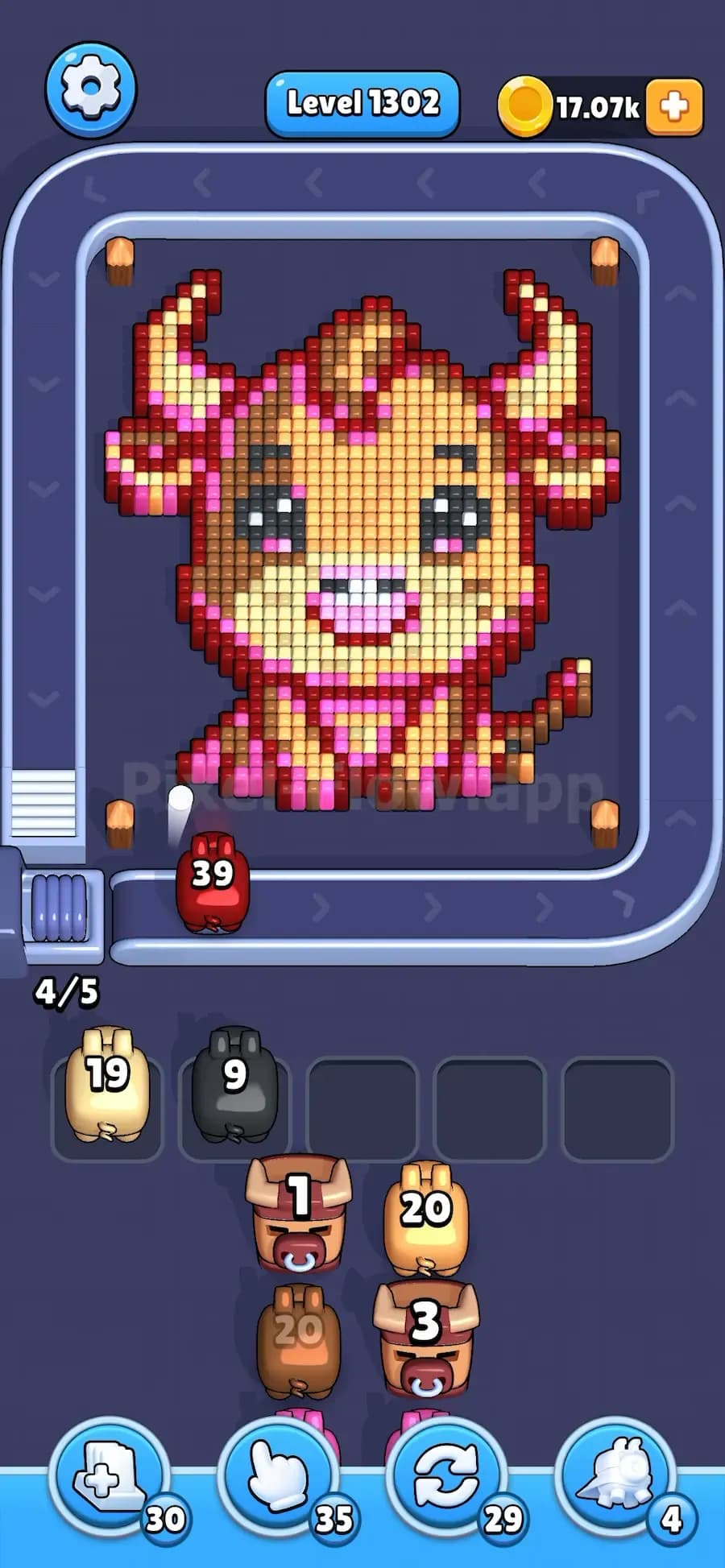

Here is the clean version:
Simple rule. Mean timing.
The bull does not care that you want to empty one column first. It wants movement from outside its own column. That means the column with the bull becomes a locked lane, while the other columns become the fuel source for breaking it.
So if the bull shows 4, you need four sends from other columns after the bull is active. Not four hits on the bull. Not four clears in the same lane. Four sends from outside.
Tiny difference. Huge wipe potential.
Before the bull can break, it has to be exposed. That means you need to use the piggies in front of it first.
If the bull is buried three piggies deep, your first job is not breaking it. Your first job is clearing the path until the bull reaches the front of that column.
Do this carefully. Don’t empty the entire column like a maniac just because the first few piggies are playable. You only need to bring the Bull Totem forward. Once it is sitting at the front, stop treating that column like free ammo.
The moment the bull is front-facing, that column becomes your locked column. Now your attention shifts to the other columns.

A good move looks like this:
That last part matters. If the bull says 5, but you only have four easy sends from other columns, you have a problem. Fix it before you create a jam.
Once the Bull Totem is active, every send from another column chips away at the number.
This is where players throw levels. They get excited because another column has a clean color match, so they dump three piggies from it back-to-back. Then the board shifts, the colors underneath are bad, and now the bull still needs two more countdown ticks but the other columns are awkward or empty.
Don’t spend one column dry.
Spread your moves.

If the bull needs 4, your goal is not “clear the biggest column.” Your goal is:
You are feeding the bull, not racing one lane.
This is why the Bull Totem feels different from features like Hard Pixels, Ice Blocks, or Locks and Keys. Those are mostly about clearing the right target. The bull is about column economy. It asks: “Did you save enough piggies in the rest of the board, or did you panic tap yourself into a corner?”
This is the main strategy. Burn it into your head.
Do not empty one column too fast when a Bull Totem is visible or likely to appear.
Pixel Flow loves hiding the real problem behind a few easy moves. You see a column full of piggies that match the board. Great. Free clears. You tap them all. The board looks cleaner for five seconds.
Then the bull appears.
Now you need sends from other columns, except one side is empty, another side has bad colors, and the last side has piggies that will overflow into waiting slots because their matching pixels are still buried.
Gross.
A better approach is to treat every column as a battery. The Bull Totem drains charge from those batteries. If you spend one battery before the bull is ready, you have fewer ticks available for the countdown.
Use this rule:
If you see a Bull Totem, keep at least two columns alive until it breaks.
Three columns is better. Two is workable. One is a panic room with the lights off.
The Bull Totem is designed to stop lazy column clearing.
Without it, you could often pick the easiest column, dump piggies from that lane, and let the board solve itself as colors open up. The bull says no. It forces you to rotate your attention.
That makes the feature annoying, but fair. Mostly.
The bull punishes three habits:
The correct play starts earlier. The second you spot the bull behind other piggies, you should already be thinking about how many outside sends you’ll need later.
This is why revealing bulls early is so strong. You don’t need to break them instantly, but you do need to know they exist. Hidden bulls are run-killers because they change the whole column plan after you have already spent resources.
Here is the safest way to handle the Bull Totem in most Pixel Flow levels:
Scan the columns first Look for bulls before tapping the obvious piggy. If one column has a blocker shape or a weird gap behind the front piggies, assume trouble.
Expose the bull early Clear only enough piggies to bring the Bull Totem to the front. Don’t over-clear that lane.
Read the number If the bull shows 3, you need three sends from other columns. Count before tapping.
Spread your sends Use different columns when possible. Keep your options open.
Avoid bad overflow Don’t send a piggy that has no useful target just to tick the bull unless you can afford the waiting slot.
Break the bull before the late board Late boards have fewer targets, fewer colors, and less recovery space. Bulls get worse the longer they stay alive.
That fifth point is where the mechanic gets spicy. Yes, you need to send piggies from other columns. No, that does not mean every send is good. If a piggy has no matching pixels exposed, it may still clog your waiting slots. A bull countdown tick is not worth losing the run unless the bull is about to open the exact column you need.
The biggest mistake is treating the bull like a normal target.
It isn’t.
You cannot just shoot it. You cannot fix it by forcing the same column. You need the board to cooperate from the sides.
Watch for these mistakes:
Using the bull column after it becomes active Once the bull is in front, that column is blocked. Stop staring at it. Work the other lanes.
Ignoring the bull number The number tells you the cost. If you don’t count, you’re guessing.
Saving the bull for last Terrible plan. A late bull can lock the final colors you need.
Overusing one outside column If you drain one helper column completely, the remaining countdown gets harder.
Breaking color order just to tick the bull A countdown tick is useful only if the piggy send doesn’t wreck your waiting slots.