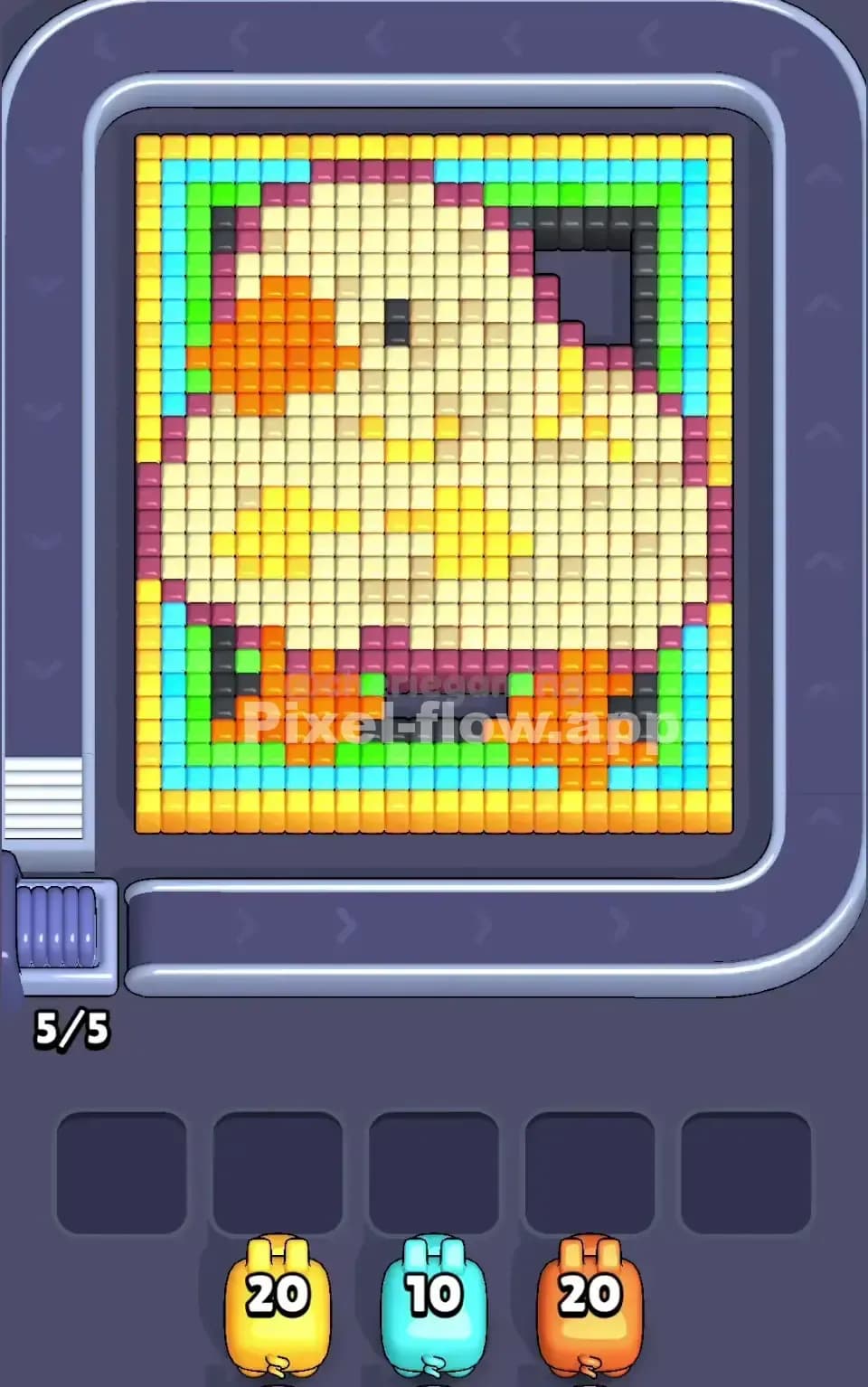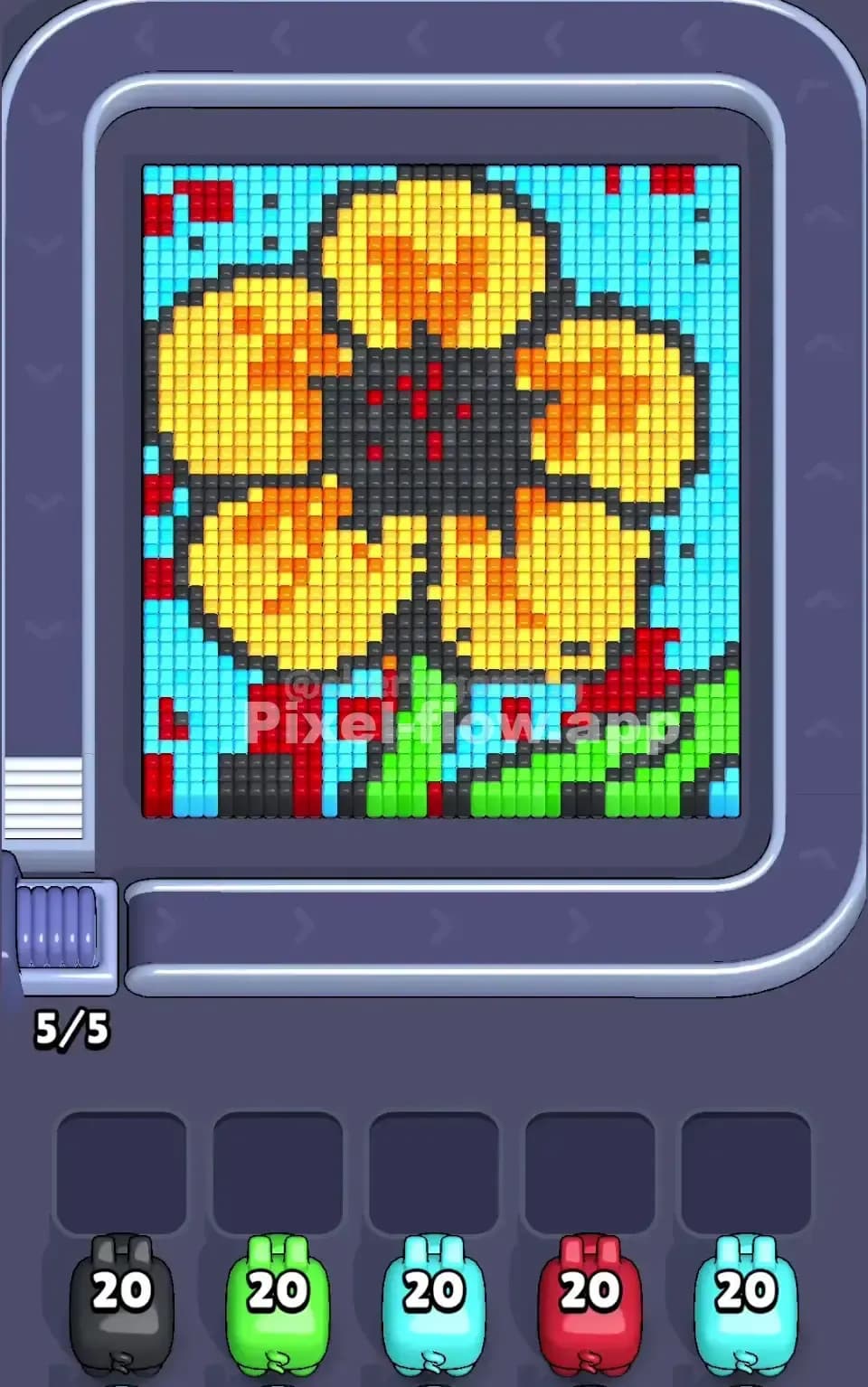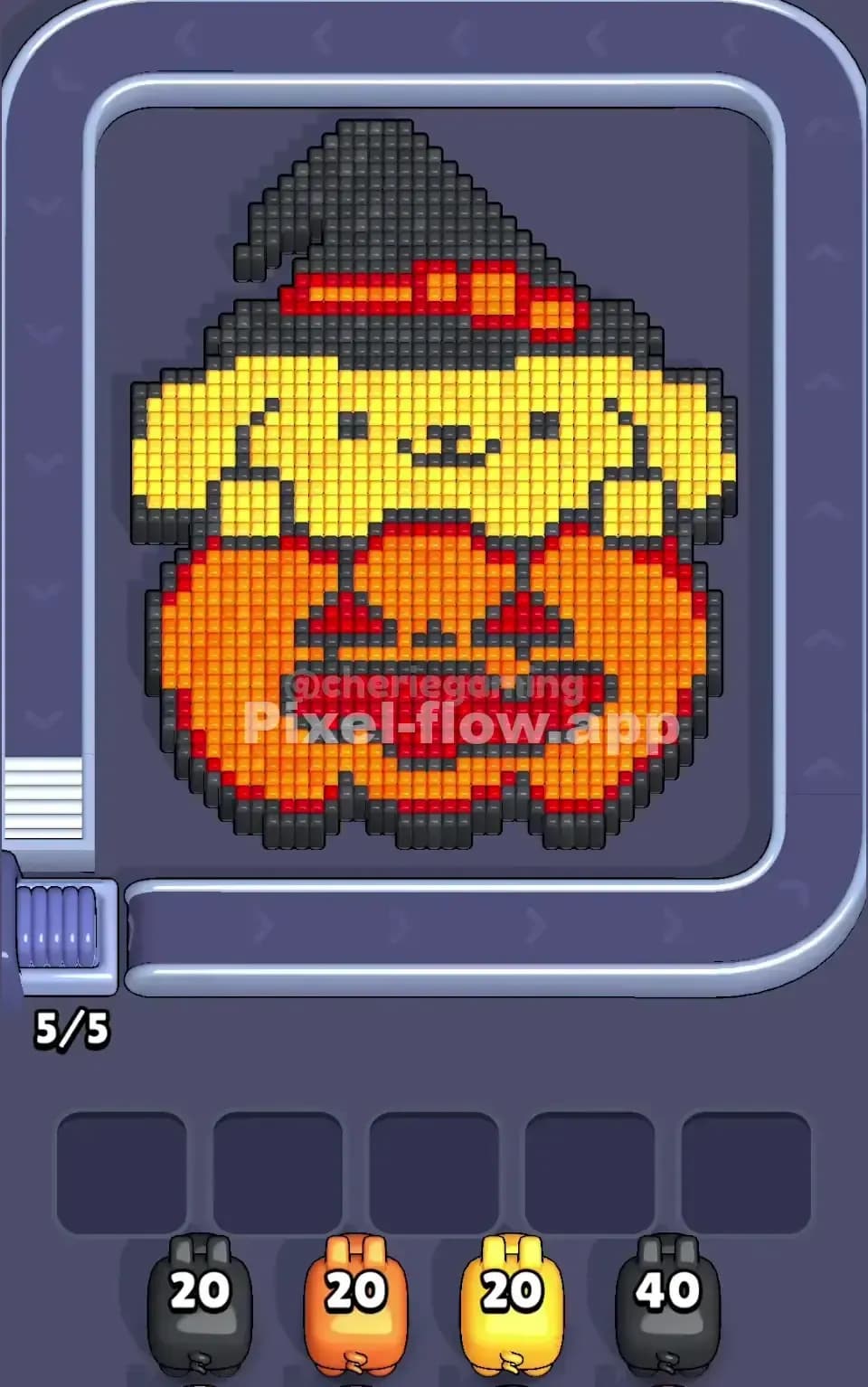

The Dragon looks cute until it eats your whole plan.
You send the wrong pig. The Dragon shrinks too much. Suddenly the board opens in a bad way, your ammo sprays into useless pixels, and the color you needed for the protected side is gone. Then the waiting slots jam. Run dead.
That is why the Dragon is one of the sneakiest features in Pixel Flow. It is not only a blocker. It is a board-control tool. The game uses it to decide when certain pixels become reachable, how much space your pigs can shoot into, and whether your early ammo gets spent cleanly or wasted into the wrong side of the board.
The basic rule is simple: shoot the different colored scales to shrink the Dragon.
The real rule is nastier: shrink the Dragon only when the next opened area helps you.
The Dragon is made of colored scale sections. Each section can be cleared by shooting it with a matching pig color. If the exposed scale is red, you need a red pig. If the exposed scale is yellow, you need a yellow pig. Same color, same hit logic.
Once the scale is hit, the Dragon shrinks. As it gets shorter, it exposes more of the board or removes part of the wall that was blocking your shots.

That sounds like a normal obstacle, but it plays differently because the Dragon can be placed in two major ways:
These two placements change the whole level.
A horizontal Dragon is about controlling how much of the board becomes active. A vertical Dragon is about hitting the correct exposed end in the correct order.
Mix them up and the level gets ugly fast.
When the Dragon is placed horizontally, the colored scales facing the pigs can be shot. This is the version that traps the most players, especially in very hard levels.
A horizontal Dragon usually acts like a long gate across the board. As you shoot its scales, it shrinks from one side and opens more shooting space. That can be good. It can also be terrible.
Why?
Because opening more board means your pigs may start targeting more pixels. If those pixels are not the ones you need right now, your ammo gets wasted.
Say the level gives you a yellow pig with 20 ammo. There are a few useful yellow pixels on the right side, but the left side has a bunch of easy yellow bait. If you shrink the Dragon too early and expose the left side, the pig may burn ammo there instead. Now you do not have enough yellow shots left for the protected area later.
That is the trick.
The game often places tempting colors near the open side, then hides the important colors behind the Dragon. Normal players shoot every scale as soon as possible. Better players ask one question first:
What does the Dragon want me to waste?
Horizontal Dragon levels are hard because they punish greed.
Most blockers in Pixel Flow should be cleared quickly. The Dragon is different. Sometimes clearing it too fast makes the board worse.
In very hard levels, the developer may set the board like this:
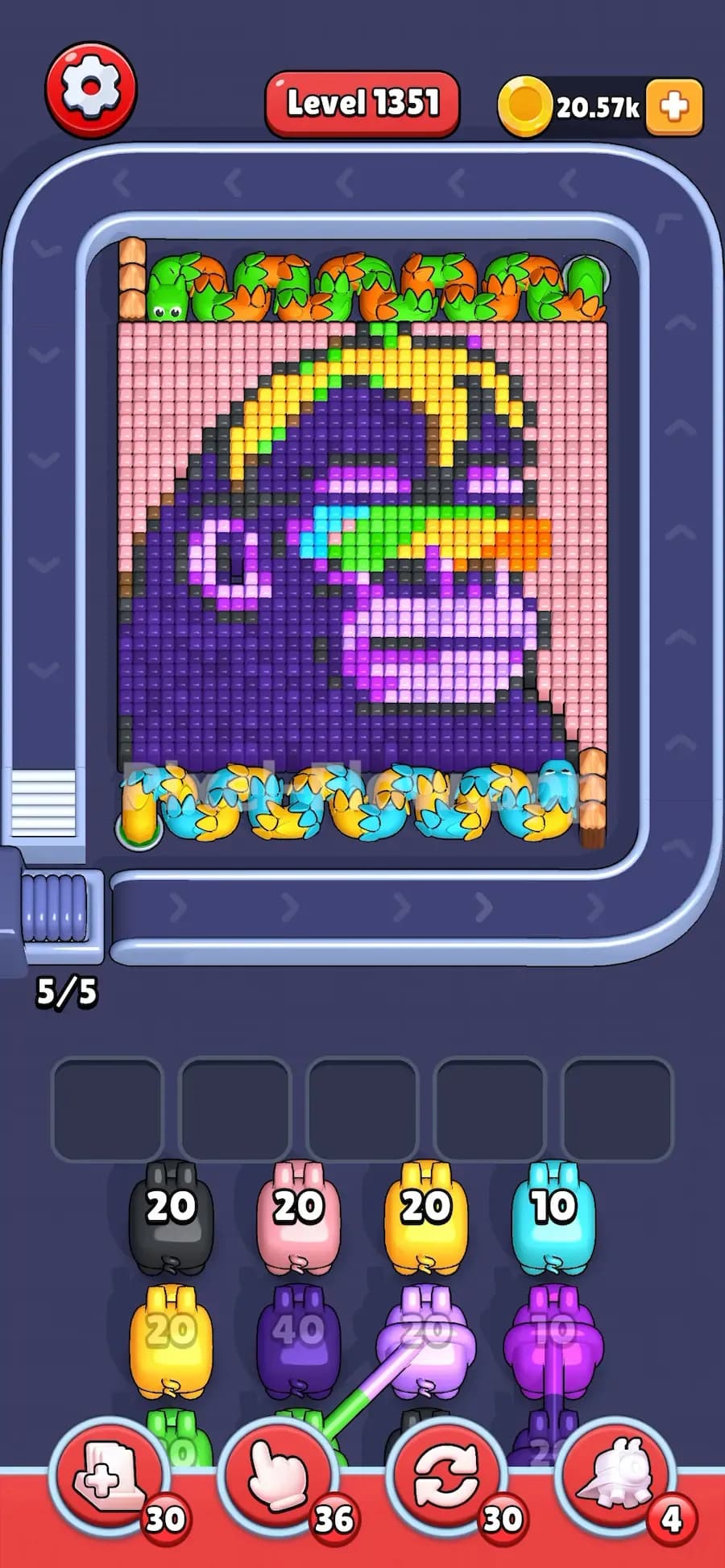
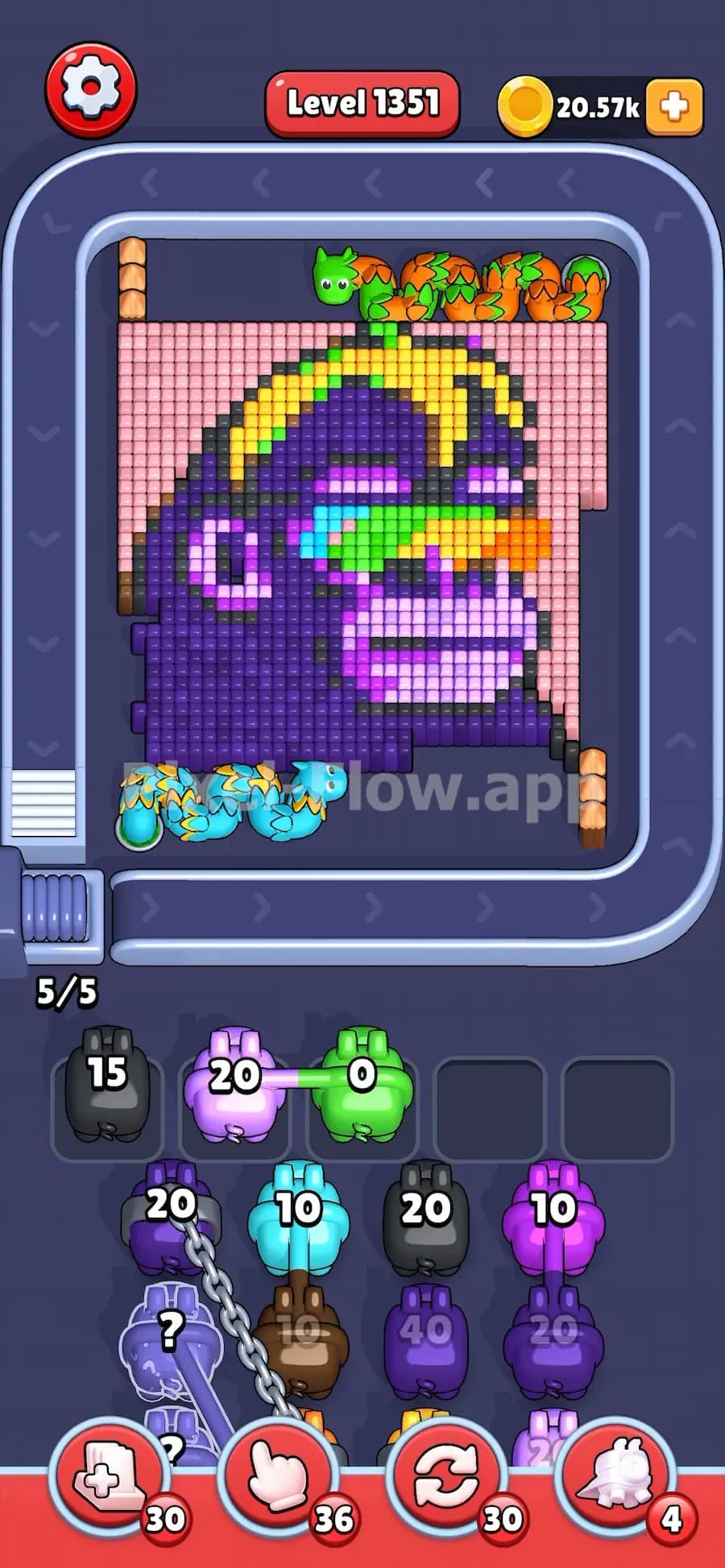
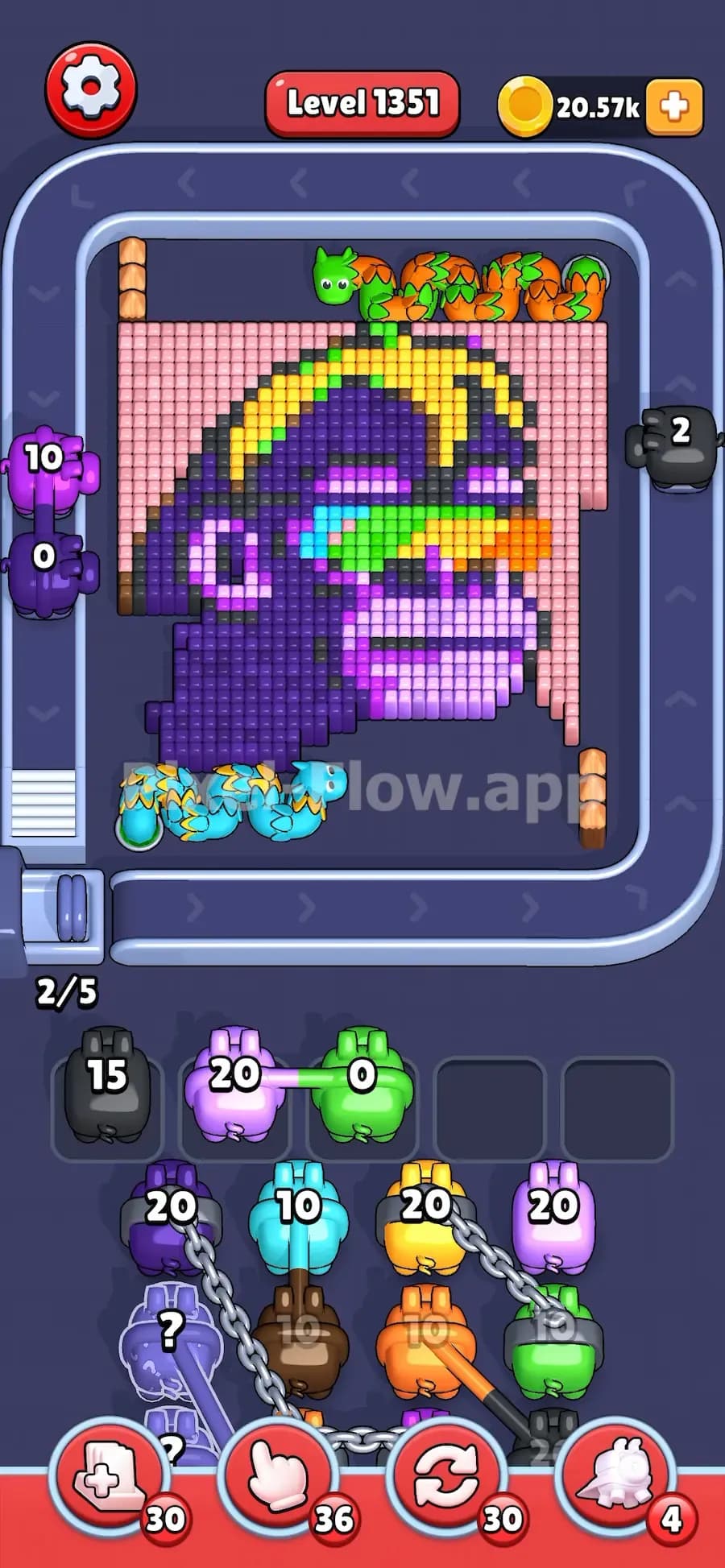
That is why the Dragon can feel unfair. It is not random. It is testing whether you can control the board shape.
Do not treat the Dragon like a target. Treat it like a valve.
Open a little. Spend ammo. Open a little more. Spend ammo again.
That rhythm wins Dragon levels.
When the Dragon is placed vertically, it usually works more like a narrow wall. In many setups, only the head or tail can be hit first, especially when the body is protected by pixels or other blockers.
This changes the puzzle.
You are no longer deciding how much board to expose sideways. You are deciding the color order.
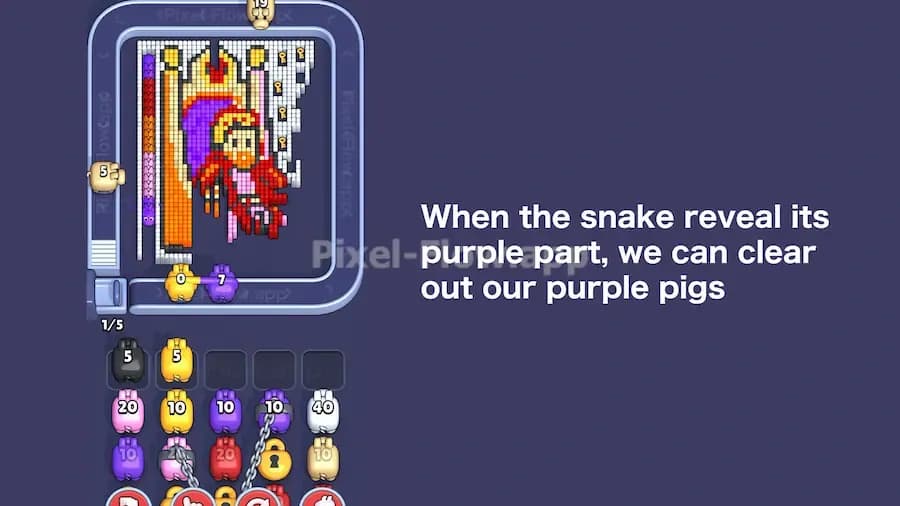
If the exposed end of the Dragon is purple, you need an purple pig. After that scale is removed, the next scale becomes exposed. Then you match that color. Step by step.
Vertical Dragons are usually stricter than horizontal ones. If you waste the color needed for the head or tail, you may get stuck with a Dragon section that cannot be hit. Then the board behind it stays blocked, and your waiting slots start filling with pigs that have nowhere useful to shoot.
Use this order:
Vertical Dragon levels reward patience. Fast tapping gets punished.
The Dragon is dangerous because it affects your waiting slots indirectly.
It does not always clog the slots by itself. It causes bad ammo spending, and bad ammo spending clogs the slots.
Here is how the chain usually happens:
That is the real Dragon trap.
A player who only sees “match color to scale” will lose more often. A player who sees “this Dragon controls where my ammo goes” will clear these levels much more cleanly.
Before shooting the first Dragon scale, scan the board.
Do it fast, but actually do it.
Look for these things:
This matters more than the first move.
In some levels, the correct play is to hit the Dragon immediately. In others, you should clear nearby pixels first and leave the Dragon alone for a few turns. That second type is where most players throw the run.
Use this plan for horizontal Dragon levels:
Check the protected side first. The Dragon is probably hiding the color you need most.
Do not shrink the full Dragon immediately. Remove only enough scale to create a useful shooting lane.
Spend current ammo safely. If your pig can clean exposed pixels without opening extra junk, do that first.
Save rare colors. If the board has only one or two pigs of a color early, do not let them waste shots on bait pixels.
Shrink in stages. One Dragon hit, then one cleanup move. Repeat.
Stop when the board opens too wide. If a new area would pull ammo away from your goal, wait.
The strongest move is often not the biggest move. It is the move that keeps the next pig useful.
Use this plan for vertical Dragon levels:
Find the exposed end. Usually the head or tail is the only valid target.
Match the visible scale color. Do not guess. If the next scale is blocked, it cannot be hit yet.
Hold the needed color if possible. A pig in the queue may be more valuable later than now.
Clear blockers near the body. Sometimes pixels around the Dragon stop body sections from being hit.
Read the next color after every shrink. The order can change your whole plan.
Avoid parking too many pigs. Vertical Dragon mistakes often become slot jams because the board stays closed.
Vertical Dragon is less about area control and more about color order. Clean and strict.
Most Dragon losses come from one of these bad habits:
The worst mistake is speed tapping. Dragon levels are not built for that. They are built to make you pause for half a second and ask where the next ammo will go.
Half a second. Huge difference.
On horizontal Dragon levels, use the Dragon like a curtain you can half-open. If the left side has exposed junk colors and the right side has the real target pixels, shrink only enough Dragon to let one useful pig work. Then stop. Let that pig clean the tight area before you hit another scale.
This feels weird at first because the Dragon is sitting there begging to be cleared. Ignore that urge.
Controlled Dragon length keeps your ammo focused. Full Dragon clearing sprays ammo everywhere.