
A Frozen Pig can end the level while the board still looks playable. That is the trap.
You see pigs sitting there, covered in ice, with a number on top. They look like normal pigs waiting for their turn, but they are not ready yet. You cannot send them out. You cannot use their ammo. You cannot depend on them until the ice breaks. In Pixel Flow, that makes Frozen Pig one of the nastiest release blockers feature because it does not block pixels directly. It blocks your pig supply.
And when your pig supply runs dry, the level dies fast.
Frozen Pig is a pig release obstacle. It freezes some pigs in your queue and forces you to clear other pigs before those frozen ones become usable.

The game hint says:
Frozen Pig Deplete other pigs to shatter their ice!
That is the whole mechanic, but the real danger sits inside the word deplete. A pig only counts when it finishes its ammo. Sending a pig out is not enough. Parking a pig in the waiting slots is not enough. A pig has to fully clear its matching pixels and leave.
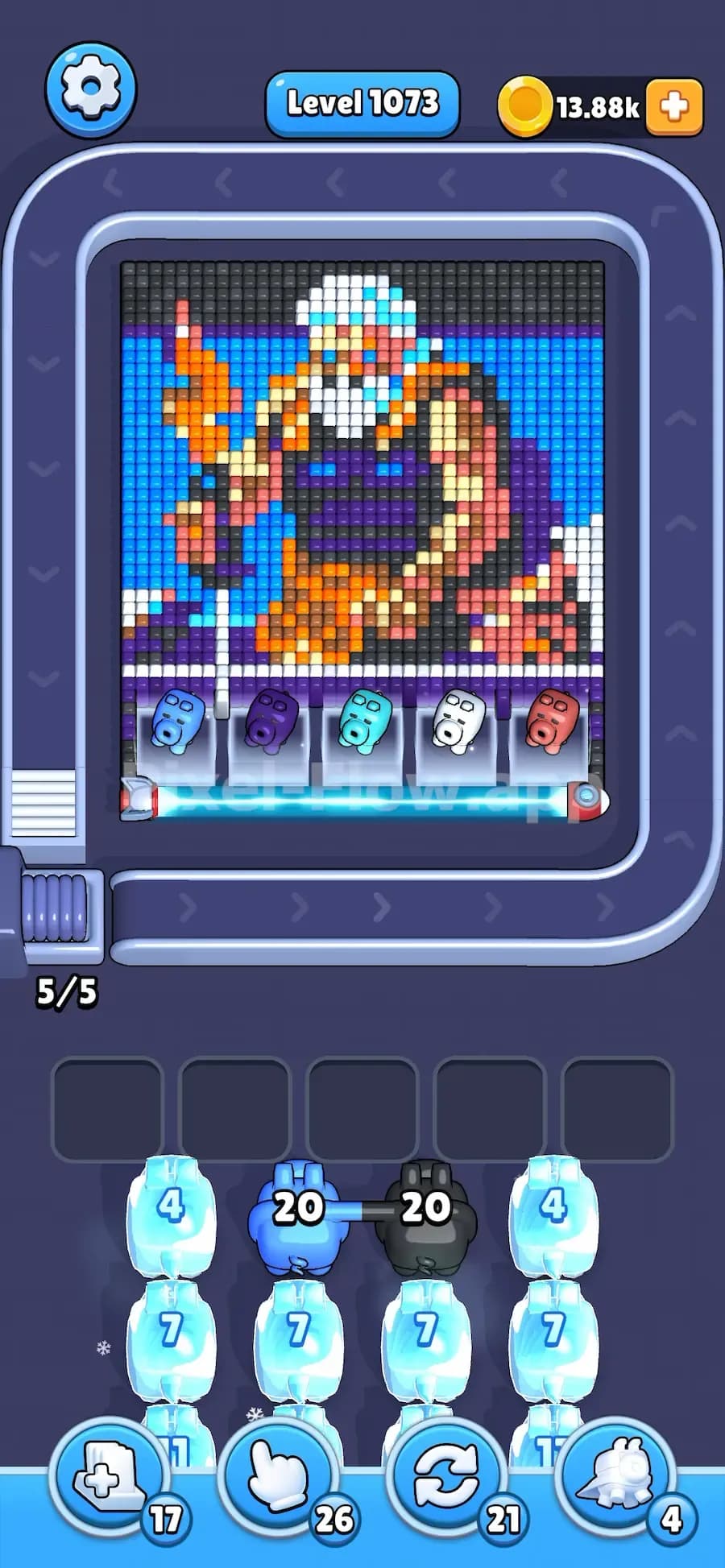
Only then does the Frozen Pig counter go down.
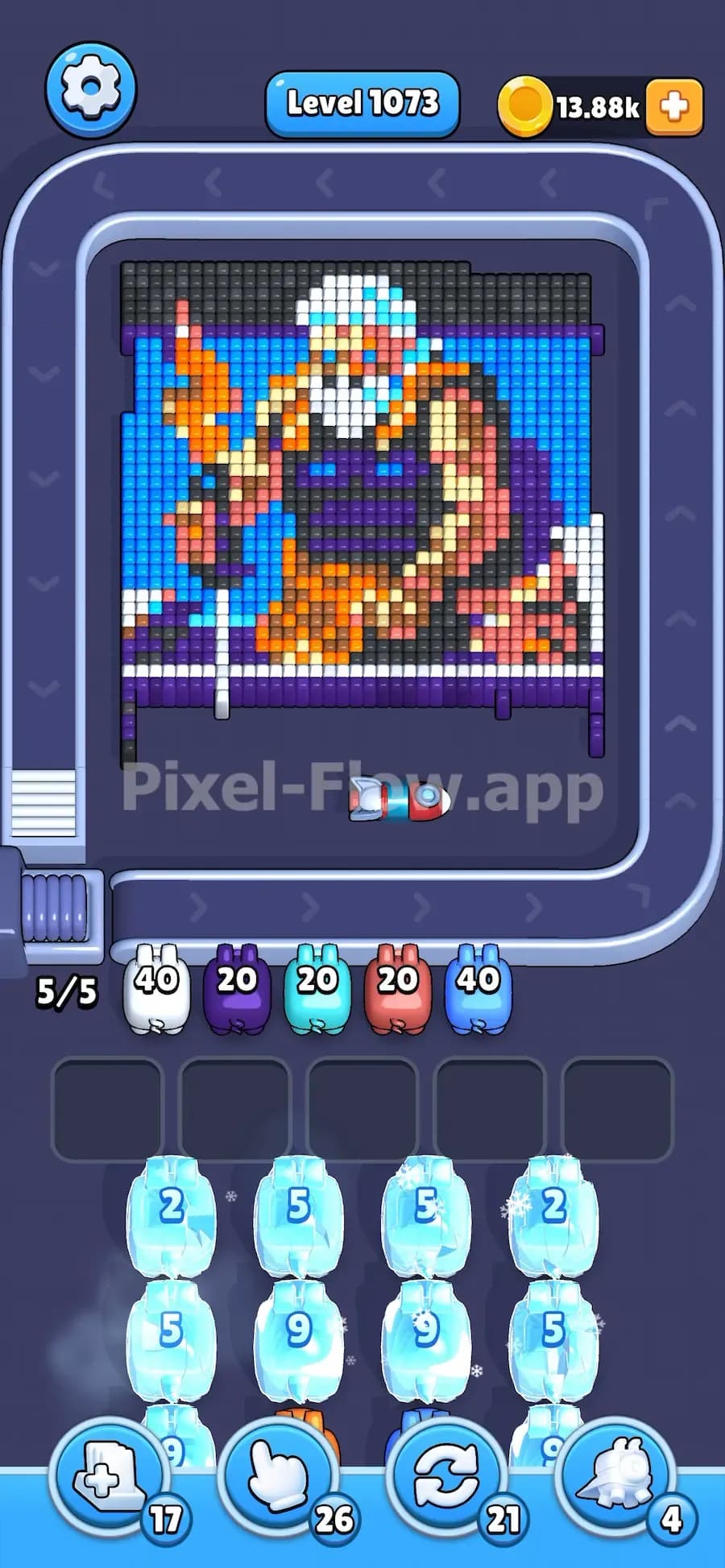
If a Frozen Pig shows 4, you need to fully clear 4 pigs before it breaks free. If it shows 7, you need to fully clear 7 pigs. Bigger number, bigger pressure. Simple. Brutal.
That last part matters most.
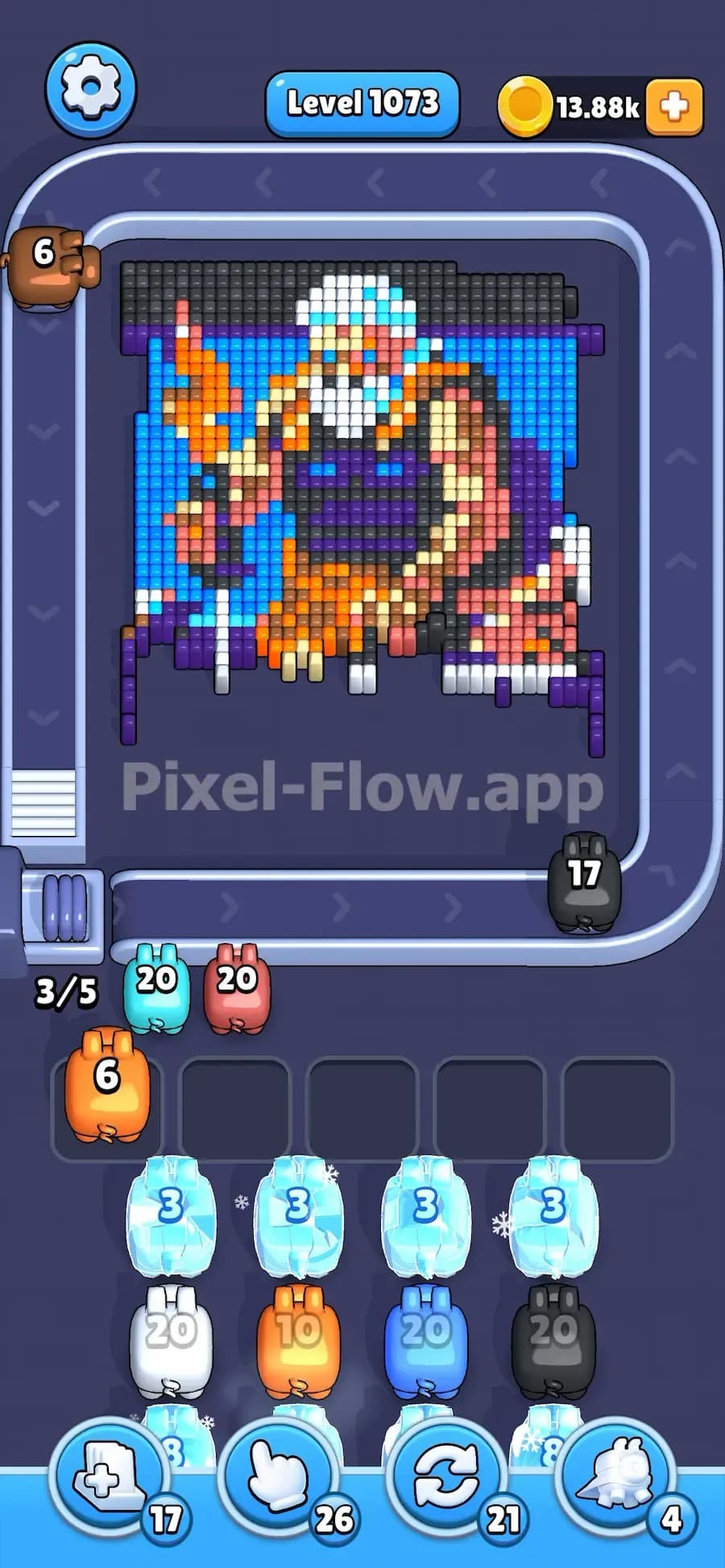
Frozen Pig is not only asking you to clear the board. It is asking you to clear the right pigs in the right order before your options disappear. If you waste your active pigs, you may never reach the frozen ones.
Frozen Pig does not attack your board directly. It attacks your timing.
Normal Pixel Flow levels already ask you to match pig colors with visible pixels. You need to send a pig only when enough of its color is exposed. If not, the pig fails to finish its ammo and drops into a waiting slot.
Frozen Pig adds another layer. Now you also need to think about how many pigs you must fully clear before the frozen ones become available.
So every tap has two jobs:
A bad tap can fail both jobs.
If you send out a pig with too much ammo and too few matching pixels available, it gets stuck. It does not reduce the ice counter. It also takes up a waiting slot. That is how Frozen Pig levels start to collapse.
One wrong pig. One blocked slot. Then another. Then the level is gone.
Frozen Pig levels punish greedy ammo use.
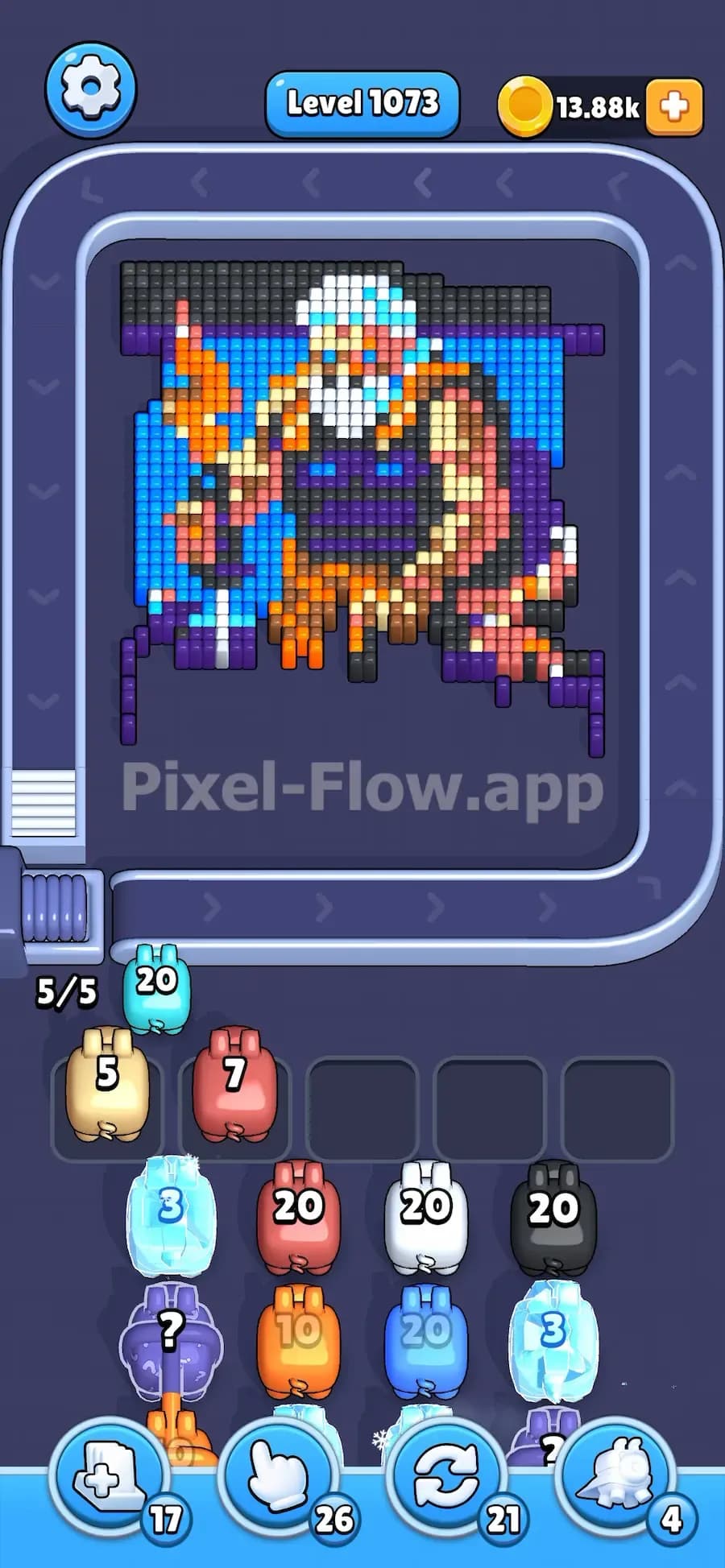
If you have a 20 white ammo pig and a 40 white ammo pig, do not automatically send the bigger one first. That is usually the wrong play.
Send the 20 white ammo pig first if only around 20 white pixels are easy to reach. Let it finish. Let it leave. Let it reduce the Frozen Pig counter.
Save the 40 white ammo pig for later, when more white pixels are exposed.
This is the core rule:
A pig that finishes is better than a bigger pig that gets stuck.
Frozen Pig levels are not about using the biggest ammo first. They are about making clean clears. Every finished pig brings you closer to breaking the ice.
The waiting slots are already the danger zone in Pixel Flow. Frozen Pig makes them even tighter.
When a pig cannot finish its ammo, it moves into a waiting slot. That slot stays blocked until the pig can return and clear the rest of its color. In a normal level, this is annoying. In a Frozen Pig level, it can be fatal.
Why?
Because frozen pigs cannot help you yet. If your usable pigs are weak, poorly timed, or stuck in waiting slots, you may not have enough clean clears left to break the ice.
This creates a nasty loop:
That is the real threat. Frozen Pig does not need to block the board. It blocks the rescue.
Use this checklist before every tap.
Count the ice number. If a Frozen Pig shows 7, you need seven finished pigs before it can move. That is a lot. Do not waste early pigs.
Check exposed pixels. Only send a pig if its color has enough visible pixels to clear most or all of its ammo.
Favor clean depletion. A pig that leaves the board is your best move. It clears pixels, frees space, and cracks the ice.
Avoid early oversized pigs. Big ammo pigs are dangerous when the board is still covered. Save them until the color is properly exposed.
Protect your waiting slots. One waiting slot can be used as a buffer. Two can be fine. Three is risky. Four means you are probably about to lose.
Free the low-number Frozen Pig first. If the level gives you frozen pigs with different numbers, the lower number usually opens your next option sooner. Push toward that first.
Do not chase one color blindly. Frozen Pig levels often need balanced clearing. If you burn through one color too early, you may expose the wrong pixels and trap your next pigs.
The biggest mistake is tapping like it is a normal level.
It is not.
Frozen Pig changes the value of every pig. You are not only asking, “Can this pig clear pixels?” You are asking, “Can this pig fully finish and help break the ice?”
Bad moves usually look like this:
A finished pig chain is when each pig you send out fully depletes, leaves, and reduces the ice counter. That is what you want. Chain enough clean clears together and the frozen pigs break open before the board gets ugly.
On very hard levels, Frozen Pig becomes much stricter. The level may require you to clear each pig almost perfectly. One wasted pig can leave you short. One stuck pig can stop the ice from breaking. One wrong color order can block the pixels you needed for the next pig.
These levels often hide the needed pixels behind awkward color layers. The game wants you to send small pigs first, expose more of the board, then use bigger pigs once enough matching pixels are ready.
Do not rush the frozen counter. Build toward it.
For example, if you need to break a 7 Frozen Pig, count your likely clean clears. If you only see five pigs that can finish safely, you need to create two more safe clears before wasting slots. That may mean clearing a smaller color first, opening a hidden patch, then sending a bigger pig after.
This is why Frozen Pig levels feel unforgiving. The loss usually happens before the screen looks doomed. The bad tap happened five moves earlier.
Treat every Frozen Pig number like a debt you must pay with finished pigs.
Before you tap, say the number in your head. If the ice says 7, count down after every clean clear: 6, 5, 4, 3... It sounds silly, but it stops panic tapping. Also, when you have two pigs of the same color, use the smaller one first unless the board clearly has enough pixels for the bigger one. The game loves baiting you with big ammo.
Break the ice early. Keep the slots clean. Then the frozen pigs stop being a trap and become your comeback.