The Hungry Door is the blocker that makes you stop clearing random colors and start asking one question: what color does this door want?
Miss that answer and the level falls apart fast.
The Hungry Door is not a normal wall. You do not open it by hitting the door directly. You do not open it by clearing every color around it. You open it by feeding it the exact color it asks for, one pixel at a time, until its number drops to 0.
That sounds easy. It is not.
In a clean board, this feature is simple. In a very hard Pixel Flow level, the Hungry Door usually guards something critical, like Keys, while the color it wants is buried, split into thin strips, or protected by other colors. That is where players lose the run. They clear the pretty outside shape, spend the wrong piggies, clog the waiting slots, and only then realize the door is still shut.
Too late. The keys are still trapped.
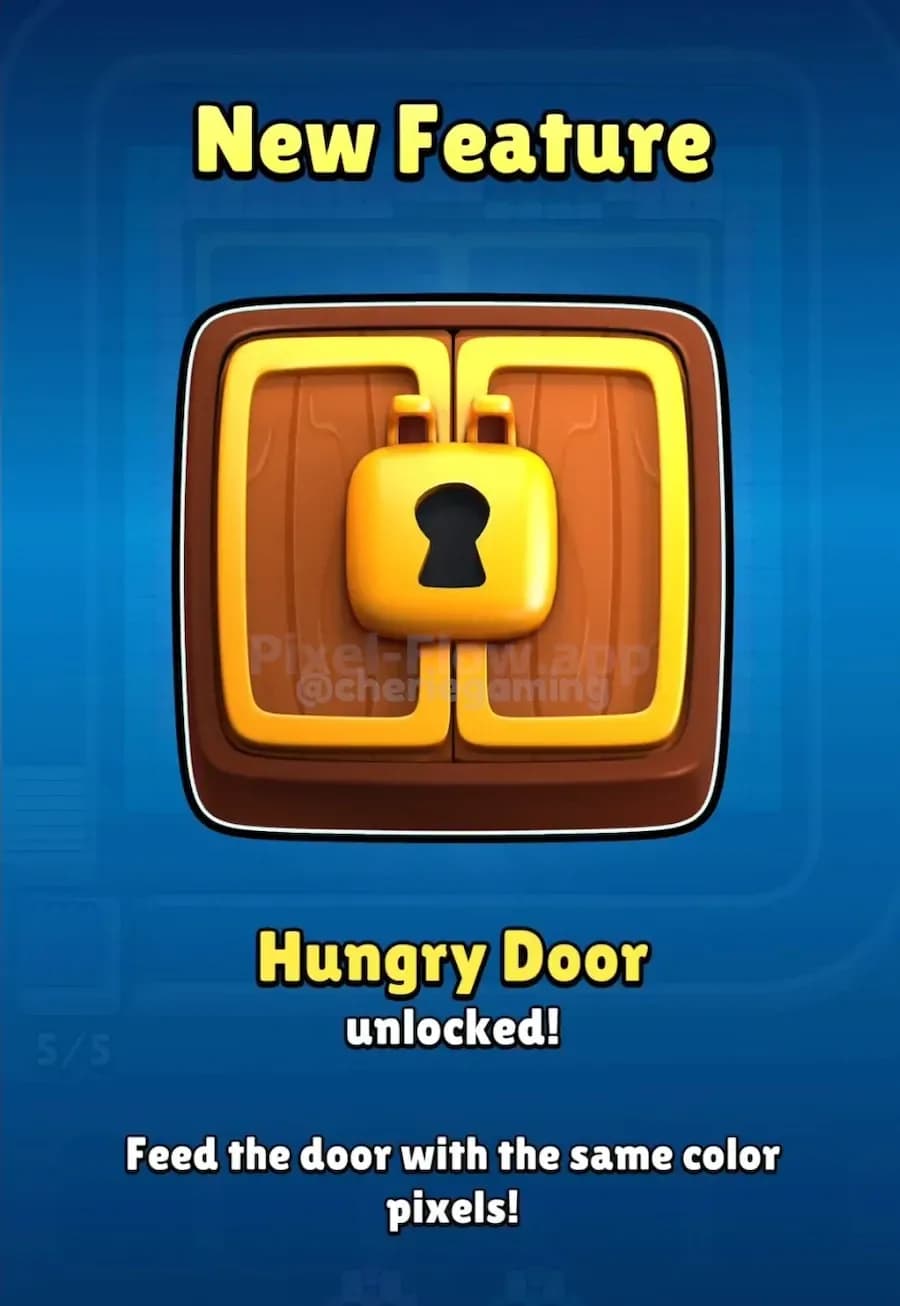
The Hungry Door is a color-fed blocker feature. It has a target color and a number. That number is the amount of matching pixels you must clear before the door opens.
If the door wants light blue, then only light blue pixels count.
Not dark blue. Not white. Not whatever color is easiest to clear right now. The door is picky.
A normal blocker asks you to remove the thing in front of you. The Hungry Door asks you to solve the board in the correct color order. That is why it can feel brutal when it shows up with Locks and Keys. You are not just trying to open a door. You are trying to reach the resources that make the rest of the level possible.
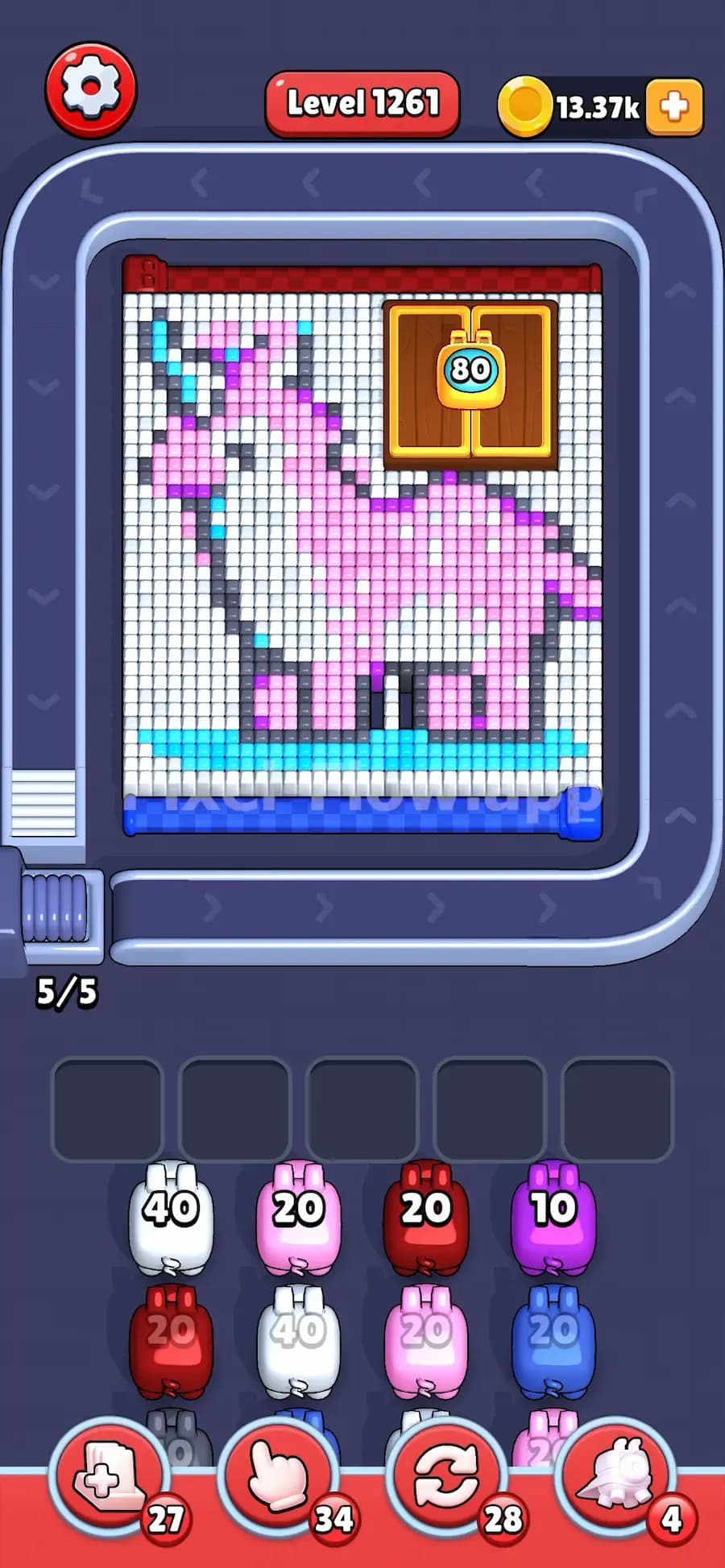
In the example board, the door wants light blue pixels, and the number 80 tells you the exact job: clear 80 light blue pixels before the door breaks open.
Until that happens, whatever sits behind the door stays trapped.
Usually, that means pain.
Here is the mechanic without the noise:
That’s the whole rule.
The hard part is not understanding it. The hard part is surviving long enough to do it.
Pixel Flow already runs on pressure. Piggies need matching pixels. Piggies have ammo. If a piggy cannot spend its ammo, it can end up stuck in a waiting slot. Fill those slots, and the board jams. The Hungry Door adds another layer to that pressure because now some colors matter more than others.
You might have five colors on the board, but only one of them feeds the door.
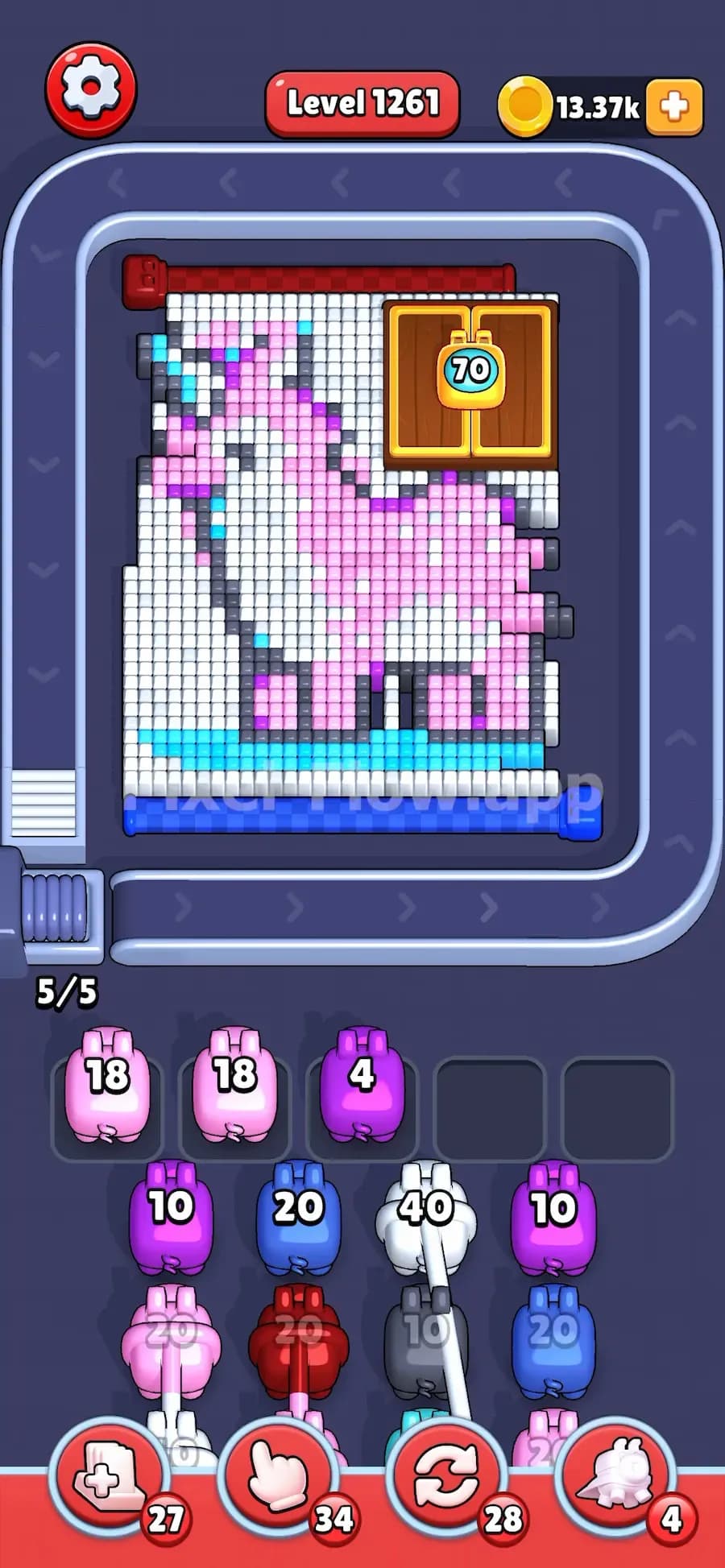
So if the Hungry Door wants light blue, your run is secretly a light blue mission. Everything else is secondary until the door opens.
The Hungry Door is dangerous because it usually protects the thing you need most.
In many levels, the door blocks Keys. That matters because Locks can stop piggies from leaving or keep parts of the column unusable. No keys means no release. No release means stuck piggies. Stuck piggies means the level slowly turns into a traffic jam with cute faces.
Awful way to lose.
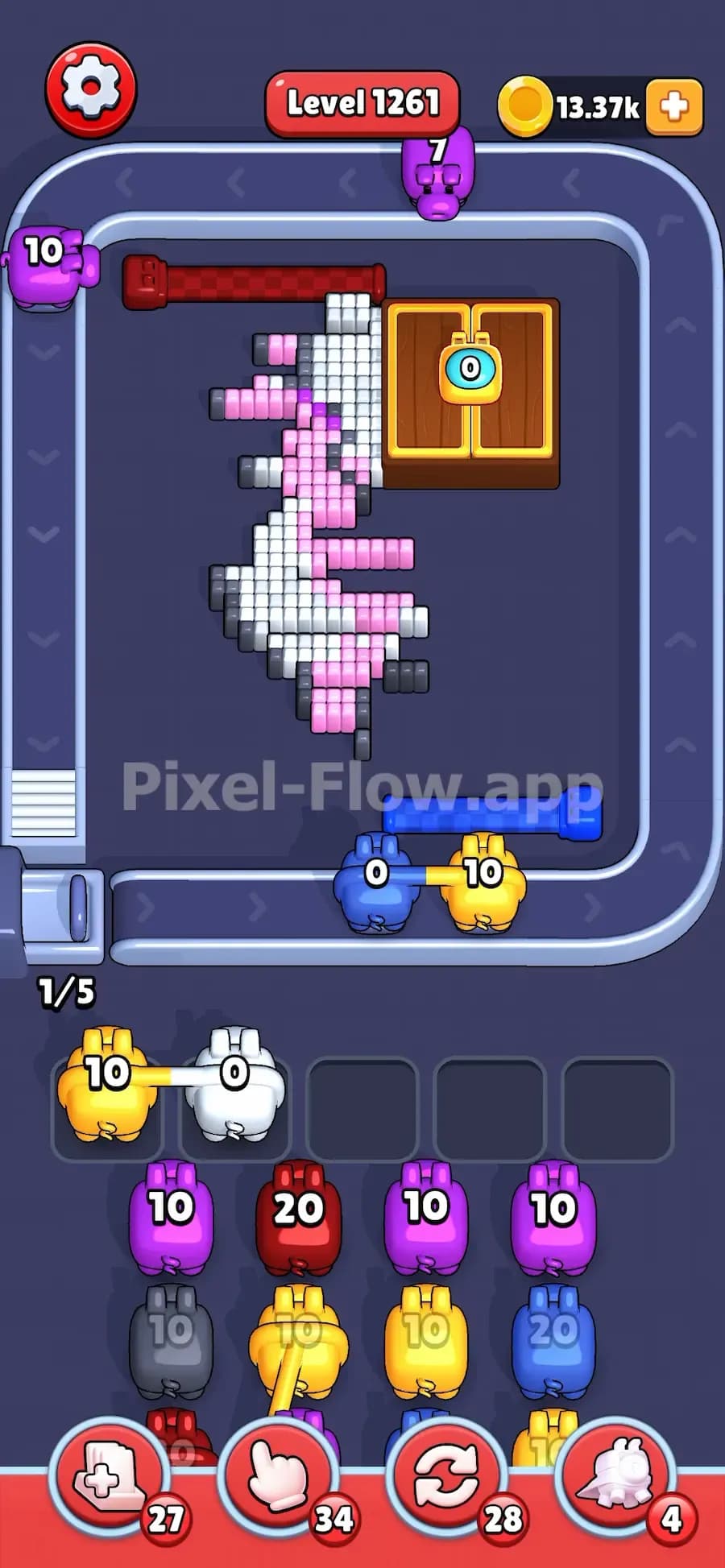
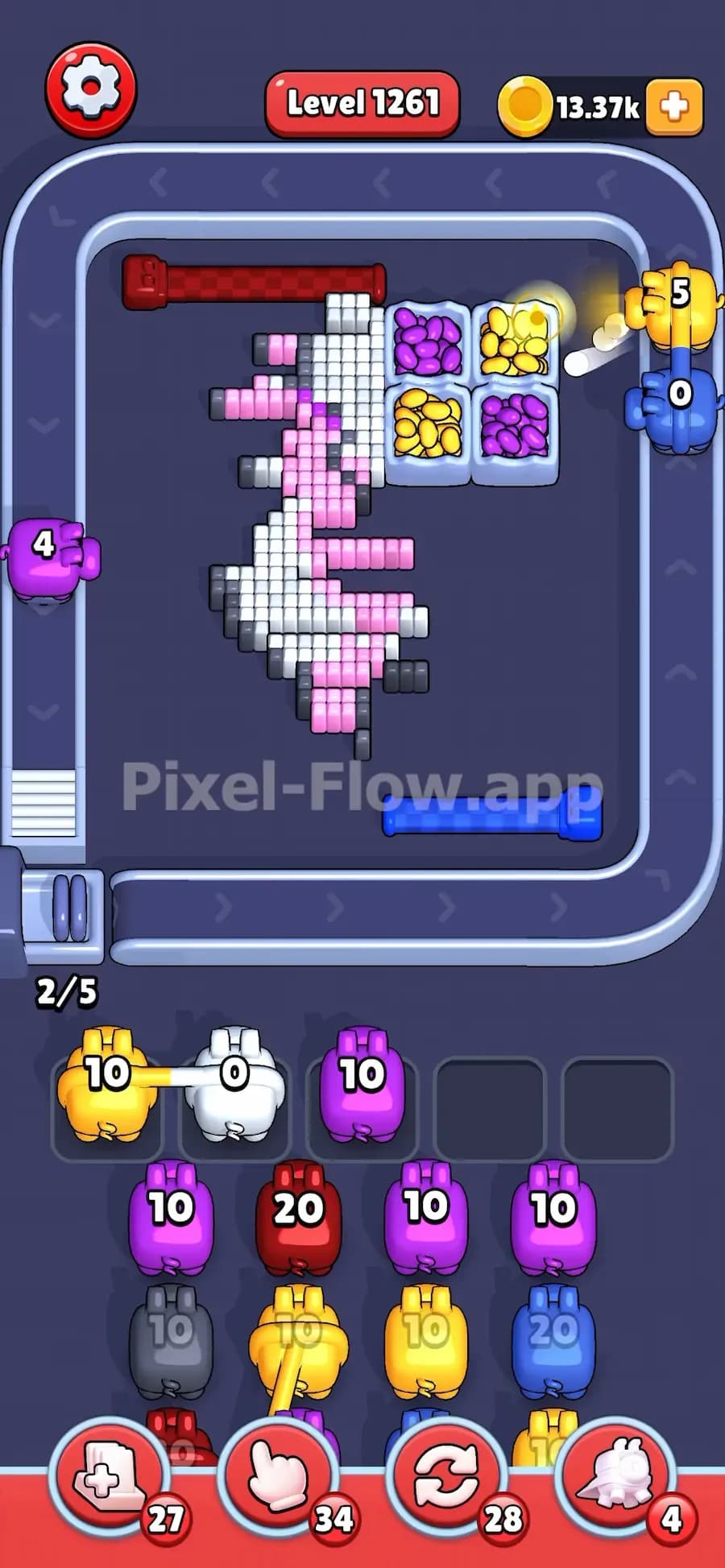
Here is why this feature gets nasty:
It protects important items. If the door guards Keys, you cannot finish the locked section until the door opens.
It forces one color priority. You may want to clear the easiest color, but the door only cares about its target color.
The target color is often awkward. The door color may sit in small strips, corners, thin outlines, or buried pockets.
It punishes early waste. If you burn the needed color before enough tiles are exposed, your piggies may leave ammo behind or clog slots.
It combines badly with Locks and Keys. The door blocks the keys. The locks block the piggies. One closed door can freeze the whole run.
This is why the Hungry Door often feels worse than a regular blocker. It does not just stop one lane. It changes what “good move” means.
A move that clears 20 random pixels might look strong, but if none of them feed the door, it may be a bad move.
If the Hungry Door is closed, your first plan should be simple:
Feed the door first.
That does not mean blindly sending the target-color piggy the second you see it. That is how you waste ammo. It means the whole board should be played around exposing and clearing the door’s color.
In the example, the goal is light blue. The door needs 80 light blue pixels cleared. So your early moves should answer this:
That is the real level.
The artwork, the outside colors, the side pieces, all of that can bait you. Do not chase random clears just because they are available. Pixel Flow levels often put easy colors in front of you to drain the wrong piggies before the real blocker is ready.
Feed the door. Then clean up.
The most painful version of Hungry Door is the combo with Locks and Keys.
Here is the trap:
The door blocks the Keys. The Locks block the piggies. The piggies cannot finish cleanly without the keys. The keys cannot move until the door opens.
That means the Hungry Door is not optional. It is the center of the level.
In this setup, clearing the outside board without feeding the door is fake progress. You might remove a lot of pixels, but the locked piggies are still stuck. Worse, you may spend the exact piggies you needed to expose the door color.
So when Hungry Door and Locks and Keys appear together, play like this:
This combo is why some Hungry Door levels feel like a lock puzzle wearing a color puzzle mask. The door is just the first gate. The keys are the real payoff.