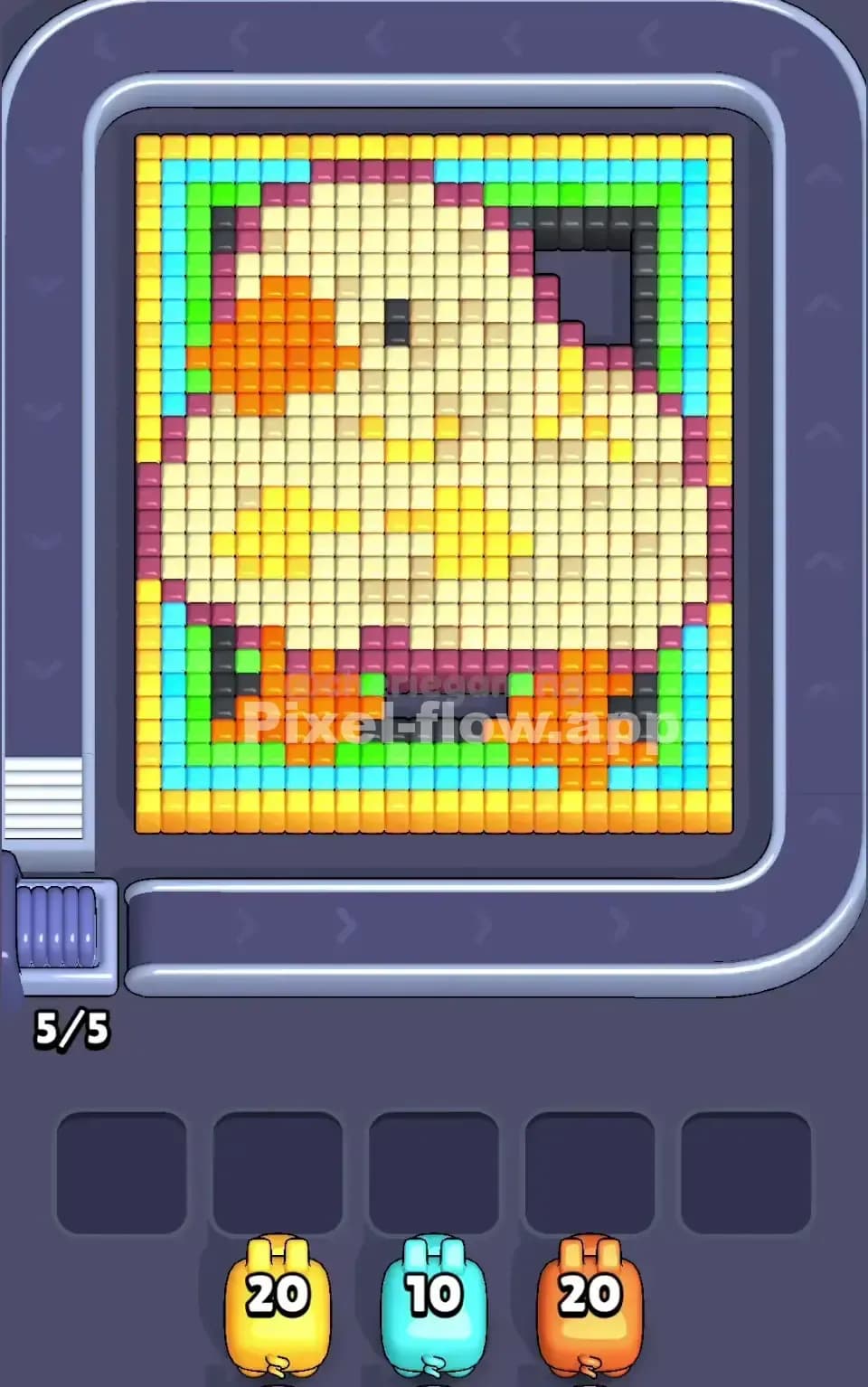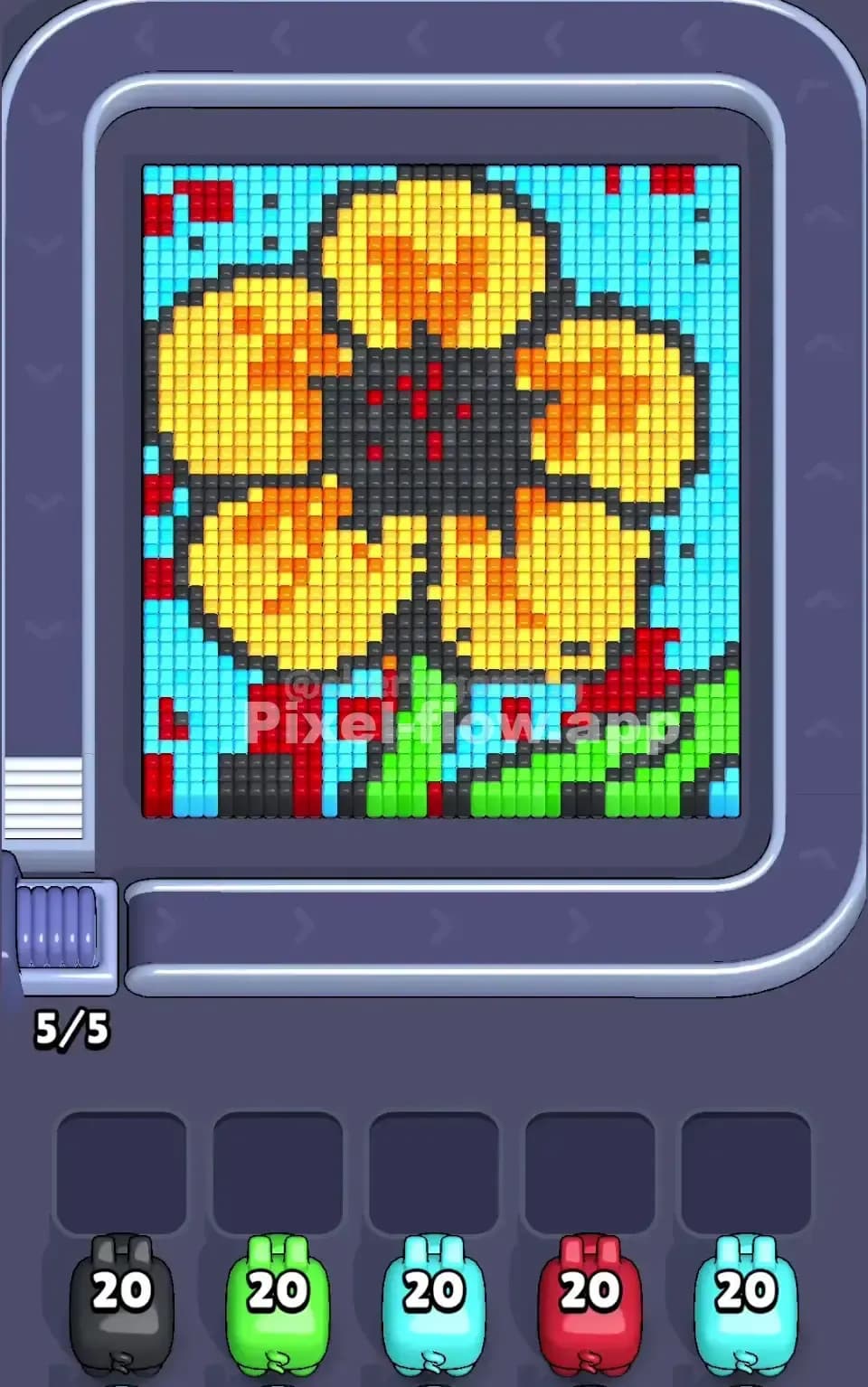

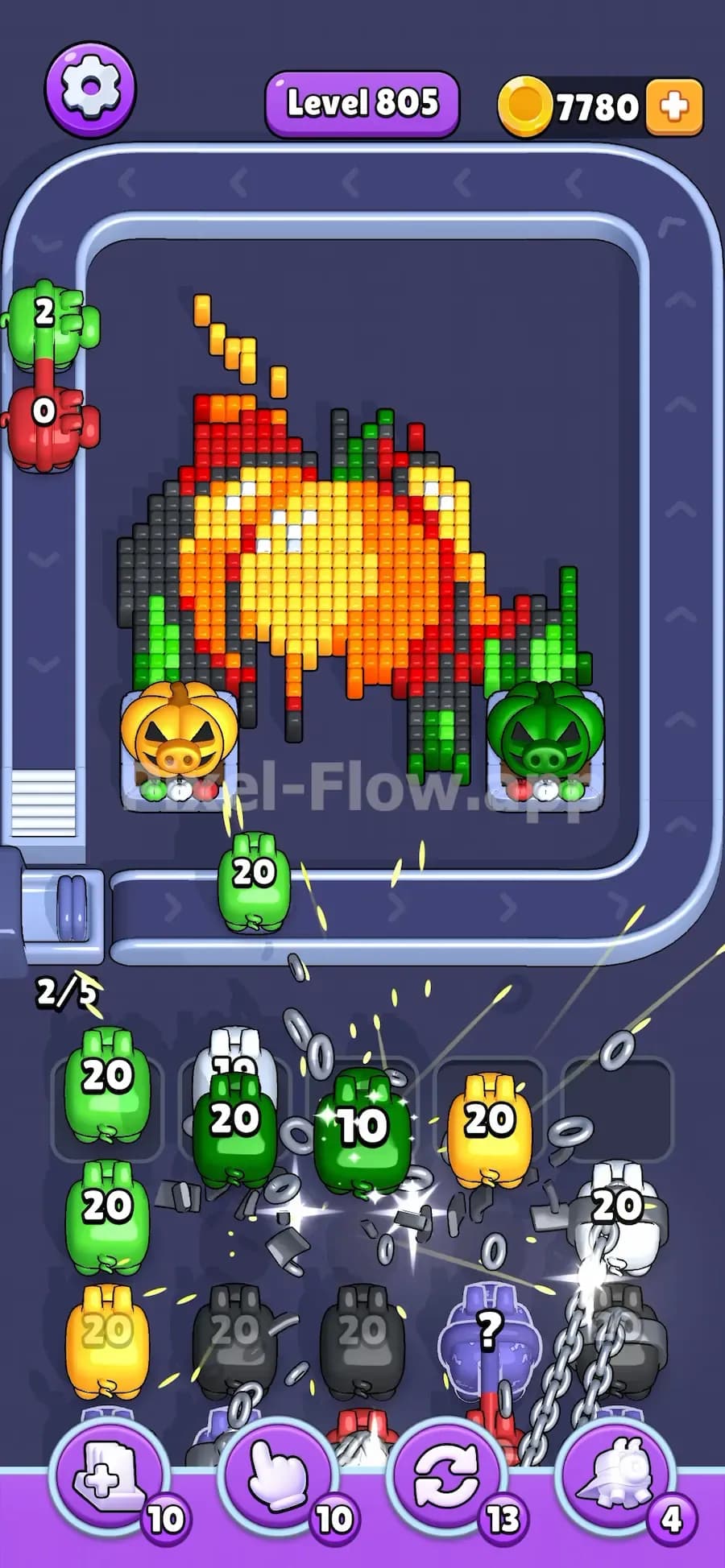
Shackles are a waiting-slot jam obstacle feature in Pixel Flow. They chain some pigs at the bottom of the board, and those pigs cannot leave their slot until they move to the front of the waiting line.
The rule is simple: a shackled pig only breaks free when it reaches first in line.

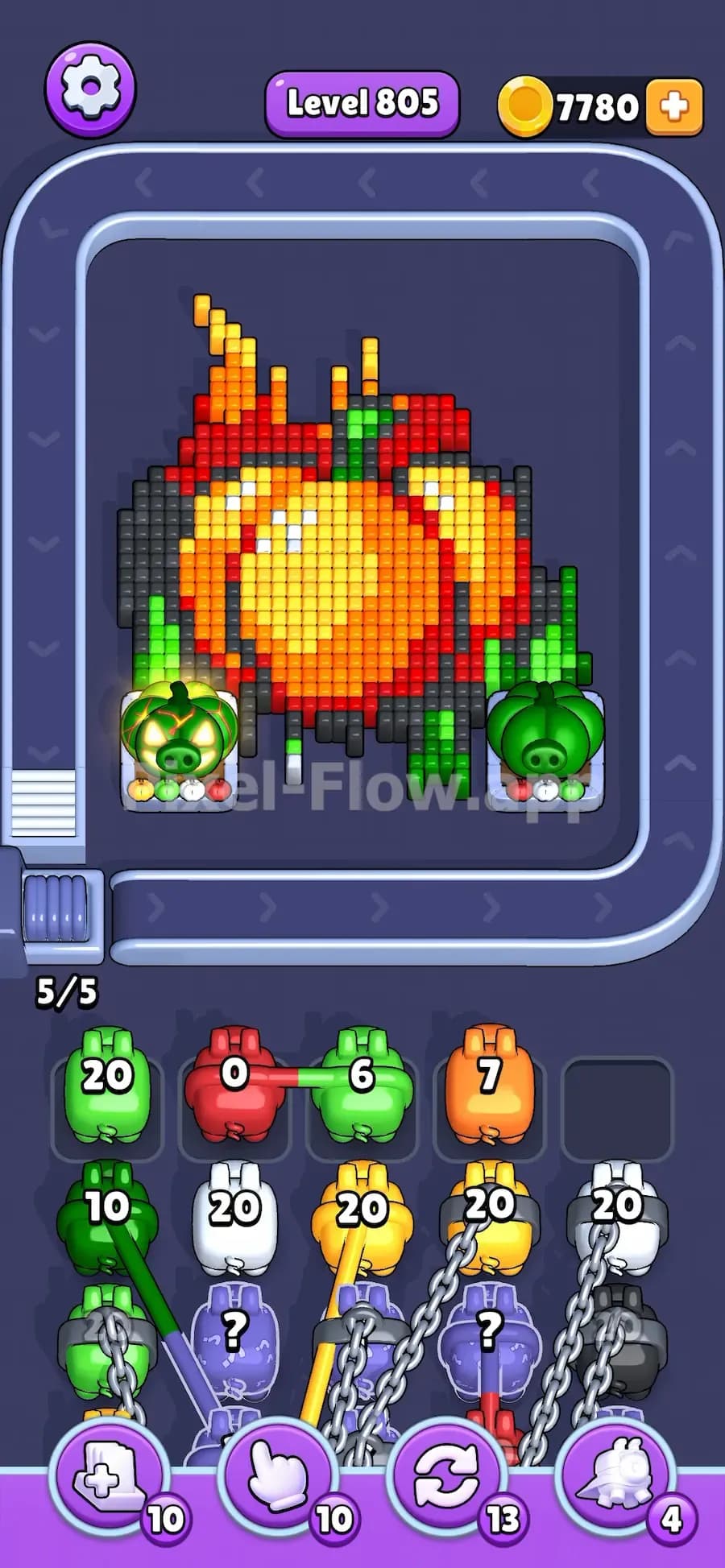
In the image, several pigs are chained below the main line. The numbers above them still matter, but the chains mean you cannot use those pigs whenever you want. They are blocked until the waiting line shifts forward.
Shackles attack your most important resource: waiting space.
Pixel Flow already depends heavily on managing limited waiting slots, and pigs that cannot clear enough matching pixels can get stuck there. The game’s waiting slots are a major pressure point because a full buffer can cause a jam.
That makes Shackles nasty.
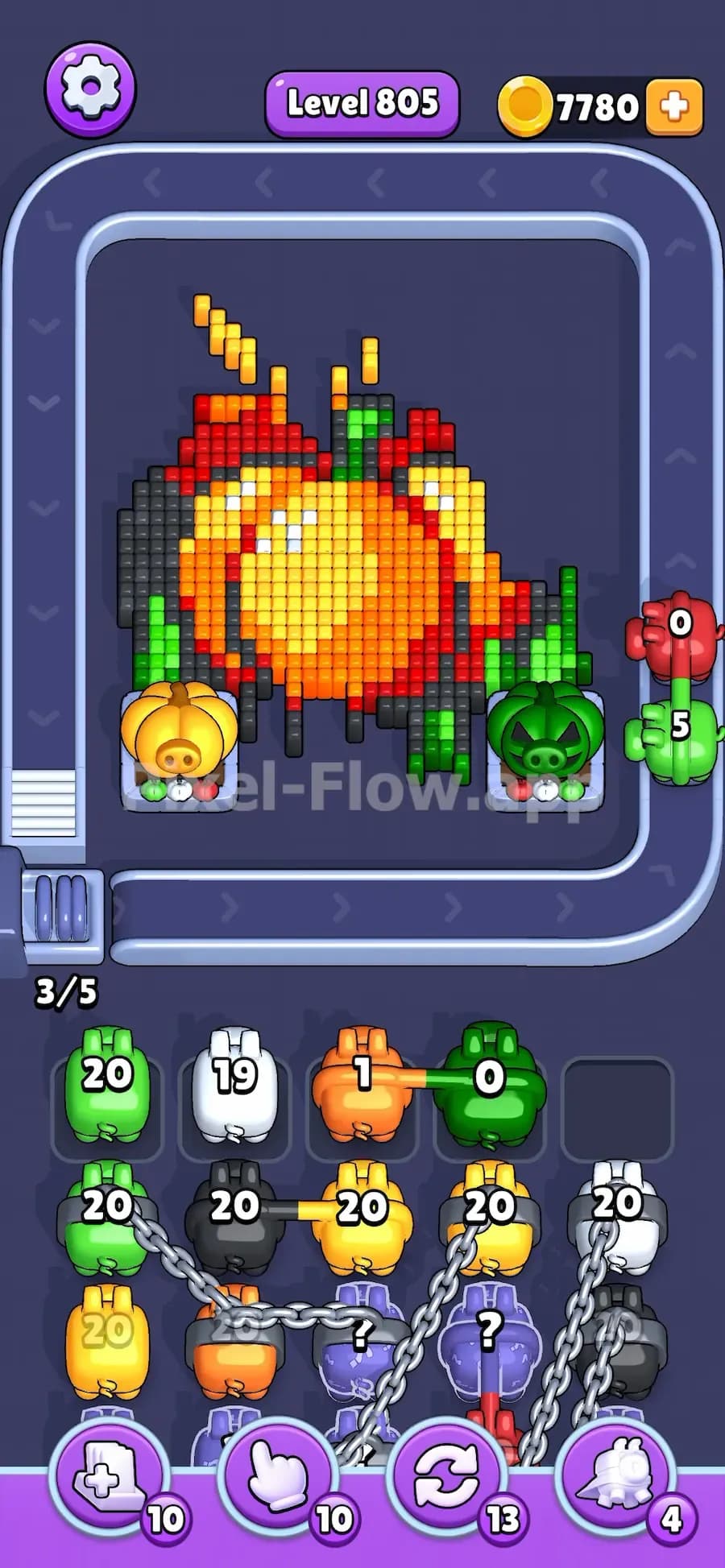
They can trap useful pigs behind the queue while the board is asking for their color. For example, you may need a Blue Pig right now, but if that blue pig is shackled behind two other pigs, you have to clear those pigs first. If those front pigs cannot clear their own colors, your slots start clogging fast.
Shackles make the order matter more than usual.
You are not just asking, “Which color can clear pixels now?” You are asking:
Bad move: sending random pigs while the shackled pig you need sits trapped.
Good move: clearing the pigs in front of the shackled one, even if that means taking a slower route for a few moves.
Pro-tip: If a shackled pig has a big number, do not rush to free it unless the board has enough matching pixels ready. A freed pig with 40 ammo can still become a problem if only a few matching pixels are available. Clear a bit of the board first, then let that chained pig come forward when it can actually finish its job.
Shackles turn Pixel Flow into a queue puzzle. Clear the front, free the chained pigs, and stop the waiting slots from choking.