
The U.F.O. is not sitting there for style. It is stealing the middle of the board.
That is the first thing to understand. When the U.F.O. appears in Pixel Flow, the center blocks are usually hidden underneath it, and those blocks are often required to finish the level. You can clear the outside colors for a while and feel like the run is going fine, but if the U.F.O. stays in place too long, your piggies eventually run out of clean targets.
Then the slots start filling.
Then the level gets ugly.
The U.F.O. is a color-seat lock. It wants specific pig colors to “sit” on it before it flies away.
Use them too early and they may waste ammo. Save them too long and the board may choke. Timing matters.

The U.F.O. is a blocker feature that covers part of the board. It hides pixels underneath it, so you cannot fully solve the level until it leaves.
Most blockers in Pixel Flow ask you to clear something directly. The U.F.O. works differently. You do not simply hit the ship until it disappears. You need to satisfy its colored seats.
Each seat on the U.F.O. represents a pig color it wants. Once the needed pig colors are used correctly, the U.F.O. flies away. After that, the hidden center blocks become playable.
That is the payoff.
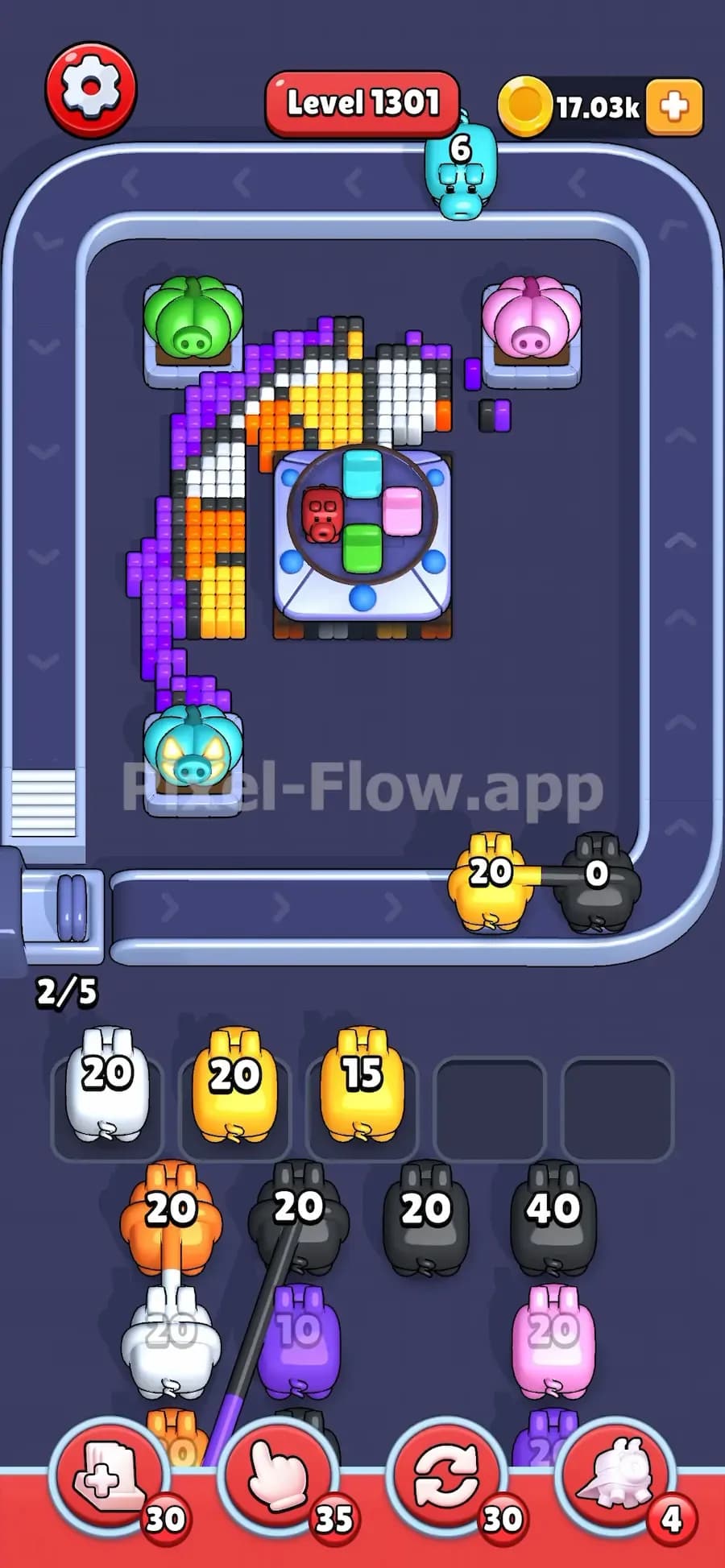
In this level, the U.F.O. wants:
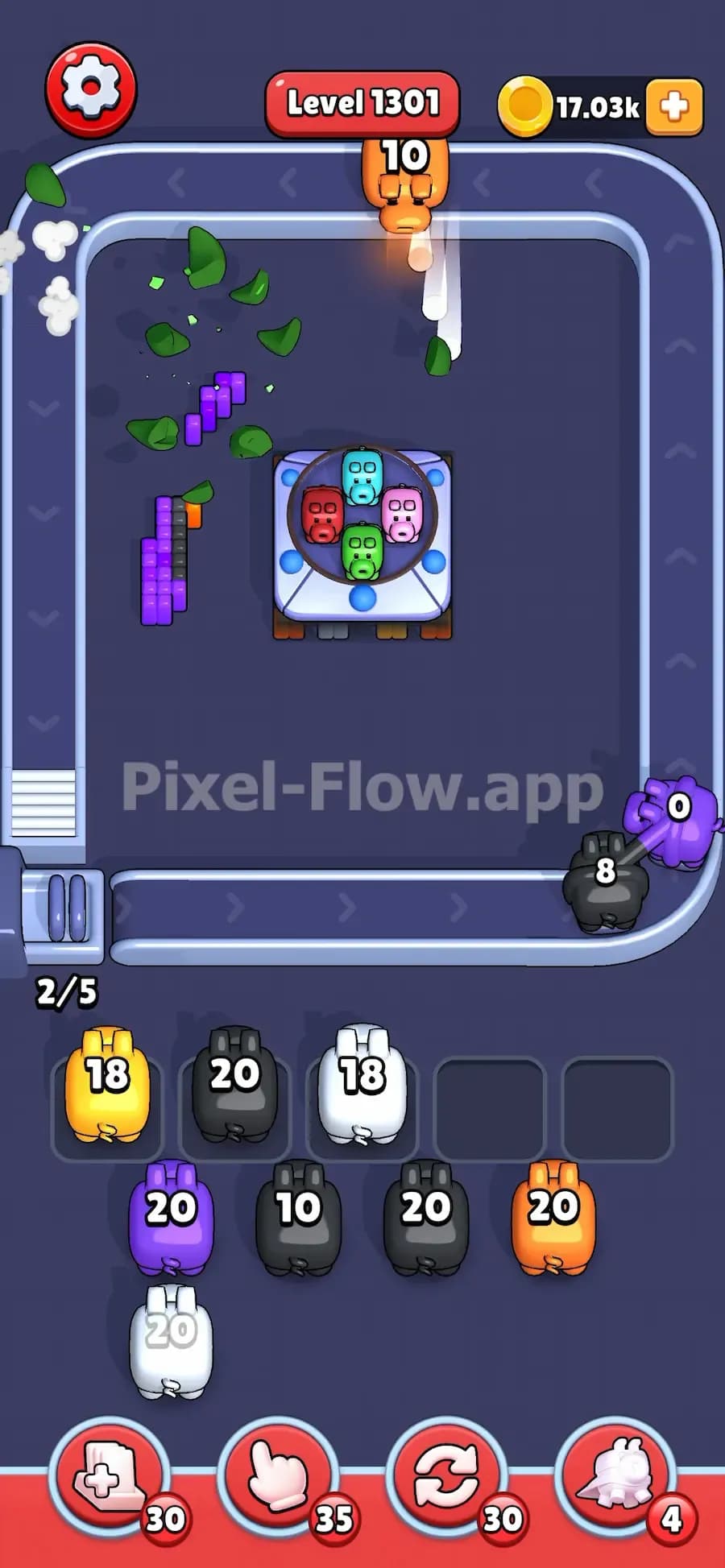
Here is the clean version:
Simple rule. Mean board design.
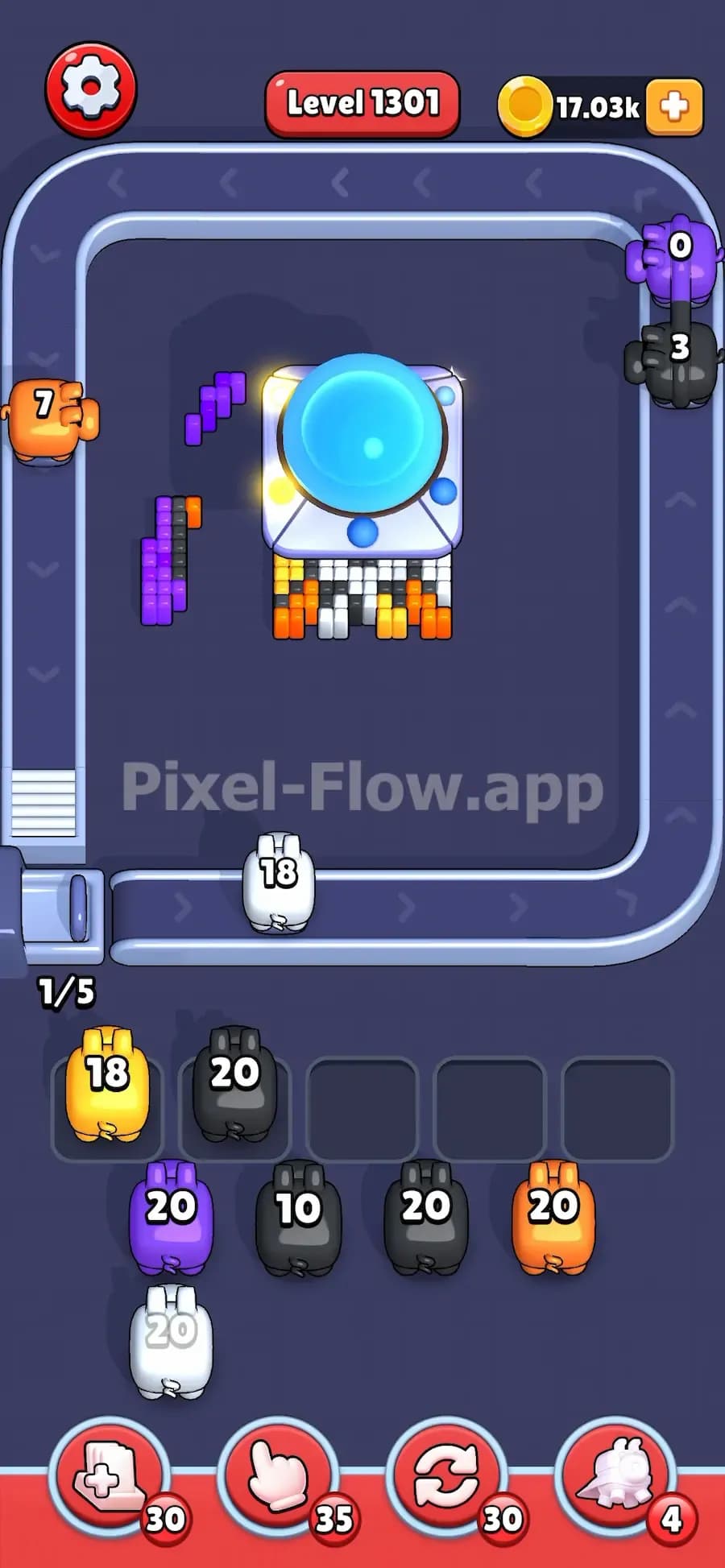
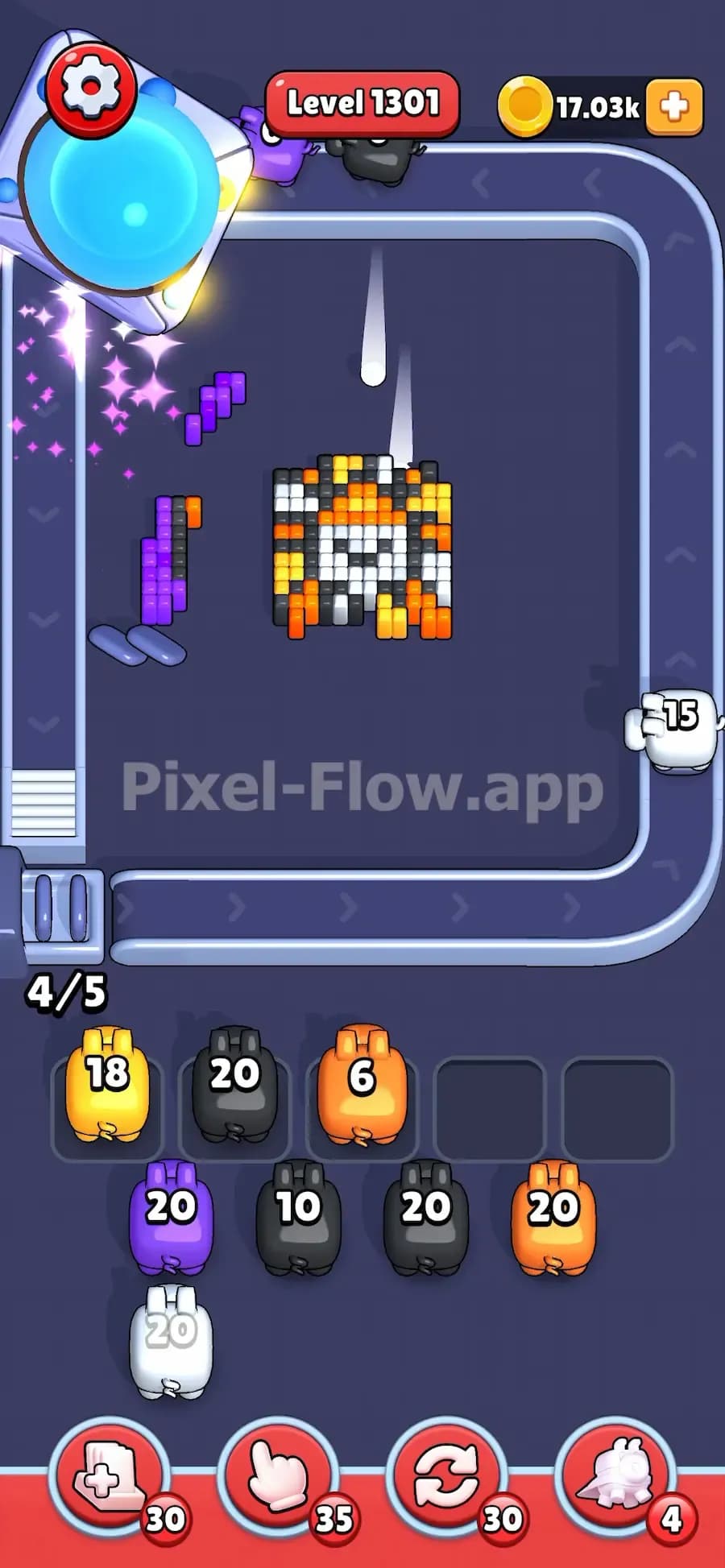
The U.F.O. becomes dangerous because it blocks the exact area you need later. Pixel Flow boards are layered, so the outside colors often protect or delay access to the important center pieces. If the center stays covered, you are playing with less board than you think.
That is why the level can feel fine at first. You clear purple, orange, white, yellow, and black. Plenty of pixels disappear. The board looks cleaner.
But the U.F.O. is still sitting there.
Bad sign.
If your required Red, Green, Blue, or Pink piggies appear before those colors can hit useful pixels, do not panic-tap them. A piggy with no good target can clog a waiting slot, and Pixel Flow punishes that fast. The game’s normal pressure already comes from piggies needing matching pixels, ammo counts, and limited waiting slots, so any feature that hides part of the board makes target planning harsher.
The U.F.O. is dangerous because it creates fake progress.
You can clear a lot and still be losing.
That sounds weird, but it is exactly how this feature works. The outside colors are usually available first. They give you something to do. They open space. They make the board feel active. But if none of those moves help seat the required pig colors, the center blocker stays alive.
And if the center blocker stays alive, the hidden blocks stay hidden.
That means your late game becomes cramped. You have fewer pixels to hit, fewer safe piggies to send, and less room for error. Once the queue starts giving you colors that only work under the U.F.O., you are stuck waiting for a ship that should already be gone.
The biggest threats are:
Hidden center pixels The board is not fully available until the U.F.O. leaves.
Required pig colors Some piggies matter more because they fill the U.F.O. seats.
Outside color bait Easy colors like purple, orange, white, yellow, and black can drain moves without solving the center.
Waiting slot pressure Required piggies sent too early can sit with leftover ammo.
Late-board collapse If the ship leaves too late, you may not have enough clean moves left to finish.
The feature is not hard because the rule is confusing. It is hard because the board asks you to prepare the rule before you can use it.