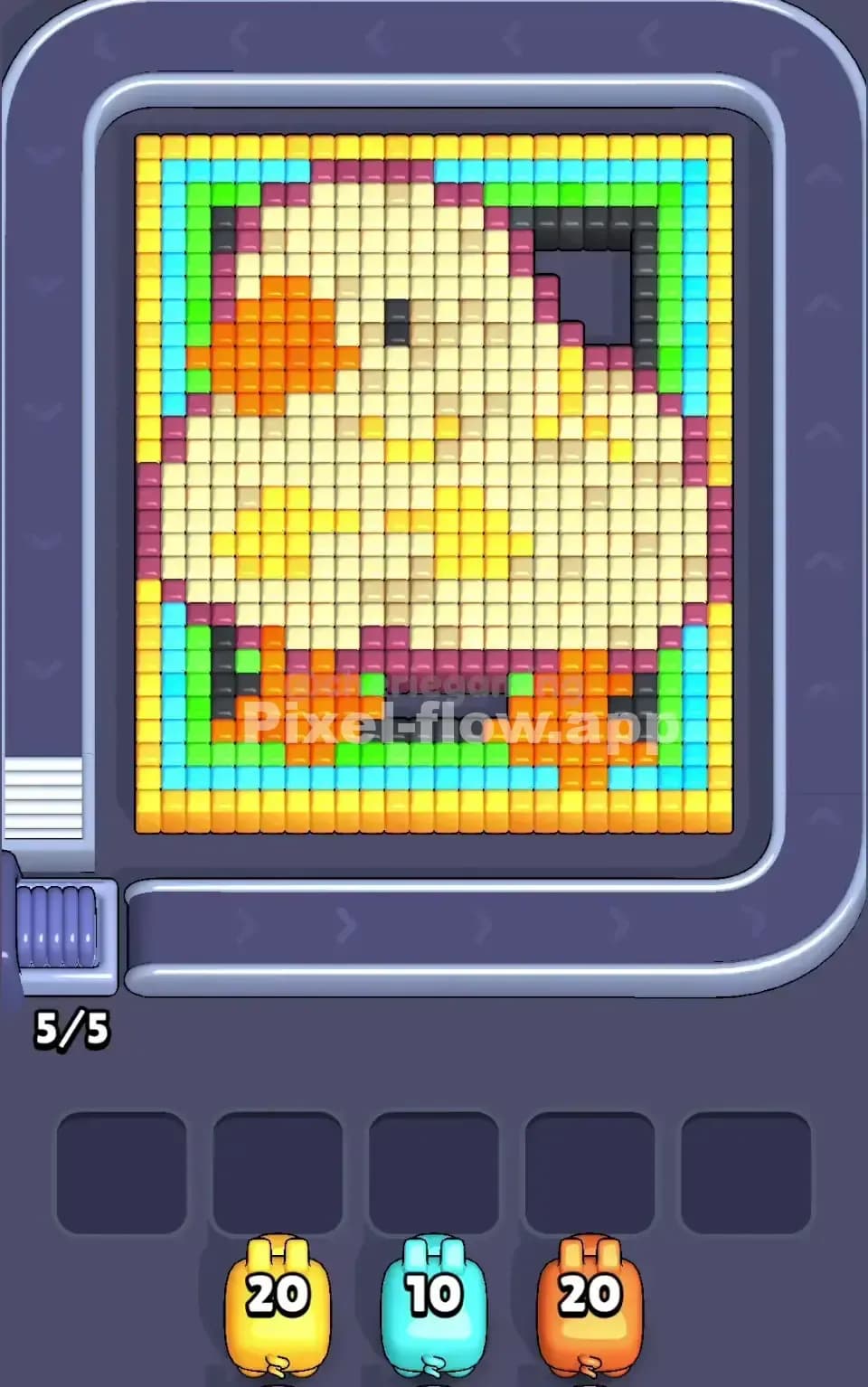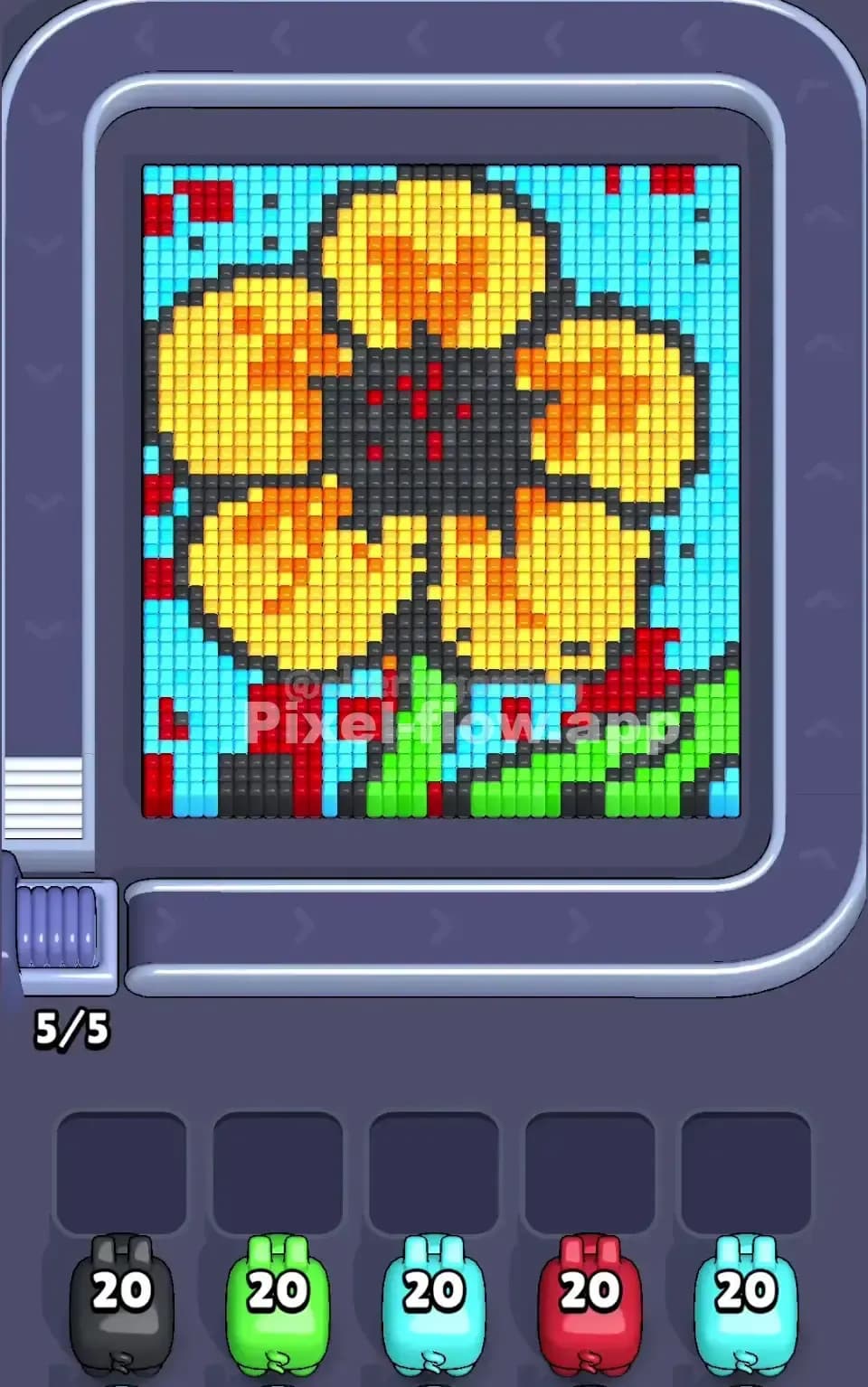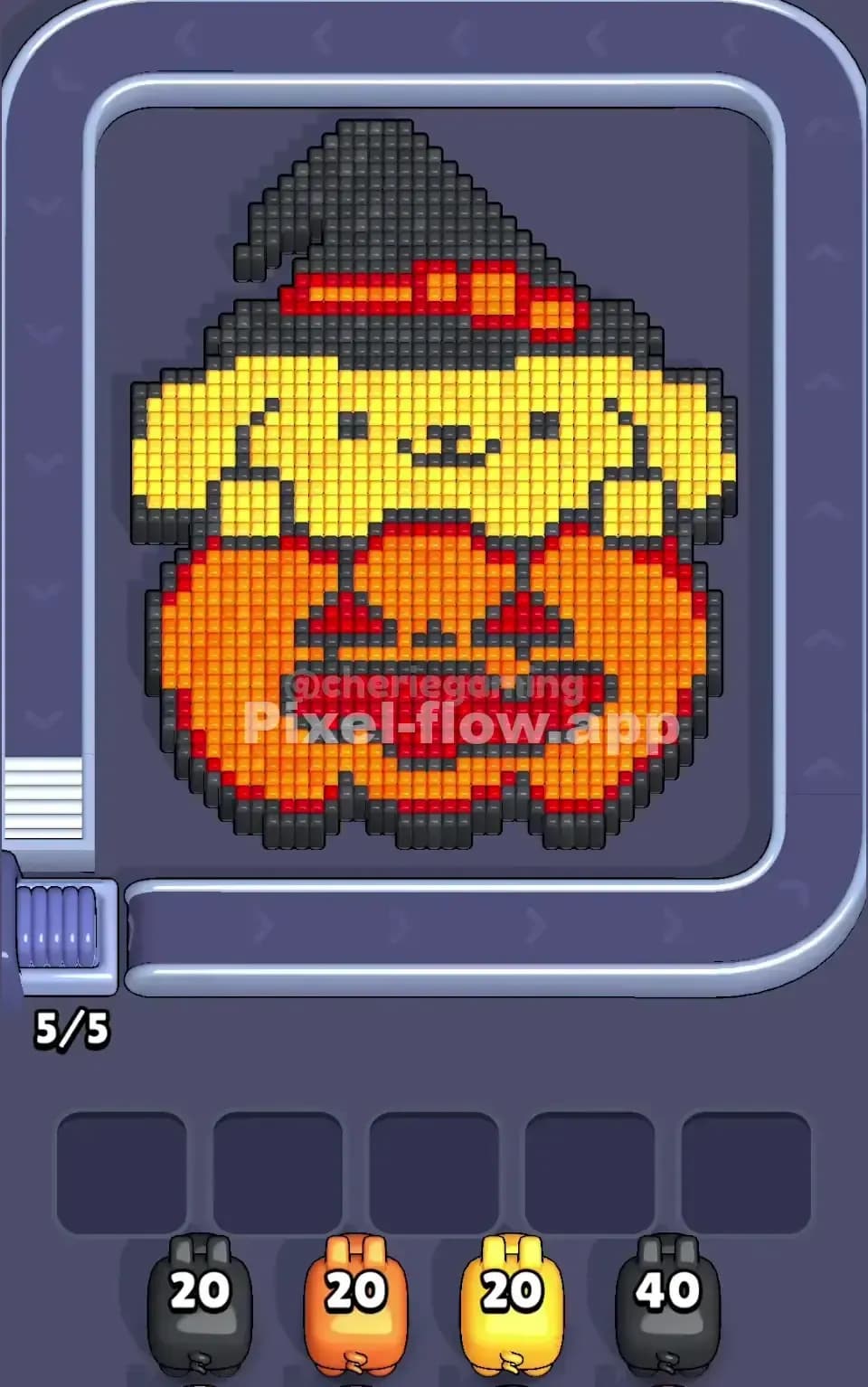

That giant 90 sitting on the board is not decoration. It is the wall between you and the pixels you actually need.

Ice Blocks in Pixel Flow cover the board itself. They freeze pixels under a blue layer and stop you from shooting those hidden pixels until the ice counter hits zero. You do not aim at the ice. You do not need a special ice pig. You break it by destroying normal pixels anywhere on the board.
That sounds easy.
It is not.
The problem is the board usually gives you only a thin strip of exposed pixels at the start. Your pigs have ammo. Your waiting slots are limited. If you send the wrong pig too early, it cannot spend its ammo, gets stuck, and starts clogging your queue. Do that a few times and the level collapses fast.
Ice Blocks are board blockers feature. They sit over pixels and hide them from play.
Here is the basic rule:
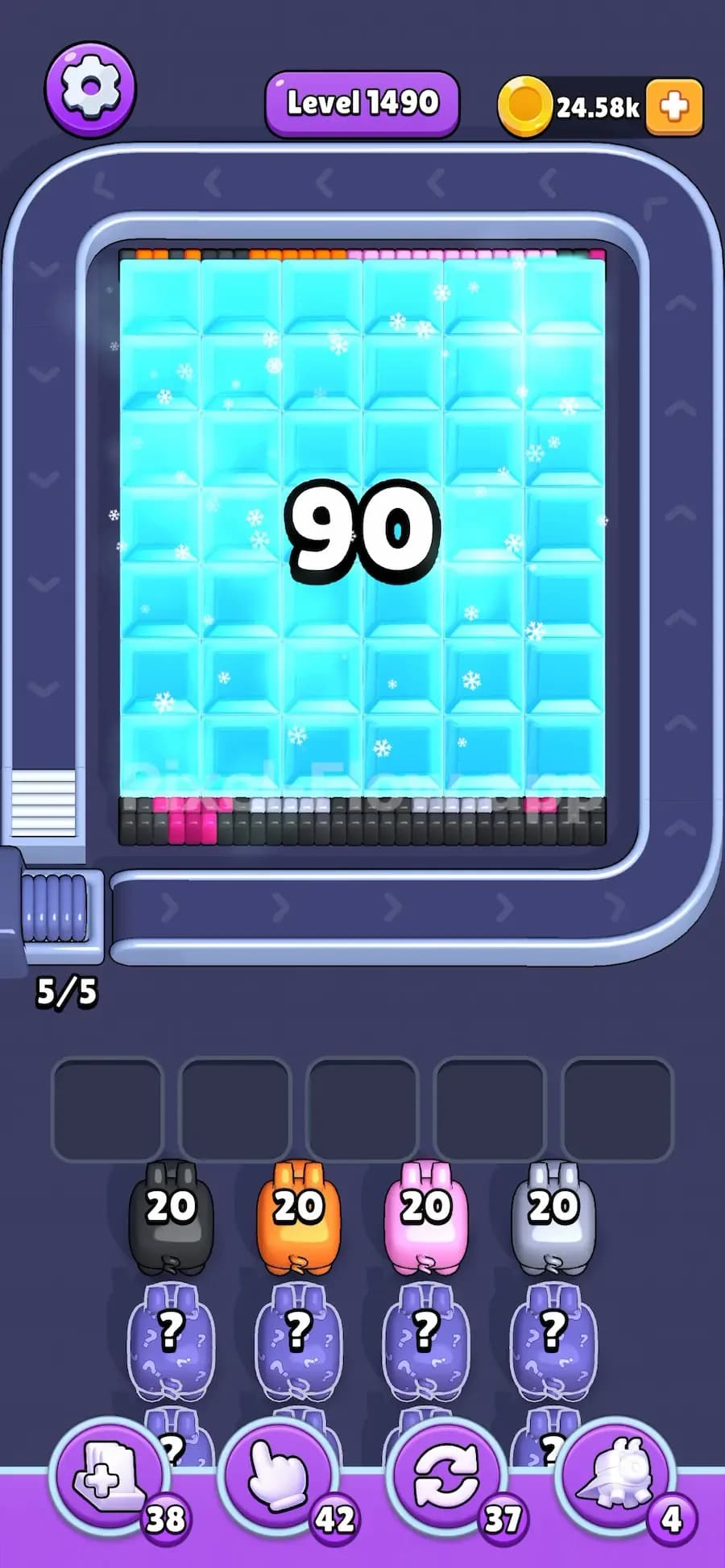
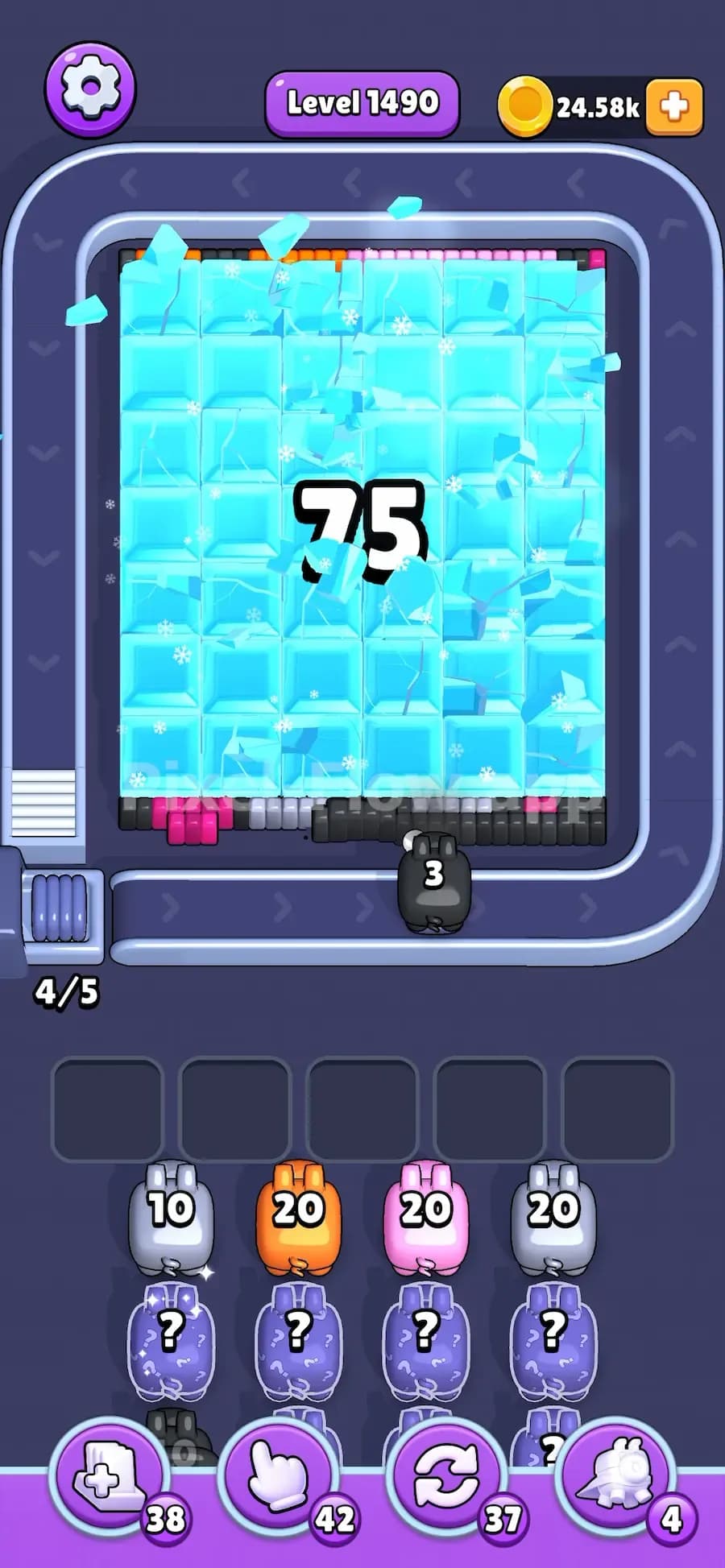
In the screenshot, the board shows a huge 90 in the center. That means you need to destroy 90 pixels before that ice layer shatters. The pixels can be any color. Black, orange, pink, white, anything. As long as a pixel gets destroyed, the counter goes down.
That is the key detail. The ice does not care what color you clear. It only cares how many pixels you destroy.
Ice Blocks feel similar to Frozen Pig, but they attack a different part of the level.
Frozen Pig blocks pig release. It freezes a pig in the queue and says, “Clear enough other pigs before this one joins the run.”
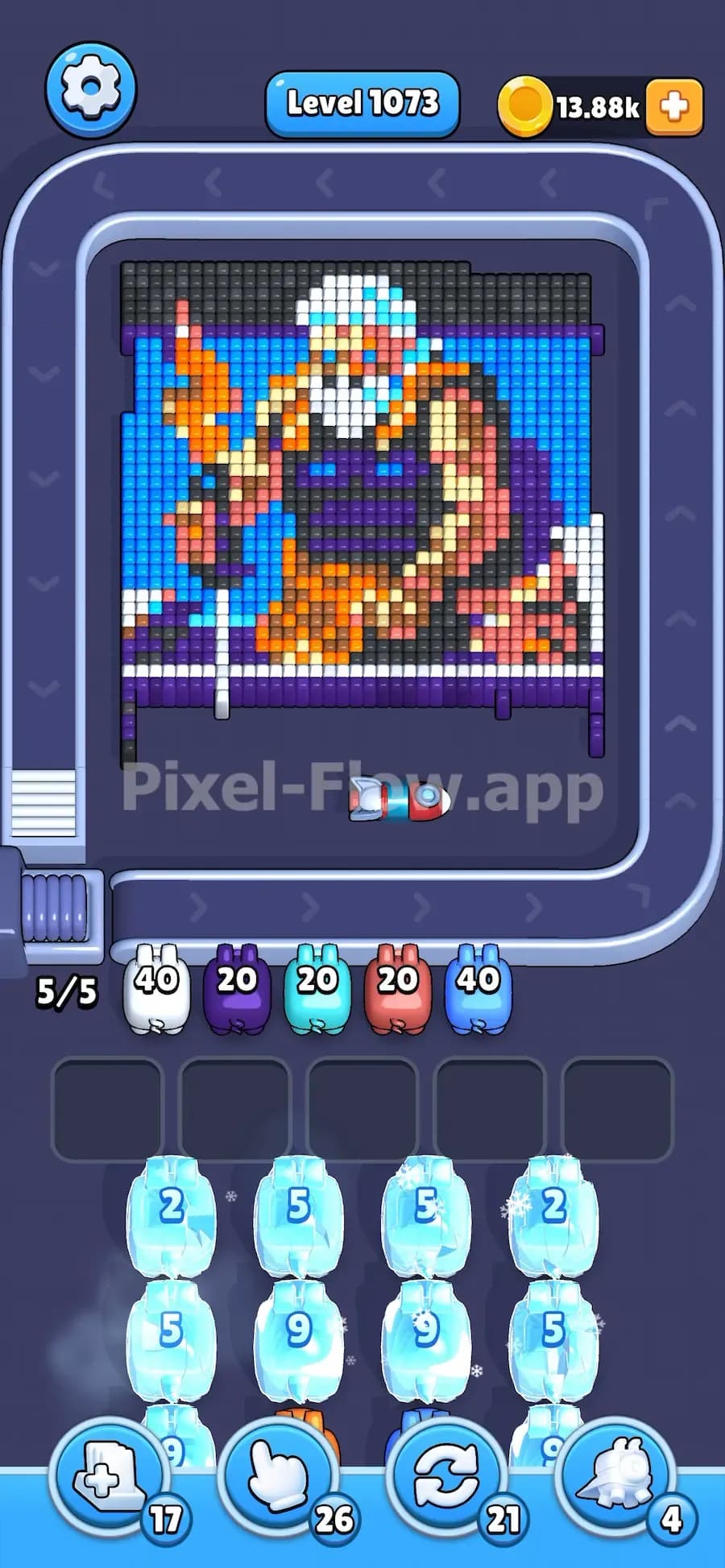
Ice Blocks block the board. They hide pixels and say, “Clear enough exposed pixels before you get access to the real board.”
The difference matters.
With Frozen Pig, you are trying to free a trapped pig. With Ice Blocks, you are trying to open the board before your queue jams.
Ice would be simple if the board gave you tons of exposed pixels. But Pixel Flow rarely does that on hard boards.
Most ice levels start with a small bottom strip or a few exposed pockets. The rest is covered. That means your first goal is not “clear everything.” Your first goal is to break enough visible pixels to crack the ice.
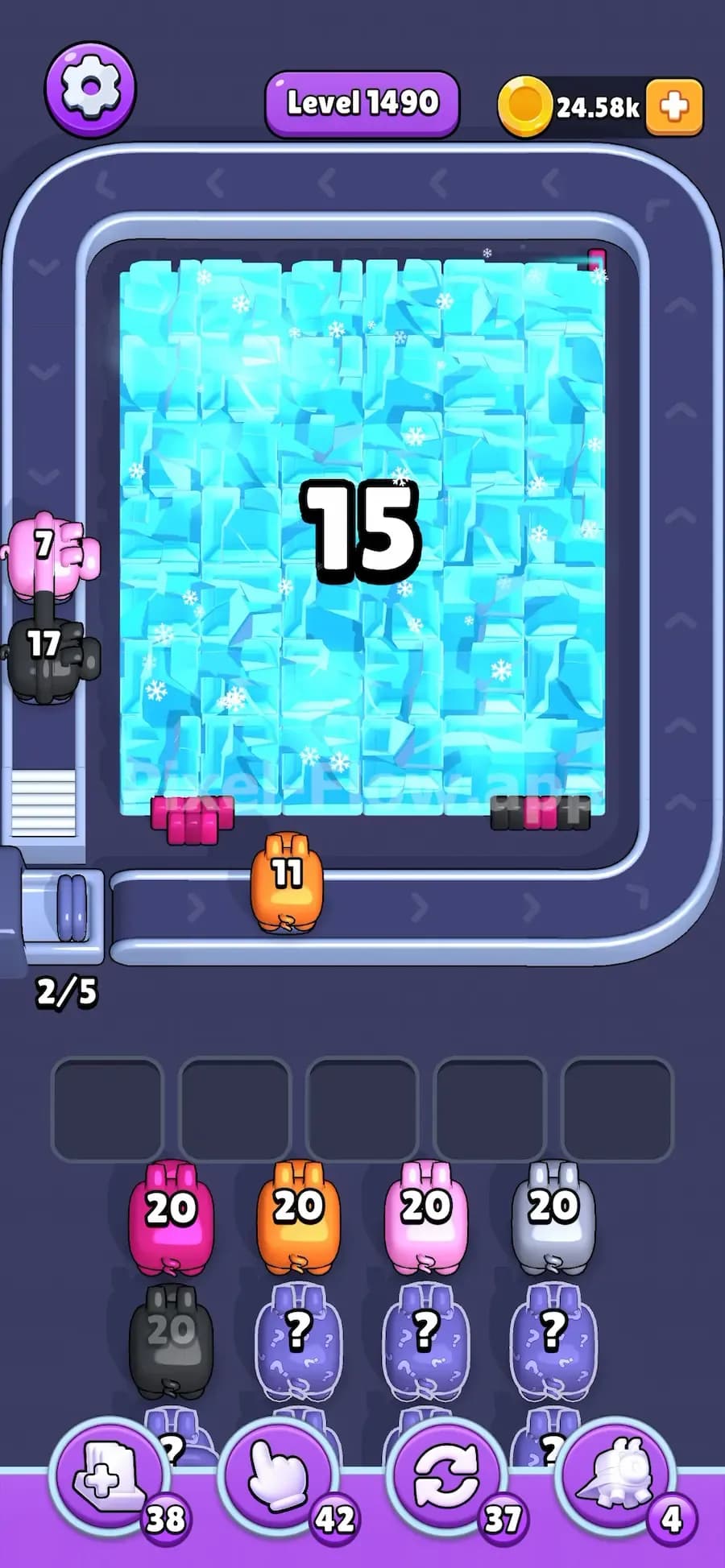
This creates three problems at once.
A 20 black pig is great if there are at least 20 accessible black pixels. But if there are only 6 black pixels exposed, that pig will clear 6, then sit around with 14 ammo left. Now it needs a waiting slot. If the next three pigs also cannot finish, your bottom row fills up and the level starts choking.
That is how Ice Blocks beat players. Not with the ice counter itself. With the shortage of safe moves before the ice breaks.
Before sending your first pig, read the board like this:
Find the ice number. A low number like 30 means the ice should break soon. A high number like 300 means the board will stay frozen for a while.
Check the exposed colors. In the screenshot, the visible strip includes colors like black, orange, pink, and white. Those are your starting colors.
Check pig ammo. A pig with 20 ammo needs 20 matching pixels to leave cleanly. If it cannot find enough, it becomes a slot problem.
Look at the next hidden pigs. Mystery pigs or covered pigs make planning harder. That means your first few moves must be extra safe.
Protect the waiting slots. Your slots are not storage for random mistakes. They are emergency space. Treat them like health points.
That last part matters most. A frozen board gives you fewer ways to fix bad taps, so every slot you waste early makes the second half harder.
Some Pixel Flow levels use several Ice Blocks at once. You might see counters like:
These usually open the board in stages. The first ice layer breaks, then a new section becomes playable. Then you keep clearing pixels to break the next one.
This kind of board is a slow reveal. The full solution is hidden at the start, so you cannot plan the whole level from one screen. You plan the first break, then adjust.
The mistake is trying to save every pig for later. You need to spend the right pigs now to reach the next stage. If a color is exposed, use it. If a color is still buried under ice, do not feed that pig into the mess unless you have a clean reason.
When the ice counter is close to breaking, do not send your biggest pig unless it matches the exposed color perfectly. Send a smaller or safer pig first, crack the ice, then let the big pig use the newly revealed pixels.
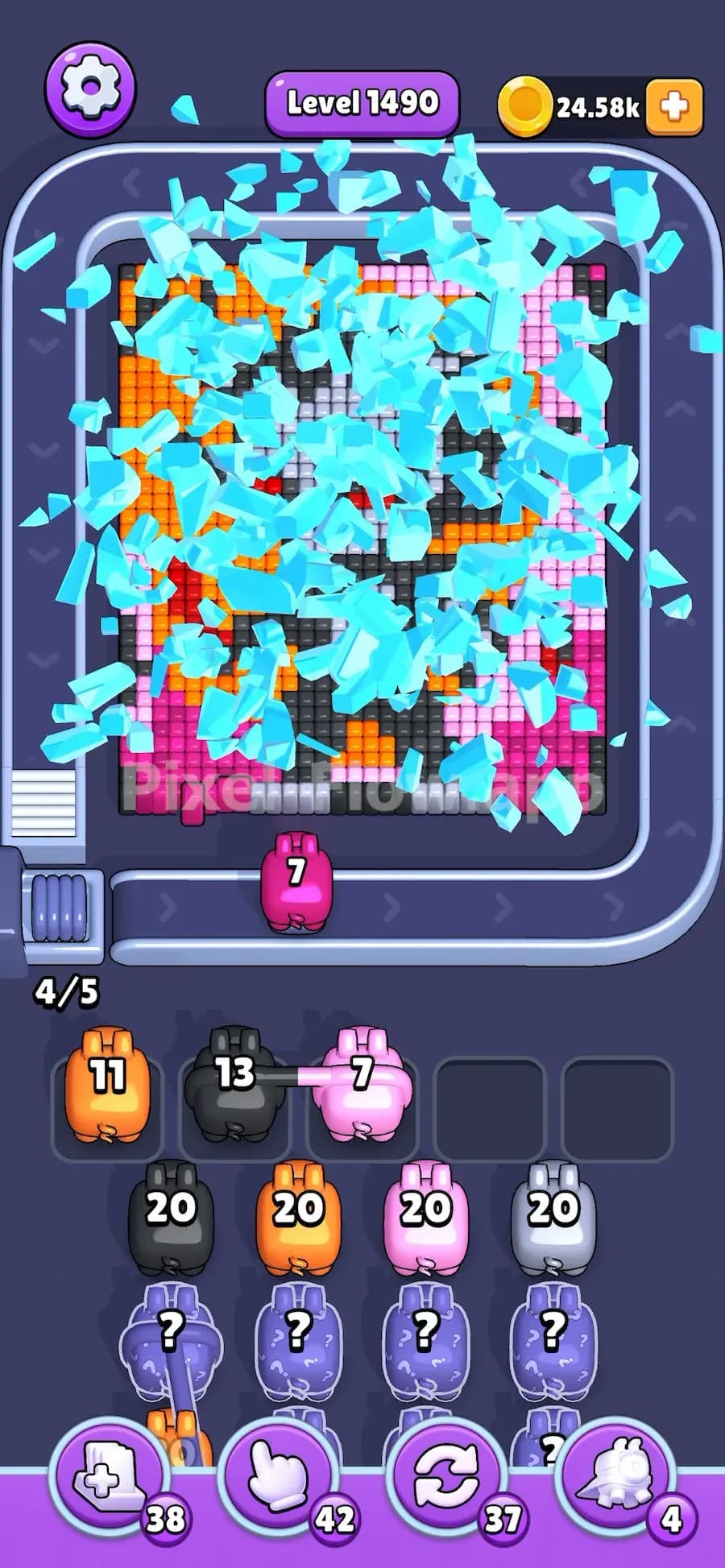
This feels weird because you are delaying a strong move, but it keeps the big pig from wasting a waiting slot right before the board opens.
That tiny delay saves runs.