
One wrong Key can ruin the whole level.
That is the nasty part of Locks and Keys in Pixel Flow. The feature looks simple at first: release Keys, open Locks, free the piggies. Easy. Then the game hides one extra Lock behind a pig column, spends your only Key on the wrong side, and suddenly every useful pig is trapped while your waiting slots are full.
Dead board. No moves. Restart.
Locks and Keys is a piggy release obstacle feature. It blocks piggies inside columns until you release enough Keys from the board. Each freed Key can open one Lock, but it does not always open the Lock you want. That is the trick.
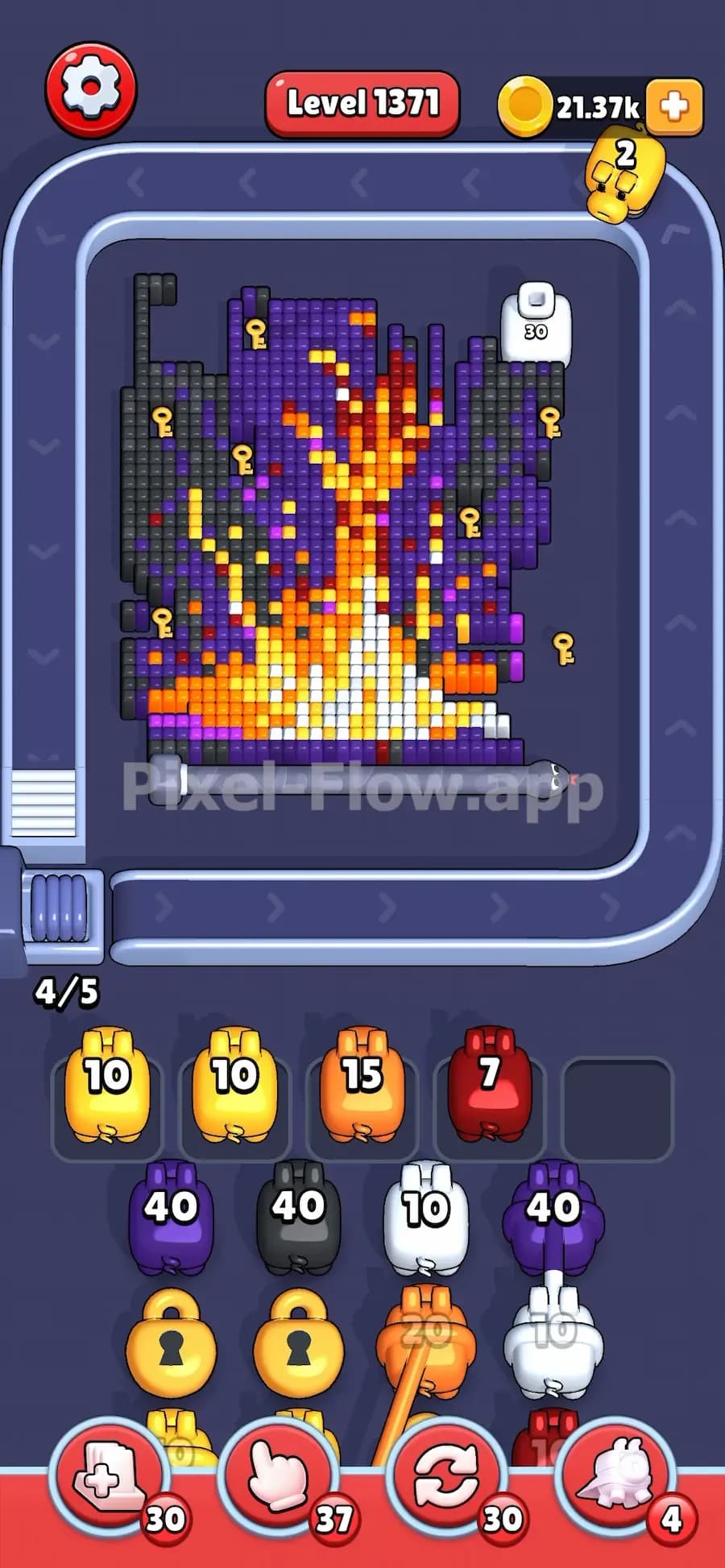
In normal Pixel Flow levels, you are mostly thinking about color order, ammo numbers, and whether a pig can clear enough matching pixels before it gets stuck in a waiting slot. With Locks and Keys, the board adds another layer: some piggies are not even available yet. They sit behind Locks, and you must free Keys from the pixel art before those piggies can join the queue.
That means every Key has value. Waste one, and the level can collapse.
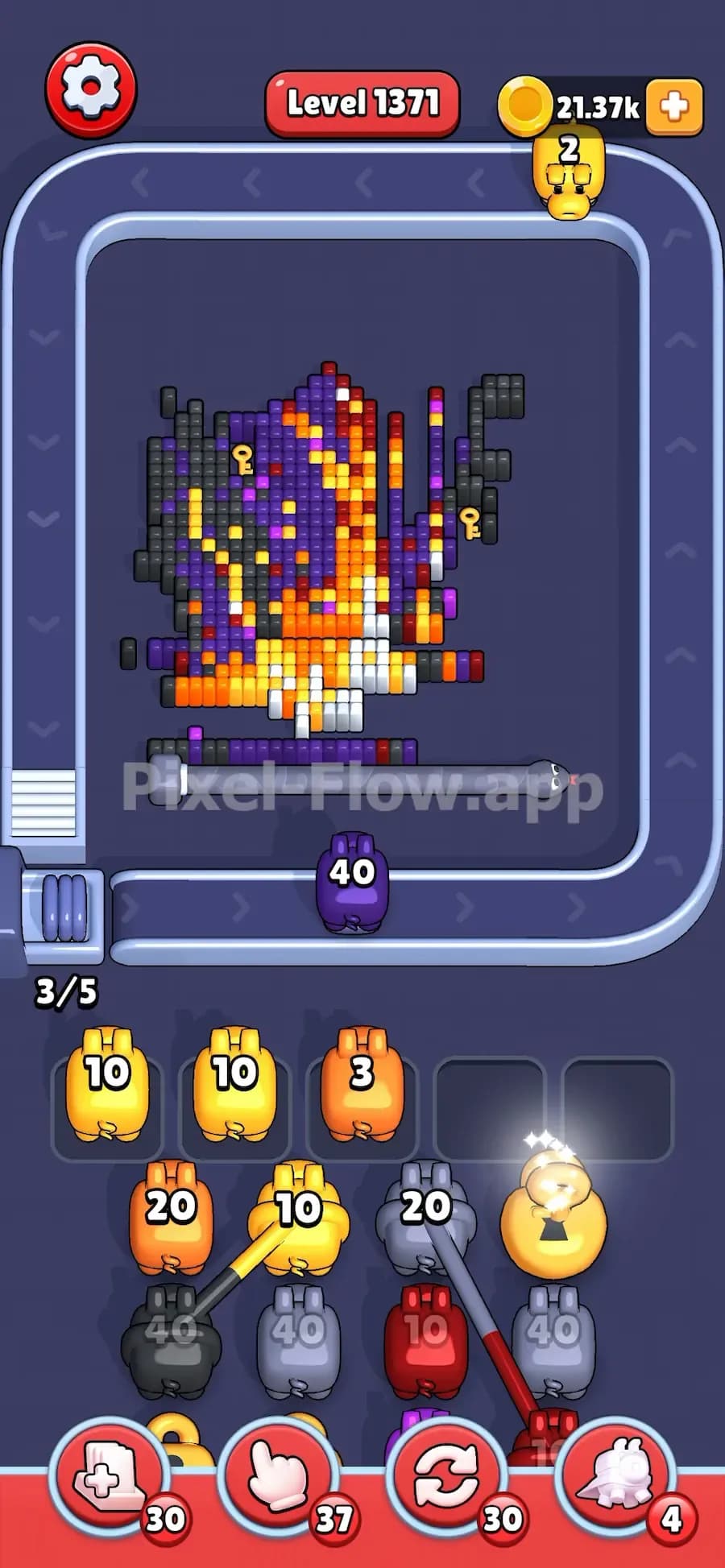
Keys start trapped inside the board. They are usually surrounded by pixels, blockers, or empty white sections that still need clearing.
Clear around a Key to release it. A Key becomes usable only when the pixels or obstacles around it are cleared enough. If it is still boxed in, it stays stuck.
A released Key opens one Lock. One Key equals one Lock. Do not treat Keys like decoration. They are limited tools.
Locks open only when they reach first in line. If a Lock has piggies in front of it, it will not open yet. The column must bring the Lock to the front before it can be opened.
Ready Locks open from left column to right column. This is huge. If several Locks are ready, the game spends the next Key on the leftmost ready one first.
No released Key means no opened Lock. A Lock can be sitting at the front, but if you have no available Key, it stays closed.
If all useful piggies are locked, the level can auto-lose. When the board gives you no playable pig and no way to free another Key, you are stuck.
The danger is not just that Locks block piggies. The real danger is that the game controls the order.
Say you release one Key. The first column has a Lock ready, but that column only gives you a pig that cannot clear anything useful yet. The second column has a Lock too, and behind it are the piggies you actually need to free more Keys.
Bad news: if the first column is ready and it sits farther left, your Key goes there.
Now you opened the wrong column. The second column stays closed. The piggies behind it stay trapped. The board still has Keys buried inside, but you cannot reach them because the colors you need are locked away.
That is how Locks and Keys turns a normal Pixel Flow board into a trap chain.
Do not start by tapping piggies. Start by reading the Locks.
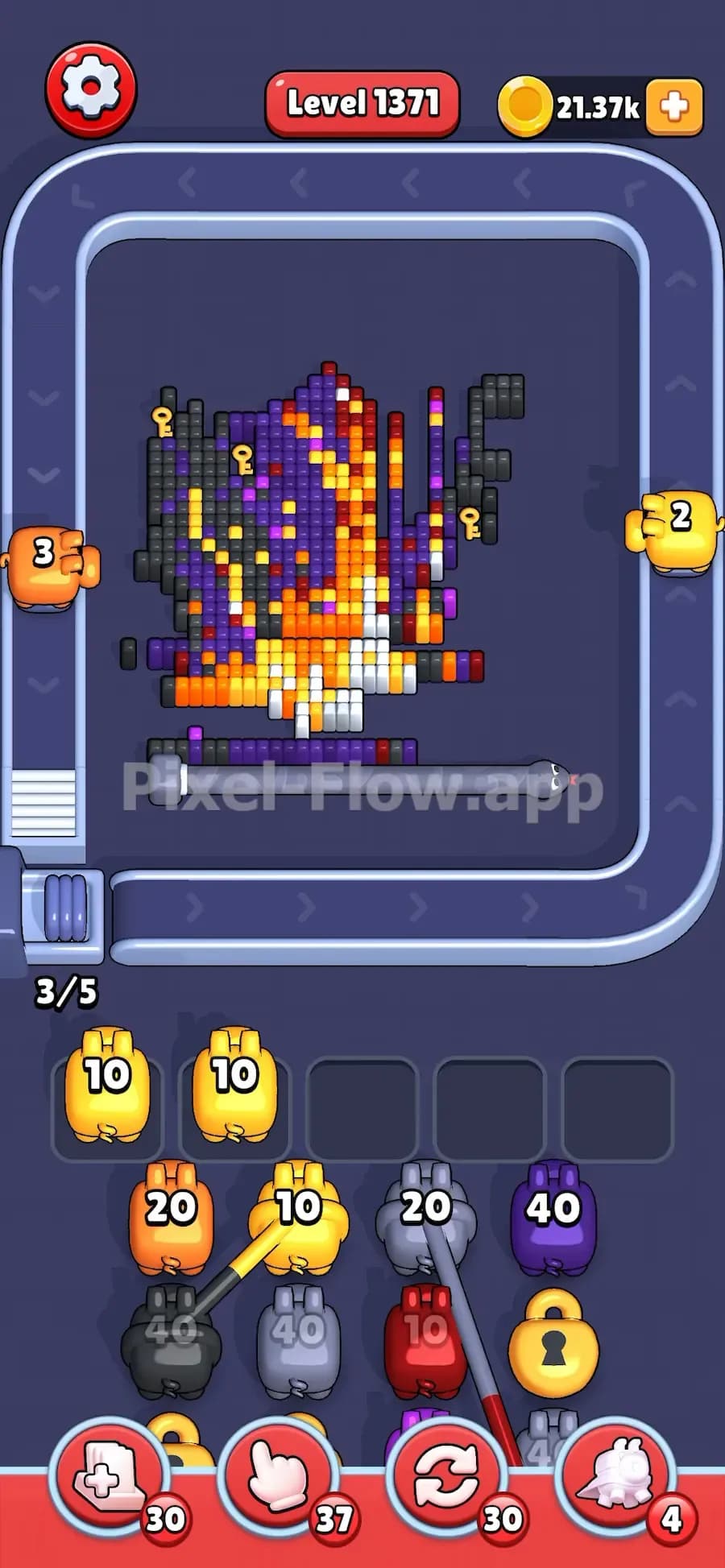
Look at three things:
In the screenshot, the visible Keys sit mostly on the right side of the pixel board. They are not free yet. They are surrounded by white pixels, so you need the right pig colors to cut them loose. At the same time, the left side has locked pig columns waiting to move. This means the level is asking you to build a chain.
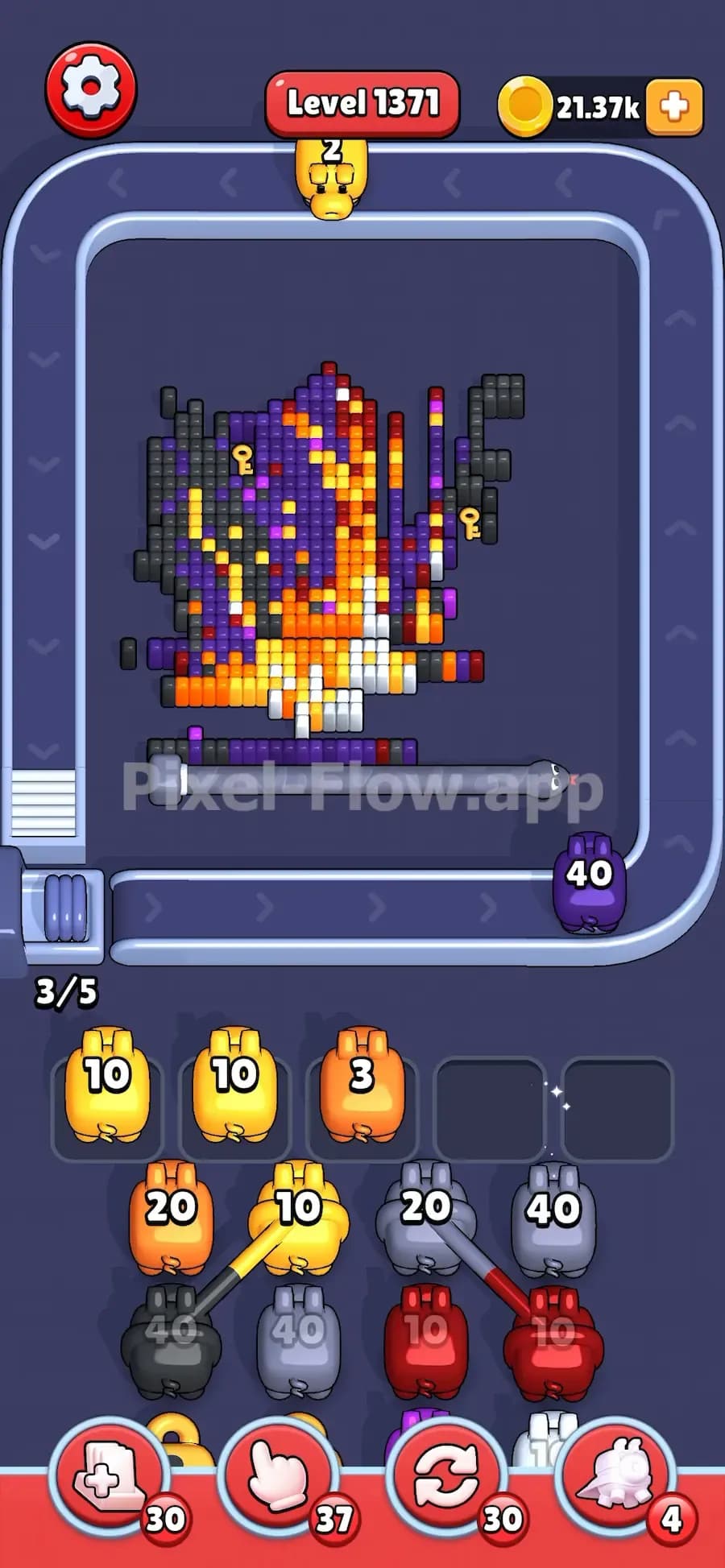
Free one Key. Open one useful Lock. Use the released piggies to clear more pixels. Free the next Key. Repeat.
Miss that order and the level gets ugly.
Find the easiest Key first. Scan the board before spending pigs. The easiest Key is usually near an open edge or surrounded by pixels you can already clear.
Check the left-to-right Lock order. Before releasing a Key, check which Lock will eat it. If the wrong column is first, hold off.
Do not clear piggies in front of a bad Lock too early. This sounds strange, but it matters. If clearing those piggies makes a useless Lock first in line, your next Key may get wasted.
Open columns that create more Keys. The best locked column is not always the biggest one. The best one gives you pig colors that help release the next Key.
Watch for hidden extra Locks. Some columns show one Lock, then hide another behind the piggies. If you open that column and hit a second Lock, you need another Key before the column becomes useful again.
Protect your waiting slots. Locks and Keys levels already reduce your options. Do not throw unmatched piggies into the waiting slots unless they will become useful soon.
The biggest mistake is freeing a Key just because you can.
Pixel Flow punishes that hard. A Key released at the wrong time may open a column you did not need yet. Then the column you actually needed stays closed, and the pigs inside it cannot help you clear the next Key.
Other bad habits:
If a pig has 40 ammo and only a tiny number of matching pixels are available, that pig is likely going to clog a waiting slot. In a normal level, that is bad. In a Locks and Keys level, it can be fatal.
Very hard Locks and Keys levels are usually chain puzzles. The board does not want you to open every Lock as soon as possible. It wants you to open the correct Lock first.
Use this order:
That sounds slow, but it saves runs.
The worst version is when the first column has 2 Locks, with the second one hidden behind piggies. The second column may only have 1 Lock, and behind it are the piggies needed to release more Keys. If you spend your first Key on the first column, you may hit the hidden second Lock and stall. If you can guide the board toward opening the second column first, the level becomes much cleaner.
Count Keys like they are pig ammo.
If you see one released Key coming soon, do not ask, “Which Lock can I open?” Ask, “Which Lock gives me the next Key?” That one question fixes most bad plays. Sometimes the right move is to avoid clearing piggies in front of the left column because doing so would make that Lock first in line and waste your Key.
Messy trick, but it works: leave a bad column slightly blocked while you clear toward a better Key path. Then release the Key when the column you actually want is ready to receive it.
Keys are not rewards. Keys are route control.
Open the Lock that gives you the piggies needed to free the next Key. Keep the chain alive, keep the waiting slots clean, and do not let the leftmost useless Lock steal your progress.
That’s how you beat Locks and Keys without turning the board into a pig traffic jam.