Pixel Flow Level 316 Solution | Pixel Flow 316 Walkthrough
How to beat Pixel Flow Level 316: Video solution & walkthrough. The fastest way to pass Pixel Flow 316.
Is this the wrong level layout?🤔
Pixel Flow randomizes levels for different players. Don't worry, just upload a screenshot of your board, and our AI will find the correct video instantly.
Pixel Flow Level 316 Walkthrough
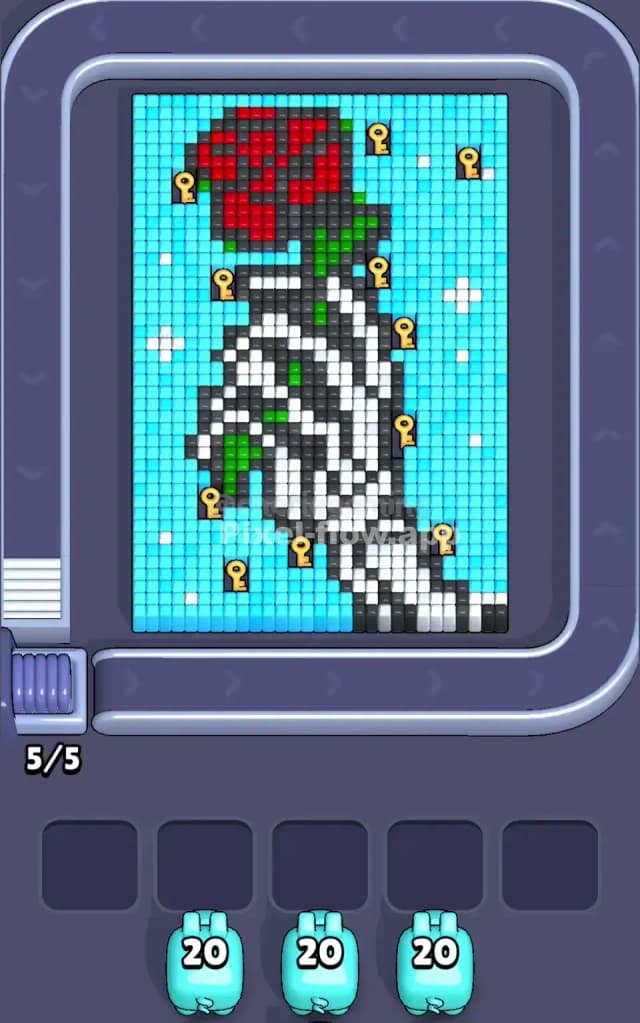
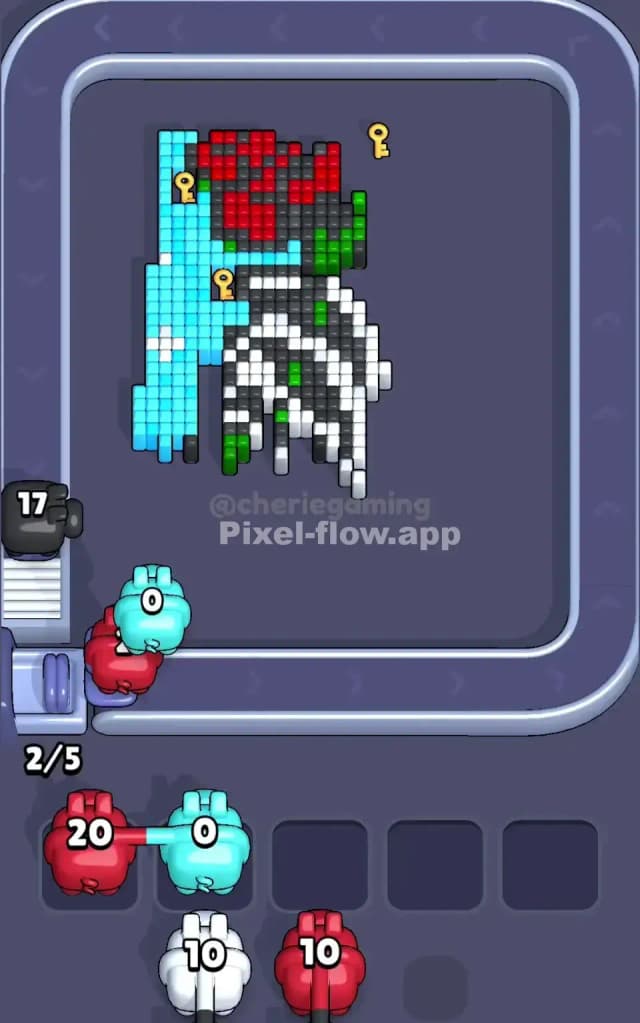
This level features a spooky yet romantic image: a skeletal hand clutching a red rose against a bright blue sky. The main challenge here is the massive amount of background color that dominates the board, surrounding the central figure.
To beat Pixel Flow Level 316, you need to efficiently clear the cyan background to access the black outlining and white bone structure beneath. The rule is simple: match the pig color to the pixel color. However, because the background is so large and uniform, you have to be careful not to clog your waiting slots with non-cyan pigs early on.
Is this level hard? No. It is not a very hard level. It's actually quite straightforward because the colors are segregated well. You mostly deal with one massive color block first, then move inward.
Pixel Flow Level 316 Overview
The artwork depicts a white skeleton hand rising from the bottom right, grasping a red rose with green leaves near the top left. The entire scene is set against a solid, light cyan blue background. Scattered throughout this blue sky are several golden key locks, meaning you will need to clear specific blue sections to "unlock" deeper layers or new colors.
The asymmetry here is distinct. The skeleton hand is heavy on the bottom right, while the rose sits high on the top left. The blue background, however, is everywhere. It fills every gap between the fingers and surrounds the rose completely. This means your early game is almost entirely focused on blue management. You won't be touching the rose or the bones until a significant chunk of that sky is gone.
Step by step solution walkthrough for Pixel Flow Level 316
First Color Zone to Erase in Pixel Flow Level 316
Start immediately with the Cyan Blue Background.
This is the only logical opening move. The game practically forces your hand by giving you three Cyan pigs with 20 ammo each right at the start. You need to focus on the large open spaces on the left and right sides of the artwork. Do not try to snipe the small blue pixels between the skeleton fingers yet. Clear the huge vertical columns on the far left and far right first.
Why? These large blocks act as "ammo dumps." They allow you to rapidly drain the high-ammo cyan pigs. If you try to target the tiny gaps between the fingers first, you risk missing shots or running out of valid targets while the pig still has ammo, forcing it into a waiting slot. Clear the big chunks to keep your slots empty.
How to pass Pixel Flow Level 316 without power ups or boosters
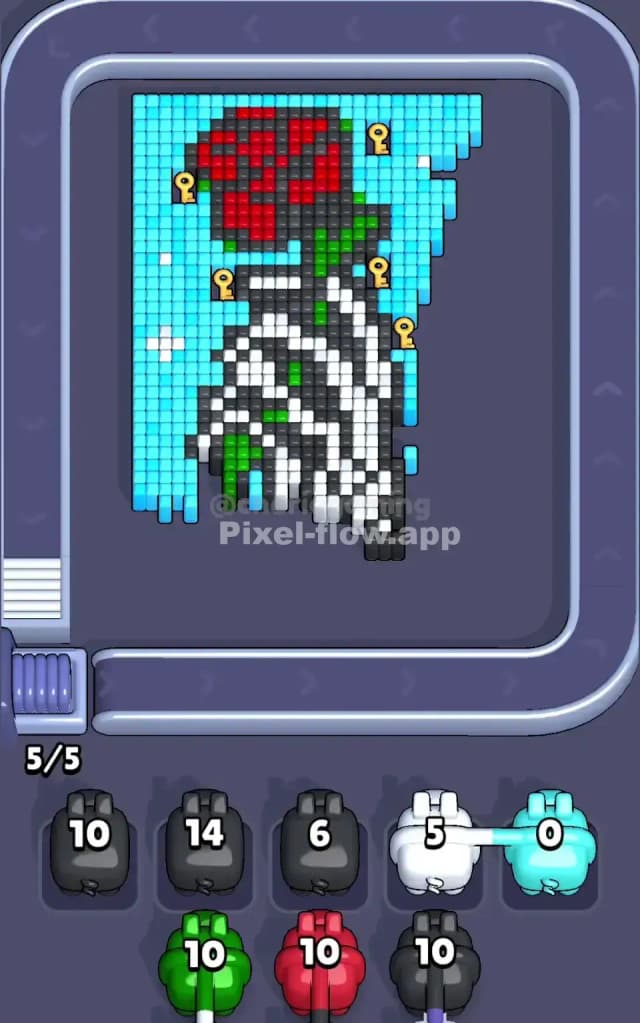
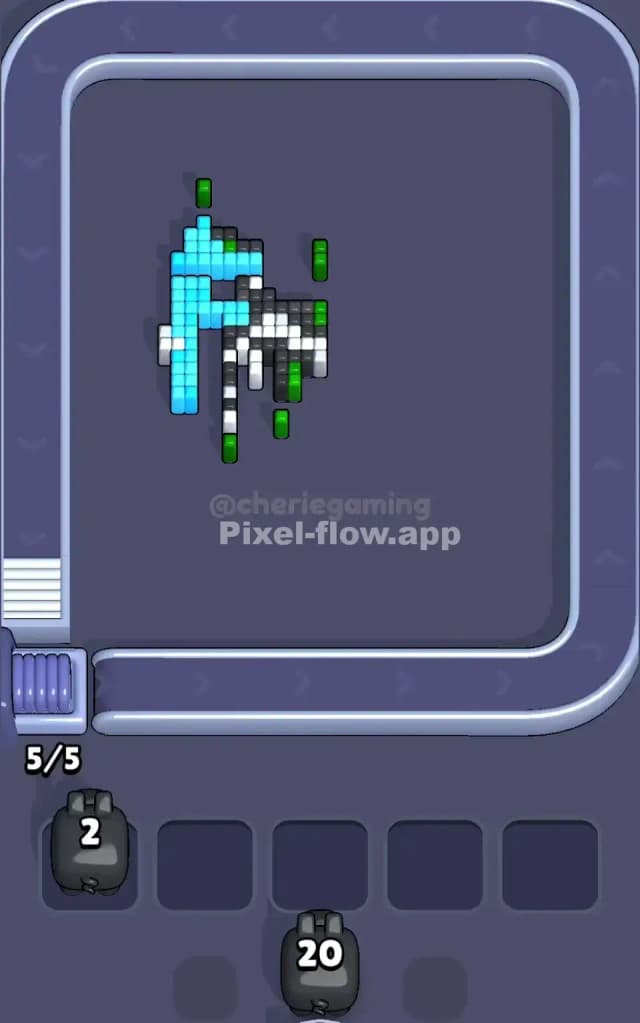
Once the blue sky is mostly gone, the board will look like a floating, pixelated skeleton hand. You’ll see the Black outline and the White bones become the new priority.
At this mid-stage, the conveyor belt will start mixing up the pig colors. You will see Red (for the rose), Green (for the leaves), White (bones), and Black (outlines).
Here is the trap: The Black pixels form the border of the hand and the rose stem. They are often thin lines. If a Black pig comes out with high ammo (like 20), be very careful. Do not tap it unless you see a thick cluster of black pixels (usually near the base of the hand or the center of the rose). If you tap a high-ammo Black pig for a single line of pixels, it will get stuck in your waiting slot with 15 ammo left, clogging your flow.
Prioritize White pigs when available. The bone structure is thick and blocky, making it easy to dump ammo. Save the Red and Green pigs for when the top left corner is fully exposed.
Last Details You Clean Up in Pixel Flow Level 316
As you near the end, you will likely be left with the Red Rose and the Green Leaves.
The final cleanup usually involves the intricate details of the rose petals. The red pixels are clustered tight, but they are often blocked by black outline pixels until the very end. Your last few moves will likely involve a Red pig cleaning up the flower head, or a Green pig sniping the final leaf stem.
Watch out for hidden pixels behind the "knuckles" of the skeleton hand. Sometimes a stray grey or black pixel hides there, preventing the level from finishing. Keep an eye on the bottom right corner where the hand fades out; it’s easy to miss a single block down there.