Pixel Flow Level 159 Solution | Pixel Flow 159 Walkthrough
How to beat Pixel Flow Level 159: Video solution & walkthrough. The fastest way to pass Pixel Flow 159.
Is this the wrong level layout?🤔
Pixel Flow randomizes levels for different players. Don't worry, just upload a screenshot of your board, and our AI will find the correct video instantly.
Pixel Flow Level 159 Walkthrough
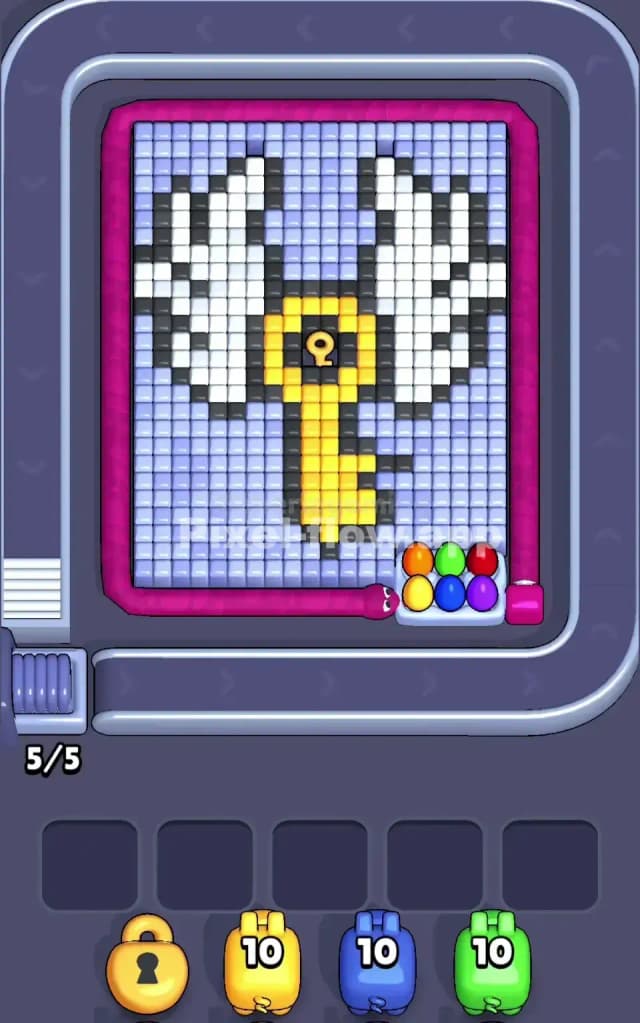
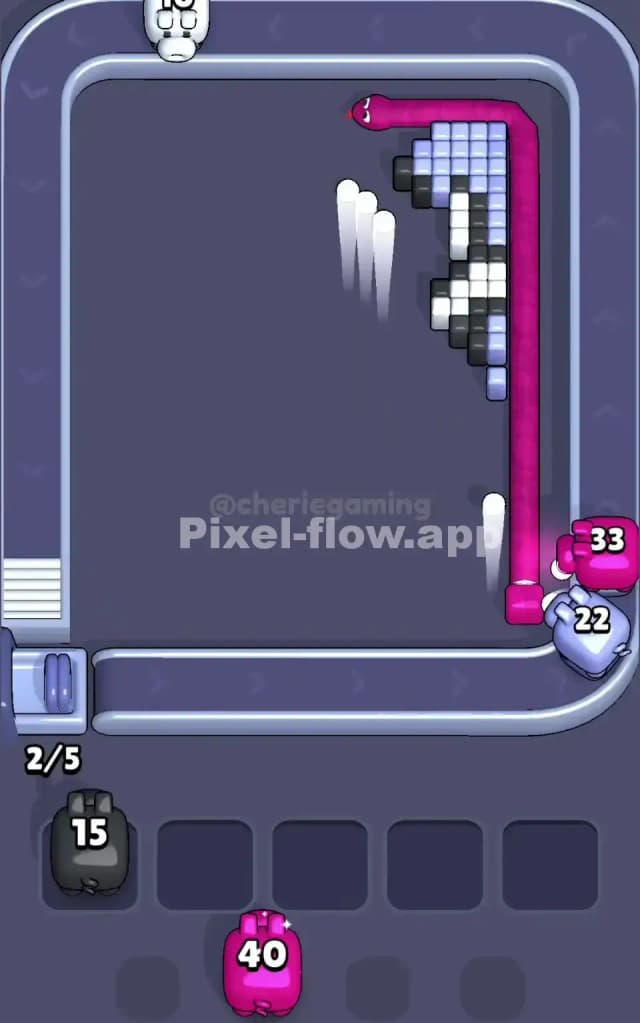
This level features a large, symmetrical image of a golden key with white wings set against a massive light blue background. The rules are standard but the volume of blocks is high: you must match your color-coded pigs to the cubes on the board. The pigs shoot the cubes, clearing layers to reveal what's underneath. If your five waiting slots fill up with pigs that have no targets, you lose.
Is Pixel Flow 159 difficult? It is not very hard in terms of complex geometry, but it is a "stamina" level. The huge background requires a lot of ammo, and mistakes in queue management can clog your slots quickly.
Pixel Flow Level 159 Overview
The artwork here is distinct: a central golden key standing upright, flanked by two large, feathery white wings. The entire icon floats on a sea of light blue (periwinkle) pixels.
- The Background: This is the most dangerous part. The light blue area covers probably 60% of the board. You will need multiple blue pigs to clear it.
- The Wings: These are chunky white sections with black borders. They are symmetrical, meaning you can attack either side without worrying about uneven progress.
- The Key: Bright yellow/gold in the center. It’s buried deep. You often won't even see the key's full shape until the blue and white layers are peeled back.
There is almost zero asymmetry here. The left wing mirrors the right. The danger lies in the sheer number of Light Blue pixels. If you ignore the blue pigs early on, they will stack up in your queue later when you desperately need space for White or Yellow pigs.
Step by step solution walkthrough for Pixel Flow Level 159
First Color Zone to Erase in Pixel Flow Level 159
Focus immediately on the Light Blue background.
Here is the narrative and logical reason: The Light Blue pixels are the "crust" of this level. They surround everything. Until you remove a significant chunk of this blue sky, you cannot reach the black outlines of the wings or the yellow of the key.
- Prioritize Blue Pigs: Whenever a Light Blue pig appears on the belt, grab it. Do not let it pass. You have a massive surface area of blue to clear. Using blue pigs early guarantees they empty their ammo and disappear, keeping your slots open.
- Ignore the Yellow (initially): The yellow key is the center of the onion. You can't reach it yet. If you pick up a yellow pig now, it will sit in your slot doing nothing, clogging your machine.
How to pass Pixel Flow Level 159 without power ups or boosters
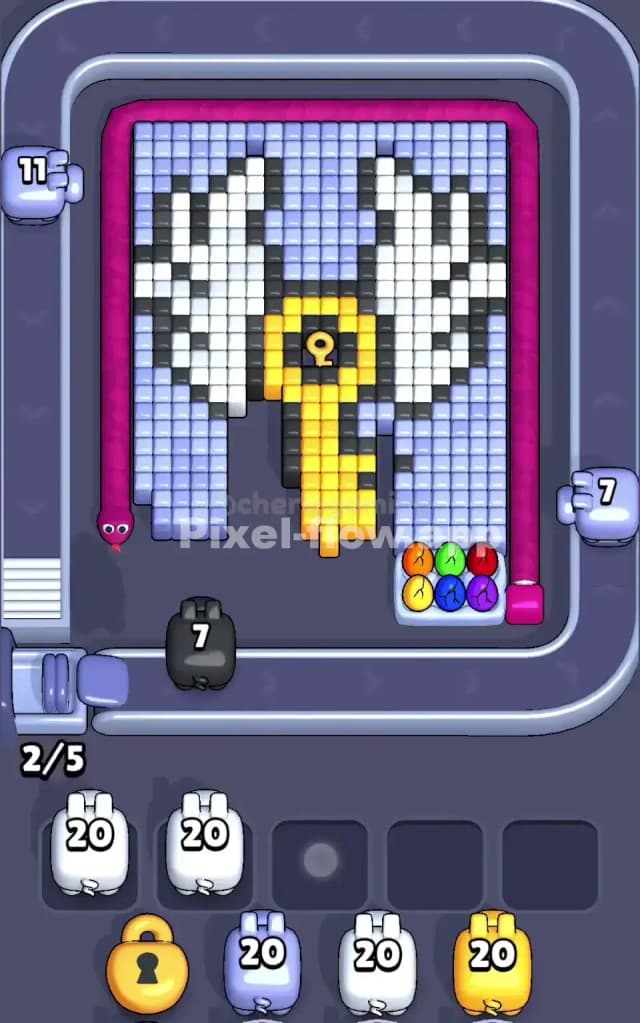
Once you’ve shaved off the top layer of Light Blue, the board looks messy. You’ll have jagged edges of white wings exposed, and maybe the top loop of the key is visible. The danger moment happens here: you might see a mix of White, Black, and Yellow pigs coming down the belt.
- Switch to White and Black: As the blue recedes, the White wings become the biggest target. Grab White pigs now. They have plenty of ammo (usually 10-20 shots) and will clear the bulk of the wing structure.
- The Black Border Trap: The wings have black outlines. Black pigs are useful now to sharpen the edges, but be careful. The black lines are thin (1 pixel wide). A Black pig with 20 ammo might not find 20 black blocks instantly. Only grab a Black pig if you see exposed black lines.
- Slot Management: If you are playing without power-ups, never hold more than two pigs of the same color in your waiting slots unless you are actively clearing that color. If you have two Yellow pigs waiting and the key is still covered by white blocks, stop. Let the belt run. Find a White or Blue pig to clear the obstruction first.
Last Details You Clean Up in Pixel Flow Level 159
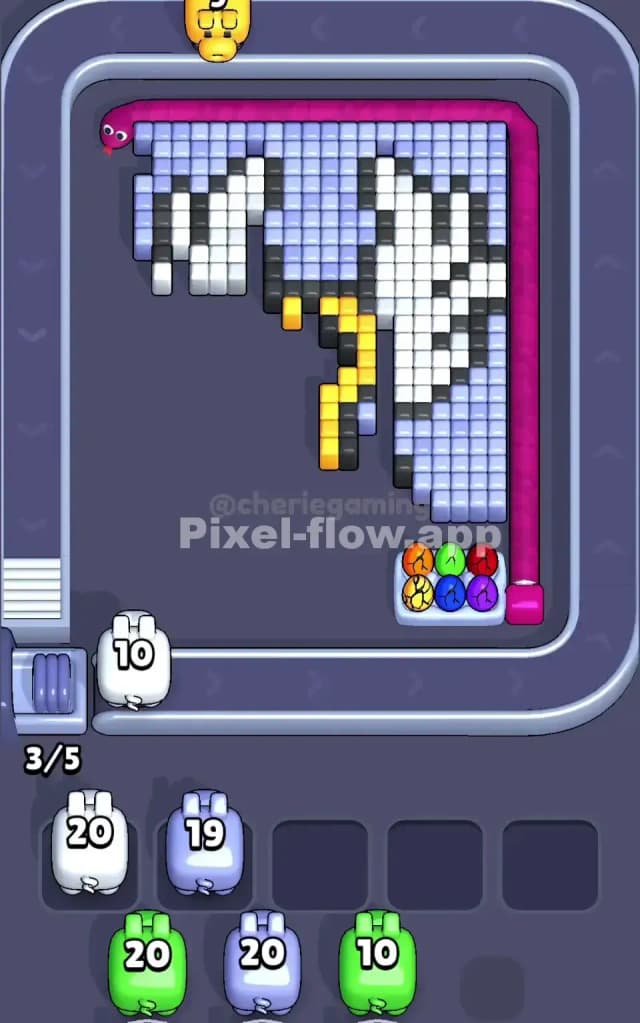
The end game of Pixel Flow Level 159 is usually just the Yellow Key and the final Black outlines.
- The Golden Core: By now, the blue sky is gone. The white feathers are gone. You are left with a yellow key shape floating in the void. Now is the time to spam Yellow pigs. They will tear through the center quickly.
- Hidden Shadows: Watch out for single black pixels hiding near the "teeth" of the key or the base of the wings. Sometimes a single cube hides behind a taller stack. If the level doesn't end when you think it should, rotate the camera slightly or look for a tiny black or grey block tucked away in the crevices of the key handle.
- Victory Lap: The final pig will likely be a Yellow or Black one cleaning up the last few voxels of the key's shaft.