Pixel Flow Level 158 Solution Walkthrough | Pixel Flow 158

How to solve Pixel Flow level 158? Get instant solution for Pixel Flow 158 with our step by step solution & video walkthrough.

Share Pixel Flow Level 158 Guide:
Pixel Flow Level 158 Gameplay
Pixel Flow Level 158 Solution 1
Pixel Flow Level 158 Solution 2
Pixel Flow Level 158 Solution 3

Pixel Flow Level 158 Overview

The Board and Its Visual Challenge

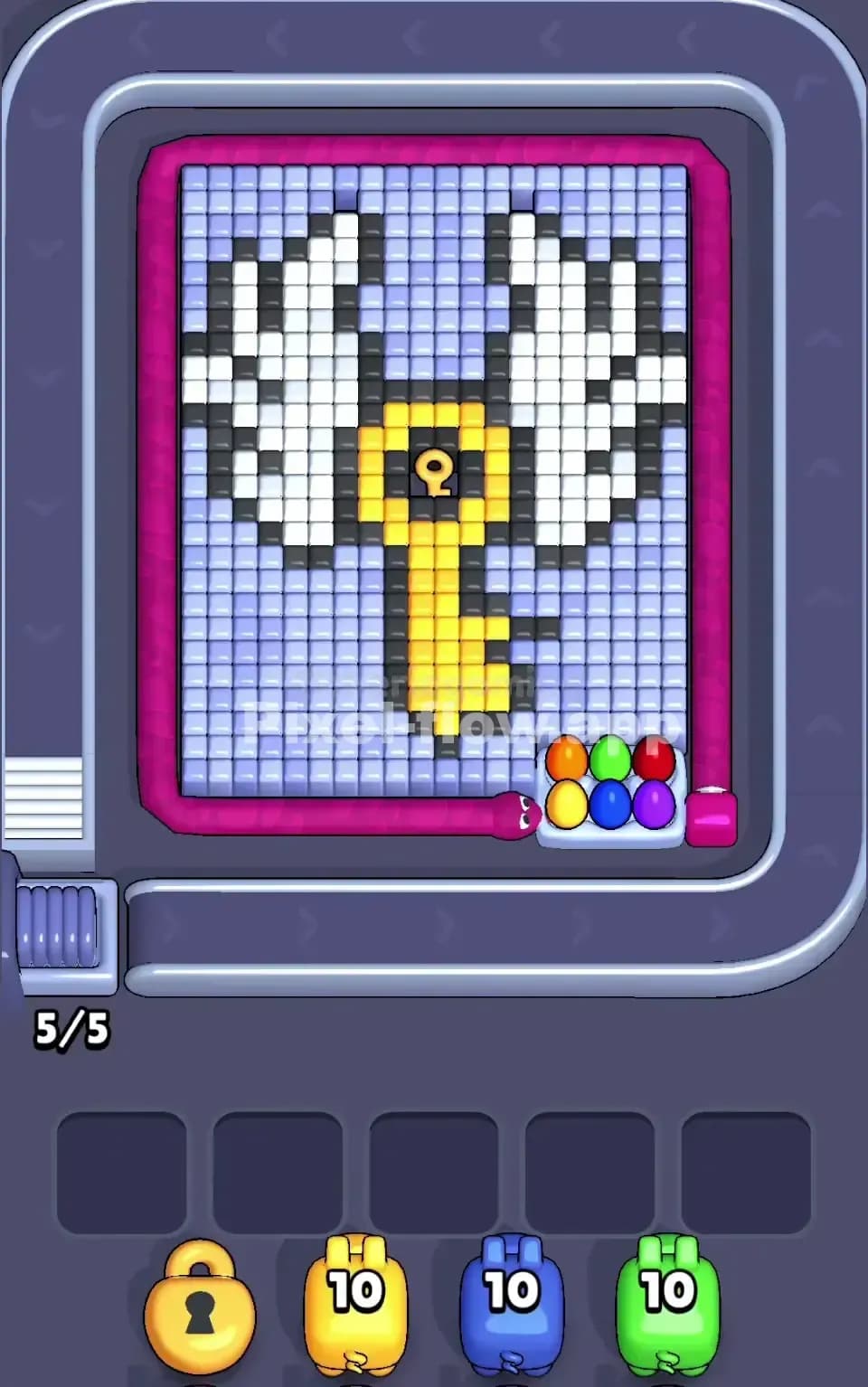
Pixel Flow Level 158 presents a delightful but deceptively complex pixel art design: an owl's face with striking black eyes and a white face, all wrapped in layers of blue, cyan, yellow-green, and purple cubes. The owl's head dominates the center, flanked by vibrant blue feathers that extend across most of the board's width. Below sits a band of red and yellow cubes that forms the owl's decorative collar or body detail. What makes Pixel Flow Level 158 particularly interesting is how these colors are stacked in depth—you're not just clearing a flat surface, but excavating through multiple layers to expose and destroy every voxel cube hiding beneath.

The waiting slots on the left show you're working with exactly five pig types: cyan, white, yellow-green, and dark blue, each carrying 20 ammo. That's your total firepower, and every single cube must be destroyed or you'll fail. The board's structure means some colors sit in front while others lurk deeper inside, creating a sequencing puzzle where releasing the wrong pig at the wrong time can trap you with unfillable slots.

Win Condition and Deterministic Gameplay

Your goal in Pixel Flow Level 158 is straightforward: eliminate every voxel cube on the board without jamming all five waiting slots with stuck pigs. Because each pig type shoots only its matching color and spends exactly one ammo per destroyed cube, you're working with completely deterministic numbers. If cyan has 20 ammo and you count 20 cyan cubes visible on the board, you know cyan will fire exactly 20 times before it either exits or drops into a slot. There's no randomness here—only planning, counting, and precise execution.


Why Pixel Flow Level 158 Feels So Tricky

The Cyan Bottleneck

The biggest threat in Pixel Flow Level 158 is the sheer volume of cyan cubes wrapped around the blue central area. Cyan makes up the majority of the owl's face outline and feather details, and those cubes stretch across nearly the entire board width. If you're not careful about when you release the cyan pig, it can fire its 20 ammo, find no more valid targets, and drop into a waiting slot while other pigs still have ammunition they can't spend. Once that happens, you've lost one of your five slots permanently, and the pressure mounts fast. You need a strategy that ensures cyan's ammo aligns perfectly with visible cyan targets, or you'll watch helplessly as your buffer fills up.

The Layering Trap and Hidden Colors

What really trips up players on Pixel Flow Level 158 is that not every color is immediately visible on the surface. The blue feathers hide internal structure, and some yellow-green or purple cubes lurk in the background. If you send out a pig too early, it clears what's visible but leaves internal colors inaccessible—and that pig drops into a slot with ammo still loaded. Now you're stuck: you can't access those hidden colors without clearing the outer layers first, but your waiting slots are filling up. The white cubes around the owl's face can also feel awkwardly placed, scattered between blue and cyan in ways that don't line up neatly.

When the Level Clicked for Me

Honestly, Pixel Flow Level 158 frustrated me at first. I kept sending pigs in the order they appeared, thinking I'd just clear colors as they became available. The result? Cyan would empty its magazine on the surface layer, drop into a slot, and suddenly I'd have three pigs left with nowhere to shoot. It wasn't until I stopped and counted the cubes by color, region by region, that I realized I needed to reverse my instincts: start with the outer, widespread colors and save the concentrated internal colors for last. That mental shift changed everything.


Step-by-Step Strategy to Clear Pixel Flow Level 158

Opening: Establish Safe Breathing Room

Begin Pixel Flow Level 158 by releasing the cyan pig first, but do it strategically. Yes, cyan dominates the board, but here's the key: you want to clear roughly 15–17 of its 20 ammo on the first pass, leaving a few cyan cubes still visible deeper in the layers. This way, cyan fires heavily, clears the outline, but doesn't immediately drop into a waiting slot. You should still have at least three empty slots after cyan exits the conveyor belt. This breathing room is critical—it gives you flexibility for the next two or three pigs without the panic of a full buffer.

Watch carefully as cyan fires. The outer face ring will collapse inward, exposing some blue and the top edges of the internal structure. Don't expect cyan to empty completely; that's actually a good sign, because it means you've uncovered new targets for later pigs.

Mid-Game: Sequencing and Layer Exposure

Next, send the white pig. The white cubes form the owl's face core and sit in a more compact region than cyan. With 20 ammo, white should clear most or all of its visible cubes in one go. This is less risky than cyan because white's targets are concentrated, so you're unlikely to leave white stranded mid-ammo. After white finishes, the center should be mostly clear, and you'll see blue and some yellow-green peeking through from underneath.

Follow up with the dark blue pig. This is where patience pays off. Dark blue has the second-largest footprint on Pixel Flow Level 158, stretching across the feather regions. Release it and let it whittle down to around 5–10 remaining ammo before it exits. Don't panic if it drops into a slot with ammo left; you've still got two pigs in reserve, and you're now three-quarters through the board.

Now comes the tricky middle stretch: you need to decide whether to release the yellow-green or cyan a second time. Look at what's exposed. If you see significant yellow-green clusters still buried, hold off on yellow-green and send cyan back out to finish its remaining 3–5 ammo on those hidden cyan cubes you left behind. This prevents cyan from jamming a slot later and clears another color completely.

End-Game: Clean Finish Without Jams

By this point on Pixel Flow Level 158, you should have your waiting slots nearly full but not overflowing. Send yellow-green to finish its concentrated patches in the lower regions (that decorative collar area). Yellow-green's 20 ammo should align well with the remaining visible cubes.

Finally, release any pigs that still have ammo. If you've sequenced correctly, the last one or two pigs will empty completely as the final cubes fall away, and you'll see the victory screen. The key is that no pig should be sitting in a waiting slot while another pig still has ammo with nowhere to aim—that's how you lose.


The Logic Behind This Pixel Flow Level 158 Plan

Why Pig Order Beats Reaction

The strategy for Pixel Flow Level 158 works because it respects the game's deterministic core: pig order and ammo counts don't change. By planning your sequence before you start (or adjusting after the first or second pig), you're not reacting to chaos—you're orchestrating a specific sequence that ensures every ammo count aligns with available targets. Cyan goes first because it covers the most area and can afford to drop a slot mid-ammo since you've got buffer room. White and blue go next because their targets are more localized and predictable. Yellow-green finishes the decorative details. This order doesn't fight the board; it works with the board's natural layers.

Staying Calm and Counting Two Pigs Ahead

Master Pixel Flow Level 158 by staying one or two decisions ahead. Before you release a pig, ask yourself: "After this pig fires and exits, what colors will be visible, and which pig should go next?" Count the ammo on your queue and the cube targets on the board simultaneously. If you see a pig with 20 ammo but only 15 visible targets of that color, you know it'll drop into a slot—and that's fine if you've planned for it and still have empty slots. The moment you fill four slots and the fifth pig has ammo with no targets, you've lost. Avoid that by keeping a mental map of what's coming and what's already clear. Pixel Flow Level 158 rewards patience and arithmetic far more than quick reflexes.