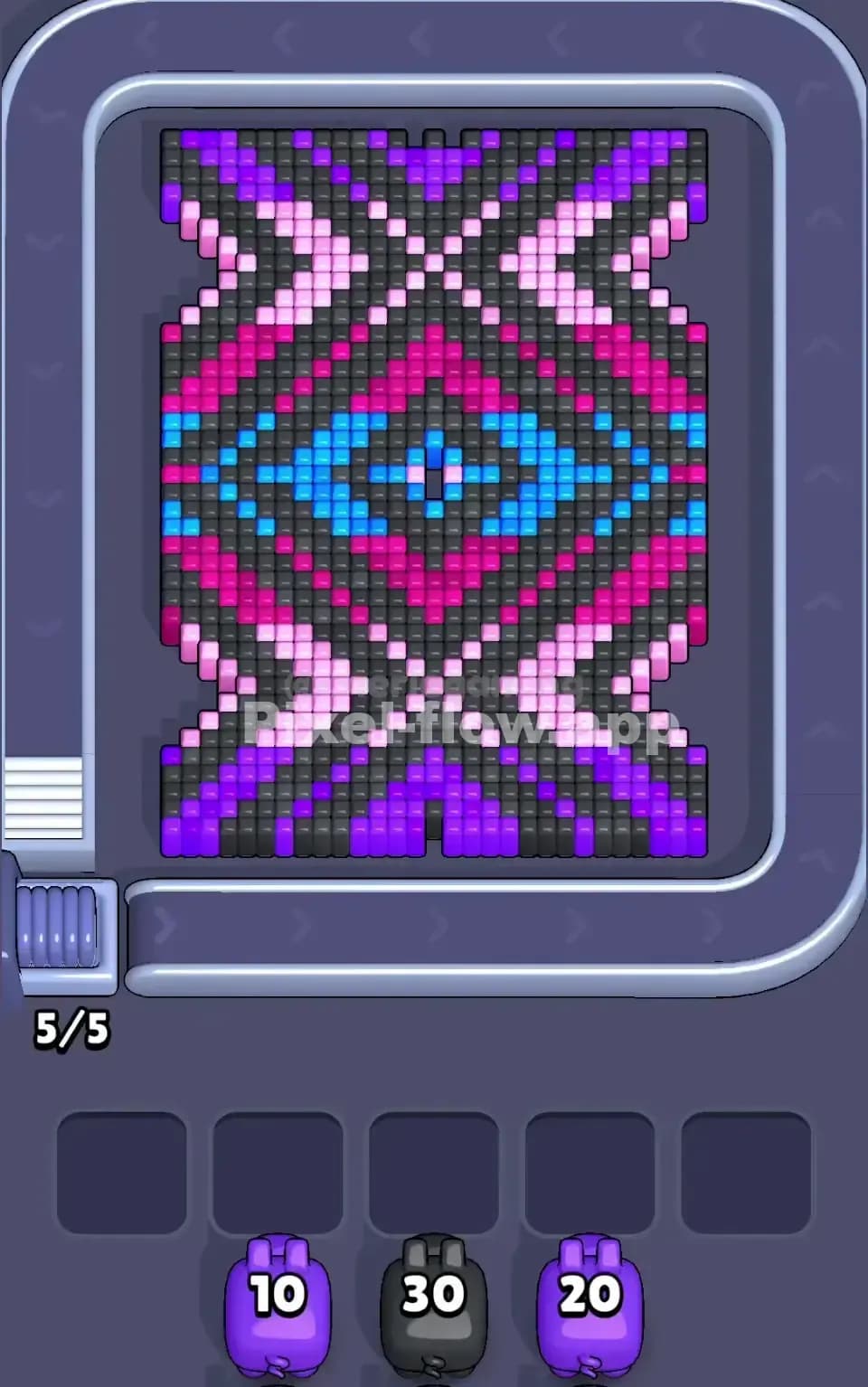
Pixel Flow Level 157 Solution | Pixel Flow 157 Walkthrough
How to beat Pixel Flow Level 157: Video solution & walkthrough. The fastest way to pass Pixel Flow 157.
Is this the wrong level layout?🤔
Pixel Flow randomizes levels for different players. Don't worry, just upload a screenshot of your board, and our AI will find the correct video instantly.

Pixel Flow Level 157 Overview
The Board Layout and Pixel Art
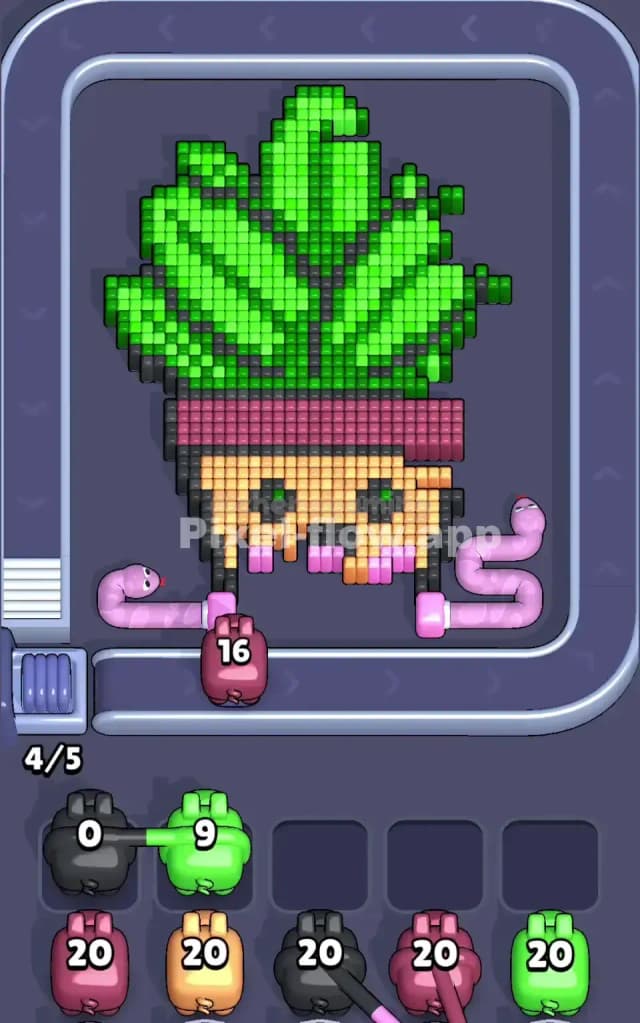
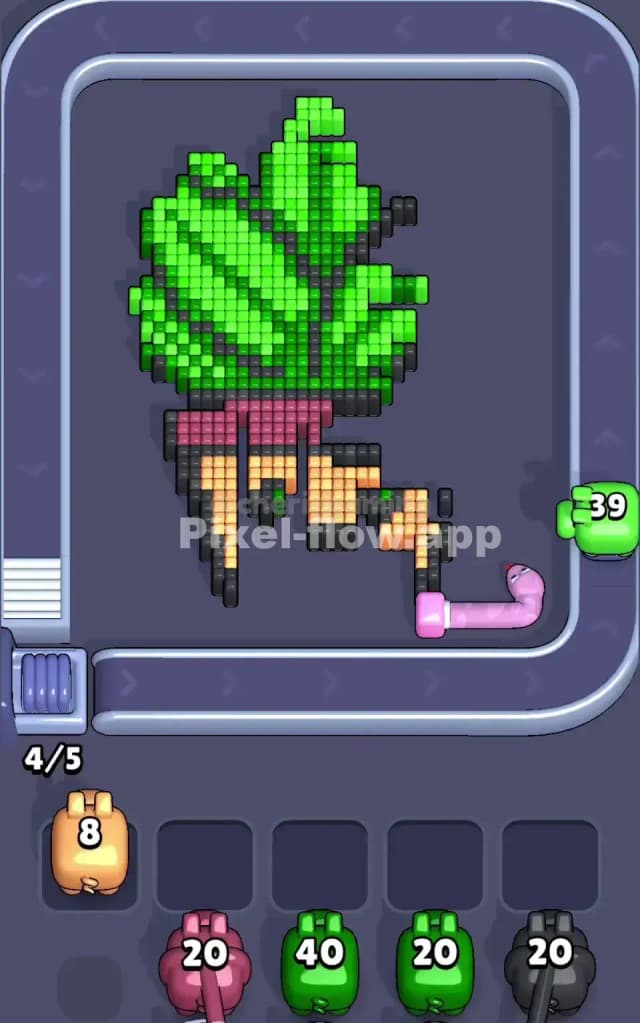
Pixel Flow Level 157 features a charming potted plant illustration that immediately catches your eye. The main subject is a leafy green plant sitting in a decorative pot, complete with cute facial features—think big eyes and a small mouth that give the whole image personality. The green foliage dominates the upper two-thirds of the board, rendered in bright lime and darker forest green to create depth and shading. Below that sits a layered pot in warm yellows, oranges, and peachy tones, with a pink mouth and delicate details that require precision to clear. Dark gray and black cubes form outlines and shadows throughout, adding definition to the pixel art. This multi-layered voxel structure means you're not just shooting at surface colors—you'll need to strategically expose and clear the deeper tones to achieve victory.
The Win Condition and Deterministic Flow
Your goal in Pixel Flow Level 157 is to clear every single cube from the board, which sounds simple until you realize that every pig carries exactly 20 ammo shots. That's your constraint: five pigs with 20 shots each, each pig locked to one color, and the waiting slots that can only hold five pigs at a time. The order in which pigs arrive on the conveyor belt is completely fixed and predictable—there's no randomness here. This means Pixel Flow Level 157 rewards planning and intentional sequencing rather than panic shooting. Once you understand the pig order and map out which colors need clearing, the path to victory becomes a matter of deliberate execution and ammo management.
Why Pixel Flow Level 157 Feels So Tricky
The Green Foliage Bottleneck
The biggest hurdle in Pixel Flow Level 157 is the sheer volume of bright green cubes. There are easily over 100 green pixels making up the leafy canopy, yet you only have one green pig with 20 ammo shots. Do the math, and you'll realize the green pig can't possibly clear all the bright green on its first pass. This creates an immediate problem: if you're not careful, the green pig will exhaust its 20 shots, still have dozens of green cubes visible, and then it'll drop into a waiting slot with nothing left to do. Suddenly you're blocking your buffer with a pig that could've been useful if you'd coordinated its appearance with other color clears that expose hidden greens beneath the surface.
The Dark Gray Shadow Lines Problem
Here's where Pixel Flow Level 157 gets genuinely sneaky. The outline and shadow cubes in dark gray are scattered throughout the entire image—they're not just at the edges. Some dark gray cubes sit directly between green leaves, and others hide within the pot structure. You've got one dark gray pig with 20 ammo, and it needs to strategically pick off these scattered grays in exactly the right sequence. Shoot the wrong grays too early, and you might expose a patch of green that your green pig can't fully consume before it jams. Wait too long to use the dark gray pig, and you'll end up with it stuck in a waiting slot unable to find targets because all the visible grays have been covered by other colors.
The Orange, Pink, and Yellow Coordination Nightmare
The pot itself is divided into orange, yellow, and pink sections, each with their own pig. What makes Pixel Flow Level 157 frustrating is that these colors are intricately mixed—an orange cube sits next to a pink cube, which borders yellow, which touches more pink. If you're not methodical, you'll launch the orange pig too early, waste ammo on scattered cubes, and then the pink pig arrives to find barely any pink targets visible (because they're hidden behind the orange you just cleared). The pacing between these three pigs is absolutely critical, and I've seen players fail at the final stretch simply because they didn't think about pot color sequencing during the opening moves.
When It Clicked for Me
Honestly, Pixel Flow Level 157 stumped me for a good ten attempts. I kept trying to clear the green first, thinking "obvious target = shoot it." But I kept jamming my buffer halfway through because the green pig would drop into a waiting slot still surrounded by untouched green. The moment it clicked was when I realized I should let the darker colors expose the hidden layers first, giving the green pig more distributed targets to chase. That mental shift—from "clear the biggest color first" to "use pig order to strategically reveal and distribute targets"—transformed Pixel Flow Level 157 from impossible to manageable.
Step-by-Step Strategy to Clear Pixel Flow Level 157
The Opening: Setting Up for Success
Start by launching the dark gray pig first, even though it's tempting to hit all that green foliage. The dark gray cubes act as structural anchors and shadows; clearing them early exposes underlying greens in smaller, more manageable chunks rather than one overwhelming blob. Target the gray lines that divide the upper foliage section—this breaks the green into regions. Your dark gray pig has 20 ammo, and you'll use roughly 15–18 of those shots in the opening. The goal isn't to clear all gray (it's scattered throughout), but to create separation so the green pig will have multiple distinct targets instead of one monolithic mass. Keep at least three waiting slots completely empty during this phase. Never fill more than two slots while opening Pixel Flow Level 157, or you risk cascading lock-ups.
Once dark gray is running its course, launch the black pig second. Black cubes in Pixel Flow Level 157 form the eyes, mouth, and fine details of the plant face—there aren't that many of them, maybe 12–15 total. Black should consume about 15 ammo, leaving your black pig with 5 shots to park safely in a waiting slot if needed. Clearing black early removes those intricate details and prevents them from interfering with later color sequencing. After dark gray and black have done their work, your board should look less dense, and you'll see clear patches where the deeper-colored pot is peeking through.
Mid-Game: The Color Cascade
Now launch the green pig third. With the dark gray outlines cleared, the green is no longer one massive slab—it's broken into logical sections. Your green pig will burn through roughly 18–19 of its 20 ammo on the foliage. Don't panic if the green pig drops into a waiting slot with 1–2 ammo remaining; that's actually healthy. It means you've exposed enough of the pot colors beneath to move forward.
Immediately follow the green pig with the first pink pig (remember, you have two pink pigs in Pixel Flow Level 157, and they arrive at different positions in the queue). This pink pig should focus on the mouth area and the decorative pink trim of the pot. You'll use about 12–14 ammo here. The second pink pig arrives later and will clean up any remaining pink in the lower pot and decorative sections.
Insert the orange pig fourth, targeting the main orange band of the pot. The orange cubes form a clear horizontal stripe, so aim for the center and let the pig methodically work across. Spend roughly 16–18 ammo on orange, and don't sweat it if some orange hides beneath yellows—that's actually okay. The yellow pig comes next and can expose it.
End-Game: The Pot Finish and Buffer Clear
Launch the yellow pig to mop up the remaining yellows and any exposed oranges. At this point in Pixel Flow Level 157, you should have two or three pigs already parked in waiting slots with minimal ammo left. Yellow has 20 ammo, so use about 15–17 on visible yellows and leave 3–5 as buffer.
The final pink pig (your second pink) arrives last and should polish off any lingering pink cubes. By now, if you've followed the sequencing correctly, your waiting slots shouldn't be completely full, and the final pink pig will finish the job with ammo to spare. The key to avoiding a last-second jam in Pixel Flow Level 157 is ensuring that no pig—especially not the final pig—is launched into a completely full buffer with zero valid targets.
The Logic Behind This Pixel Flow Level 157 Plan
Why Order Matters More Than Instinct
Pixel Flow Level 157 teaches you that the queue order is your greatest asset. Every pig arrives at a predetermined time, and its color is locked. You can't change that, so instead of fighting it, you orchestrate around it. By launching dark gray and black early, you're essentially doing structural demolition—clearing the scaffolding that holds the visual chaos together. Once the framework is gone, the remaining colors (green, orange, yellow, pink) become spatially distinct and much easier to consume methodically. This strategy exploits the deterministic nature of the conveyor belt rather than reacting moment-to-moment.
Staying Calm and Counting Ammo
Here's the unglamorous truth of Pixel Flow Level 157: you need to count. Before you launch each pig, glance at the board and estimate how many matching cubes are visible. If you see 15 green cubes and your green pig has 20 ammo, you're safe—fire away. But if you count 25 green cubes and you spot your green pig arriving next? Pause. Insert a different pig to expose or clear some greens first. This constant ammo audit prevents the feeling of helplessness that hits when a pig runs dry surrounded by its own color.
Watch your waiting slots like a hawk. If four pigs are already parked and a fifth is about to drop in with no valid targets, you've hit the failure condition. It's not dramatic—it's just silent, slow death. Pixel Flow Level 157 rewards you for thinking two or three pigs ahead: "The green pig comes next, but there are 30 greens visible. Better use dark gray now to break it up." That forward planning is what separates a clear from a stall.
Good luck with Pixel Flow Level 157—you've got this!