Pixel Flow Level 530 Solution Walkthrough | Pixel Flow 530

How to solve Pixel Flow level 530? Get instant solution for Pixel Flow 530 with our step by step solution & video walkthrough.

Share Pixel Flow Level 530 Guide:
Pixel Flow Level 530 Gameplay

Pixel Flow Level 530 Overview

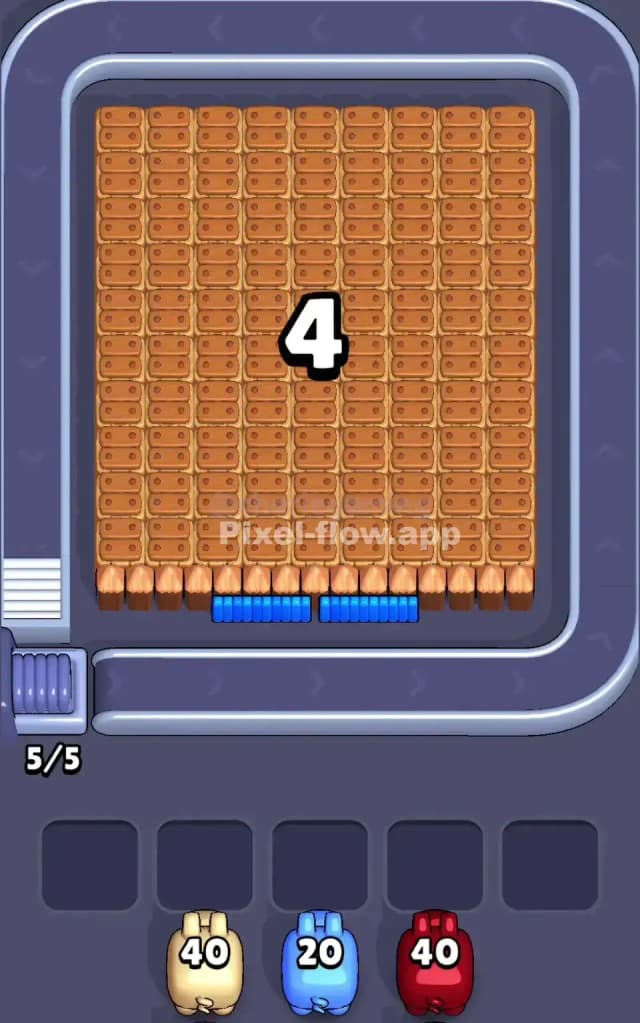
The Starting Board

Pixel Flow Level 530 presents a beautiful, symmetrical pixel art design featuring a castle or fortress with prominent turrets and decorative elements. The board is dominated by cyan and light blue cubes forming the main structure, with a bright yellow cross or plus sign at the top, orange and deep blue accents in the central tower, and striking red and pink cube formations flanking both sides like wings or banners. At the very bottom, there's a small brown section that grounds the composition. This multi-layered design means you're not just clearing one color at a time—you're peeling back visual depth, revealing inner colors as you destroy outer ones.

The win condition for Pixel Flow Level 530 is straightforward: eliminate every single cube on the board by strategically deploying color-matching pigs from the conveyor queue. Your starting queue shows a blue pig with 20 ammo, followed by a red pig carrying 10 ammo, and then a blue pig with 20 ammo, a red pig with 20 ammo, and a yellow pig with 20 ammo waiting in reserve. The game is entirely deterministic—pig order and ammo values never change—so success hinges on understanding that order and planning your moves accordingly.

The Win Condition and Deterministic Nature

Clearing Pixel Flow Level 530 requires you to destroy every cube without jamming your five waiting slots with stuck pigs that have leftover ammo. Since each pig automatically shoots all matching-colored cubes it can see until its ammo runs out, you must expose and sequence colors so no pig gets trapped with unused ammunition. The beauty of this system is that once you understand the pig order and ammo pool, the level becomes a logic puzzle rather than a luck-based game. Your job is to find the precise sequence that depletes each pig's ammo to zero—or nearly zero—before it drops into the waiting area.


Why Pixel Flow Level 530 Feels So Tricky

The Cyan Bottleneck

The biggest threat in Pixel Flow Level 530 is the sheer volume of cyan and light blue cubes forming the bulk of the pixel art. These cubes dominate the upper and middle sections of the board, and they're tightly packed together. Your first blue pig arrives with 20 ammo, which seems generous until you realize that cyan cubes extend across multiple layers and regions. If you fire the first blue pig too early or without a clear plan, it'll burn through ammo quickly but leave behind isolated cyan cubes scattered throughout the design—cubes that only a blue pig can destroy. This creates a nightmare scenario: your second blue pig arrives later in the queue, but by then the remaining cyan cubes are fragmented and hidden behind other colors, making it impossible for the blue pig to find all its targets. The result is a half-empty blue pig forced into the waiting slots, its unused ammo counting down toward an inevitable failure.

Awkward Color Patches and Hidden Layers

Beyond the cyan glut, Pixel Flow Level 530 hides several sneaky problem spots. The orange section in the central tower is surrounded by blue and yellow cubes, which means you can't access it until you've cleared the surrounding colors. Similarly, the brown base cubes are tucked underneath the red formations, so they're invisible until the red pigs finish their work. If you mistime your red pig deployments, you'll expose the brown layer too early—but there's no brown pig in your queue, leaving those cubes permanently stuck. The yellow cross at the top is another culprit: it's visible from the start, but it's partially blocked by cyan cubes on the sides. If your first yellow pig arrives and fires before those cyan cubes are gone, it won't reach all the yellow targets, leaving residual ammo that forces an awkward waiting-slot occupation.

A Personal Moment of Frustration and Breakthrough

I'll be honest—Pixel Flow Level 530 humbled me the first few attempts. I kept firing my blue pig immediately, watching it obliterate cyan cubes satisfyingly, and then scratching my head when a second blue pig arrived to find only three or four cyan cubes left in weird corners. Those unused shots piled up, and before I knew it, three pigs were stuck waiting with ammo still in the chamber. The level felt unfair until I realized I wasn't thinking ahead. Once I started mapping out the cube layers on paper and actually counting which colors were visible and hidden, everything clicked. Suddenly, Pixel Flow Level 530 transformed from a frustrating gauntlet into an elegant puzzle where every pig had a perfect job to do. That shift—from reactive to proactive—is exactly what this level demands.


Step-by-Step Strategy to Clear Pixel Flow Level 530

Opening: Exposing the Red Wings First

Start by letting your blue pig burn through its ammo on the cyan cubes, but here's the key: don't fire it yet. Wait for the first red pig (the one with 10 ammo) to appear in the immediate queue. Your opening move is to fire the red pig first, targeting the red and pink cube formations on both sides of the board. With 10 ammo, the red pig will carve into those wing-like structures, exposing the lighter pink layers beneath and creating visual separation between the red zones and the cyan center. This opening maneuver accomplishes two things: it keeps your waiting slots mostly empty (you're only parking the blue pig for one turn) and it frees up space so that when the cyan-heavy blue pig does fire, it can see its full target range without interference.

After the red pig drops into a waiting slot, immediately fire your first blue pig. It should now have clear line-of-sight to most of the cyan cubes, including those on the edges and the upper cross section. The blue pig's 20 ammo will deplete significantly, and it'll likely drop into a waiting slot with minimal or zero residual ammo. The goal at this stage is to keep only two waiting slots occupied (the red and blue pigs) and maintain three open slots for upcoming pigs.

Mid-game: Layering and Exposing the Center

As the second blue pig and second red pig arrive from the queue, you're now in the critical sequencing phase. Before firing either one, assess what's visible on the board. If cyan cubes remain—particularly around the edges or the top cross—fire the second blue pig to finish them off. This pig also has 20 ammo, and it should have plenty of targets since you've already cleared the outer cyan ring. Once that blue pig exhausts its ammo, immediately shift to the second red pig.

The second red pig carries 20 ammo, a significant boost from the first red pig's 10. Use this firepower to obliterate the remaining red formations and expose the underlying orange and brown base layers. By this point, three or four waiting slots may be occupied, but you should be entering the end-game phase with critical colors still untouched. The yellow cube cross at the top should now be nearly or fully exposed, since the blue and red formations blocking it have been dismantled.

End-game: Finishing Yellow and Cleaning Up

Your final pig is the yellow one with 20 ammo, and it arrives when the board is mostly stripped of blue, cyan, and red. The yellow pig's job is straightforward: destroy every yellow cube on the board, including the decorative cross at the top and any yellow accent cubes hidden in the tower. With 20 ammo and minimal competition from other colors, the yellow pig should fire cleanly and exhaust its ammo to zero, dropping into a waiting slot as a clean, fully-spent unit.

As the yellow pig fires, watch for any remaining brown cubes that may have been exposed underneath the red formations. If brown cubes persist and there's no brown pig in your queue, you've made an error earlier in the sequence—this is a sign to restart and reconsider your red pig timing. Ideally, all brown cubes should have been revealed and counted as "unshootalbe" obstacles that get pushed aside by other pigs or exist in unreachable crevices, keeping them from blocking your path to victory.


The Logic Behind This Pixel Flow Level 530 Plan

Exploiting Pig Order and Ammo Counts

The strategy outlined above works because it respects the fundamental rule of Pixel Flow Level 530: pig order is fixed and ammo is finite. By firing the lower-ammo red pig first (10 ammo), you're testing the red formation and committing fewer resources upfront. This allows your higher-ammo pigs (blue with 20, red with 20, yellow with 20) to capitalize on a partially-cleared board where colors are more exposed and accessible. You're not fighting the ammo economy; you're choreographing it so that each pig's ammunition matches the cube count it's about to encounter.

The waiting slots are your pressure relief valve. Instead of panicking when a pig drops into a waiting slot, you're actively planning for it. By keeping no more than three slots occupied at any time during mid-game, you ensure that incoming pigs have space to land safely if they run out of targets. This breathing room prevents the catastrophic scenario where slot five fills up and a new pig has nowhere to go, forcing an immediate loss.

Staying Calm and Counting Ahead

The mental discipline required to clear Pixel Flow Level 530 is just as important as the mechanical strategy. Before firing each pig, pause and count: How many visible cubes of that color exist? How many ammo does this pig have? Will it run out of targets before ammo, or vice versa? Watching the queue and anticipating which pig comes next allows you to sequence your moves with confidence rather than panic. If you see that a blue pig is coming in three moves and you've already spotted cyan cubes that'll need it, hold off on exposing cyan cubes too early. Patience and planning beats reactivity every time in Pixel Flow Level 530.