Pixel Flow Level 531 Solution | Pixel Flow 531 Walkthrough
How to beat Pixel Flow Level 531: Video solution & walkthrough. The fastest way to pass Pixel Flow 531.
Is this the wrong level layout?🤔
Pixel Flow randomizes levels for different players. Don't worry, just upload a screenshot of your board, and our AI will find the correct video instantly.

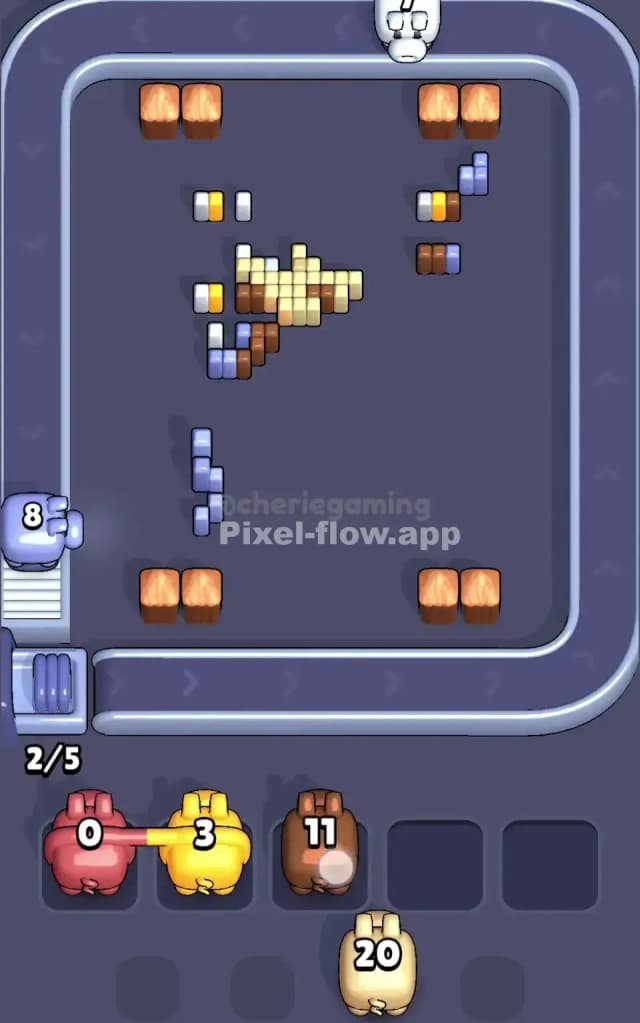
Pixel Flow Level 531 Walkthrough
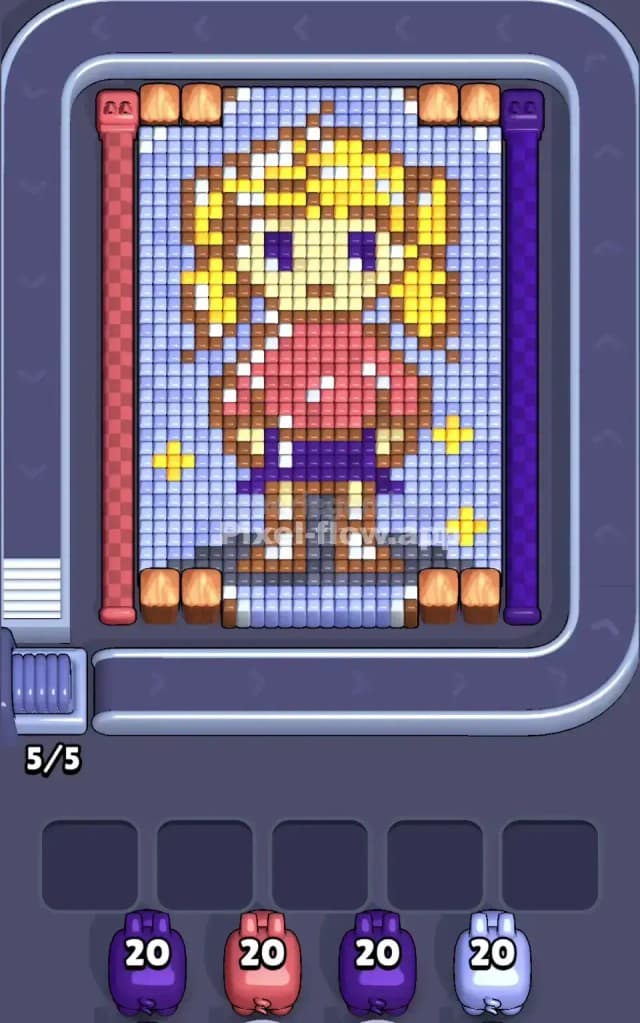
This stage presents a cute, character-focused puzzle that relies heavily on "framing" layers. You are looking at a pixel art portrait of a young girl with blonde pigtails, wearing a pink polka-dot shirt and a purple skirt. The tricky part isn't the girl herself; it’s the structural blockers surrounding her.
The board is flanked by two massive vertical pillars—a pink one on the far left and a deep purple one on the far right. Between these pillars and the girl is a field of light blue sky, speckled with yellow sparkles. To beat Pixel Flow Level 531, you must dismantle these outer "curtains" before you can effectively work on the character in the center.
Is this a difficult stage? No. It is not a very hard level. The color blocking is distinct, and the layers peel back logically. As long as you don't ignore the side pillars, you will clear this with plenty of moves to spare.
Pixel Flow Level 531 Overview
The artwork here feels like a character selection screen from an old RPG. The girl stands dead center on a small grey shadow or platform. She has bright yellow hair tied in pigtails, accented with brown outlines. Her outfit is distinct: a bright pink shirt with white spots and a dark purple skirt.
The background sets a cheerful tone—a solid wall of light blue blocks representing the sky. Floating in this blue void are yellow "sparkle" shapes, basically little plus signs made of yellow pixels.
The critical asymmetric feature here is the framing. The left edge of the board is guarded by a tall, solid column of pink blocks. The right edge is guarded by an identical column, but in deep purple. Also, notice the top and bottom corners have wooden blocks (brown/tan) that act as bumpers. These don't disappear quickly, so they often redirect your shots into the main picture unexpectedly.
The game gives you high-ammo pigs (often holding 20 shots) right at the start. This is a hint. The game expects you to burn a lot of ammo on huge, single-color zones immediately.
Step by step solution walkthrough for Pixel Flow Level 531
First Color Zone to Erase in Pixel Flow Level 531
You need to attack the "Curtains" first. I’m talking about that Pink Pillar on the left and the Purple Pillar on the right.
Narratively, think of this as opening the stage drapes so the show can start. Logically, these pillars are massive ammo sponges. They are solid, vertical rectangles with no hidden gaps. If you see a Pink or Purple pig in your queue, do not waste them on the girl's shirt or skirt yet.
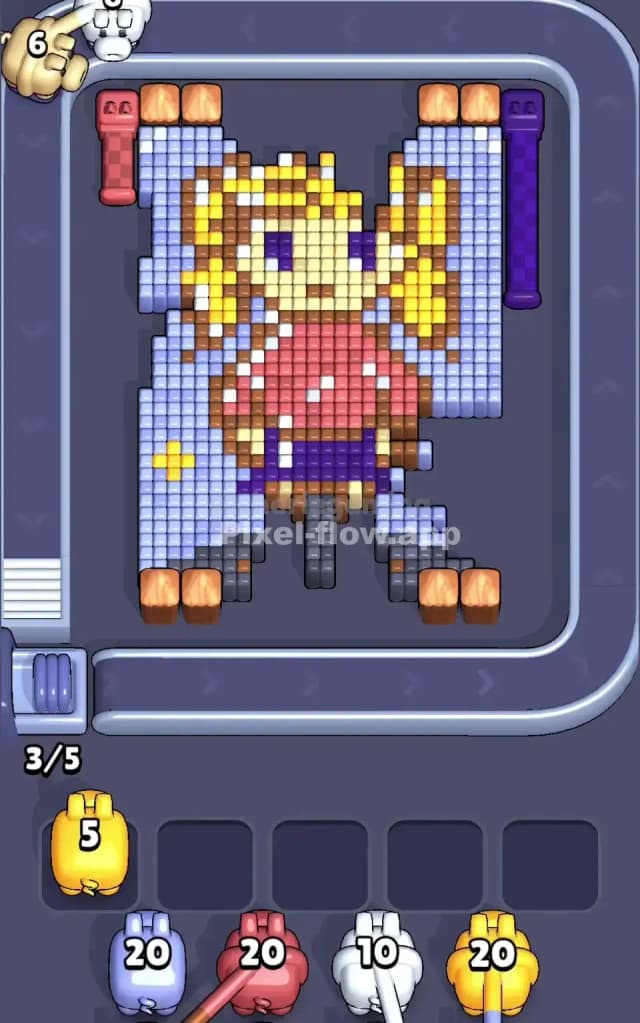
Target the far left column with your Pink pig. It will chew through that entire vertical bar, likely using up most of its ammo in one satisfying burst. Do the same for the right side with a Purple pig.
Why prioritize these? Because they physically block the light blue background pixels. If you try to clear the sky (light blue) while the pillars are still standing, your Light Blue pigs will hit the pillars, do zero damage, and clog up your waiting slots. Clear the sides to open up the firing angles for the rest of the board.
How to pass Pixel Flow Level 531 without power ups or boosters
Once the pillars are gone, the board looks significantly different. The girl is now "floating" in the light blue sky, unprotected. At this mid-point, you will likely see a mix of Light Blue, Yellow, and Brown pigs appearing in the conveyor belt.
Your priority shifts to the Light Blue Sky. This is the wrapper layer. It touches almost every part of the girl's outline.
Here is the no-booster strategy for the mid-game:
- Strip the Sky: Use Light Blue pigs to eat away the background. This separates the yellow sparkles and exposes the brown outline of the girl’s hair and body.
- Watch the Polka Dots: The girl's shirt is pink with white dots. When a White pig comes up, be careful. The white dots are isolated deep inside the pink shirt layer. You probably can't hit them until the pink shirt is partially damaged. Save White pigs for the girl's socks or eyes if the shirt isn't open yet.
- The Brown Outline Trap: The girl is outlined in Brown pixels. These are thin lines, not blocks. A Brown pig might only find 3 or 4 targets at a time. Do not let three Brown pigs sit in your waiting slots. If you have a Brown pig and only a few brown pixels are exposed, fire it anyway to clear the slot, even if you waste ammo. Flow is more important than ammo conservation here.
Last Details You Clean Up in Pixel Flow Level 531
The end game of Pixel Flow 531 is usually a "cleanup on aisle 4" scenario. You’ve cleared the sky and the big chunks of her clothes. What remains are the disconnected bits.
You will likely be staring at:
- Floating Yellow Sparkles: These often get left behind because the main Yellow blocks (her hair) get cleared first, and the sparkles are too far away to be hit by the same pig.
- The Grey Shadow: Under her feet is a small patch of grey/black pixels. It’s easy to miss because it blends in with the bottom UI sometimes.
- Wooden Corners: The brown wooden blocks at the very top and bottom corners of the frame are often the last things to go.
Keep an eye on the waiting slots. If you have a Yellow pig left with 15 ammo and only one tiny yellow sparkle remaining on the right side, take the shot. Don't wait for a "better" target. The level ends when the last pixel vanishes, so burn that ammo aggressively to finish the art.