Pixel Flow Level 532 Solution | Pixel Flow 532 Walkthrough
How to beat Pixel Flow Level 532: Video solution & walkthrough. The fastest way to pass Pixel Flow 532.
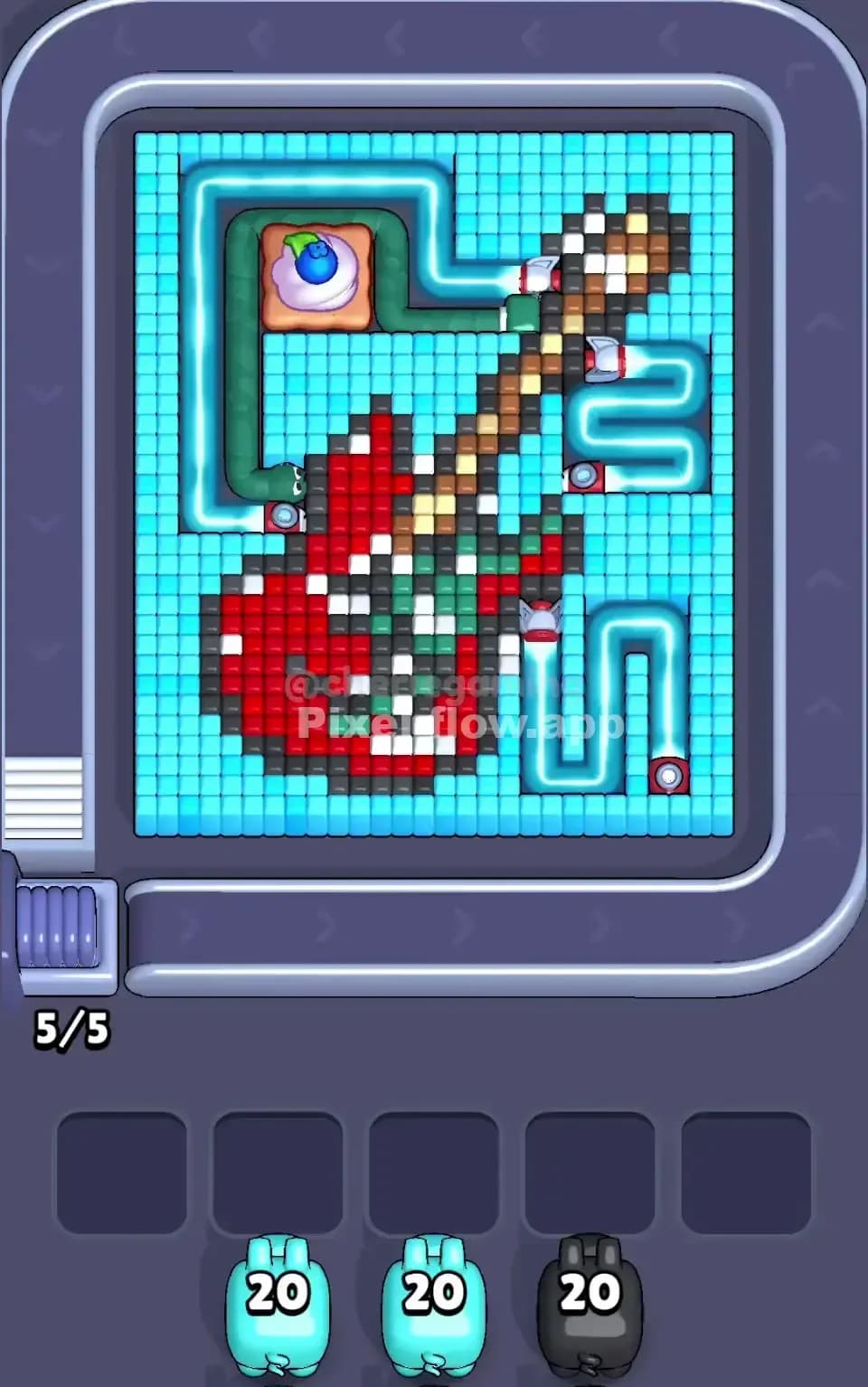
Is this the wrong level layout?🤔
Pixel Flow randomizes levels for different players. Don't worry, just upload a screenshot of your board, and our AI will find the correct video instantly.

Pixel Flow Level 532 Walkthrough
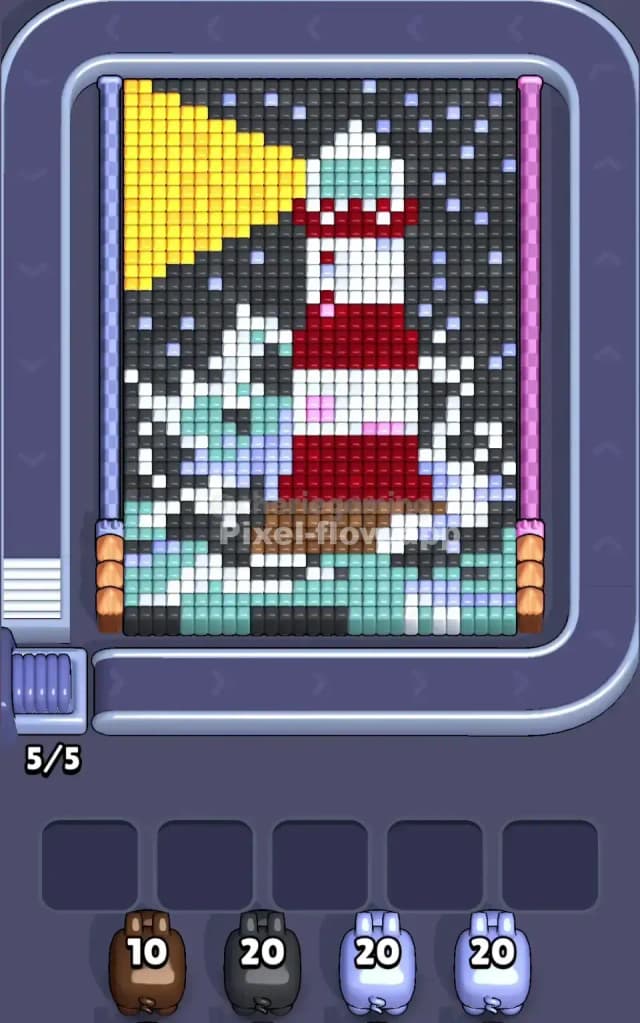
This level features a classic nautical scene: a tall lighthouse standing against a night sky, beaming a massive triangle of yellow light to the left. The colors are distinct but dangerous. You have a massive field of Dark Gray (the sky), bold stripes of Red and White on the tower, a blocky Yellow beam, and a messy floor of Cyan waves.
To beat Pixel Flow Level 532, you have to manage the "noise" in the background against the "solid" blocks of the tower. The sky isn't just empty space; it’s filled with single-pixel white stars (or snow) that will confuse your targeting if you aren't careful. Because of the density of the background and the specific layering of the lighthouse stripes, this is a very hard level.
Pixel Flow Level 532 Overview
The picture is a night watch scene. A red-and-white striped lighthouse dominates the center of the board. To its left, a huge, solid wedge of Yellow represents the light beam cutting through the darkness. The background is a heavy, expansive Dark Gray night sky.
However, the sky isn't clean. It is speckled with single pixels of White—likely stars or snowflakes. This creates a scattered texture that surrounds the main structure. At the very bottom, you have a chaotic mix of Cyan and White cubes representing crashing waves, with a tiny patch of Brown at the lighthouse door.
The asymmetry here is critical. The left side is top-heavy with that Yellow beam. The right side is mostly open sky. This means your pigs on the left side of the conveyor belt will hit the beam first, while pigs on the right will punch directly into the dark background or the right edge of the tower.
Step by step solution walkthrough for Pixel Flow Level 532
First Color Zone to Erase in Pixel Flow Level 532
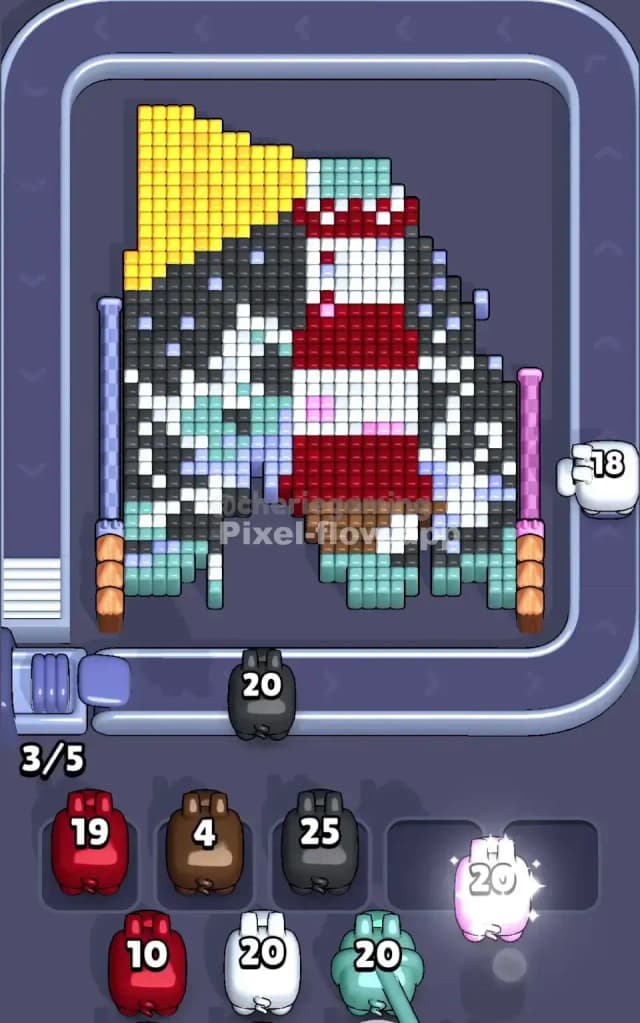
I strongly recommend you start by aggressively targeting the Dark Gray sky.
Looking at your starting queue, you will likely see a Black pig early on. Use him immediately. The sky wraps around the entire lighthouse, acting as a "wrapper" that holds the shape together. By clearing the Dark Gray cubes first, you do two things:
- You isolate the lighthouse tower, making the edges easier to hit for your Red and White pigs.
- You expose the scattered White "stars" which are dangerous distractions.
If you don't clear the sky, your pigs will waste ammo trying to tunnel through the gray just to reach the main structure. The Black pigs have high ammo counts (usually 16-20), and the sky is a dense target rich environment. They will almost never clog your slots in the early game because there is so much valid gray to hit.
How to pass Pixel Flow Level 532 without power ups or boosters
Once the sky is thinned out, the board looks like a floating skeleton of a lighthouse. This is the danger zone. You will see solid blocks of Red and White stripes, the big Yellow triangle, and the tricky base.
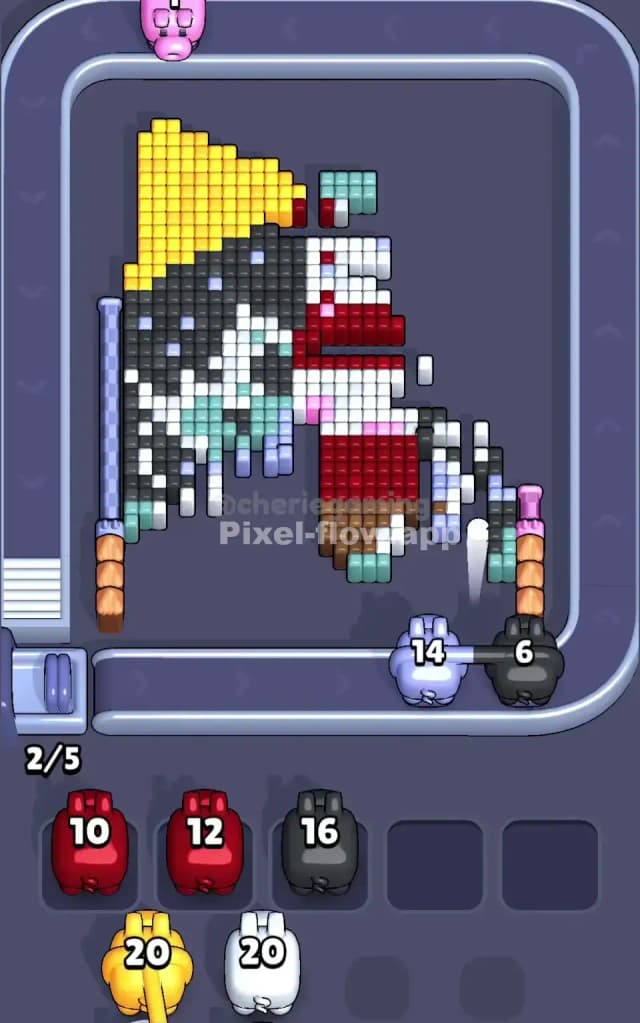
Your priority shifts to the Yellow beam. This yellow triangle is a "shield." It sits in the foreground on the top left. Until it is gone, it blocks access to the upper left section of the lighthouse stripes. If you see a Yellow pig, prioritize it over everything else. The Yellow area is a single, dense block. One or two Yellow pigs can wipe it out completely, instantly opening up a huge portion of the board.
Here is the specific trap to avoid in Pixel Flow Level 532: The White Pixel Distraction. The lighthouse has thick White stripes. But the sky has tiny, single White pixels. When you deploy a White pig, it might decide to shoot the single pixels in the sky instead of the big stripes you want to destroy. This wastes ammo.
- The Fix: Try to position your White pigs when they have a straight, unobstructed line of sight to the thick lighthouse stripes. Don't let them snipe the stars unless you are specifically trying to clean up the background.
Also, ignore the Brown pig if it shows up early. The only brown on the map is the tiny door at the very bottom center. If the waves or the tower base are still covered by other colors, the Brown pig will have zero targets and will choke one of your five slots. Leave him in the queue until the bottom center is exposed.
Last Details You Clean Up in Pixel Flow Level 532
The end-game is almost always the Cyan waves and the final Red stripes at the bottom.
The waves are messy. They are a checkerboard of Cyan, White, and Dark Gray. Unlike the solid blocks of the tower, the waves require pigs to take many small shots. You might find that a Cyan pig drops into a slot and sits there with 14 ammo remaining because it only found 6 targets. This is fine, as long as you have other slots open.
Your final moves will be precision strikes on the lighthouse base. Watch out for the vertical columns on the far left and right edges (the borders of the image). Sometimes a stray Dark Gray or Cyan pixel hides there, obscured by the game’s frame. Clear the center, double-check the corners, and finally send that Brown pig to hit the door for the win.