Pixel Flow Level 160 Solution | Pixel Flow 160 Walkthrough
How to beat Pixel Flow Level 160: Video solution & walkthrough. The fastest way to pass Pixel Flow 160.
Is this the wrong level layout?🤔
Pixel Flow randomizes levels for different players. Don't worry, just upload a screenshot of your board, and our AI will find the correct video instantly.

Pixel Flow Level 160 Walkthrough
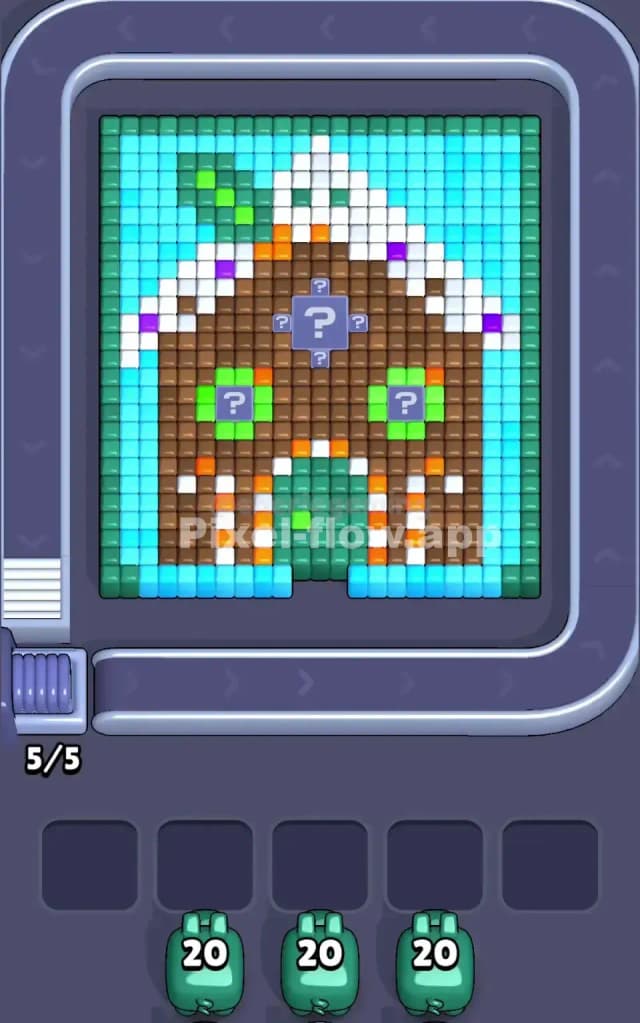
This level features a festive, voxel-art Gingerbread House, but don't let the cute theme fool you. It is a density trap. You are looking at a central brown structure heavily coated in white icing, framed by a teal border and a light blue sky. The real threat here isn't the size of the board; it’s the Mystery Blocks (the purple cubes with question marks) hiding in the center and windows. Because of these unpredictable blocks and the thick layers of brown "cookie" voxels, Pixel Flow Level 160 is a very hard level. You need to manage your waiting slots aggressively, or you will gridlock instantly.
Pixel Flow Level 160 Overview
The artwork depicts a classic holiday Gingerbread House. It sits centered, surrounded immediately by a Light Blue sky, which is then encased in a darker Teal/Green outer frame.
The house itself is primarily Brown. A thick layer of White voxels creates a snowy roof effect, dripping down the sides. There are small Orange and White candy cane accents framing the door. Two windows on the left and right are blocked out by Green shutters, but the centers are currently obscured by Mystery Blocks. There is also a large cross-shaped cluster of Mystery Blocks right in the "attic" area of the house.
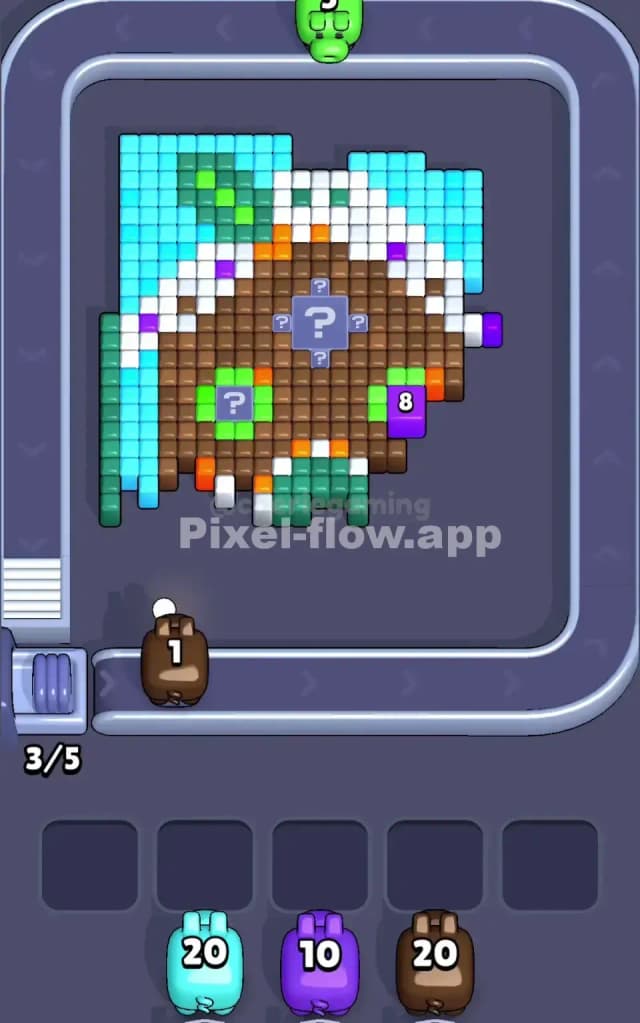
Visually, the board is symmetrical, but your gameplay won't be. The conveyor belt wraps around the left and bottom. This means pigs often snipe the left side of the house first, leaving the right side untouched until later. This uneven clearing can be dangerous; you might expose a deep layer on the left while the right is still covered in surface-level Teal blocks.
Step by step solution walkthrough for Pixel Flow Level 160
First Color Zone to Erase in Pixel Flow Level 160
Attack the Teal/Green Border first.
This is a forced move, but also a strategic one. The game typically hands you Green pigs (often with 20 ammo) right at the start. Use them to strip away the outermost square frame. Do not let these Green pigs drop into your slots if you can help it; wait for the belt to align so they shoot immediately.
Once the Teal frame is gone, you expose the vast Light Blue sky. Clearing the sky is the only way to get a clean shot at the White roof and the Brown walls. If you ignore the sky, your pigs will waste ammo shooting single pixels on the edges rather than drilling into the main structure.
How to pass Pixel Flow Level 160 without power ups or boosters
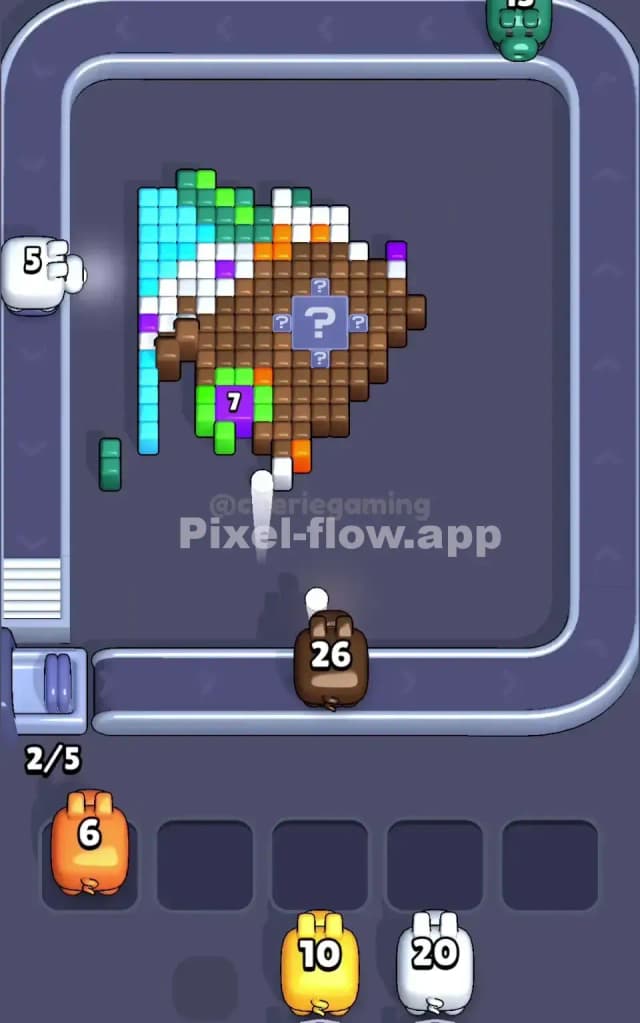
The mid-game here is brutal because of the Brown layer. It is incredibly thick. You will see Brown pigs with high ammo counts (26 or more). You must keep your waiting slots empty to accommodate them.
- Prioritize the Roof: Before you try to clear the main brown walls, try to get rid of the White roof tiles. The white layer sits on top of the brown. If you don't clear the white, your Brown pigs will have no targets and will clog your waiting slots.
- The Mystery Block Gamble: Be very careful when the Mystery Blocks (purple '?') start appearing. When hit, they turn into a random color voxel. If that color is Orange or Green and you don't have those pigs active, that block sits there, blocking the layers behind it.
- Slot Management: If you see a Brown pig and your board is still covered in White icing or Orange door details, let that Brown pig pass. Do not pick it up. It will just sit in your tray, occupying space you need for a White or Orange pig. Only pick up high-ammo pigs when you see a clear, large target area for them.
In Pixel Flow 160, you essentially want to peel the house like an onion: Border -> Sky -> Roof (White) -> Details (Orange/Green) -> Walls (Brown).
Last Details You Clean Up in Pixel Flow Level 160
The final moments of Pixel Flow Level 160 usually revolve around the "door" area and the deep background.
Once the massive Brown wall section is gone, you'll likely find leftover pixels around the front door. This area has a checkerboard pattern of Orange and White. These single pixels are annoying because they consume a whole pig's attention for very little progress.
Finally, check the "chimney" area. There is often a floating Green leaf or detail near the top left of the roof that persists until the end. Ensure you have a small Green pig saved for this, or you'll be stuck cycling through the conveyor belt looking for one while the timer ticks down.