Pixel Flow Level 186 Solution | Pixel Flow 186 Walkthrough
How to beat Pixel Flow Level 186: Video solution & walkthrough. The fastest way to pass Pixel Flow 186.
Is this the wrong level layout?🤔
Pixel Flow randomizes levels for different players. Don't worry, just upload a screenshot of your board, and our AI will find the correct video instantly.
Pixel Flow Level 186 Walkthrough
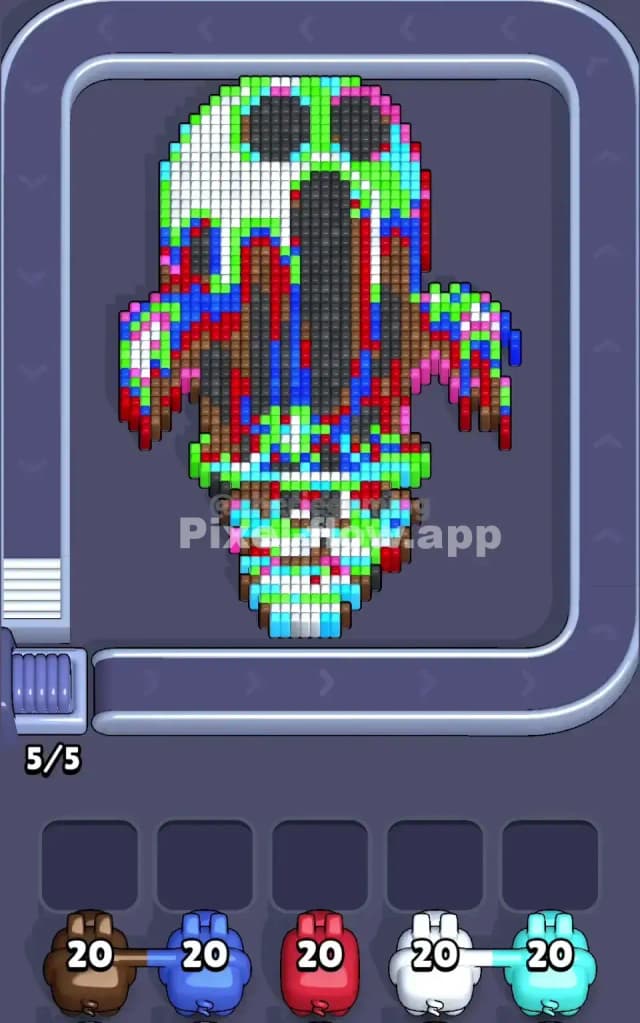
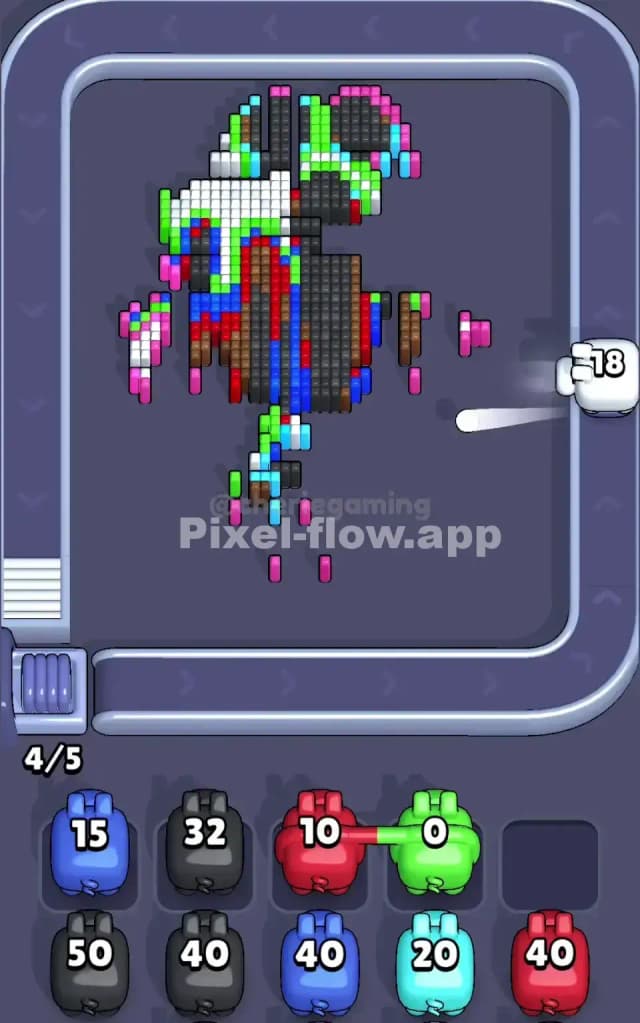
Pixel Flow Level 186 looks like a hallucination. Is it a melting ice cream cone? A glitchy ghost? Whatever it is, it’s a chaotic mess of neon colors dripping over a dark core. You are dealing with a tall, central figure that tapers at the bottom like a waffle cone but spreads out at the top with a massive white dome and neon green slime.
The rules here are standard but punishing. You have 5 slots. If you pull a pig that can't empty its ammo, it sits in a slot. Fill all 5 slots with half-empty pigs, and you lose. Because this artwork uses "dithering"—scattering single pixels of color rather than solid blocks—it is extremely easy to clog your slots.
Is this hard? Yes. I would classify this as a very hard level because of the hidden black layer and the scattered "glitch" pixels that trick you into wasting moves.
Pixel Flow Level 186 Overview
The artwork in Pixel Flow Level 186 feels like a corrupted video file. The subject is roughly shaped like a skull or a scoop of ice cream melting down a cone. The top left is dominated by a large patch of White, representing the "vanilla" or the skull's forehead. The top right balances this with toxic Neon Green.
Running straight down the center are thick, vertical stripes of Brown. This looks like chocolate syrup or the dark ridges of a waffle cone. The bottom tip is a mix of Cyan and White horizontal bands.
The real danger lies in the "noise." Notice the random specks of Red, Blue, and Pink scattered on the edges? These "glitch" pixels are not connected to large blocks. They are isolated. If you grab a Pink pig with 20 ammo but only see 4 Pink pixels on the board, that pig will clog your waiting slot for the rest of the game.
The board is asymmetrical. The left side is heavier on white; the right is heavier on green. The center is your anchor.
Step by step solution walkthrough for Pixel Flow Level 186
First Color Zone to Erase in Pixel Flow Level 186
Ignore the "confetti" pixels on the edges. Your priority must be the large, solid blocks of color. Look for the Brown vertical stripes in the center or the White block on the top left.
I recommend targeting the Brown first if possible. Why? The brown pixels run vertically through the entire figure. By removing this central spine, you essentially split the image in two. This exposes the inner sides of the left and right chunks, revealing more valid targets for your other colors.
If a Brown pig isn't available immediately, go for the White zone on the top left. It is a dense, solid chunk. A White pig will likely empty its entire clip into that forehead area, keeping your waiting slots clean. Do not touch the Red or Pink pigs early on unless you are 100% sure you can clear them immediately. They are bait.
How to pass Pixel Flow Level 186 without power ups or boosters
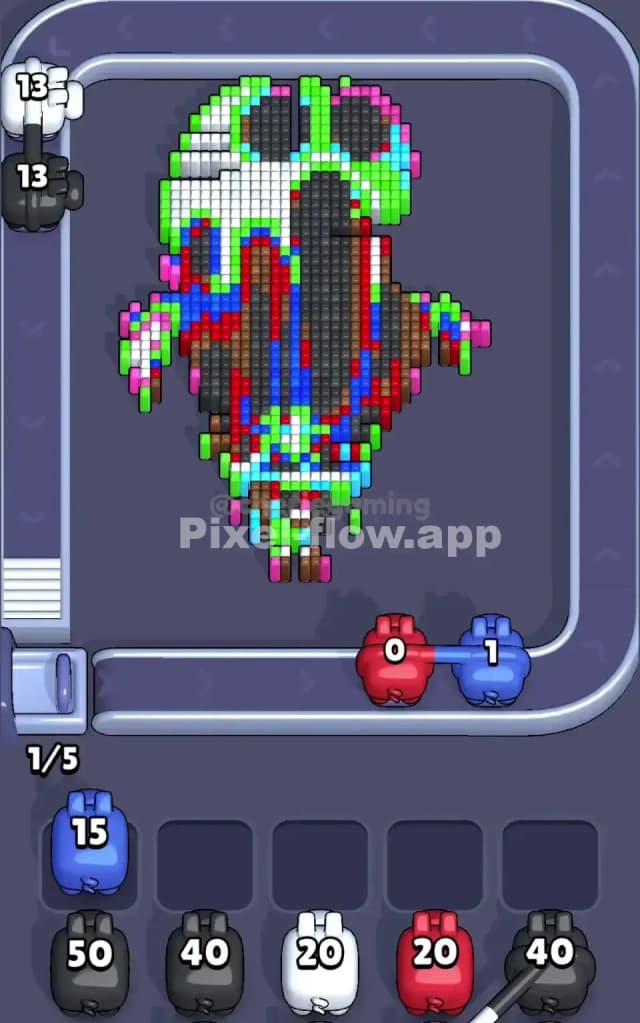
The mid-game of Pixel Flow Level 186 is where most players fail. Once you strip away the outer layer of White and Brown, you will reveal a terrifying core: Black pixels.
You will notice the queue suddenly fills with Black pigs carrying massive ammo counts (30, 40, even 50). This confirms that the "ghost" has a solid, dark skeleton underneath the colorful skin.
Here is the strategy for the no-booster run:
- Stop Clearing Edges: Do not try to pick off the single Blue or Pink pixels on the far left/right arms yet. They are distractions.
- Drill Deep: Focus entirely on the center. As soon as you see Black pixels exposed, prioritize Black pigs. Since the core is solid, Black pigs are "safe"—they will almost always find enough targets to empty their ammo and leave the board.
- The Cyan Trap: Be careful with the bottom "cone." It looks like alternating lines of Cyan and White. If you shoot a Cyan pig, make sure it hits the front layer. Sometimes the game tricks you with depth; a Cyan block might be behind a White one. Check your angles.
If your slots start filling up, pause. Look at the board. Do not simply click the next pig in the queue. Find a color on the board that has a lot of exposed surface area—likely Green on the right side by this point—and find the matching pig to clear a slot.
Last Details You Clean Up in Pixel Flow Level 186
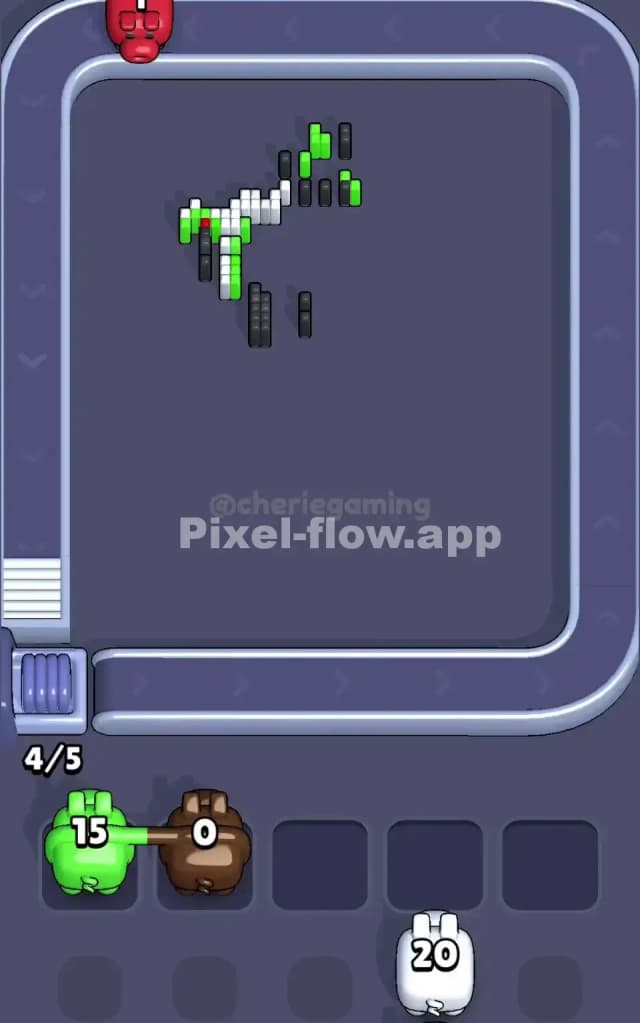
As you near the end, the picture will look like a skeleton. The beautiful neon drip is gone, replaced by jagged dark blocks.
The final cleanup usually involves the Neon Green and Pink remnants on the top right. These colors are often layered awkwardly, meaning you might have a few Green blocks hiding behind a Black wall. You have to clear the Black wall first to reach them.
The very last move is often the bottom tip of the cone. It’s usually a single voxel deep. Watch your ammo count. If you have a pig with 5 ammo and only 1 pixel left, that’s fine—victory clears the board anyway. But don't let that straggler block a slot earlier in the match. Clear the center, expose the core, and the glitches will resolve themselves.