Pixel Flow Level 23 Solution Walkthrough | Pixel Flow 23

How to solve Pixel Flow level 23? Get instant solution for Pixel Flow 23 with our step by step solution & video walkthrough.

Share Pixel Flow Level 23 Guide:
Pixel Flow Level 23 Gameplay
Pixel Flow Level 23 Solution 1
Pixel Flow Level 23 Solution 2
Pixel Flow Level 23 Solution 3

Pixel Flow Level 23 Overview

The Board and Its Layers

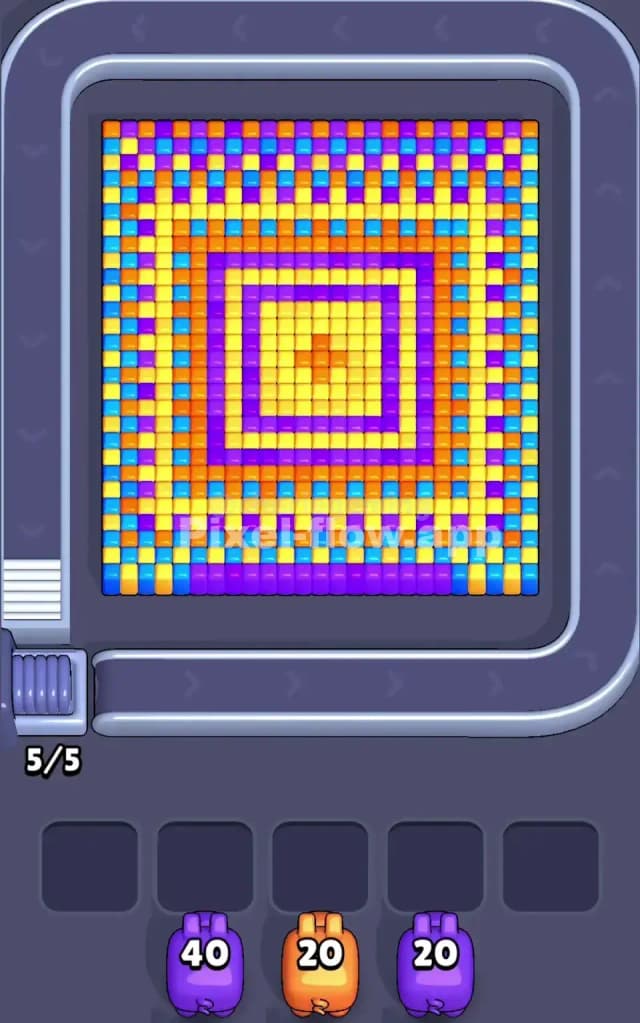
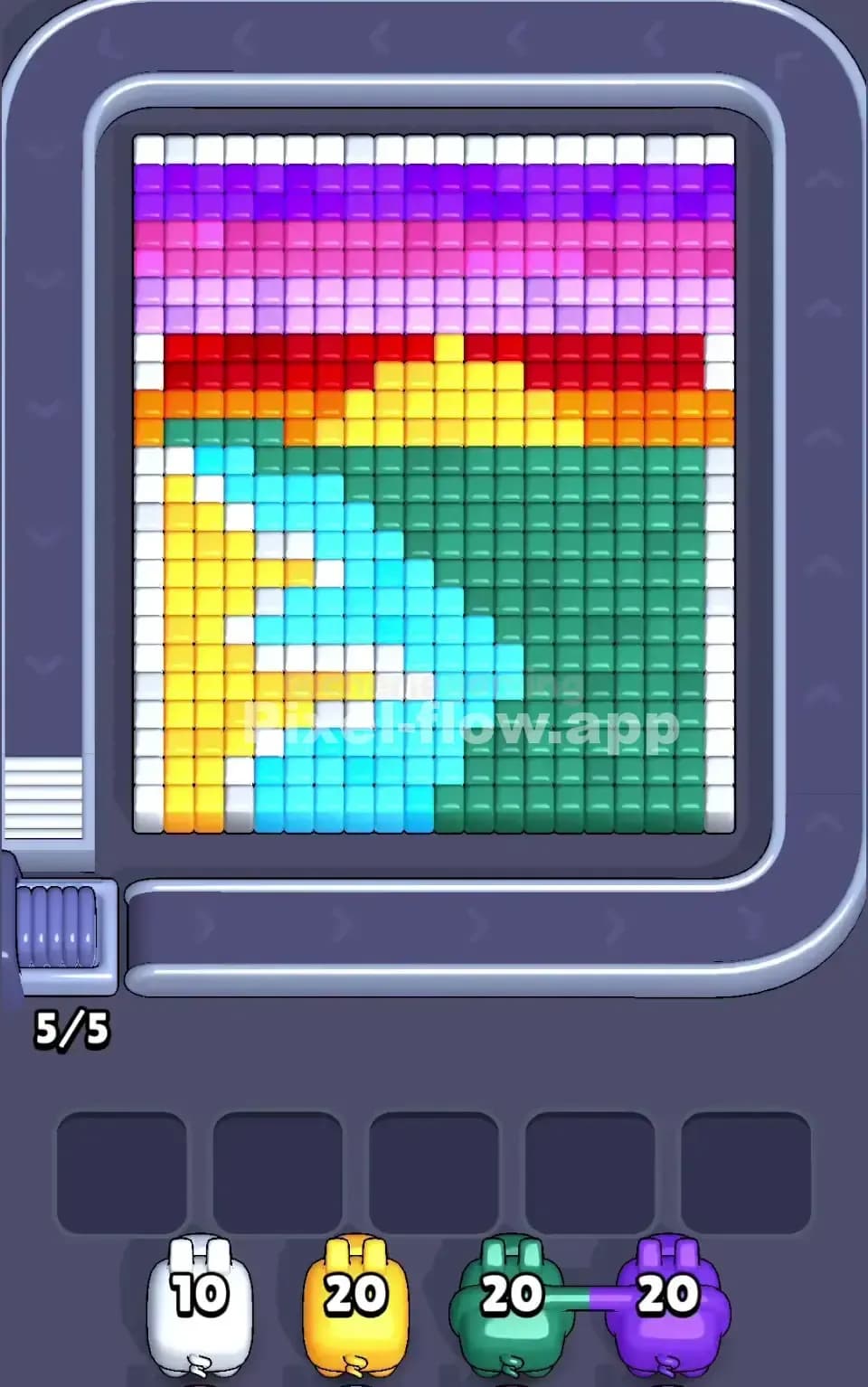
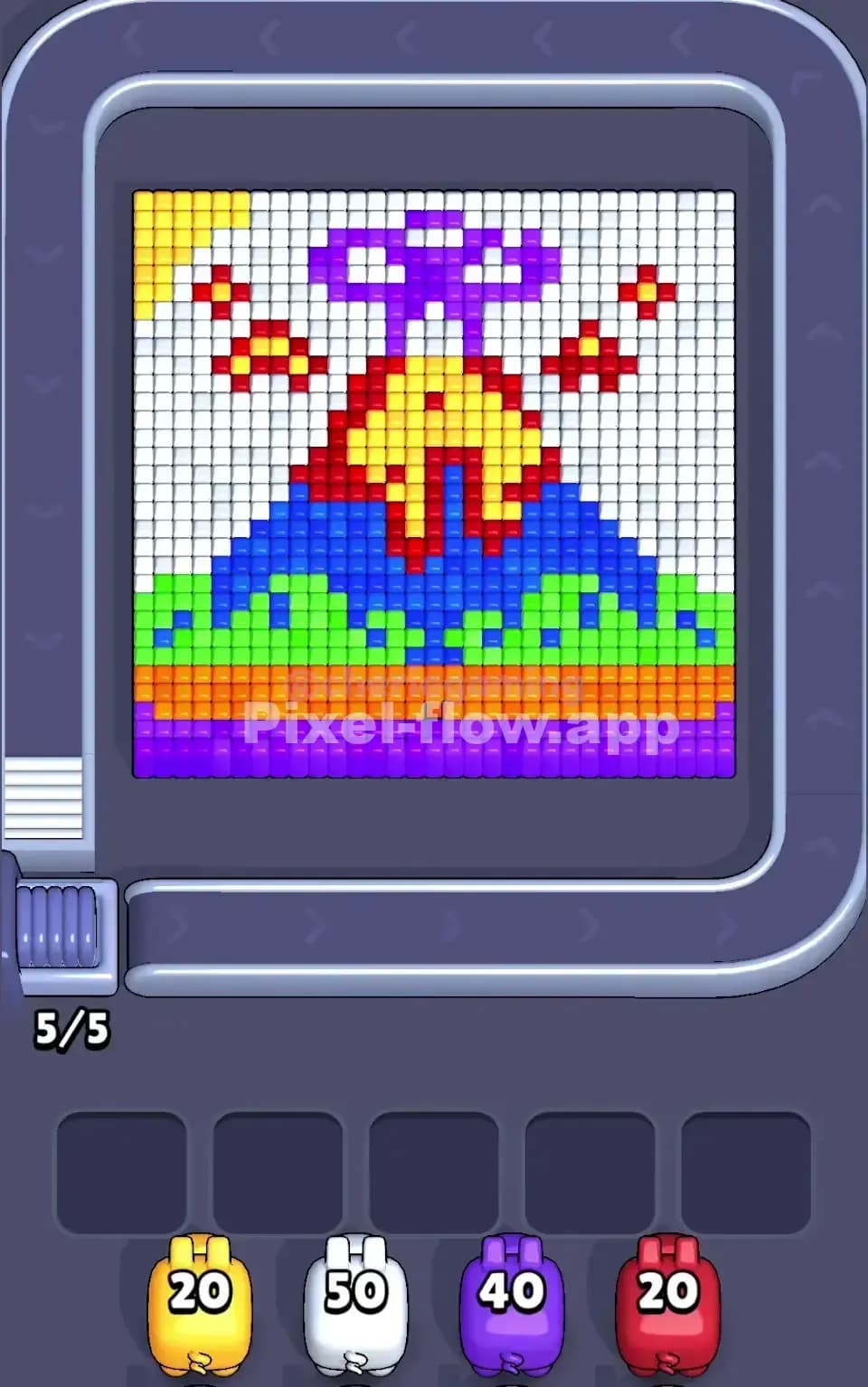
Pixel Flow Level 23 presents a striking concentric square pattern composed of vibrant, multi-colored voxel cubes arranged in nested rectangles. The outermost layer features a chaotic mix of cyan, yellow, orange, magenta, and blue cubes that form the periphery of the puzzle. Moving inward, you'll find a dominant purple band that creates a bold frame around the middle section. The innermost core is dominated by yellow and orange cubes, with purple accents scattered throughout the deeper layers. This layered structure is the heart of what makes Pixel Flow 23 so challenging—you can't simply target one color and move on. Instead, you'll need to strategically dismantle the outer shells to expose and access the colors trapped underneath.

The Win Condition and Deterministic Nature

Your goal in Pixel Flow Level 23 is straightforward: clear every single voxel cube from the board. What makes this straightforward goal deceptively complex is that you're working with three incoming pigs, each carrying a fixed ammo count that you can see upfront. You currently have two purple pigs with 40 and 20 ammo respectively, and one orange pig with 20 ammo. Every cube you destroy costs exactly one unit of ammo from the firing pig, and the order in which pigs arrive is completely fixed. This deterministic nature means there's an optimal solution waiting for you—it's not about luck, but about finding the right sequence and having the discipline to execute it.


Why Pixel Flow Level 23 Feels So Tricky

The Purple Bottleneck

The biggest threat in Pixel Flow Level 23 is the purple pig with 40 ammo arriving first. Purple cubes form a massive band around the middle layers of the board, and while that seems like plenty of firepower to handle them, here's the snag: if you let the first purple pig fire into purple cubes and it depletes its entire 40-round magazine, it'll fill up your waiting slots. If the second and third pigs (another purple with 20 and an orange with 20) then find themselves with no valid targets immediately available, they'll get stuck in those slots too. Before you know it, all five waiting slots are jammed with half-spent pigs, and you've created a deadlock where you can't clear the remaining cubes. This is why rushing to shoot every purple cube you see is a trap—you need to expose other colors first to give your later pigs something to aim for.

The Scattered Cyan and Orange Puzzle

Another subtle pain point in Pixel Flow Level 23 is the way cyan and orange cubes are scattered throughout the outer layers in what feels like a random pattern. They're not concentrated in neat blocks; instead, they dot the board in clusters that don't align neatly with each other. This means you can't just pick an orange pig and expect it to blow through a solid wall of orange targets. Instead, you'll find that after 10 or 15 shots, the orange pig runs out of visible orange cubes and gets dropped into a waiting slot—now you've got a partially spent pig taking up valuable real estate, and you need to carefully plan when to bring it back into action. Cyan has a similar problem: it's plentiful but scattered, which makes it hard to predict exactly when you'll exhaust cyan targets.

The Magenta Middle-Layer Surprise

There's also a layer of magenta cubes sandwiched between the outer chaos and the inner yellow core that tends to surprise players. Magenta isn't represented by any of your incoming pigs, which means those cubes can only be destroyed by accident or as part of a deeper layer strategy. Wait—that's not quite right in Pixel Flow Level 23's case, but the principle holds: magenta sits in an awkward zone where it's not your primary target, but it's blocking access to inner layers. If you're not paying attention, you might paint yourself into a corner where you've cleared everything except a few magenta cubes, and you have no way left to hit them.

When the Level Clicked for Me

Honestly, Pixel Flow Level 23 frustrated me for a good while. I kept assuming I should fire the first purple pig as much as possible, reasoning that getting 40 shots out of the way early would give me flexibility. Instead, I'd watch my waiting slots fill up and find myself stuck with nowhere to go. The "aha moment" came when I realized I needed to be ruthless about restraint: don't call the first purple pig unless you've already set up a path for the second and third pigs to follow. Once I accepted that I'd need to break the puzzle into four or five distinct phases rather than blasting away in one continuous push, everything fell into place.


Step-by-Step Strategy to Clear Pixel Flow Level 23

Opening: The Careful First Moves

Start Pixel Flow Level 23 by not immediately firing your first purple pig at the obvious purple target. Instead, take a moment to survey the board and identify which outer-layer colors appear most frequently and most concentrated. In this case, yellow and orange form larger contiguous blocks in the outer shell, and cyan also has some solid presence. Your opening move should be to hold off on the purple pig and let it drop into a waiting slot untouched—yes, that sounds counterintuitive, but it buys you strategic flexibility. Next, observe where the second purple pig and the orange pig land in the queue. Once you have visibility into the immediate sequence, identify a yellow or orange cluster that you can cleanly destroy once you get a yellow or orange pig. If you don't have a yellow pig but you do have an orange pig, start by looking for orange cubes on the surface. The goal in this opening phase is to clear some of the chaotic outer layer and create space—both on the board and in your waiting slots—without committing your heavy hitters (the 40-ammo purple pig) just yet.

Mid-Game: Sequencing and Layer Exposure

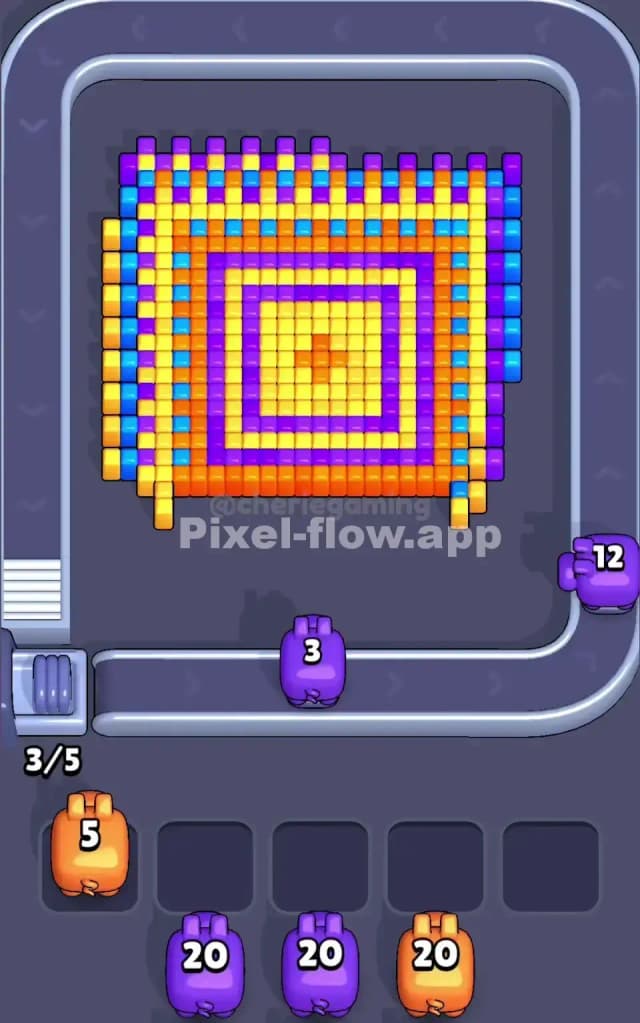
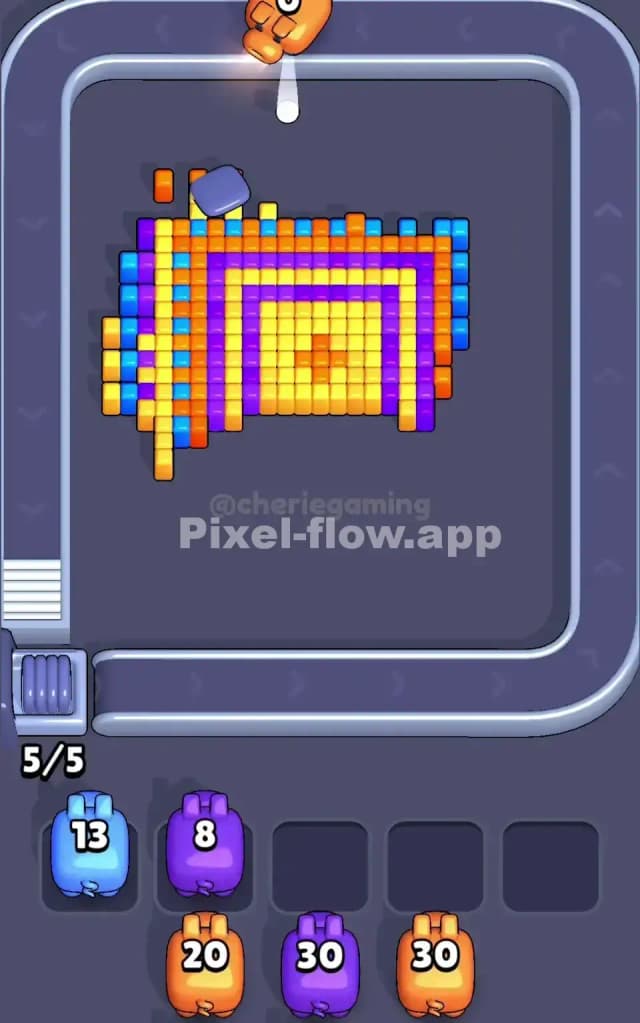
As you progress through Pixel Flow Level 23, you'll enter the critical mid-game phase where you need to think two or three pigs ahead. Once you've cleared some outer-layer chaos, bring your first purple pig back into action, but don't fire it recklessly. Count the purple cubes you can currently see—if there are 15 visible purple cubes and your pig has 40 ammo, fire 10 or 12 and then stop. Let the pig drop back into a waiting slot with ammo remaining. This accomplishes two things: it starts dismantling the purple band without overcommitting, and it keeps that slot occupied by a partially spent pig rather than a fresh pig from the queue. As you do this, you're exposing the inner layers beneath the purple band. Yellow and orange cubes will start becoming visible. This is where your orange pig with 20 ammo becomes valuable—bring it in and have it target the orange cubes that are now exposed in the middle layers. The key insight in Pixel Flow Level 23 is that each pig should ideally hit multiple "phases" of the board. Your first purple pig should fire in bursts, returning to the waiting slot between bursts to let other pigs work. By the time you're in the true mid-game (after 2–3 pigs have fired), the board should look noticeably less dense, and inner colors should be appearing.

End-Game: The Final Sequence and Clean Finish

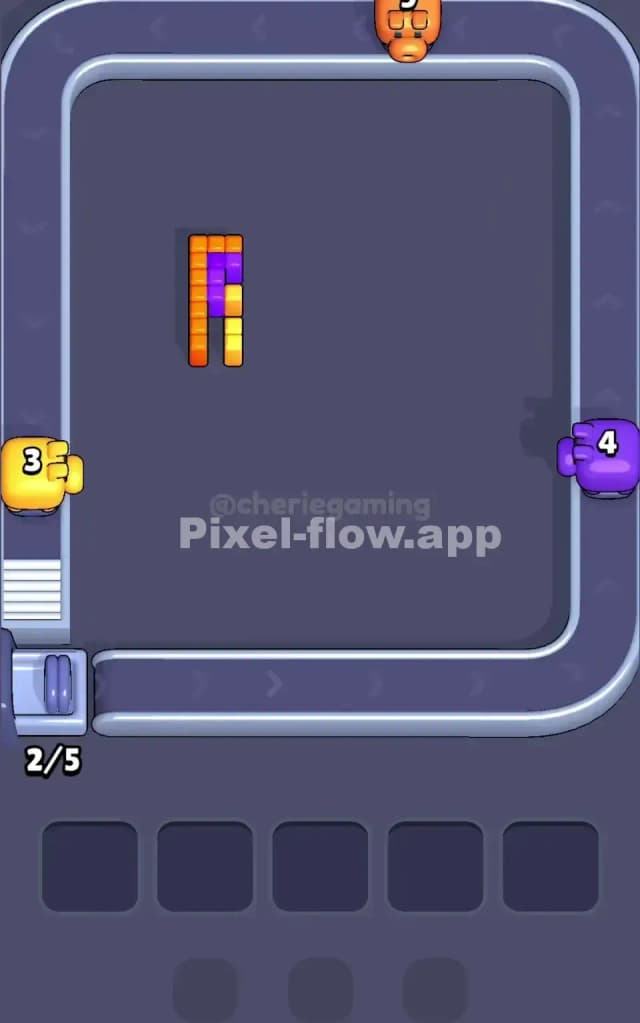
The end-game of Pixel Flow Level 23 requires precision and a steady hand. By this point, you've likely revealed the innermost yellow core and any remaining purple in the center. Your second purple pig with 20 ammo should target these final purple cubes. Coordinate its shots so that it empties completely—you have no room for error here, as a partially spent pig in the waiting slots near the end is a death sentence. Once purple is gone, you should be left with scattered yellow, cyan, orange, and any other stubborn colors. You might not have pigs specifically for every remaining color, but that's okay—the voxel-matching rule means you only lose ammo when you hit a matching color. Any stray shots into non-matching cubes don't cost you anything. The trick is to use your remaining ammo wisely and deliberately clear the final few cubes. If you've planned well throughout Pixel Flow Level 23, your waiting slots should have breathing room, and you'll watch the last few cubes disappear one by one. The satisfaction of clearing that final voxel is your reward for the patience and planning you showed throughout the level.


The Logic Behind This Pixel Flow Level 23 Plan

Ammo Efficiency and Waiting Slot Management

The core logic underlying this Pixel Flow Level 23 strategy is simple but powerful: ammo and waiting slots are your two finite resources, and they interact in a deadly way. Every pig has a fixed ammo count, and every waiting slot can hold only one pig. If you fill all five waiting slots with pigs that still have ammo but no valid targets, you lose. Therefore, the strategy prioritizes keeping waiting slots free by ensuring that each pig you call either (a) completely empties its ammo by hitting nothing but matching cubes, or (b) deliberately parks in a waiting slot with ammo remaining while you set up future pigs to create new targets. The nested structure of Pixel Flow Level 23 makes this possible: by clearing outer layers, you expose inner colors, which retroactively creates targets for pigs with ammo still in the magazine. This is why patience and sequencing matter far more than raw firepower.

Staying Calm and Planning Ahead

The psychological aspect of Pixel Flow Level 23 is just as important as the mechanical aspect. When you see that first purple pig with 40 ammo arriving, your instinct is to unleash it fully. Resist that urge. Instead, watch the queue, count the ammo, and mentally map out what the board will look like after two or three specific pig actions. Ask yourself: "If I fire the first purple pig into 12 purple cubes, which inner colors will that expose, and will my orange pig have valid targets?" By thinking in sequences rather than individual shots, you'll avoid the trap of jamming your waiting slots. Keep a running count of each color's total ammo: in Pixel Flow Level 23, you have 40 + 20 = 60 purple ammo and 20 orange ammo, for 80 total rounds. The board has maybe 50–60 cubes per color on average (rough estimate), so you're not short on firepower—you just need to deploy it intelligently. When you feel the frustration building during your first few attempts, remember that Pixel Flow Level 23 is a logic puzzle wrapped in a shooter's skin. Every failure teaches you something about the board's structure and which colors are hiding where. The moment you stop reacting and start planning is the moment Pixel Flow Level 23 will fall.