Pixel Flow Level 251 Solution | Pixel Flow 251 Walkthrough
How to beat Pixel Flow Level 251: Video solution & walkthrough. The fastest way to pass Pixel Flow 251.
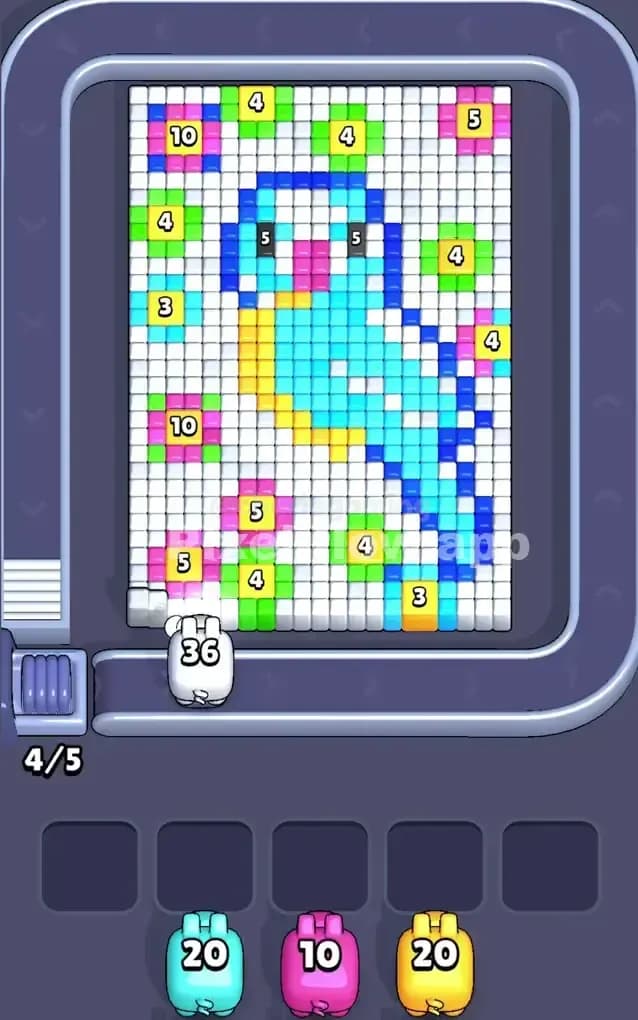
Is this the wrong level layout?🤔
Pixel Flow randomizes levels for different players. Don't worry, just upload a screenshot of your board, and our AI will find the correct video instantly.
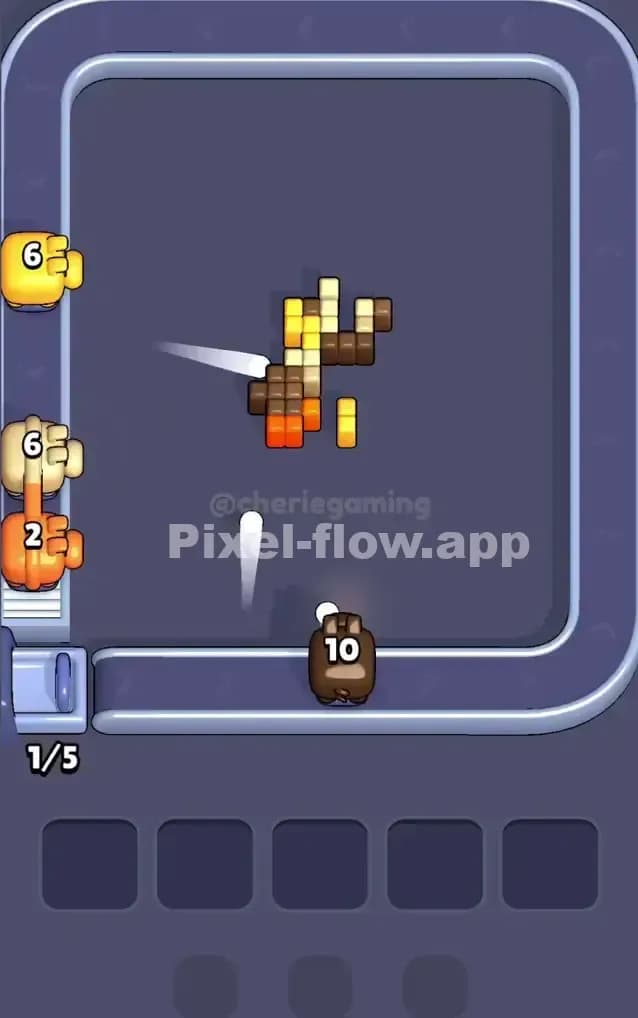
Pixel Flow Level 251 Walkthrough
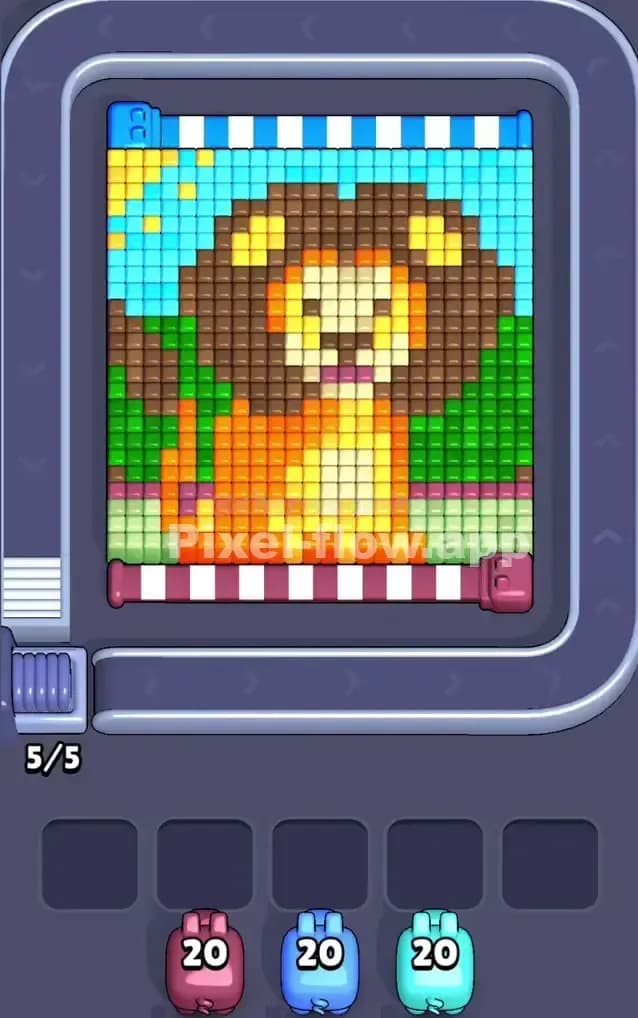
Welcome to the jungle, or at least a very cute voxel version of it. In Pixel Flow Level 251, you face a large, sunny portrait of a sitting lion. The image is dense with blocks, featuring a bright blue sky, a yellow sun in the top-left, lush green grass flanking the lion, and the lion itself dominating the center with browns, oranges, and yellows.
The rule to beat Pixel Flow Level 251 is standard but strict: clear the outermost layers first to reveal the "bones" of the image underneath. You have five waiting slots. If you fill them with pigs that can't shoot because their target color is buried deep inside the picture, you fail. Is this a very hard level? No. It’s a "patience level." It isn't mechanically complex, but it punishes you for trying to rush the lion before clearing the scenery.
Pixel Flow Level 251 Overview
Imagine a storybook illustration of a lion cub sitting politely for a class photo. The scene is bright and cheerful. The background is split horizontally: the top half is a light cyan sky with a yellow sun corner, while the bottom half is vibrant green foliage.
The lion sits dead center. It has a dark brown mane that forms a circular frame around its face. The face itself is a mix of cream and yellow, with cute little ears poking out into the mane. Its body is orange, sitting on a strip of purple/pink ground at the very bottom.
Asymmetry Note: The background isn't uniform. The left side has that chunk of yellow sun in the sky, making the blue section there smaller. The right side is almost pure blue sky. This matters. The right side is "safer" to clear early because it’s a massive block of a single color (Cyan), whereas the left side is broken up by the sun, requiring more specific pig management.
Step by step solution walkthrough for Pixel Flow Level 251
First Color Zone to Erase in Pixel Flow Level 251
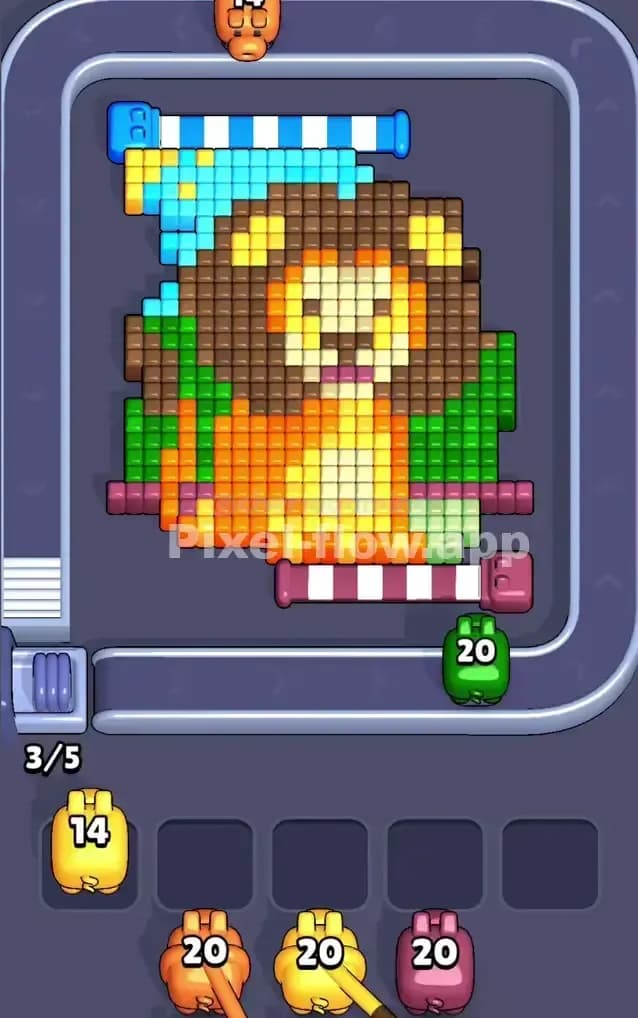
I start by shaving off the Cyan Sky first, specifically prioritizing the right side.
Here is the narrative logic: The sky is the "wrapper" of the image. It sits on the top layer and blocks access to the top of the lion’s mane. By focusing on the cyan pigs first, you remove a huge percentage of the useless blocks that are just taking up space. This clears the top half of the board rapidly.
Once the sky thins out, I shift focus immediately to the Green Grass. The grass blocks the sides of the lion's body. You want to peel this image like a banana: top (sky) first, sides (grass) second. Do not touch the brown mane or orange body yet unless you have absolutely no other choice. Those colors are the "core" and usually have layers underneath that you can't see yet.
How to pass Pixel Flow Level 251 without power ups or boosters
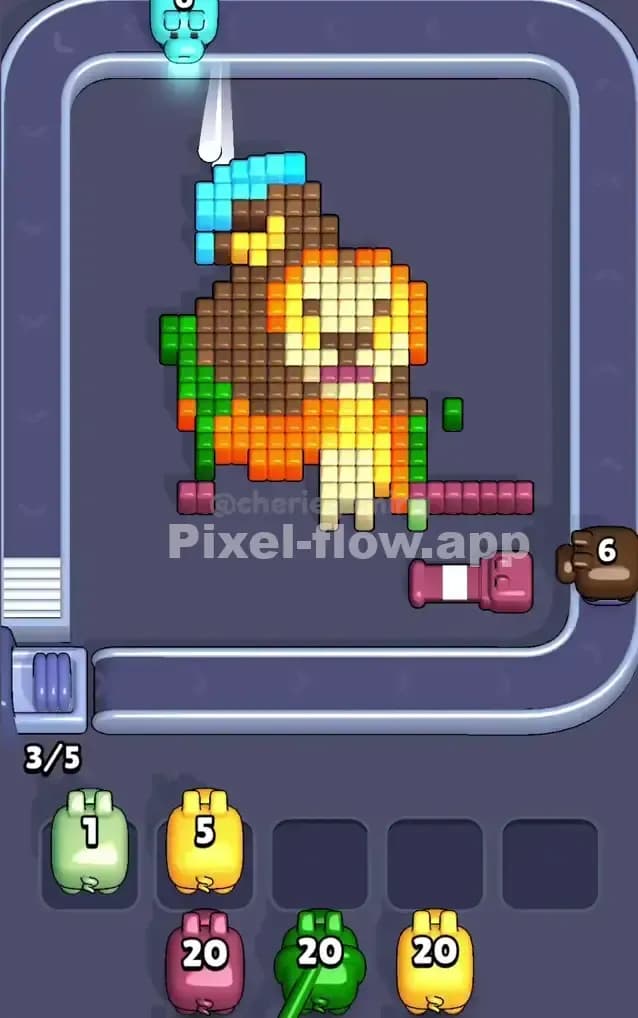
At the halfway point, your board will look strange. The nice rectangular frame will be gone. You will be left with a jagged, floating lion shape. The blue sky is gone. The green grass is gone.
This is the danger zone. You will likely see Dark Brown pigs (for the mane) and Orange pigs (for the body) appearing in your queue.
The Trap: The lion is thick. It has layers. The dark brown mane often covers parts of the face. The orange body covers the legs.
The Strategy:
- Prioritize the "Floor": Look at the bottom strip. There is a row of pinkish-purple blocks the lion is sitting on. Clear this row aggressively. It often acts as a foundation layer that, once removed, lets you hit the bottom of the orange body more easily.
- Hold the Yellows: You will see bright yellow pigs. These are mostly for the lion's face and the sun (if you haven't cleared it). If the face is still surrounded by the brown mane, do not slot the yellow pigs. They will sit in your waiting slots and rot because the yellow face blocks are "inside" the brown ring. Keep your slots open for Brown and Orange.
- The Mane Event: Once the background is gone, the Dark Brown pigs become your VIPs. The mane is the largest remaining obstacle. Dedicate two slots to holding brown pigs if needed, because that mane takes a lot of ammo to chew through.
Last Details You Clean Up in Pixel Flow Level 251
The final few moves of Pixel Flow Level 251 are usually centered on the lion's face and chest.
Once the dark brown mane is stripped away, the Cream/Light Yellow face is exposed. This is usually a single, flat layer that clears instantly. The very last blocks to vanish are often the deepest parts of the orange body or the small pink tongue detail.
Watch out for "stray pixels." Sometimes a single green block from the grass hides behind the lion's tail on the left. If you have a green pig stuck in your slot from the start of the game, this is the moment you finally get to fire it. Don't panic if that pig sits there for 2 minutes; its target is just hiding behind the orange body. Keep calm, clear the orange, and the shot will open up.