Pixel Flow Level 252 Solution | Pixel Flow 252 Walkthrough
How to beat Pixel Flow Level 252: Video solution & walkthrough. The fastest way to pass Pixel Flow 252.
Is this the wrong level layout?🤔
Pixel Flow randomizes levels for different players. Don't worry, just upload a screenshot of your board, and our AI will find the correct video instantly.
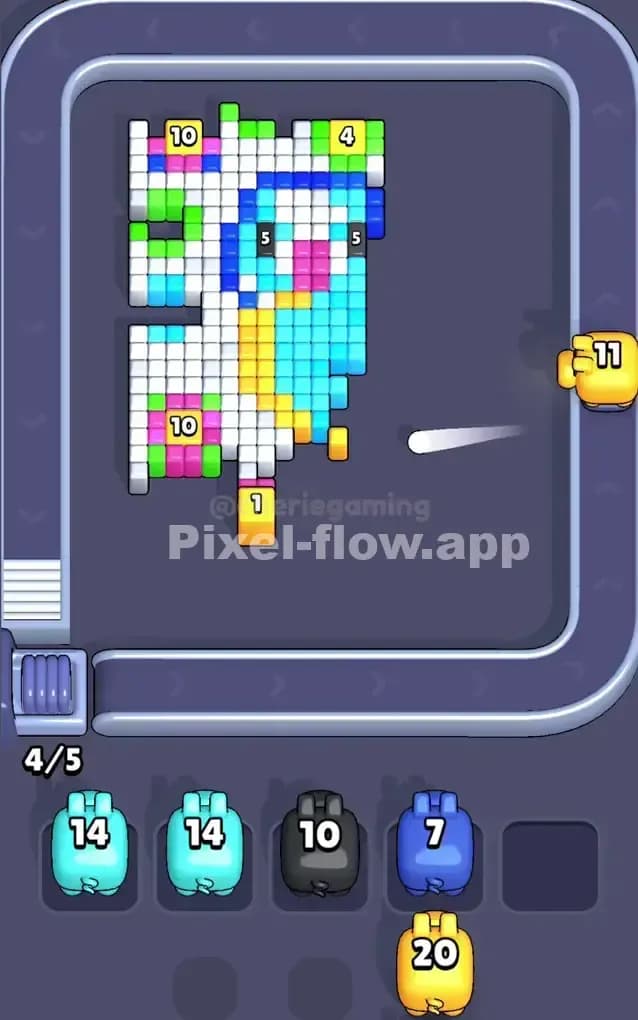

Pixel Flow Level 252 Walkthrough
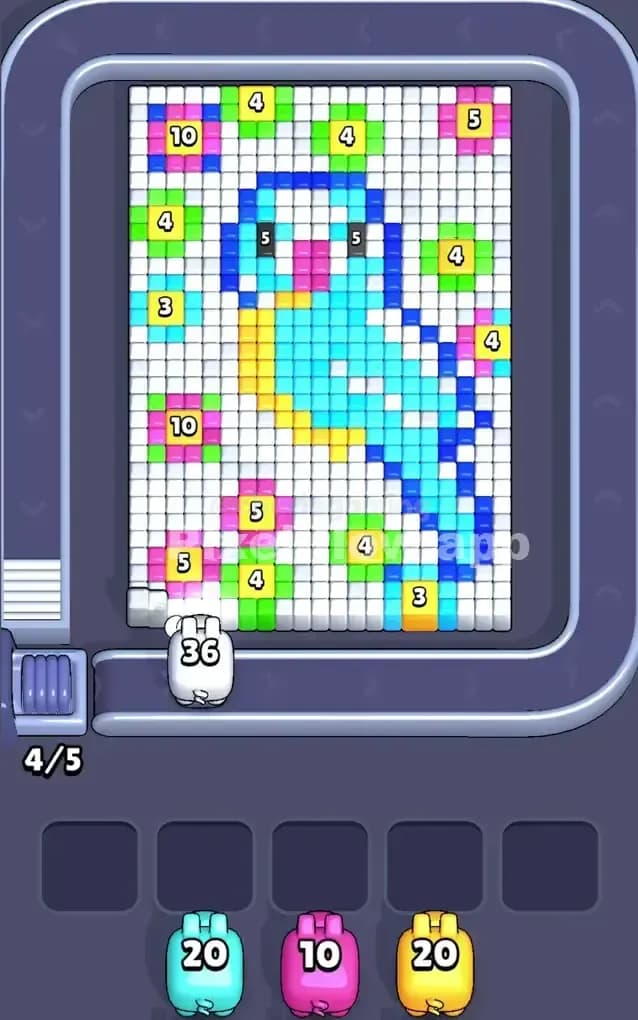
This level is a massive, chunky endurance test. You are facing a large pixel art parrot—specifically a blue budgie or macaw—surrounded by a noisy field of abstract flowers. The board is dense. The stacks are high. The main challenge here isn't tricky angles; it's pure volume. You have huge stacks of White blocks acting as a background fog, and deep stacks of Pink and Yellow in the flowers. Because the ammo requirements are so high to clear even a single flower, slot management becomes a nightmare. If you don't get the right high-ammo pigs early, you will clog your slots instantly. This is a very hard level.
Pixel Flow Level 252 Overview
The artwork depicts a bright blue bird perched in the center, facing left. It has a cheerful yellow belly, a pink beak, and black eyes. It’s vibrant. But the bird is trapped. Surrounding the parrot is a chaotic garden of pixel flowers.
Notice the asymmetry in the floral hazards:
- The Left Side: Dominated by two heavy "square" flowers. These are brutal. They have Pink borders and Yellow centers, and they are extremely deep stacks (often requiring 10+ ammo).
- The Right Side: Lighter, more organic flowers. Green petals, yellow centers. These are shallower (stacks of 4 or 5) and easier to clear.
- The Background: A massive sheet of White blocks covers everything, acting as the "soil" for these flowers.
The visual trap here is the mix of depths. The white background looks flat, but it connects everything. The bird itself is a solid anchor in the middle, but you can't really work on the bird until you mow the lawn around it.
Step by step solution walkthrough for Pixel Flow Level 252
First Color Zone to Erase in Pixel Flow Level 252
You must attack the White Background first.
Logically, there is no other choice. The white blocks aren't just at the back; they fill every gap between the flowers and the bird. A White pig with high ammo (like the 36-ammo pig seen in typical runs of this level) is your best friend. Narrative-wise, think of this as clearing the fog. Until the white is gone, the board is a claustrophobic mess. Clearing the white exposes the edges of the flowers and the outline of the blue bird. If you try to snipe the green or pink flowers first, your pigs will waste ammo hitting the white blocks shielding them, or worse, they'll have no valid targets and drop into your waiting slots, starting the death spiral.
How to pass Pixel Flow Level 252 without power ups or boosters
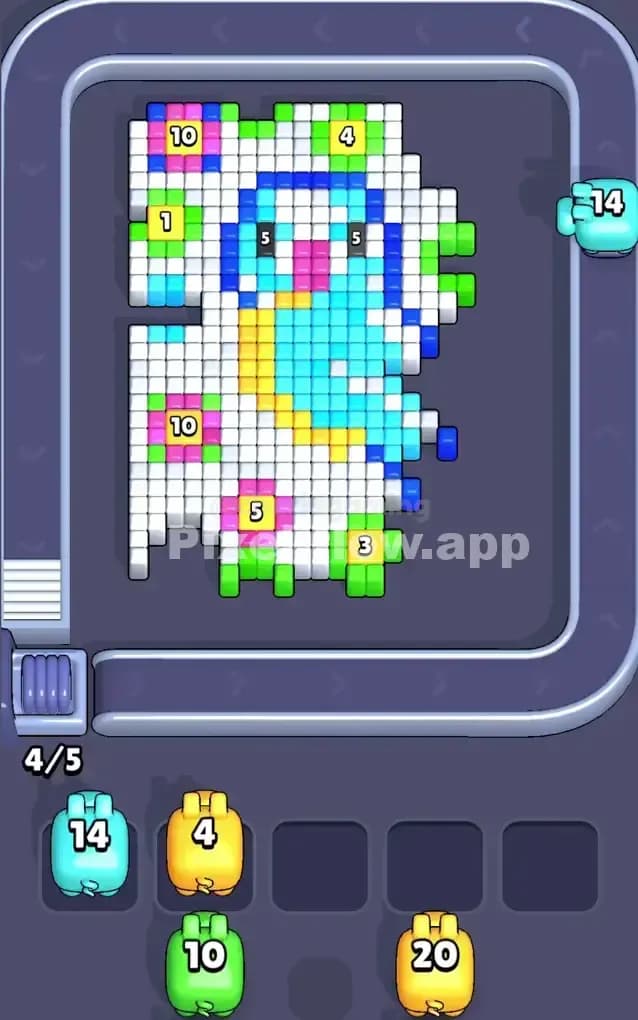
Once the white "fog" is lifted, the board looks like a skeleton. You have the central bird and floating islands of flowers. This is the danger zone.
Here is how to survive without boosters:
- Ignore the Bird's Body (Blue/Cyan): The blue pigs will come, but the bird is a huge target. It’s safe. It’s easy to hit later.
- Focus on the "Deep" Flowers: Look at the square flowers on the left. The Pink blocks there are stacks of 10. That is huge. If a Pink pig appears, do not let it pass. Use it immediately on those deep stacks. If you let a Pink pig slide into a waiting slot while you mess around with the bird, you might not get another one quickly enough to clear that 10-stack before the board advances.
- Manage the Green/Yellow Scatter: The green flowers are shallow (stacks of 4). They are quick wins. Prioritize clearing these small clusters to keep the board clean.
- The Slot Trap: Because the stacks are deep, pigs stay on the conveyor belt longer. This is good! It means they don't fill your waiting slots. However, if a Black or Dark Blue pig shows up early, you are in trouble. Those colors are buried deep inside the bird (eyes and outline). They have zero targets right now. You must keep a slot open for them. If your slots are full of useless Black pigs while you are still trying to chip away at the Pink flowers, you lose.
Last Details You Clean Up in Pixel Flow Level 252
The end game is usually the bird's face. After the white background is gone and the heavy pink flowers are shredded, you are left with the Blue body.
As you strip away the Light Blue feathers and the Yellow belly, you will finally expose the core structure:
- Dark Blue: The outline of the wing and head.
- Black: The pixel eyes.
These are the last cubes to fall. They are usually buried under 5-6 layers of other colors. Save your small-ammo pigs for this moment. You don't need a heavy hitter here, just precision. Watch out for the single Pink block that often hides right at the tip of the beak—it’s easy to miss until the very end.