Pixel Flow Level 250 Solution | Pixel Flow 250 Walkthrough
How to beat Pixel Flow Level 250: Video solution & walkthrough. The fastest way to pass Pixel Flow 250.
Is this the wrong level layout?🤔
Pixel Flow randomizes levels for different players. Don't worry, just upload a screenshot of your board, and our AI will find the correct video instantly.


Pixel Flow Level 250 Walkthrough
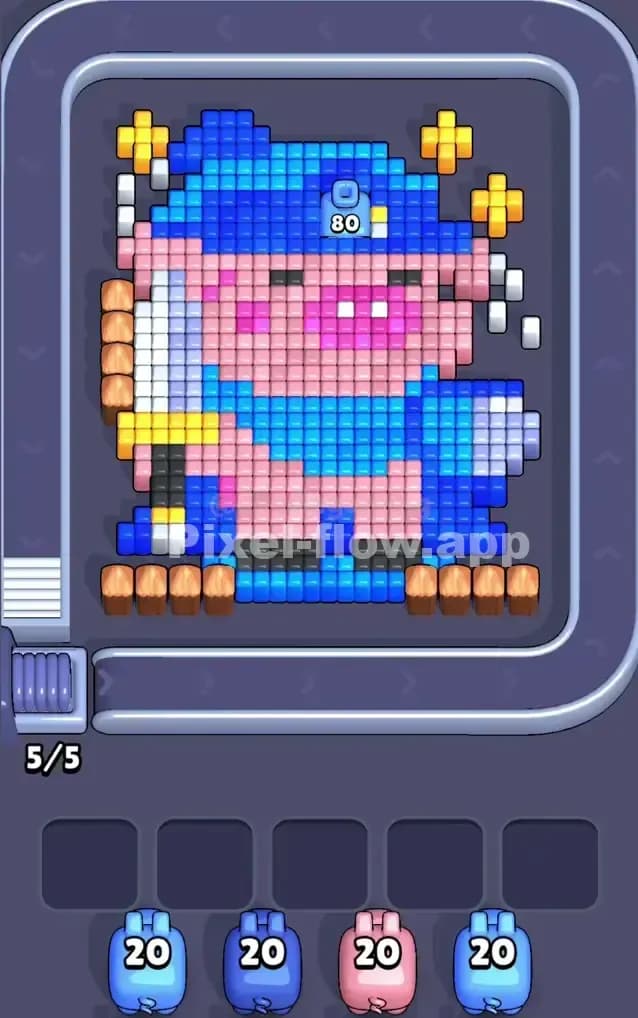
This level features a large, detailed pixel art character: a pig dressed as a fantasy adventurer, complete with a blue wizard hat and a sword. The main colors are various shades of Blue (hat and cape), Pink (skin), White/Yellow (sword), and some Brown wooden crates acting as barriers.
The rule to beat Pixel Flow Level 250 is standard: clear the outer layers of the pig and the crates to expose the voxels underneath. You have 5 waiting slots. If you fill them all with pigs that can’t shoot, you lose. Because of the density of the blue hat and the annoying wooden crate placement, I judge this as a very hard level.
Pixel Flow Level 250 Overview
The artwork depicts a heroic pig ready for battle. He dominates the center of the board. He's wearing a massive blue hat that takes up the top third of the screen, adorned with yellow sparkles. In his left hand (our left), he holds a vertical sword made of white and yellow blocks. His outfit is a mix of light and dark blues.
What makes Pixel Flow 250 tricky is the asymmetry caused by the environment.
- Left Side: A tall stack of brown wooden crates blocks the sword. You cannot hit the white blade easily from the side until these are gone.
- Bottom: A row of wooden crates protects the pig's feet. This prevents you from clearing the bottom-most blue rows early on.
- Top: The yellow stars/sparkles are floating free, making them easy targets, but the hat is a dense block of blue that requires heavy ammo to clear.
The "feel" here is defensive. The crates act like a shield, forcing you to attack from the top-down rather than the sides or bottom.
Step by step solution walkthrough for Pixel Flow Level 250
First Color Zone to Erase in Pixel Flow Level 250
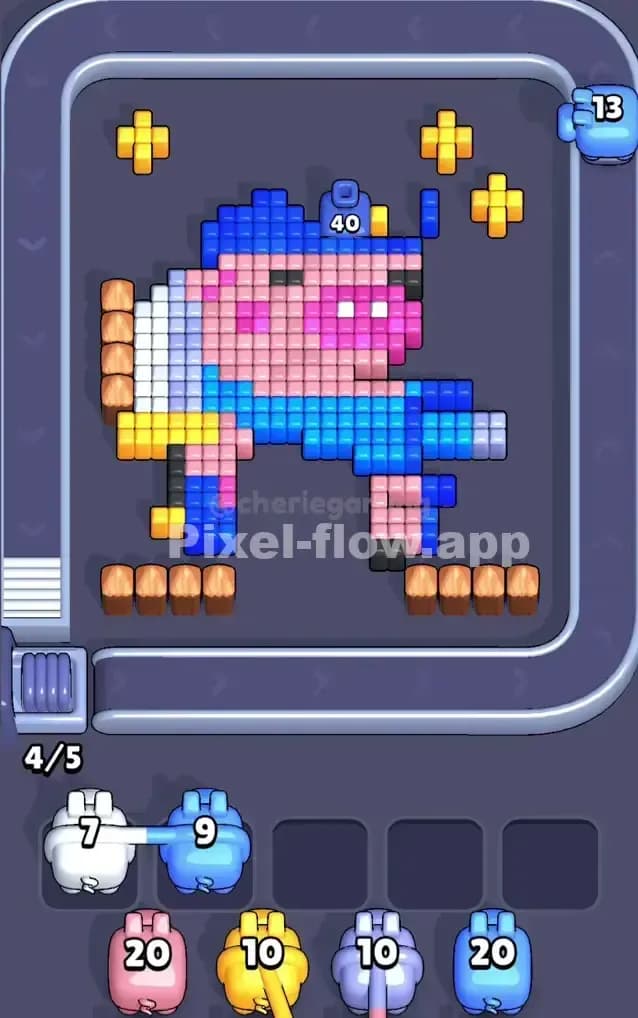
I start by targeting the Dark Blue of the hat.
Here is the narrative logic: The hat is the highest point of the structure and is completely exposed. Unlike the feet (blocked by crates) or the sword (blocked by the left crates), the top of the hat is wide open. By peeling off the dark blue layers first, you immediately reduce the height of the sprite. This reveals the pink skin underneath and starts to expose the inner layers of the sword hilt. If you try to attack the wood crates first, you often waste turns waiting for specific brown-ammo pigs that might not spawn immediately. Dark Blue is almost always a safe bet to clear queue space.
How to pass Pixel Flow Level 250 without power ups or boosters
Halfway through the level, the board usually looks like a mess. The hat is gone, leaving a "headless" pig, and you are likely struggling with the wooden crates.
- Prioritize Wood Breakers: Once the hat is shaved down, you must clear the brown crates. The moment a brown-ammo pig appears, use it. Do not let it sit in your slot. The left vertical stack is more dangerous than the bottom row because it hides the white sword blocks. You can't clear the white sword without clearing the left crates first.
- The "Yellow Hilt" Trap: Be careful with yellow pigs. The sword hilt (yellow) is often buried behind white blocks or blue cape blocks. Do not pull a yellow pig into your slots unless you see exposed yellow pixels. If you grab one too early, it will clog your slots while you frantically try to clear the white blade.
- Pink Skin Management: The face is a huge block of pink. It’s a great "ammo dump." If your slots are getting full, look for pink pigs. You can almost always fire off pink ammo because the face is large and centrally located. Use the face to keep your slots empty while you wait for the specific colors needed to break the crates or the sword.
Last Details You Clean Up in Pixel Flow Level 250
The end game usually revolves around the Sword and the Feet.
By the final few moves, the big blocks of blue and pink are gone. You are likely left with a few stray white pixels from the sword blade that were previously hidden by the left crates. Also, watch out for the bottom row of blue (the feet). Because the bottom crates protected them for so long, they are often the last blue blocks remaining.
Save a small blue pig for the very end. You often think you are done, only to realize there are two blue voxels hiding behind a final wooden crate at the bottom right. Keep your eyes on the corners.