Pixel Flow Level 303 Solution | Pixel Flow 303 Walkthrough
How to beat Pixel Flow Level 303: Video solution & walkthrough. The fastest way to pass Pixel Flow 303.
Is this the wrong level layout?🤔
Pixel Flow randomizes levels for different players. Don't worry, just upload a screenshot of your board, and our AI will find the correct video instantly.
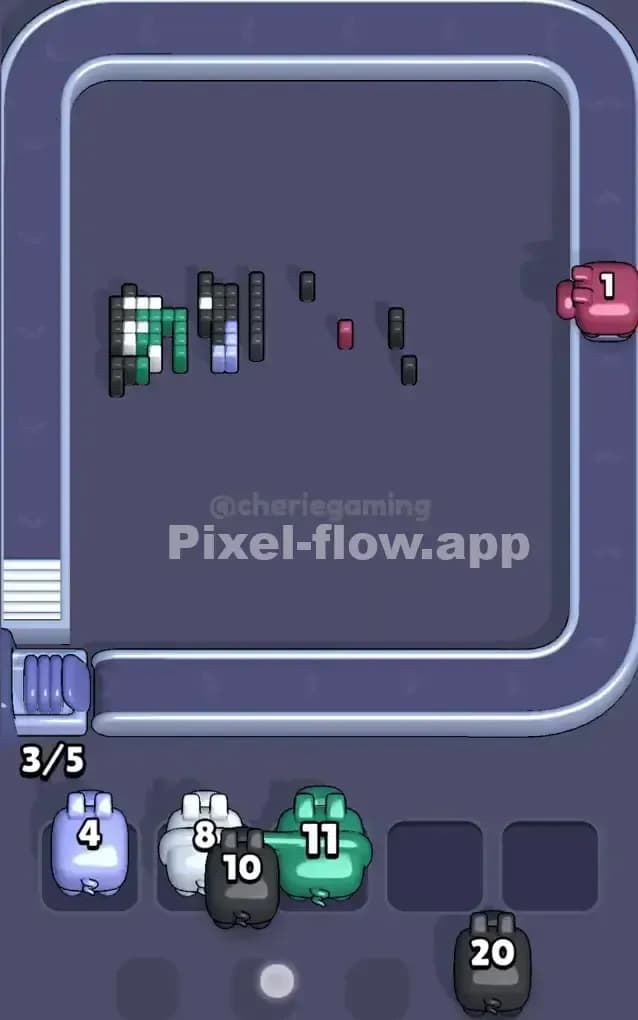
Pixel Flow Level 303 Walkthrough
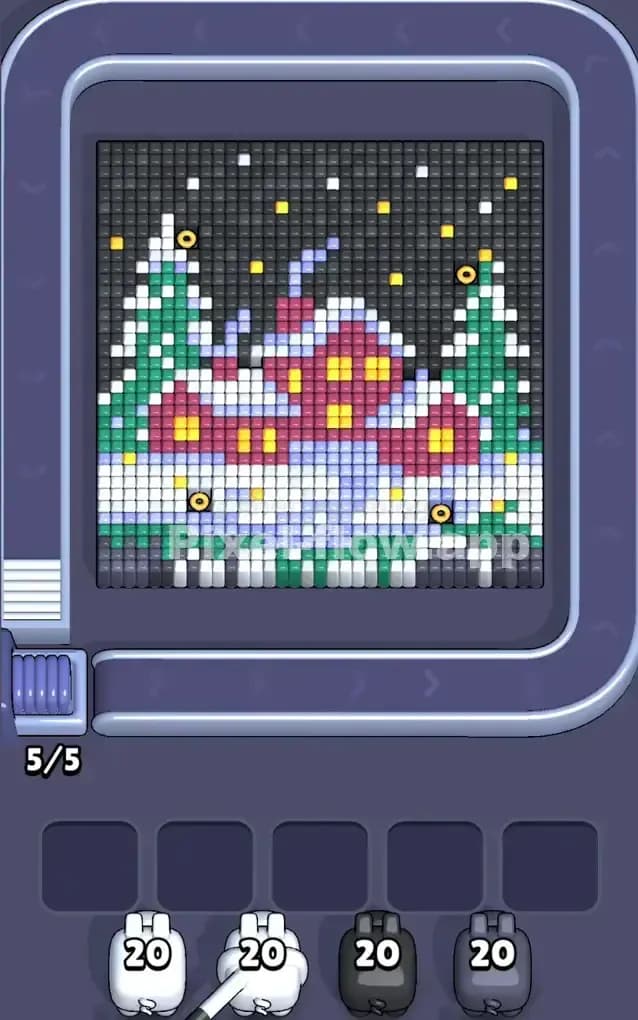
This level features a cozy winter night scene: two snow-covered pine trees flanking a red cottage with glowing yellow windows, all set against a dark, starry sky. The black background dominates the top half, while white snowdrifts dominate the bottom.
The rule to beat Pixel Flow Level 303 is simple but punishing: clear the front layers to reveal the back without clogging your five waiting slots. Because the black sky is huge but sits behind the trees and house, and the white snow is massive but sits in front of almost everything, your order of operations is critical. If you pull too many black or red pigs early, they will sit in your slots uselessly until the white snow is cleared. This is a very hard level due to the density of the white and black layers.
Pixel Flow Level 303 Overview
The artwork depicts a classic holiday card scene. You have a heavy white snowy foreground that acts as a gatekeeper.
- The Bottom Half: Almost entirely solid white snow, with a few green pine needles and brown tree trunks poking through at the very bottom edge.
- The Center: A red house with a purple-ish roof, yellow windows, and smoke rising. This is the "meat" of the sandwich.
- The Top Half: A massive block of dark grey/black night sky, speckled with white snowflakes and yellow stars.
- The Flanks: Two tall green pine trees with white snow frosted on their branches.
The asymmetry here is vertical. The bottom is a "white wall." The top is a "black wall." The colorful stuff is trapped in the middle. You cannot access the red house or the black sky effectively until you deal with the white wall at the bottom.
Step by step solution walkthrough for Pixel Flow Level 303
First Color Zone to Erase in Pixel Flow Level 303
Focus strictly on the White Pigs first.
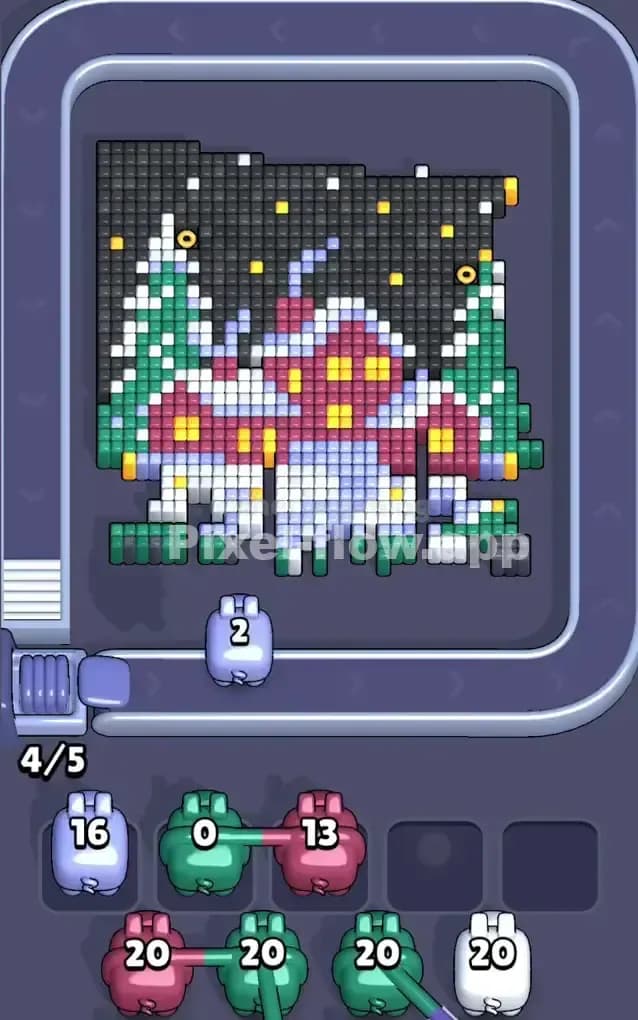
Looking at the board, the bottom third is a massive, horizontal band of white snow. This layer physically blocks the green trees and the red house foundation.
- Prioritize White: When white pigs appear on the conveyor belt, grab them immediately. They have high ammo counts (usually 20), and you have huge swathes of white snow to dump that ammo into.
- Why start here? If you grab a black pig now, it will likely only hit the very top row of the sky. Once that top row is gone, the black pig will drop into a slot and stay there, clogging your board, because the rest of the black sky is behind the white snow and green trees.
- The Trap: Do not touch the red pigs yet. The red house is buried deep in the center. You need to shave off the white foreground to expose the red blocks.
How to pass Pixel Flow Level 303 without power ups or boosters
Once the bottom white layer is thinned out, the picture will look like a floating house and tree tops. This is the danger zone where players lose.
- Shift to Green: As the white snow vanishes, the green pine trees on the left and right become the most prominent "outer" layer. Use green pigs to strip the trees down. This exposes the black sky behind them and the red house walls next to them.
- Handle the "Roof" Layer: You will see purple/blue blocks mixed in with the red roof. These often act as a shield for the red blocks. If you see a purple pig, use it to clear those roof accents.
- The Black Sky Gamble: Now that the trees (Green) and snow (White) are largely gone, you can finally start holding Black pigs. However, be careful. The black background is deep. Only keep one or two black pigs in your slots at a time. If you fill three slots with black pigs, and suddenly a layer of red blocks the sky, you will choke your board.
- Yellow Windows: The yellow blocks are tiny targets (windows and stars). Do not prioritize yellow pigs unless you have a clear shot at multiple windows. Otherwise, let them pass or use them quickly on exposed stars to free up the slot immediately.
Last Details You Clean Up in Pixel Flow Level 303
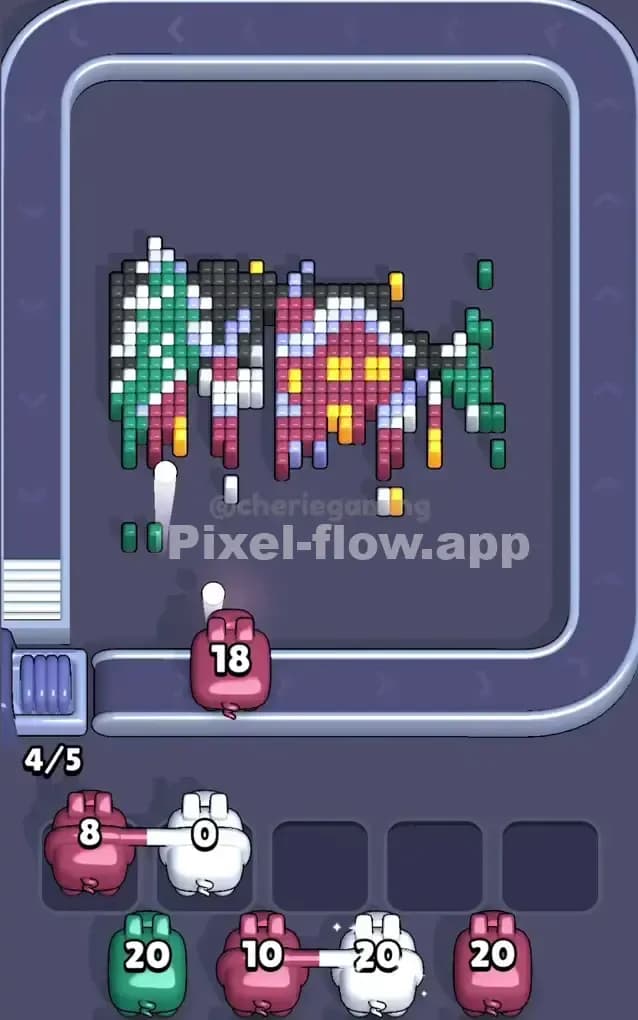
In the final phase, you are usually left with a scattered mess:
- The Night Sky: The large chunks of black background are often the last to go because they are the deepest layer. You will likely have 1-2 black pigs constantly firing at the back wall while you clean up scraps.
- Hidden Snowflakes: Watch out for single white blocks "floating" in the black sky area. These are the snowflakes. If you ignored white pigs earlier because the ground was clear, you might get stuck waiting for a white pig just to hit three tiny pixels.
- The Chimney Smoke: The purple/grey smoke pixels above the house are easy to miss against the dark background. Ensure you clear them before you fill your slots with black pigs trying to finish the sky.
Keep your slots open. If you have 3 pigs waiting, stop pulling new ones until at least one finishes its ammo. Patience beats panic here.