Pixel Flow Level 309 Solution Walkthrough | Pixel Flow 309

How to solve Pixel Flow level 309? Get instant solution for Pixel Flow 309 with our step by step solution & video walkthrough.

Share Pixel Flow Level 309 Guide:
Pixel Flow Level 309 Gameplay
Pixel Flow Level 309 Solution 1
Pixel Flow Level 309 Solution 2
Pixel Flow Level 309 Solution 3

Pixel Flow Level 309 Overview

The Board and Starting Setup

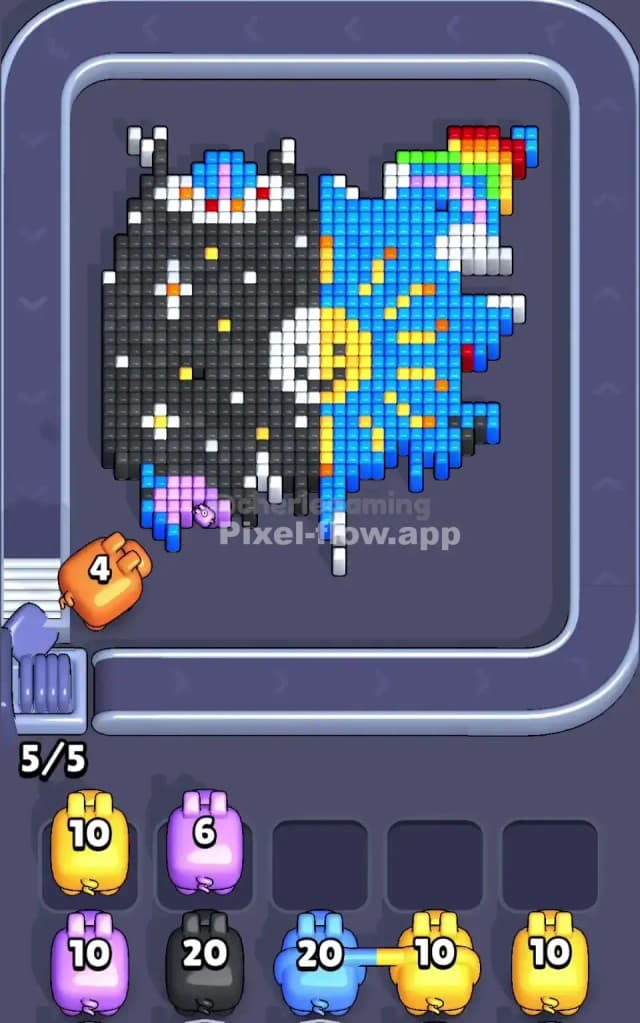
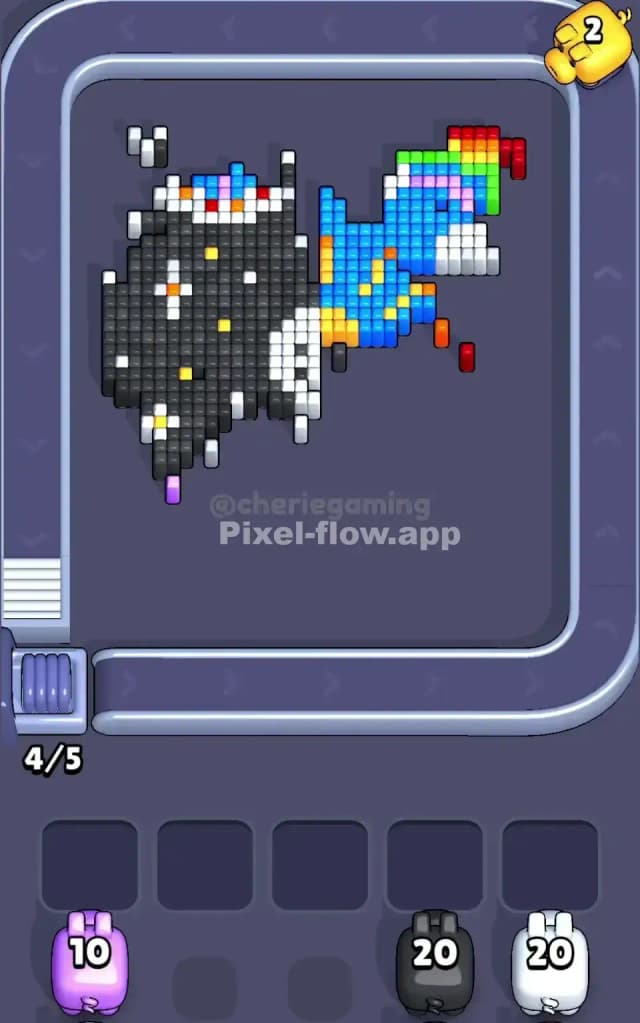
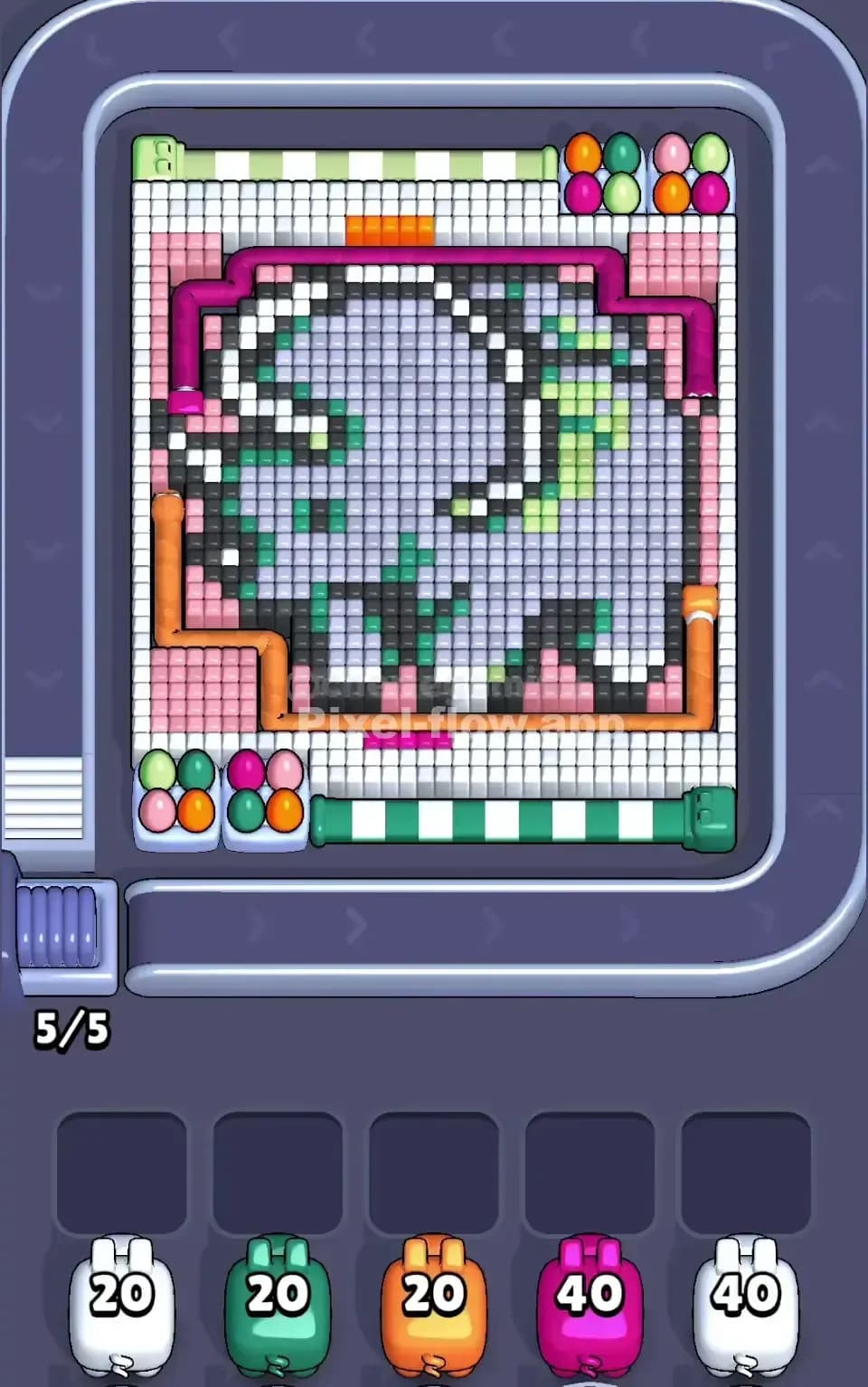
Pixel Flow Level 309 presents you with a beautifully detailed character portrait built entirely from colored voxel cubes. The main subject is a stylized face with expressive features, dominated by dark grays and blacks that form the skull and shadow structure, layered beneath bright yellows, oranges, reds, and whites that highlight the facial features, expression, and details. When you first load Pixel Flow 309, you're looking at a complex multi-layered composition where the outer frame and background are predominantly dark gray, while the inner face contains vibrant accent colors that feel deceptively easy to clear—until you realize how many cubes lurk beneath them.

The five pigs waiting in the queue at the bottom of Pixel Flow Level 309 each carry exactly 20 ammo: a dark gray pig, a yellow pig, a white pig, another dark gray pig, and a brown pig. This symmetry is deceptive; the real challenge lies in understanding that every cube you destroy consumes one ammo, and pigs drop into waiting slots the moment they have no valid targets left. Your win condition is straightforward but demanding: clear every single cube from the board before all five waiting slots fill with stuck pigs that have nowhere left to shoot.

The Win Condition and Deterministic Nature

Pixel Flow Level 309 isn't about luck—it's about sequencing. The pig order never changes, ammo counts are fixed, and cube positions don't shift. This means the level is 100% solvable through planning and observation rather than trial-and-error. You need to eliminate all voxel cubes on the board by targeting them with color-matched pigs in the correct order, exposing deeper layers as outer colors disappear. The waiting slots below act as a buffer; once they're full and you still have ammo left unspent, the level ends in failure. This mechanic transforms Pixel Flow 309 from a simple matching game into a puzzle where foresight and restraint matter as much as efficiency.


Why Pixel Flow Level 309 Feels So Tricky

The Dark Gray Bottleneck

Here's where Pixel Flow Level 309 becomes genuinely punishing: the dark gray cubes form the overwhelming majority of the board, especially the background and structural elements. You have two dark gray pigs, each with 20 ammo, for a total of 40 shots—yet the dark grays easily consume 50+ cubes across multiple layers. This creates an immediate tension. You can't simply dump all your dark gray ammo at once without exposing what's underneath; you need to strategically interleave other colors to break up the monotony and expose the next layer of grays. If you're careless and let the first dark gray pig shoot until it jams, you'll waste critical waiting slots and lose the flexibility to handle mid-game surprises.

Color Isolation and Hidden Depths

The bright yellows and reds in Pixel Flow Level 309 sit on top of the dark structure, and they're tempting targets because they're visible and distinct. However, beneath those vivid accent colors often lie more grays, more whites, and even brown elements that you can't access until you've cleared the overlying layers. I found myself repeatedly wanting to clear all the yellows first because they're so eye-catching, only to realize halfway through that I'd wasted a yellow pig's ammo on scattered cubes when I should have saved that pig's shots for a later phase where a cohesive yellow patch becomes exposed. Pixel Flow Level 309 punishes greed and rewards patience.

The Waiting Slot Squeeze

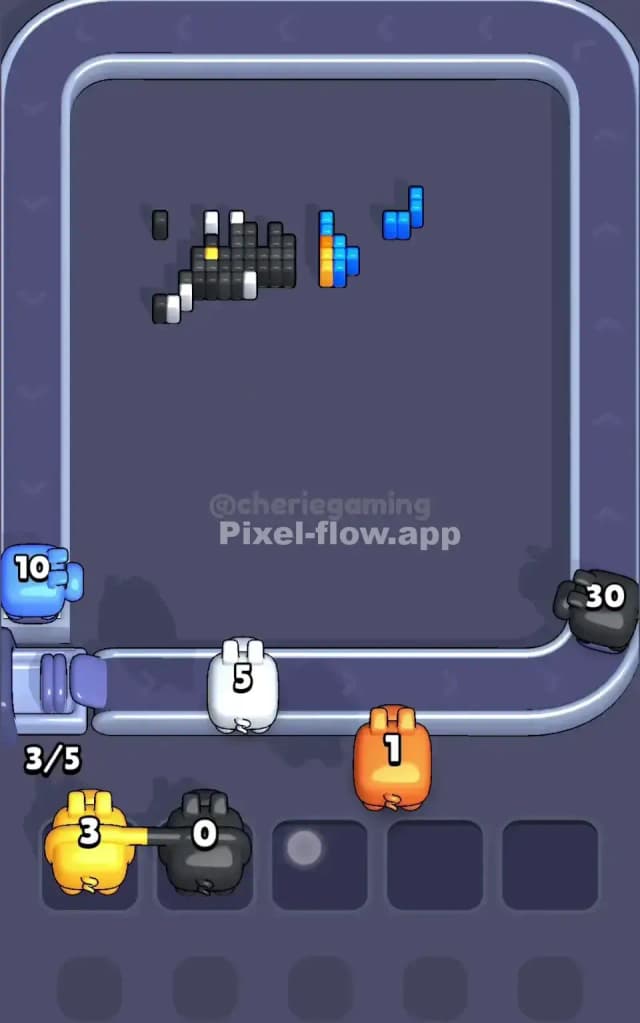
With five waiting slots and five pigs in the queue, you have zero margin for error once all slots fill. Imagine reaching the endgame of Pixel Flow Level 309 with two pigs still waiting to launch, but four stuck pigs already occupying the buffer because they ran out of valid targets early. Now the fifth pig arrives and immediately drops into the last free slot—and you still have cubes left on the board. Game over. This isn't theoretical; it's the most common failure mode in Pixel Flow Level 309, and it's frustrating because it often feels like you were "almost there." The tension between feeding pigs gradually and exposing new targets quickly is the real puzzle hidden inside Pixel Flow Level 309.

When the Level Clicked for Me

Honestly, my first dozen attempts at Pixel Flow Level 309 felt chaotic. I'd shoot randomly, watch pigs jam into the buffer, and restart without understanding why. The breakthrough came when I stopped thinking about "clearing colors" and started thinking about "keeping slots open." Once I accepted that parking a half-spent pig—letting it drop into a waiting slot even though it had ammo left—could be the right move because it freed me to sequence the next pig strategically, Pixel Flow Level 309 transformed from frustrating to fascinating. That shift in perspective is what separates wild guessing from actual strategy in this level.


Step-by-Step Strategy to Clear Pixel Flow Level 309

Opening: Establish Your First Layers

Start Pixel Flow Level 309 by firing the first dark gray pig and letting it chip away at the outer background structures, but don't empty it completely. The dark gray forms a shell, and you want to clear just enough to expose the next layer without losing sight of your overall plan. Aim for the edges and corners of the dark gray structure first—these are often the safest targets that don't accidentally expose too much too soon. After the dark gray pig has spent roughly 8–10 ammo, let it drop into a waiting slot even though it still has ammo remaining.

Next, launch the yellow pig. Pixel Flow Level 309's yellows are concentrated in the facial features and accents, and the yellow pig has exactly the ammo you need to clear most of them in one go. This is one of the few moments in Pixel Flow Level 309 where you can be aggressive and direct. Empty the yellow pig almost completely, aiming for dense yellow clusters. Don't waste shots on isolated yellow cubes; focus on the central concentrations. The yellow pig will likely jam into a waiting slot with a few ammo left.

At this point in Pixel Flow Level 309, you've used two of five waiting slots and exposed the next layer. Assess what's visible: more dark grays, whites, and possibly some reds that weren't previously accessible. You've kept three waiting slots free, which gives you breathing room.

Mid-Game: Layer Exposure and Ammo Precision

Now launch the white pig into Pixel Flow Level 309. Whites often form highlights and details, and they're scattered across the face. The white pig has 20 ammo, which should be more than enough to clear all visible whites. Be systematic: sweep across the board, targeting white clusters. Once the white pig is empty (or nearly empty), let it drop.

This is the critical moment in Pixel Flow Level 309. You've just filled your fourth waiting slot with three pigs still potentially in the queue—the second dark gray and the brown pig—plus whatever ammo remains to be spent. Reassess the board. You should now see deep layers of dark gray that were hidden before, and possibly brown elements. The second dark gray pig is your next launcher.

Feed the second dark gray pig carefully into the exposed inner grays of Pixel Flow Level 309. This pig carries 20 ammo, and you need every shot to count. Prioritize clearing new dark gray patches that appeared after removing the yellows and whites. Watch your waiting slot carefully; you want the second dark gray pig to drop into the fifth and final slot only when you're certain the brown pig can finish the job or when one of the earlier pigs has been depleted enough that you've freed a slot back up.

The red and brown cubes in Pixel Flow Level 309 are often the smallest populations and appear in accent areas. If reds become visible during mid-game, fire the yellow pig (if it has ammo remaining) or wait until the brown pig launches to handle browns systematically. The key is never letting all five waiting slots fill while you still have moves to make.

End-Game: The Final Stretch

By the end of Pixel Flow Level 309, you should have one or two pigs left in the queue and a nearly clear board. The brown pig is typically the last pig to launch, and it's your clean-up crew. Fire the brown pig at any remaining brown or dark-toned cubes that layer deep in the image. If the board is nearly empty by this point, the brown pig should finish it off.

The absolute final step in Pixel Flow Level 309 is confirming that no cubes remain. Scan every inch of the board, checking for any stray colors hidden in corners or layered deep. If you see a single cube and no pigs remain in the queue, you've failed—make a mental note for the next attempt. But if you clear the board before all waiting slots fill, you've beaten Pixel Flow Level 309. The moment the last cube vanishes, you've won.


The Logic Behind This Pixel Flow Level 309 Plan

Why Sequencing Beats Reaction

The strategy outlined above works because it respects the fundamental truth of Pixel Flow Level 309: you can't react in real-time to an evolving board. You must predict how layers will unfold and ensure your pig order aligns with the colors you'll encounter. By starting with dark gray, pivoting to yellow, then white, then dark gray again, and finishing with brown, you're following the natural order of the voxel layers you created when you first saw Pixel Flow Level 309. You're not fighting the board; you're dancing with it.

The waiting slot buffer isn't a penalty in Pixel Flow Level 309—it's a feature that forces you to think ahead. Every pig that drops into a slot is a sacrifice you're making to preserve flexibility. You're saying: "I'm okay with this pig being partially unspent because keeping a free waiting slot lets me respond to what the next layer reveals." This is mature puzzle strategy, and Pixel Flow Level 309 rewards it.

Staying Calm and Counting Ahead

When you're in the thick of Pixel Flow Level 309, especially if you've failed a few times, it's easy to panic and fire pigs randomly. Don't. Instead, count your remaining resources: How many pigs are in the queue? How many waiting slots are free? How much ammo have you burned, and what colors remain on the board? A thirty-second pause before each pig launch in Pixel Flow Level 309 can save you from a catastrophic final-slot jam.

Use your eyes to scan ahead two or three pigs. After you fire the yellow pig, already know that white is next. After white drops, already be thinking about how the second dark gray will behave. This forward-thinking approach transforms Pixel Flow Level 309 from a stressful race into a calm, deliberate chess game. You're not reacting to chaos; you're executing a plan, and that's the only way to truly master Pixel Flow Level 309.