Pixel Flow Level 310 Solution Walkthrough | Pixel Flow 310
How to solve Pixel Flow level 310? Get instant solution for Pixel Flow 310 with our step by step solution & video walkthrough.


Pixel Flow Level 310 Overview
The Board Layout and Dominant Colors
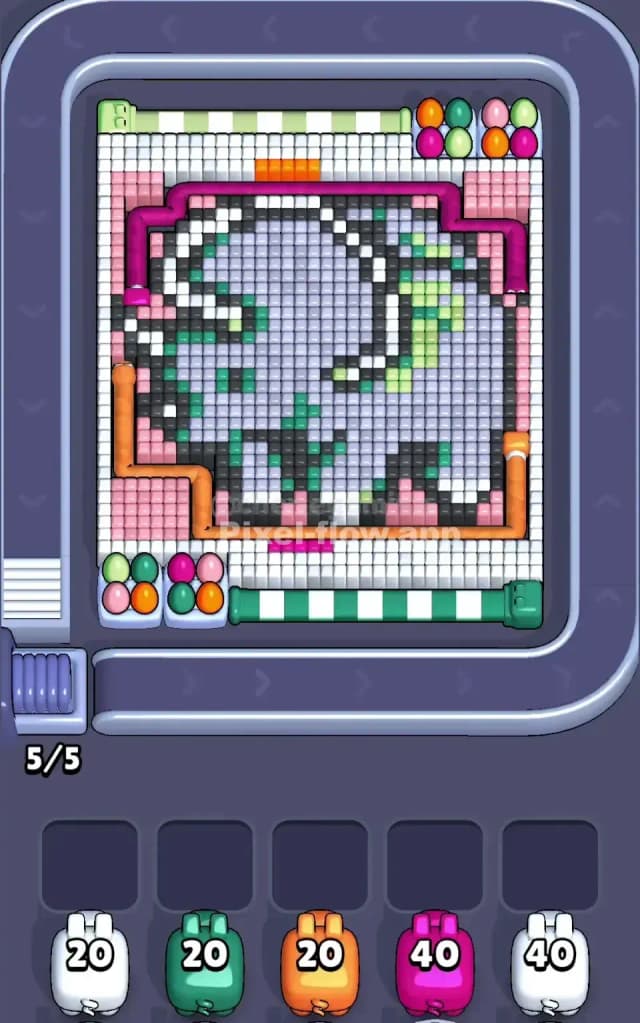
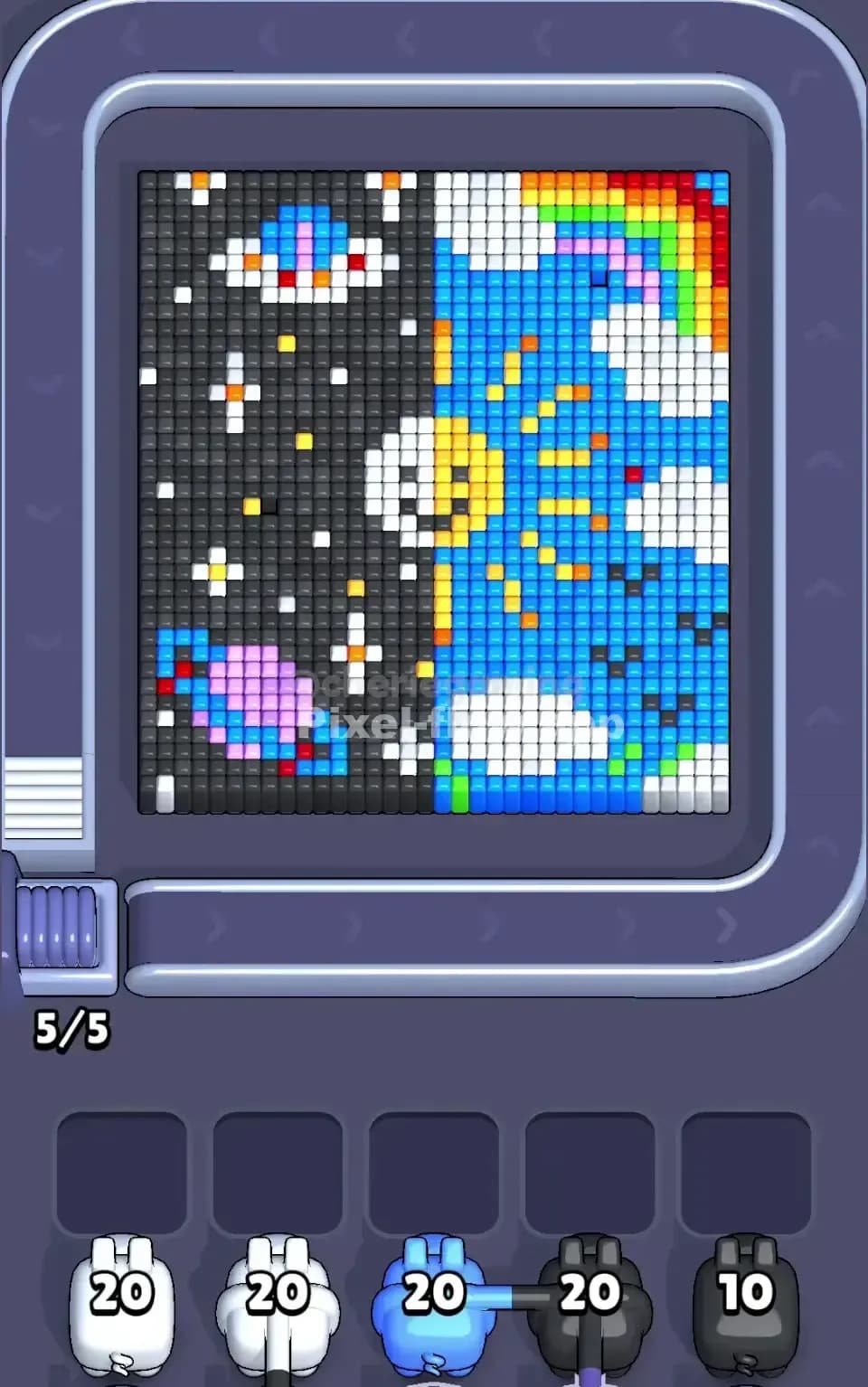
Pixel Flow Level 310 presents a vibrant, multi-layered puzzle dominated by blues, whites, yellows, and magentas arranged in what appears to be an abstract or character-like composition. The board is packed with color, featuring a dense right-side cluster of bright blues and yellows that form the visual centerpiece, while whites and darker tones scatter across the left and upper regions. You'll notice immediately that this level doesn't have obvious "empty" spaces—nearly every voxel position is filled with some color, which means you're working with a deeply layered pixel art canvas where exposing inner colors is critical to victory. The composition feels almost chaotic at first glance, but that's actually the puzzle's design: multiple colors are stacked behind each other, waiting for you to chip away the top layers systematically.
Winning Condition and Deterministic Flow
To beat Pixel Flow Level 310, you must clear every single voxel cube on the board—there's no partial credit here. The good news is that the incoming pig queue is completely deterministic: you'll always see the same sequence of colors with the same ammo counts. Your job is to plan the firing order so that every pig's ammo gets spent before it runs out of matching targets, and so you never jam all five waiting slots with stuck pigs that have leftover ammunition.
Why Pixel Flow Level 310 Feels So Tricky
The Magenta Bottleneck
The most dangerous choke point in Pixel Flow Level 310 is the magenta cluster on the left side of the board. Magenta appears in limited, scattered patches that aren't immediately obvious to locate under all that visual noise. When the magenta pig arrives in your queue, you may find that you can't spend all of its ammo because the visible magenta cubes run out, and you're forced to park it in a waiting slot. If that happens and you haven't planned far enough ahead, subsequent pigs may also get stuck, filling your buffer and triggering a cascade failure. The magenta pig with 20 ammo is particularly punishing if you misread the board.
Color-Layering and Hidden Ammo Sinks
Another subtle trap in Pixel Flow Level 310 is that certain colors—especially white and light blue—dominate the visible surface, hiding deeper layers beneath them. You might think a color has no cubes left, but after you clear the top layer, suddenly that color floods the board again from below. This forces you to re-sequence your plans mid-puzzle. If you fire a pig too early on a color you thought was done, it wastes ammo and lands in the waiting slots with nothing left to shoot. The illusion of "emptiness" is one of the most frustrating aspects of this level's design.
The Yellow Scatter and Awkward Pockets
Yellow presents another headache: it's scattered across multiple small pockets rather than forming one cohesive block. You might clear most yellows with one pig, but then a second yellow pig arrives and finds only three or four isolated cubes to shoot before running dry. That wasted ammo becomes a dead pig in your waiting buffer, and suddenly you're in crisis mode. The lack of a consolidated yellow zone forces you to be surgical about which pig you send when.
Personal Reaction and the "Click" Moment
Honestly, Pixel Flow Level 310 humbled me the first few attempts. I kept launching pigs reactively, watching colors disappear, and then gasping as the waiting slots filled up and the failure screen loomed. The level clicked for me when I stopped looking at the board as five separate color zones and started thinking of it as a timeline: which pig must go now so that the pig arriving in three moves has something to shoot? Once I mapped out the first four or five pigs on paper and traced their ammo paths, the rest fell into place.
Step-by-Step Strategy to Clear Pixel Flow Level 310
Opening: Secure Your Buffer and Target White First
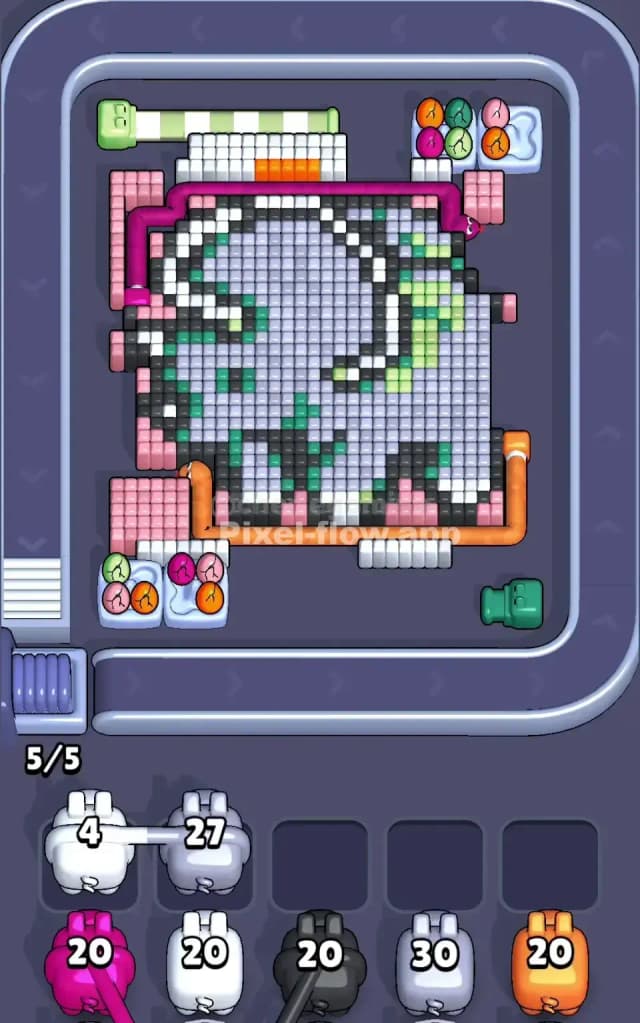
Begin Pixel Flow Level 310 by letting your first white pig (20 ammo) have priority. White is everywhere on the board—it's your safety valve and the easiest color to spend ammunition on. Fire the first white pig immediately and watch it carve into the right-side cluster. This accomplishes two things: it spends a safe 20 ammo, and it peels back one layer to expose the blues and yellows underneath. Keep at least three waiting slots open at this stage; you want breathing room before the trickier colors arrive. Don't overthink the opening—white pigs are forgiving, and you need to build momentum and confidence before the puzzle tightens.
Mid-Game: Sequence Pigs Around Exposed Colors and Layer-Clearing
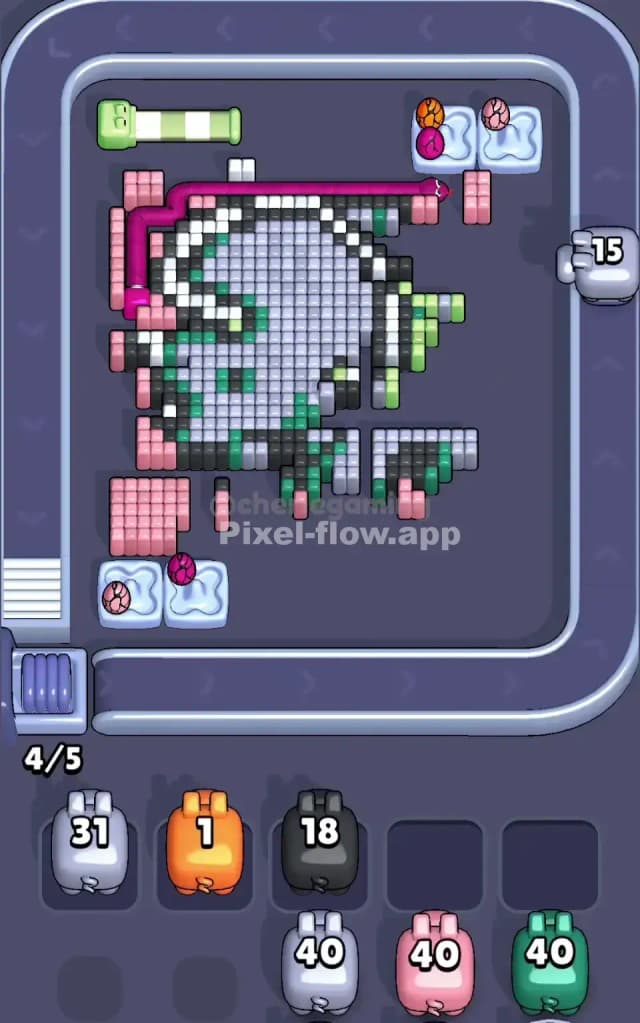
Once you've fired the first white pig, look at what the second white pig (also 20 ammo) faces. If the board still has plenty of white to shoot, fire it. If you're seeing diminishing white but lots of exposed blue, hold the second white pig in reserve and instead send the blue pig (20 ammo) to clear that large blue cluster on the right. The blue pig should demolish the bulk of the bright blue zone, which also reveals hidden yellows beneath it. Now that yellows are more visible and concentrated, you can plan to send yellow pigs with confidence. The key mid-game rule is: always expose new layers before firing the pig whose color you just revealed. This keeps your waiting slots manageable and prevents ammo wastage.
Watch your queue carefully. If you see magenta arriving in the next two or three pigs, start scanning the board right now for every magenta cube you can identify. Mentally mark them, because magenta will land on you soon and you need to spend its 20 ammo across those scattered patches. If you can't confidently locate at least 15 of those 20 magenta targets, consider parking a white or blue pig first to clear overlying colors and expose hidden magenta below.
The dark/black pig (20 ammo) is another mid-game anchor. Dark cubes are mixed throughout and don't form obvious blobs, so treat the dark pig like a cleanup specialist: send it when you've exposed enough of the board that dark cubes are finally visible and concentrated enough to be a real target.
End-Game: Empty the Buffer Cleanly and Avoid a Last-Second Jam
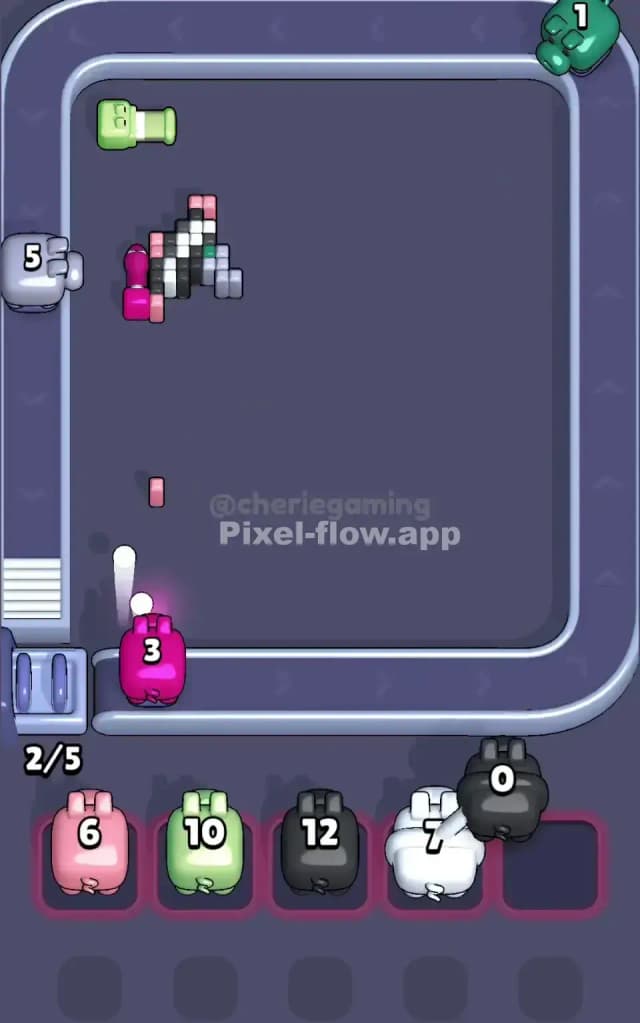
Approaching the final five or six pigs, you should have fewer than two colors remaining on the board. This is where discipline matters most. The final yellow pig (10 ammo) is your mercy rule if you've been frugal with waiting slots. A 10-ammo pig is much less dangerous than a 20-ammo pig stuck in the buffer, so if you're close to the end, it's okay to send the final yellow even if it's not perfectly efficient. Better a light tap than a wasted high-ammo cannon.
In your last two or three moves, you want zero pigs in the waiting slots. Count your remaining cubes by color and match them precisely to incoming ammo. If there are 15 blue cubes left and a blue pig with 20 ammo is arriving next, you know that pig will get stuck—so fire something else first to carve away other colors and free up blue targets, or accept that you'll park it and finish it last.
The final pigment should leave no cubes on the board and no ammo in the waiting buffer. If you see a single cube and a pig with ammo left over, you've misplayed somewhere—but don't panic. Restart and apply these principles more carefully.
The Logic Behind This Pixel Flow Level 310 Plan
Why Planned Sequencing Beats Reactive Play
The strategy above works because it treats Pixel Flow Level 310 as a constraint-satisfaction problem, not a reflex game. Every pig has fixed ammo; every cube is fixed in place. By planning two or three pigs ahead, you're essentially asking: Will this pig have enough valid targets, and will it leave enough buffer space for the next pig to land safely? Reactive players fire the first pig in line and hope for the best. Strategic players fire the pig whose ammo will fit perfectly into the exposed board, even if that means skipping a pig or two in the queue mentally and reassessing.
Exploit the waiting slots as a tool, not an emergency. You have five slots; use them intentionally to "park" a half-spent pig while you clear other colors, creating new targets for that parked pig later. This transforms a potential failure state into a planned maneuver.
Staying Calm and Counting Ammo Under Pressure
Pixel Flow Level 310 tests your patience and focus. When you feel the waiting slots filling up, pause. Don't panic-fire. Count the remaining cubes of each color, look at the incoming pig queue, and trace the likely path of the next three or four pigs. Ask yourself: Is there a move I haven't considered? Often, the answer is yes—maybe a hidden magenta patch will show itself after one more clearing, or maybe the dark pig can absorb overflow. Mental discipline transforms frustration into clarity, and that's when Pixel Flow Level 310 shifts from impossible to inevitable.