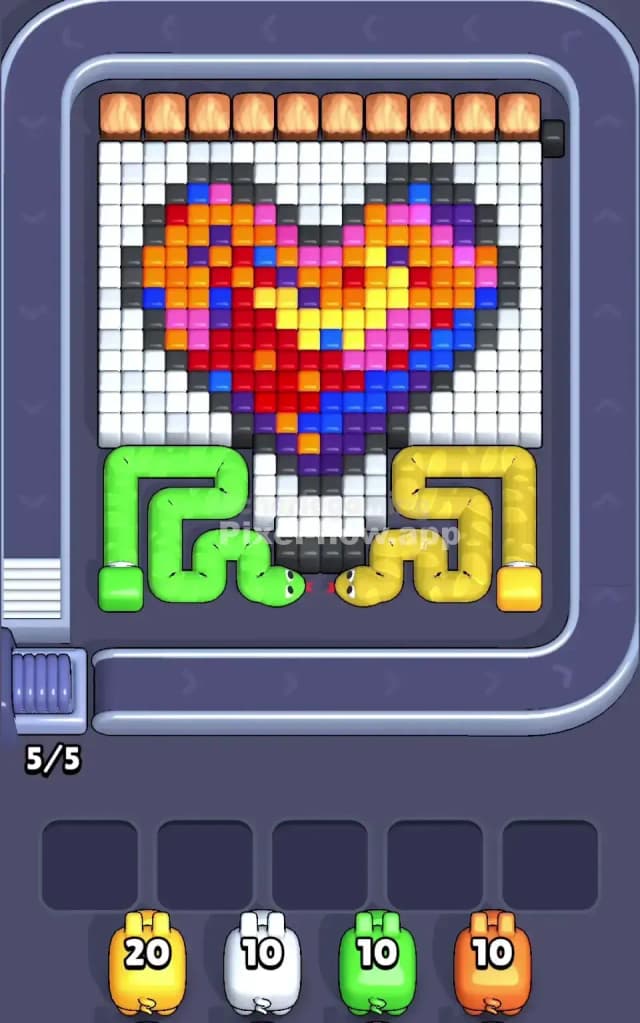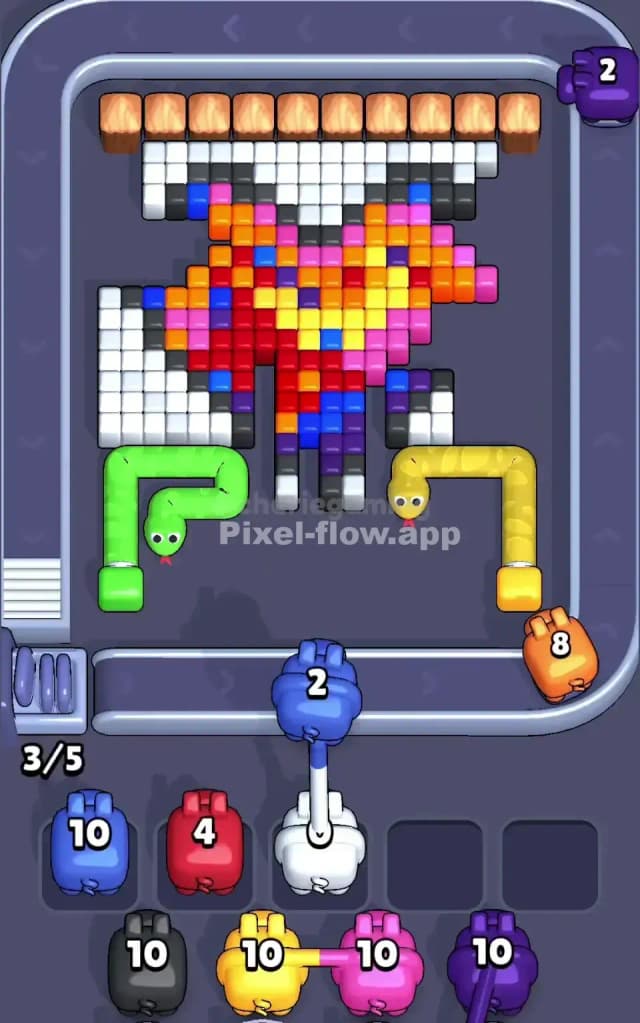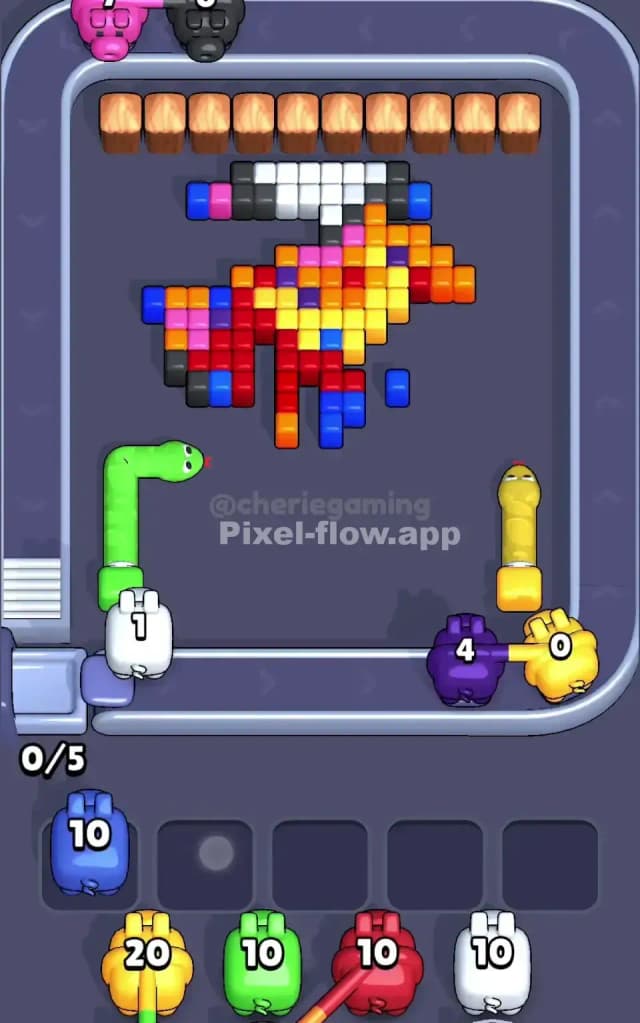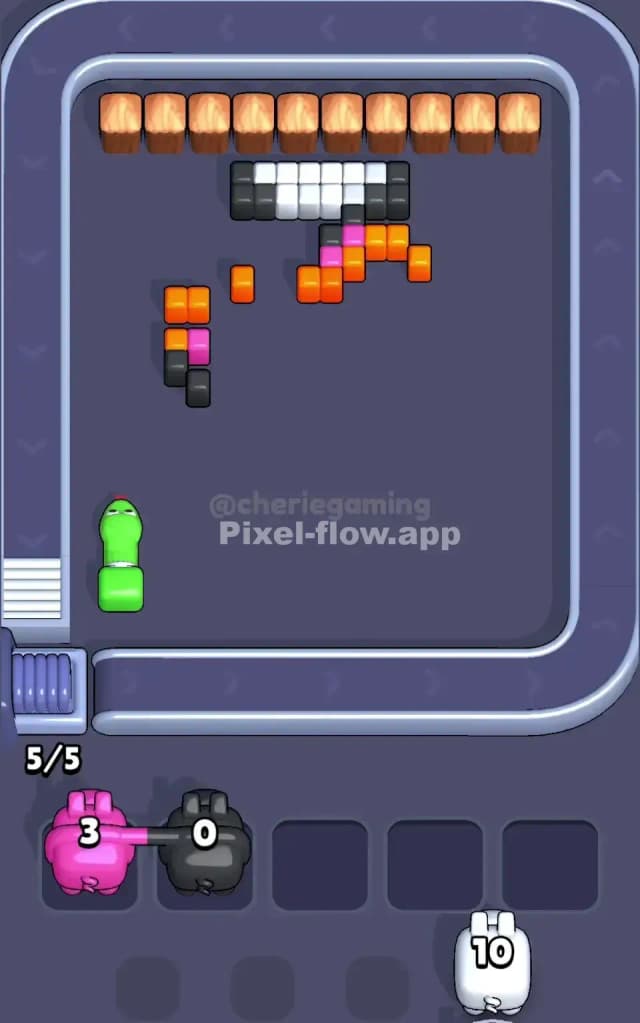
Pixel Flow Level 313 Solution Walkthrough | Pixel Flow 313

How to solve Pixel Flow level 313? Get instant solution for Pixel Flow 313 with our step by step solution & video walkthrough.

Share Pixel Flow Level 313 Guide:
Pixel Flow Level 313 Gameplay
Pixel Flow Level 313 Solution 1
Pixel Flow Level 313 Solution 2
Pixel Flow Level 313 Solution 3

Pixel Flow Level 313 Overview

The Desert Scene and Its Color Layers

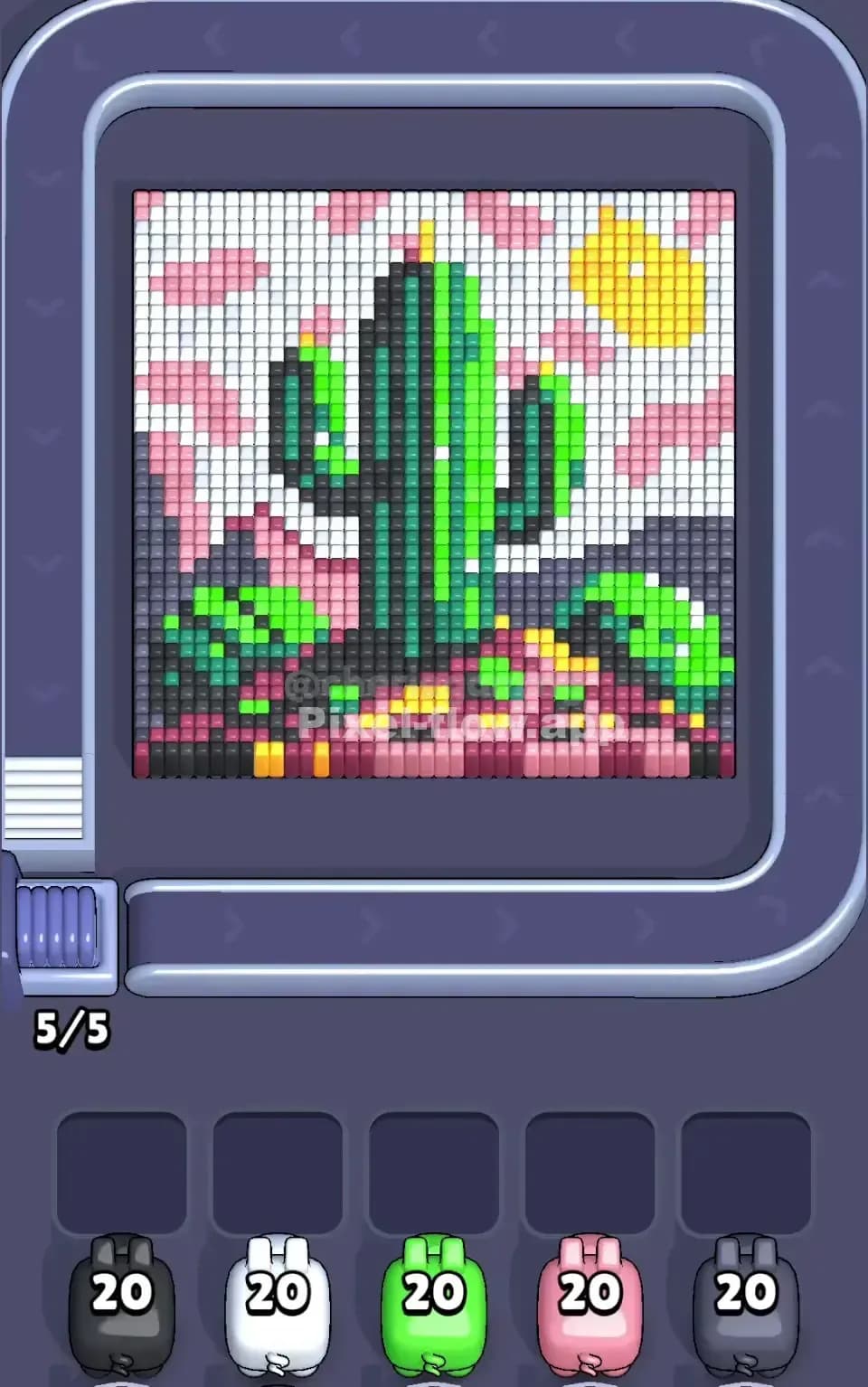
Pixel Flow Level 313 presents a striking desert landscape dominated by a tall green saguaro cactus standing against a bright yellow sun and a scattered pink sky. The board is layered with multiple depth zones: the foreground features dense green cactus segments and pink/orange desert sand, the midground shows white sky and lighter terrain, and the background houses darker gray hills and additional pink cloud patches. What makes Pixel Flow 313 visually complex is how these colors overlap and nest within each other—you're not just clearing random cubes; you're systematically peeling back layers of a cohesive pixel art scene. The color palette includes black (cactus outlines and shading), green (cactus body), pink (sky, clouds, and sand), yellow (sun), white (sky), and gray (distant hills), each representing distinct pig types with their own ammo reserves.

Win Condition and Deterministic Nature

Your objective in Pixel Flow Level 313 is to clear every single voxel cube from the board. The pigs arrive in a fixed sequence with predetermined ammo counts—in this case, you have five pigs, each carrying 20 cubes of ammunition. This means 100 total shots are available, and the puzzle is designed so that 100 cubes exist on the board. There's zero randomness here; Pixel Flow Level 313 succeeds or fails based purely on your decision-making and sequencing. You cannot blame bad luck—only strategy.


Why Pixel Flow Level 313 Feels So Tricky

The Green Cactus Bottleneck

The biggest threat in Pixel Flow Level 313 is the green pig's ammo count versus the visible green cubes early on. At first glance, green dominates the cactus structure, but not all green cubes are exposed simultaneously. If you fire the green pig too early, you'll burn through ammo on accessible green tiles while deeper green layers remain hidden beneath pink, yellow, or black pixels. Then the green pig sits in a waiting slot with leftover ammo but no new targets, essentially "stuck." This forces you to carefully sequence other pigs to expose inner green regions before committing your green shots, which is easier said than done when you're staring at a dense cactus silhouette.

The Pink Spread and Sky Complexity

Pink is scattered across multiple regions—clouds, sky, sand, and atmospheric elements—making it tempting to fire pink early and often. However, Pixel Flow Level 313 punishes this impulse because pink cubes hide layers of other colors beneath them. If you deplete pink too quickly, you'll reveal black outlines and green cores that demand immediate attention, but by then your pink pig might be stuck without targets. The challenge is resisting the urge to clear obvious surface colors and instead asking yourself: What does this pink cube conceal? The answer often determines whether you progress smoothly or jam up your five waiting slots.

Yellow and White Coverage Gaps

Yellow and white appear less frequently than you'd expect in Pixel Flow Level 313. The yellow sun is a compact cluster, and white sky patches are sparse. This scarcity creates an asymmetry problem: if you mistime the yellow or white pig, they'll run out of targets mid-puzzle and lock into a waiting slot, wasting their remaining ammo. It's a subtle trap because these colors feel abundant while you're playing, but the actual cube count per color is far tighter than the visual weight suggests.

When Pixel Flow Level 313 Clicked for Me

I'll admit, my first three attempts were chaos—I fired randomly at whatever looked biggest and watched my waiting slots fill up by move seven. On attempt four, I realized I was treating Pixel Flow Level 313 like a reflexive action game instead of a logic puzzle. I slowed down, counted the approximate cubes per color, and sketched out a rough pig order on paper. That shift in mindset—from shoot now, plan never to count, then commit—made everything click. Suddenly Pixel Flow Level 313 felt solvable, not arbitrary.


Step-by-Step Strategy to Clear Pixel Flow Level 313

Opening: Exposing the First Layer

Start Pixel Flow Level 313 by firing your black pig first. Black cubes form the cactus outline and shading details; they're relatively isolated and don't conceal critical colors beneath them. By clearing black early, you'll sharpen the visual boundaries of the puzzle and expose green and pink cubes that were hidden in the shadow zones. This move keeps your waiting slots almost completely empty—after the black pig fires and depletes its 20 ammo, you'll have four open buffer slots for upcoming pigs. The psychological win here is huge: you're not locked into a bad position after move one.

Next, fire the white pig. White sky patches and background elements are scattered but not load-bearing—they don't prop up deeper colors in critical ways. White's 20 ammo will vanish cleanly, further clearing your visual field and revealing the true pink and green landscape beneath. You now have three fully open waiting slots, which gives you maximum flexibility for the remaining three pigs.

Mid-Game: Sequencing and Layer Exposure

This is where Pixel Flow Level 313 demands patience. After black and white are gone, fire your gray pig. Gray cubes are concentrated in the distant hills and darker midground; they represent a discrete region that, once cleared, won't interfere with the cactus or sky. The gray pig will cycle through its 20 ammo without running dry because the entire gray cluster remains intact until you target it. You now have two free waiting slots—still comfortable, but tightening.

Now comes the critical decision in Pixel Flow Level 313: should you fire pink or green next? The answer depends on your count of exposed cubes. Look at the pink cubes you can currently target (sky clouds, sand patches, visible surface details). If you count fewer than 15 reachable pink cubes, do not fire pink yet. Instead, fire your first color pig that has a clear, countable target set matching its ammo. In most Pixel Flow Level 313 solves, this is often the yellow pig, which has a compact sun cluster (roughly 15–18 cubes). Yellow's 20 ammo will mostly consume the sun and its immediate border, leaving 2–3 spare shots that can catch yellow pixels elsewhere on the board if they're exposed during subsequent moves.

After yellow fires, you have one waiting slot left. This is your critical buffer. Now reassess: how many pink cubes are exposed and reachable? Fire pink if you can identify at least 18–20 reachable pink targets. Pink's ammo is likely to land perfectly or with minimal overspend because you've already cleared black, white, and gray—those removals have exposed fresh pink surfaces that weren't visible before.

End-Game: Finishing the Cactus

The final pig in Pixel Flow Level 313 is always green, and by now, the cactus interior should be largely revealed. You're down to zero waiting slots, so there's no room for error—green must consume exactly 20 green cubes remaining on the board. If you've played Pixel Flow Level 313 correctly up to this point, your count will be spot-on. Fire green, watch the cactus dissolve, and celebrate the completed desert scene as the final layer clears. If you misjudged earlier and green has more than 20 targets or fewer than 5, you'll either jam a waiting slot or leave cubes on the board. That's your signal to restart and revisit the mid-game sequencing.


The Logic Behind This Pixel Flow Level 313 Plan

Why This Order Works

The strategy I've outlined for Pixel Flow Level 313 exploits two core mechanics: layering and ammo scarcity. By firing black and white first, you're removing the "skin" of the puzzle—the background and outline—without risking ammo waste on colors that matter more structurally. Gray and yellow follow naturally because they're geographically isolated. Pink and green are last because they're interwoven with the puzzle's visual depth; delaying them gives you time to see exactly which cubes are exposed and reachable. This order minimizes the chance of a pig sitting idle in a waiting slot, which is the primary failure mode in Pixel Flow Level 313.

Counting Cubes and Planning Ahead

The secret weapon in Pixel Flow Level 313 is simple: pause and count. Before you fire each pig, take five seconds to visually estimate the reachable cubes of that color. If you're unsure, lean conservative and assume the pig won't find all 20 targets; this nudges you toward a different pig that you can count with confidence. Planning two or three pigs ahead—even loosely—prevents the scramble that leads to poor decisions. Pixel Flow Level 313 rewards the player who thinks in sequences, not isolated moves. Every pig you fire reshapes the board and exposes new colors, which means your plan must be flexible enough to adapt when a pig depletes its ammo faster or slower than expected.

Staying Calm Under Pressure

Pixel Flow Level 313 is relentless once you're in the mid-game: waiting slots shrink, the board is a chaotic mix of colors, and you feel the weight of the remaining pigs in the queue. The temptation to fire impulsively is strongest here. Resist it. Take a breath, count visible cubes of the next pig's color, and ask yourself: Do I have at least 18 cubes ready? If the answer is no, switch to a different pig. You're not wasting a move; you're being smart. Pixel Flow Level 313 respects patience and punishes haste, so make each fire button press feel intentional.


You've got this. Pixel Flow Level 313 is hard but absolutely beatable with the right mindset. Good luck, and may your waiting slots stay mercifully empty.