Pixel Flow Level 331 Solution | Pixel Flow 331 Walkthrough
How to beat Pixel Flow Level 331: Video solution & walkthrough. The fastest way to pass Pixel Flow 331.
Is this the wrong level layout?🤔
Pixel Flow randomizes levels for different players. Don't worry, just upload a screenshot of your board, and our AI will find the correct video instantly.
Pixel Flow Level 331 Walkthrough
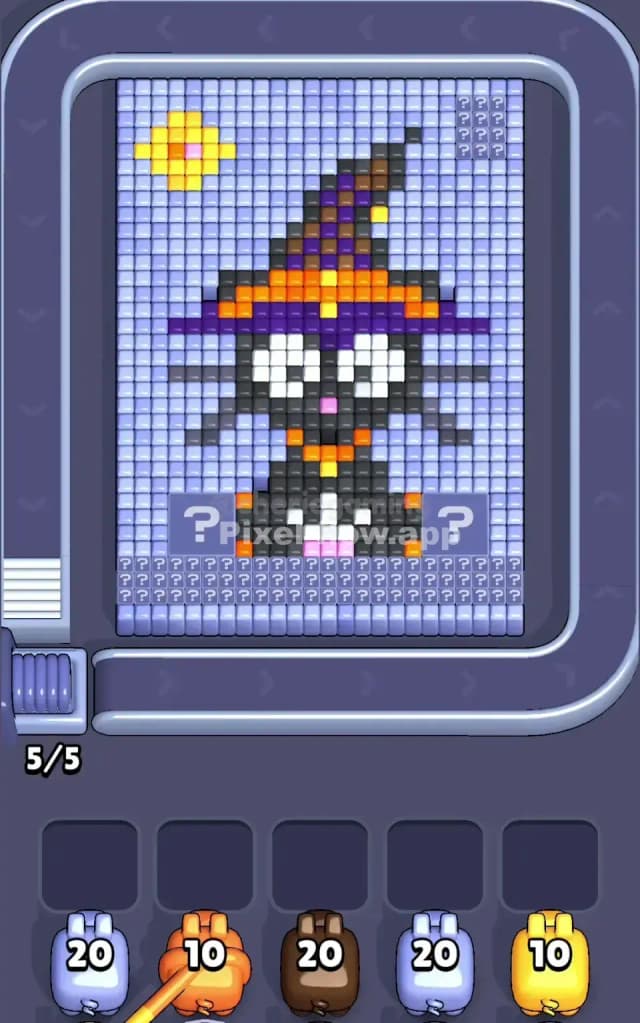
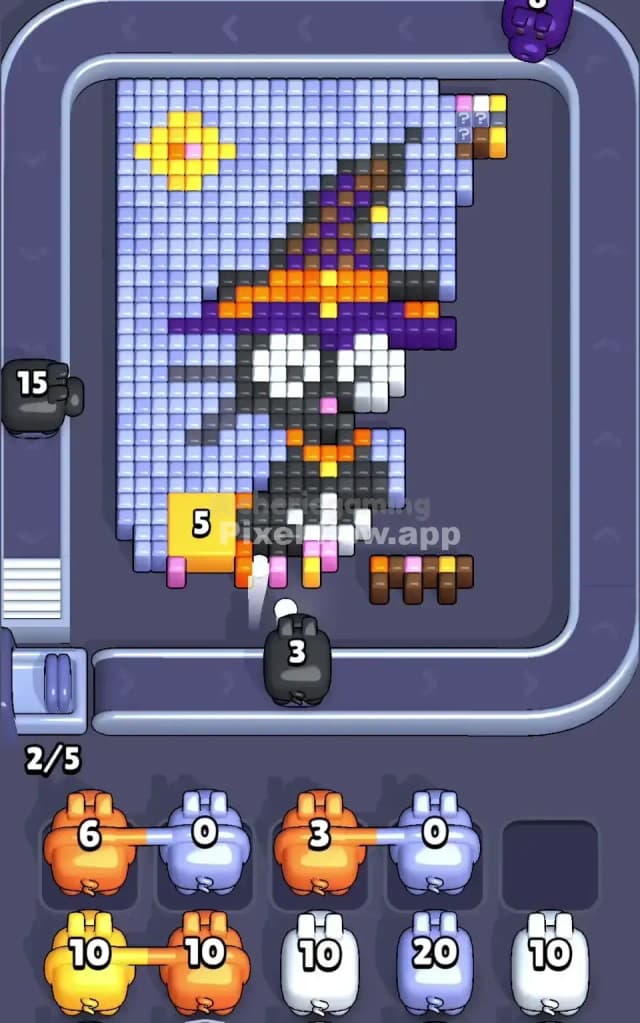
This level features a spooky yet cute black cat wearing a classic witch's hat, set against a light blue sky. The main challenge here is the massive amount of background sky (light blue blocks) that encases the central figure. You need to peel away this blue wrapper to get to the intricate details of the hat and the cat's face. The rules remain standard: match the pig color to the pixel color. If your pig has ammo but nothing to shoot, it gets stuck in your waiting slots. Clog all five slots, and you're done. Is it a very hard level? No. It's moderate. The colors are distinct, but the sheer volume of background blocks can trick you into wasting slots on the wrong colors early on.
Pixel Flow Level 331 Overview
The scene is straightforward Halloween charm. A black cat sits center stage, sporting a tall, crooked witch hat banded with orange and purple stripes. To the top left, a simple yellow moon (or sun) hangs in the sky. The entire image is buried under a thick layer of light blue sky pixels.
There is a slight asymmetry here that matters. The "moon" in the top left corner means yellow pixels are isolated up there, while the rest of the yellow/orange is concentrated in the hat band. The cat’s body is a dense block of black and dark grey near the bottom, while the hat is a mix of purple, brown, and orange near the top. This vertical separation means you need to be careful. Don't grab a black pig if the black pixels are still buried under blue or purple layers.
Step by step solution walkthrough for Pixel Flow Level 331
First Color Zone to Erase in Pixel Flow Level 331
I start by targeting the Light Blue Sky. This is the most obvious and safest move. Look at the board: the blue pixels are the "wrapper" for the entire image. They are on the surface layer almost everywhere.
Using a Light Blue pig first is efficient because it will find targets immediately, likely clearing huge swathes of the left and right sides. This exposes the edges of the hat and the cat's whiskers. If you try to start with Orange or Pink, you risk those pigs getting stuck because the specific orange pixels on the hat band or the pink nose might be physically blocked by a layer of blue or black you haven't removed yet. Clear the sky to see what you're actually dealing with.
How to pass Pixel Flow Level 331 without power ups or boosters
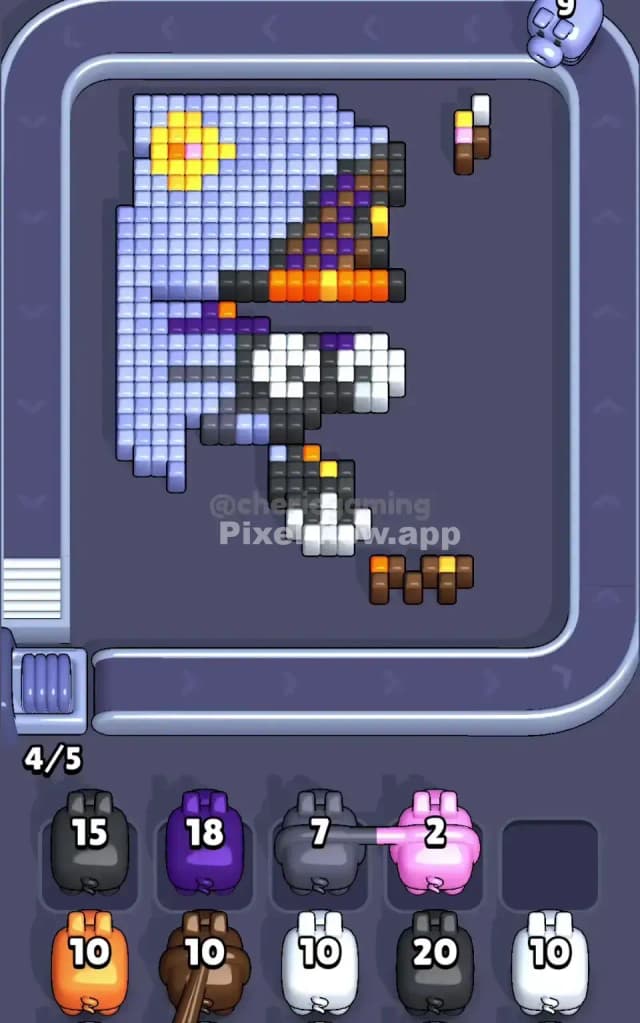
Once the blue sky is mostly gone, the picture looks half-destroyed. You'll have the black cat silhouette and the colorful hat floating there. This is the danger zone.
- Prioritize the Hat Band (Orange/Purple): The hat is layered. You often need to clear the orange stripe or the purple brim to access the brown pixels of the hat's cone. If you see an Orange pig, check if the hat band is exposed. It usually is after the blue is gone.
- The "Whiskers" Trap: The cat's whiskers stick out to the sides. Sometimes these are on a different layer than the face. Don't assume a Grey/Black pig will hit the face immediately; it might just snipe a few whisker pixels and then get stuck in your slot. Wait until the main face block is clearly the top layer.
- The White Eyes: The big white eyes are often buried deep. Do not pick a White pig early. It will likely sit in your slot for 80% of the game. Save White pigs for when the black/grey face is mostly peeled away.
- Slot Management: If you have a Brown pig for the hat tip and a Black pig for the body, but they are blocking each other, look for a color that connects them or sits between them (often the Purple brim). Clearing the middle of the image (the brim) often separates the top and bottom halves, making it safer to clear them independently.
Last Details You Clean Up in Pixel Flow Level 331
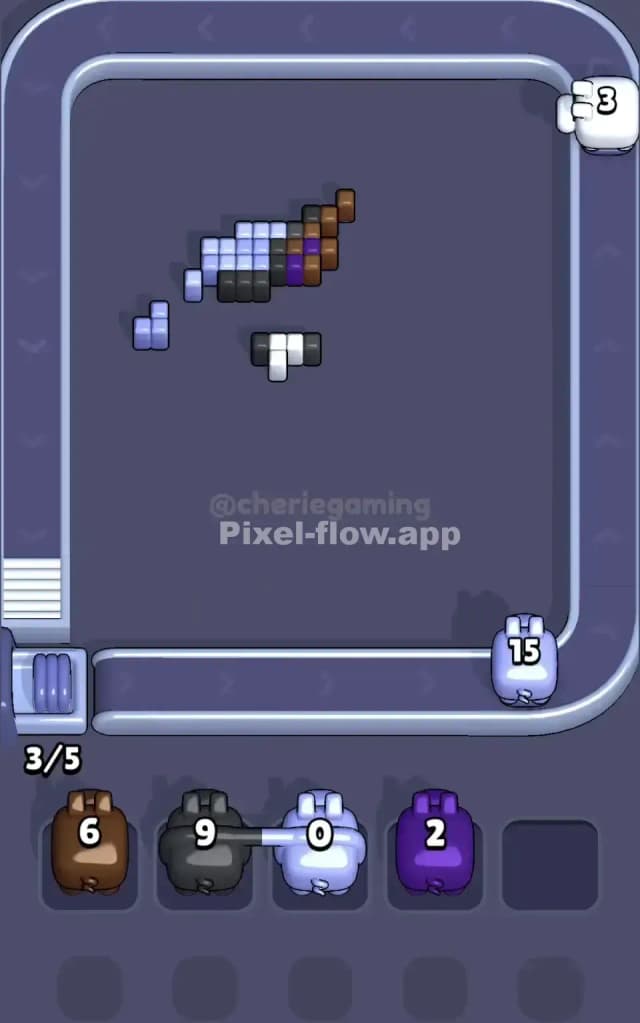
In the final few moves, you are usually left with the deepest layers of the voxel stack. For Pixel Flow Level 331, this is typically the White of the eyes and the Pink of the nose/mouth.
Because these features are recessed into the cat's face, they are the last to be exposed. You might also find a stray Yellow pixel from the moon or a star that was hiding behind a cloud layer. Don't panic if you have a Pink pig waiting in your slot for a long time; it's practically destined to be the last move. Just keep the other slots flowing and ensure you don't bury your exit strategy behind jammed pigs. Ideally, your final shot is that single Pink snout.