Pixel Flow Level 330 Solution | Pixel Flow 330 Walkthrough
How to beat Pixel Flow Level 330: Video solution & walkthrough. The fastest way to pass Pixel Flow 330.
Is this the wrong level layout?🤔
Pixel Flow randomizes levels for different players. Don't worry, just upload a screenshot of your board, and our AI will find the correct video instantly.
Pixel Flow Level 330 Walkthrough
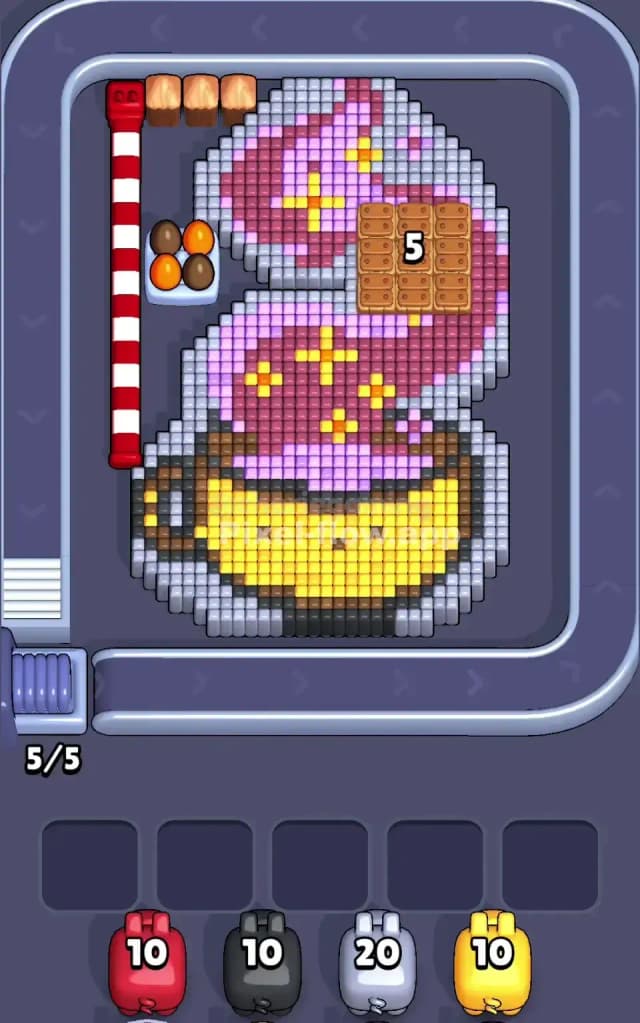
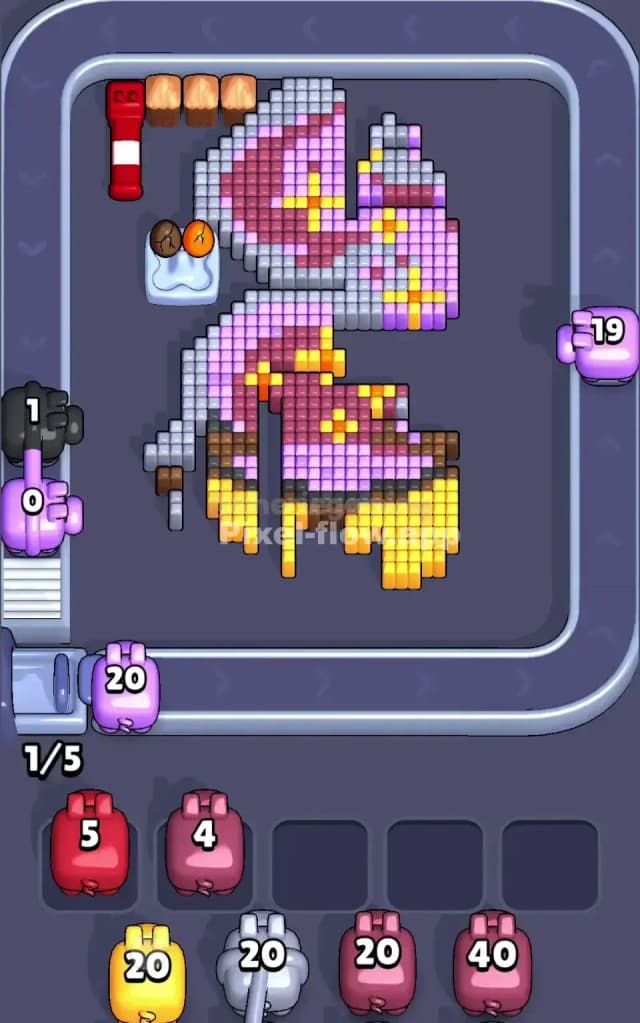
You are looking at a cozy, voxel-art coffee break. Pixel Flow Level 330 depicts a steaming yellow mug, likely filled with tea or coffee, sitting on a saucer. Rising from the cup is a thick, swirling cloud of pink and white steam, accented with yellow sparkles. To the left, there's a small tray of what looks like coffee beans or eggs, and a vertical red barrier. A large crate labeled "5" sits right in the middle of the steam, blocking your shots.
The rules here are standard but brutal due to the layout: you need to peel off the outer white and grey layers to reach the vibrant yellow and pink cores. If you pick the wrong colors early, your pigs will have no targets, clogging your five waiting slots. Because of the crate and the spiral shape of the steam, this is a very hard level.
Pixel Flow Level 330 Overview
Think of this level as two distinct battles: the Cup and the Cloud. The bottom half is the Cup—a solid, dense block of yellow liquid surrounded by a brown rim and a grey saucer. This area is "heavy" and easier to hit because it doesn't move or spiral.
The top half is the Cloud. This pink and white steam swirl is messy. It creates weird angles where blocks hide behind other blocks.
The asymmetry here is dangerous. The left side has that small tray of beans and a red bumper, which are mostly distractions. The real threat is the right side, where the "5" crate sits. That crate acts like a shield. Until you clear the pixels around or behind it, it will eat up your line of sight. The steam also curls around it, meaning a pig on the right side of the conveyor belt might have a clear shot, while a pig on the left is totally blocked.
Step by step solution walkthrough for Pixel Flow Level 330
First Color Zone to Erase in Pixel Flow Level 330
Start with the Silver (or White) pigs.
Look at the saucer at the very bottom and the outer lining of the steam. They are both made of light grey/white voxels. This is your "wrapper." By focusing on the Silver pigs first, you achieve two things. First, you completely remove the saucer, which acts as a physical barrier for lower shots. Second, you shave off the outer layer of the steam cloud.
This is critical because the steam is thick. If you don't thin it out early, your Pink and Yellow pigs later on won't be able to reach the deep center pixels. Clearing the white layer also tends to expose the edges of that annoying "5" crate, getting you closer to removing it.
How to pass Pixel Flow Level 330 without power ups or boosters
Once the grey "wrapper" is gone, the picture will look half-naked. You’ll see a massive block of yellow (the liquid) and a spiral of pink (the steam core).
Now, switch your focus to Yellow.
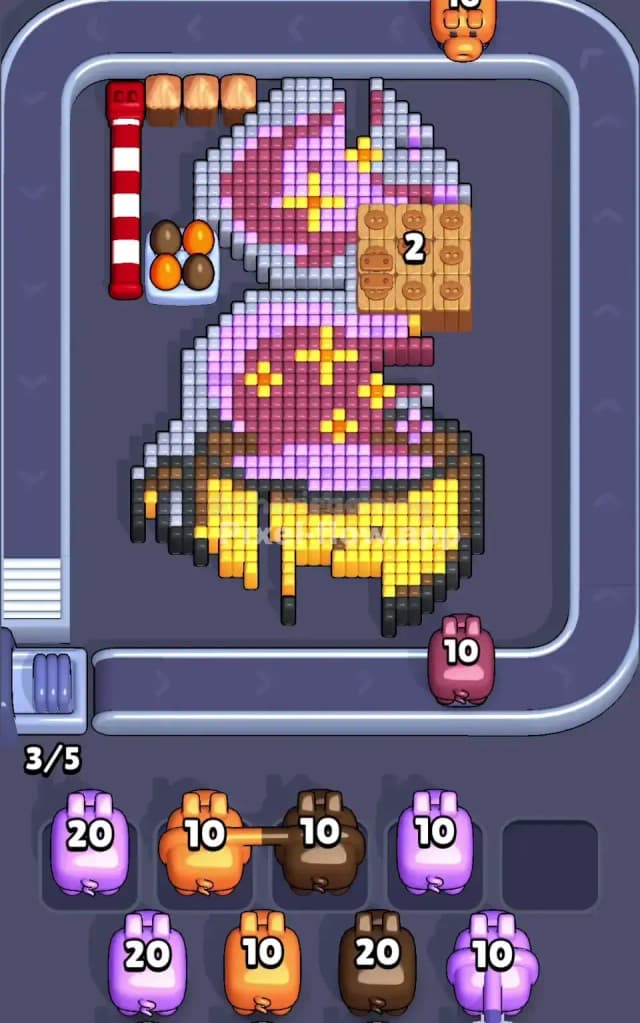
This is the safest mid-game play. The cup is a huge, solid target. A Yellow pig here has almost zero chance of missing or getting "stuck" with ammo, because the target area is so wide. Dump your Yellow pigs to hollow out the cup. This clears a huge portion of the screen real estate.
Do not prioritize the Pink pigs yet. The pink steam is spiral-shaped. If you send Pink pigs too early, they might hit the front of the spiral but fail to reach the back curves blocked by the "5" crate or the red bumper on the left. Save the Pink pigs for when the Yellow cup is drained.
Also, keep an eye on the Red and Black pigs. Use them sparingly to clear the specific obstacles on the left (the red vertical bar and the dark coffee beans). Don't let them clog your slots; only deploy them when their specific targets are clearly visible on the belt loop.
Last Details You Clean Up in Pixel Flow Level 330
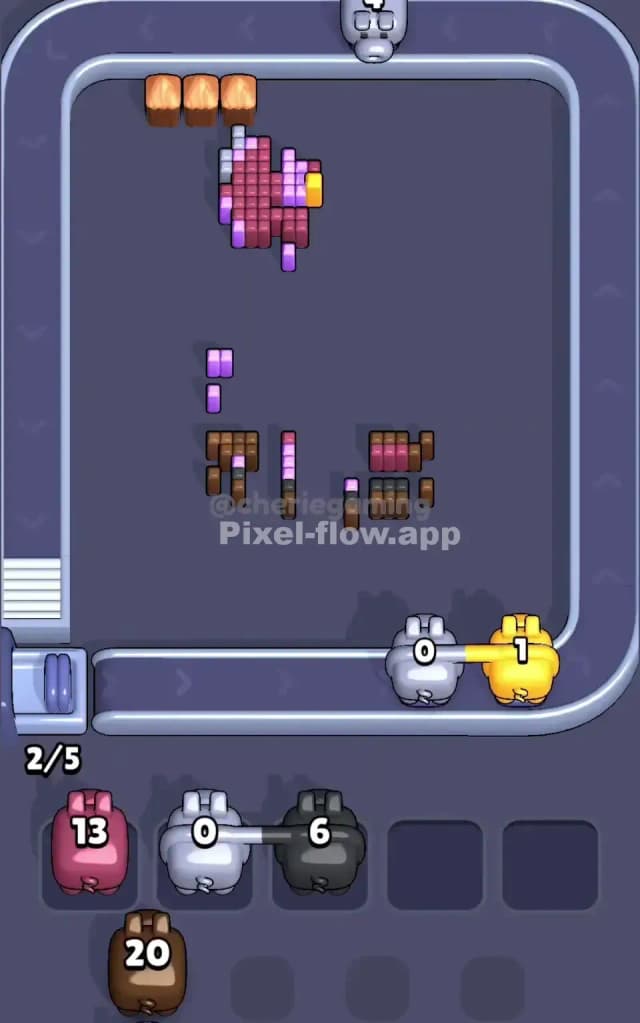
By the end, the cup will be gone, and the white steam border will be erased. You will be left with a floating, jagged spiral of Pink and a few leftover Yellow sparkles.
The final challenge is usually the "sparkles" (the little yellow cross shapes) buried deep inside the pink steam. You might have one or two Yellow pigs clogging your slots waiting for these specific blocks to be exposed.
Aggressively send your Pink pigs now. They need to eat through the remaining steam layers to unearth those final yellow crosses. The very last move will likely be a single Yellow pig snipping off the last hidden sparkle that was stuck behind the crate position. Watch the belt timing—make sure your pig is lined up with the spiral opening before it drops.