Pixel Flow Level 332 Solution | Pixel Flow 332 Walkthrough
How to beat Pixel Flow Level 332: Video solution & walkthrough. The fastest way to pass Pixel Flow 332.
Is this the wrong level layout?🤔
Pixel Flow randomizes levels for different players. Don't worry, just upload a screenshot of your board, and our AI will find the correct video instantly.
Pixel Flow Level 332 Walkthrough
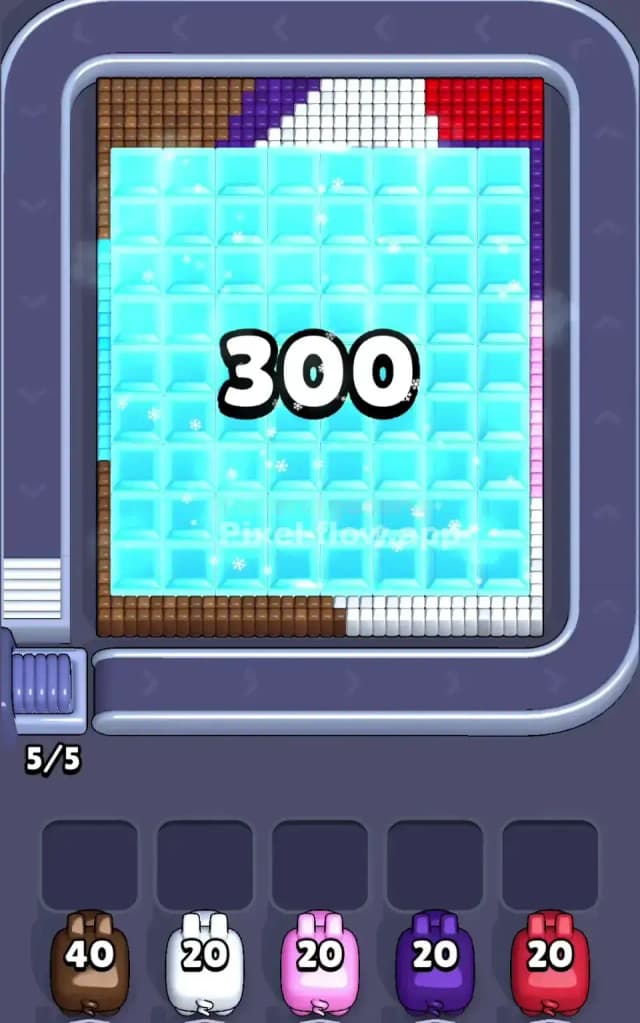
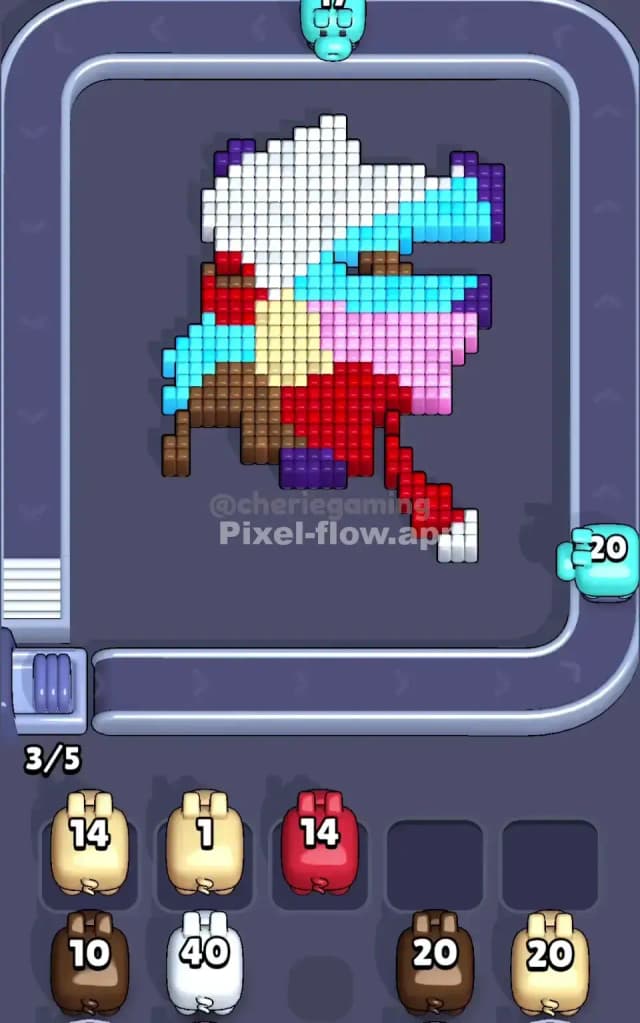
This level is a massive endurance test disguised as a simple puzzle. The board is dominated by a gigantic, 300-hit block of solid Cyan ice that covers 90% of the screen. Beneath this frozen crust lies a complex character made of White, Red, Pink, and Brown voxels, but you won't see much of them until you start chipping away. Because the ice block has such high health and blocks the center entirely, you have very limited legal moves at the start. One mistake in managing your waiting slots will end the run instantly. This is a very hard level.
Pixel Flow Level 332 Overview
Imagine a winter excavation. The "artwork" here is initially invisible. You are staring at a sheer wall of blue ice with a daunting "300" stamped in the middle.
Only the ragged edges of the actual picture are peeking out from under the frost.
- The Bottom Left reveals a strip of dark Brown, likely the ground or boots.
- The Bottom Right shows a clean line of White.
- The Top Right is a heavy patch of Red.
- The Top Left and sides show streaks of Purple and more White.
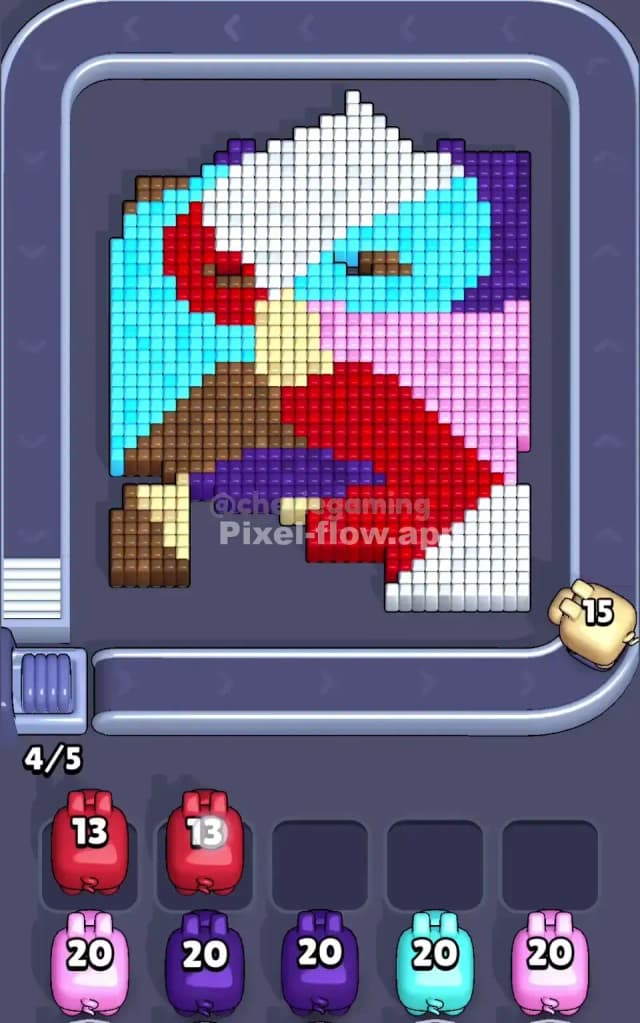
Once you finally shatter that ice sheet, the character underneath looks like a jagged, abstract figure—possibly a skier or winter adventurer—wearing a red tunic and white hood, standing on brown earth. The asymmetry is brutal here. The ice is a perfect rectangle, but the valid targets around it are scattered and thin. You can't just spam clicks.
Step by step solution walkthrough for Pixel Flow Level 332
First Color Zone to Erase in Pixel Flow Level 332
You must attack the Perimeter Frame first. This is counter-intuitive because your brain wants to hit the big ice block, but you likely won't have Cyan pigs immediately available, or at least not enough of them.
The conveyor belt will throw Brown, White, Red, Purple, and Pink pigs at you. If you stare at the ice waiting for a Cyan pig, your five slots will fill up with these other colors, and you will lose. You have to "dump" this ammo into the exposed edges.
- Send Brown pigs to the bottom left corner immediately.
- Send Red pigs to the top right corner.
- Send White pigs to the bottom right strip.
- Purple pigs go to the thin vertical strips on the left and right edges.
By constantly cleaning this outer frame, you keep your slots empty. This buys you the time needed for the Cyan pigs to finally arrive and start hammering that 300-hit ice block in the center.
How to pass Pixel Flow Level 332 without power ups or boosters
The mid-game here is the "Cracking Point." This happens when the ice block is about half gone (around 150 hits left) and the perimeter is mostly cleared.
At this stage, you will have awkward gaps. The danger is that you might run out of "Frame" targets (Brown/Red/White edges) before the ice is fully destroyed. If you have a Brown pig and no Brown blocks left because the rest are buried under the center ice, do not panic. You must let that pig sit in a slot. Do not bring down three Brown pigs if you can't use them.
Watch the belt like a hawk. Only tap a pig if:
- It is Cyan (to hit the ice).
- It matches a color you have recently exposed by breaking a piece of ice.
For example, if breaking a chunk of ice reveals a hidden pocket of Pink pixels, immediately use any waiting Pink pigs to clear it. This frees up slot space. You are essentially playing a game of "waiting room management" while the Cyan pigs do the heavy lifting.
Last Details You Clean Up in Pixel Flow Level 332
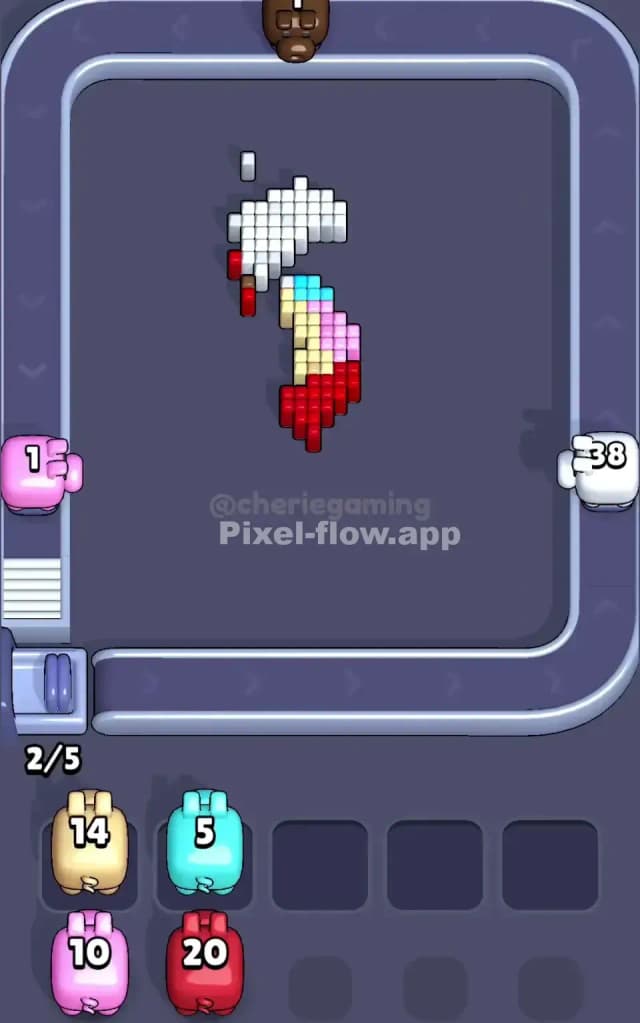
Once the great ice sheet is gone, the level becomes a standard cleanup operation, but don't get sloppy. The character underneath has a messy core.
- The Red/Pink Center: The torso of the figure is a mix of Red and Pink. These are often distinct layers. Be careful not to hoard Red pigs if the top layer is actually Pink. Check which color is "higher" visually.
- The White Hood/Hair: The top section is a large block of White. This is usually the easiest part to clear last since White pigs often have large ammo counts (like the 40-ammo pig in the screenshot).
- The Stray Browns: Often, a single brown voxel hides behind the character's "legs." If you have a Brown pig with 1 ammo left, save it for that final straggler.
Smash the ice, clear the frame, and don't clog your slots. That's the only way through.