Pixel Flow Level 333 Solution | Pixel Flow 333 Walkthrough
How to beat Pixel Flow Level 333: Video solution & walkthrough. The fastest way to pass Pixel Flow 333.
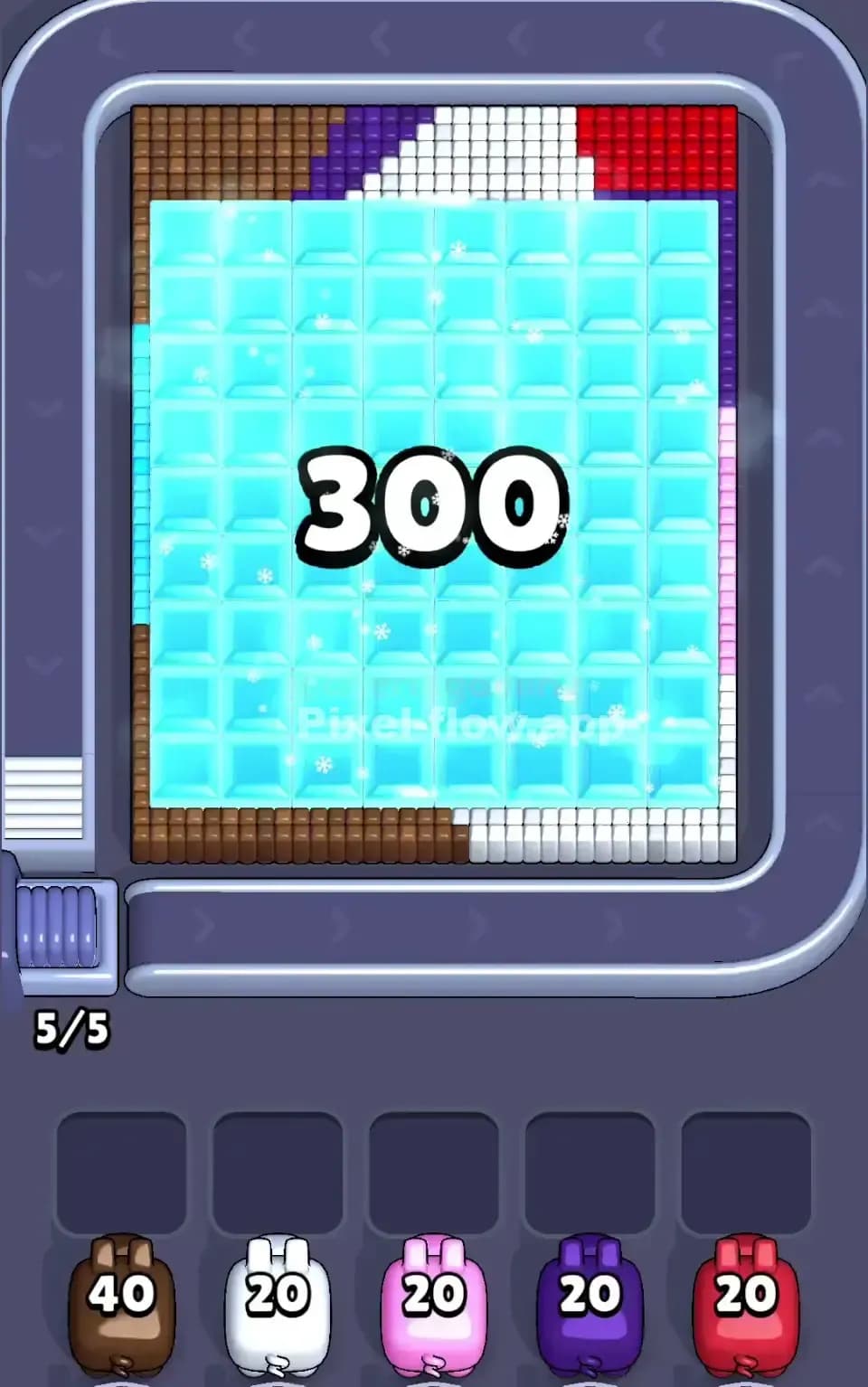
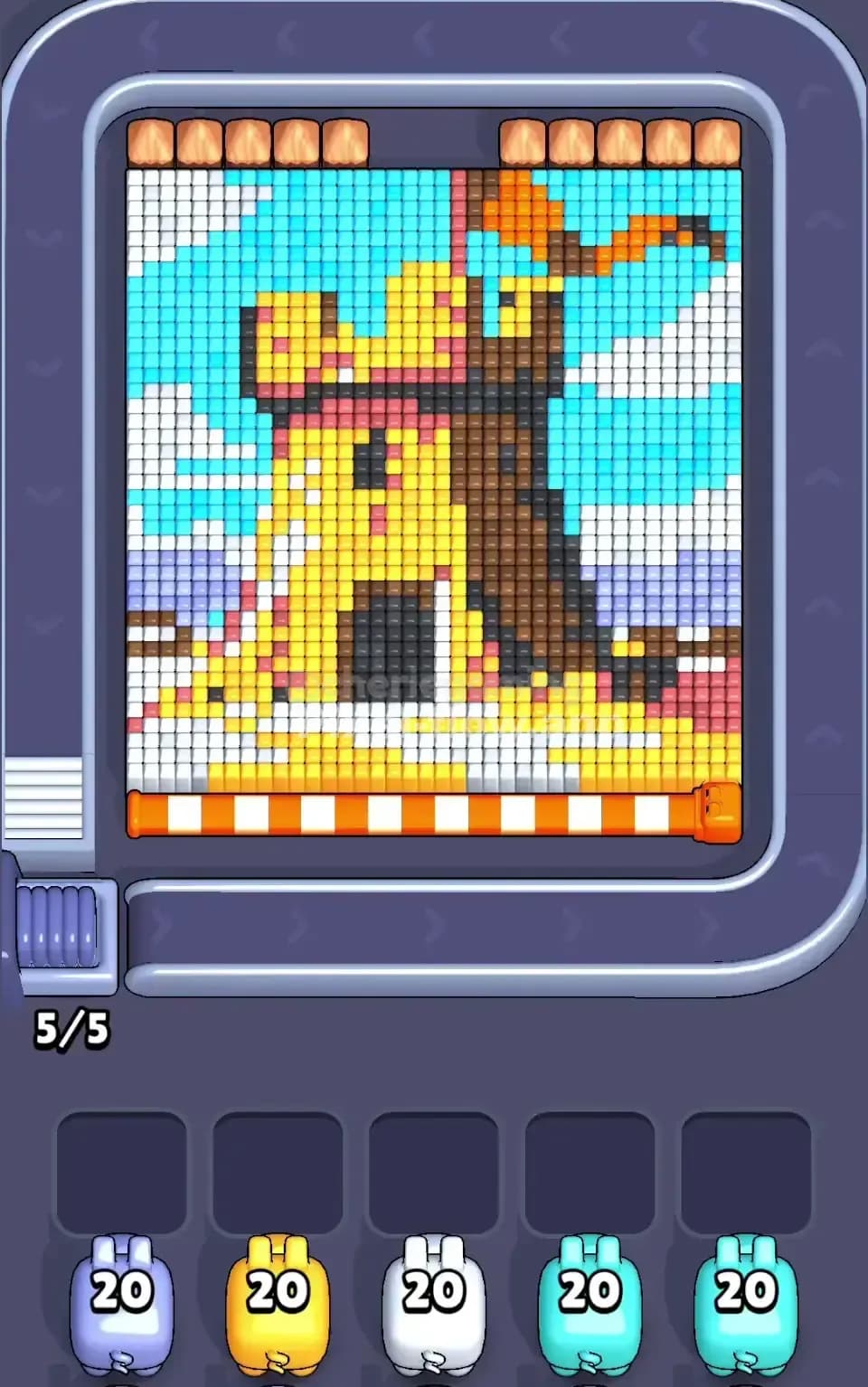
Is this the wrong level layout?🤔
Pixel Flow randomizes levels for different players. Don't worry, just upload a screenshot of your board, and our AI will find the correct video instantly.
Pixel Flow Level 333 Walkthrough
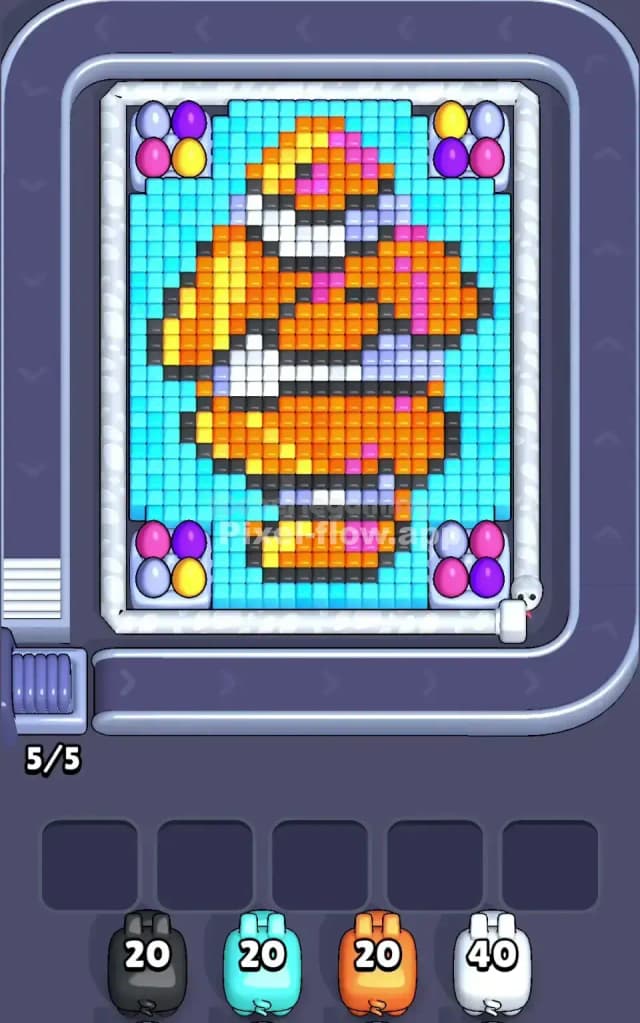
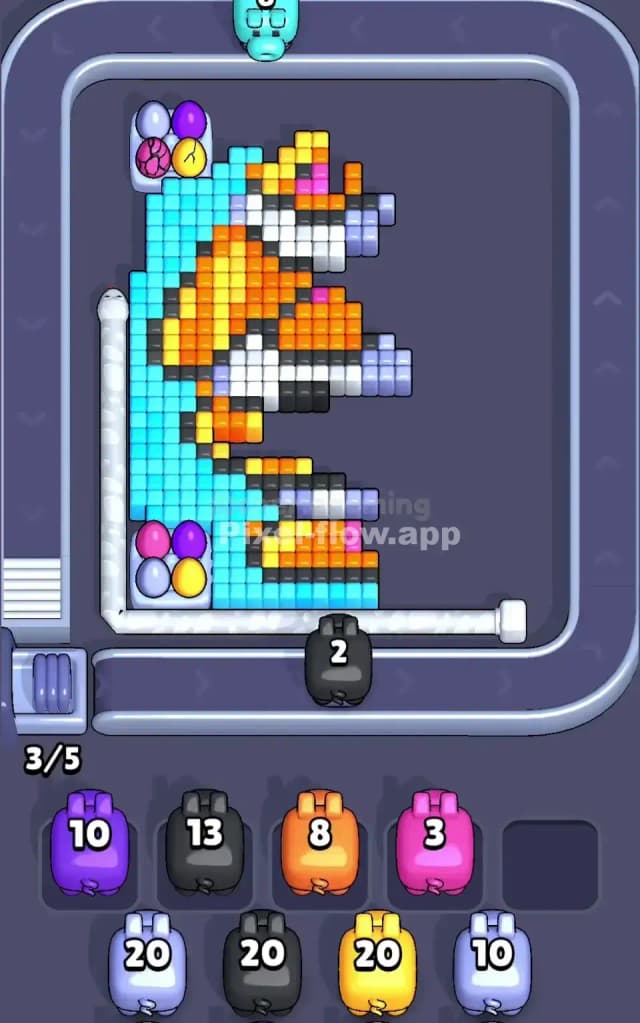
This level features a giant, swirled soft-serve ice cream cone set against a bright cyan background. The core challenge here isn't just the central figure—it's the four "egg nests" stuck in the corners. You have purple and yellow eggs blocking the corners, surrounded by white barriers. The ice cream itself is heavily layered with orange, white, and dark grey/black pixels. To beat Pixel Flow Level 333, you need to strip away that cyan background to expose the sides of the ice cream, while carefully managing the weird egg clusters in the corners. Is it a very hard level? Yes. The egg corners act as blockers that waste pig slots if you aren't careful.
Pixel Flow Level 333 Overview
Imagine a delicious orange-creamsicle soft serve. It has distinct swirls: thick bands of orange separated by bands of white and greyish-purple shadow. The whole treat floats in a sea of cyan blue pixels.
The dangerous part of this board is the symmetry. You have four identical corner pockets. Each pocket holds four eggs: two purple, two yellow. These eggs are walled off by white blocks. This means your pigs can't just shoot "anywhere." A purple pig is useless until you break the white wall guarding the purple eggs.
The ice cream itself is dense. The orange is the primary fill color, but it’s buried. The cyan background is the "wrapper" you have to peel off first. If you ignore the background, you'll never get clean shots at the central orange swirls.
Step by step solution walkthrough for Pixel Flow Level 333
First Color Zone to Erase in Pixel Flow Level 333
Start with Cyan (Light Blue).
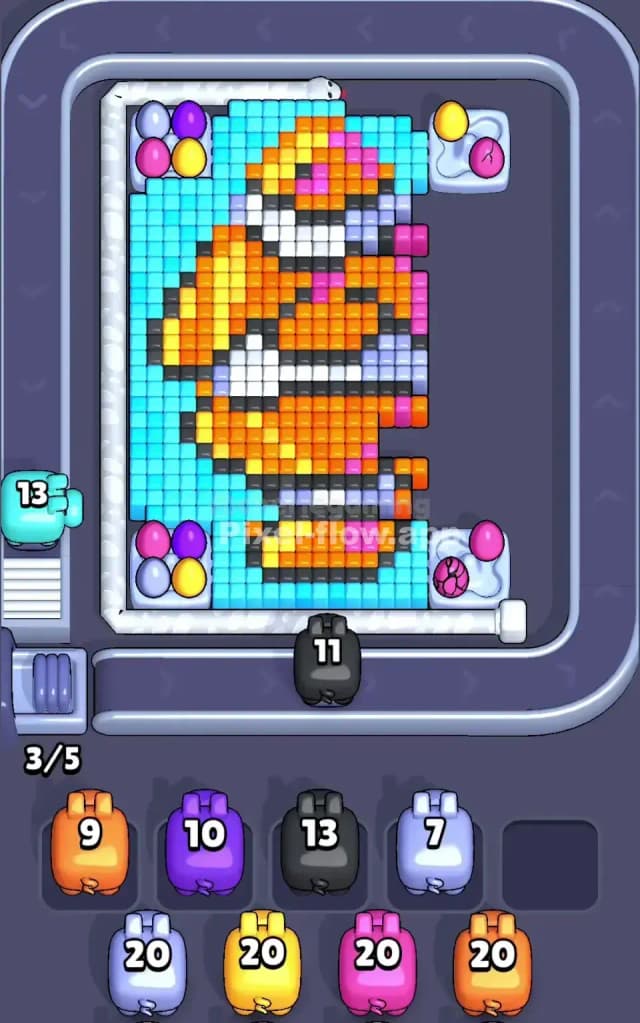
Narratively, you are unwrapping the ice cream. Logically, the cyan is the only color that is completely exposed and safe to target immediately. It covers the entire left and right flanks of the board. By clearing the cyan first, you accomplish two critical things:
- Open the Flanks: You expose the side profile of the orange/white swirls.
- Clear the Path to Corners: The cyan blocks physically touch the white walls of the corner egg nests. Removing cyan lets your white pigs eventually target those walls.
If you skip the cyan and try to force orange pigs onto the center, you will clog your waiting slots because the orange blocks are mostly internal or blocked by other colors.
How to pass Pixel Flow Level 333 without power ups or boosters
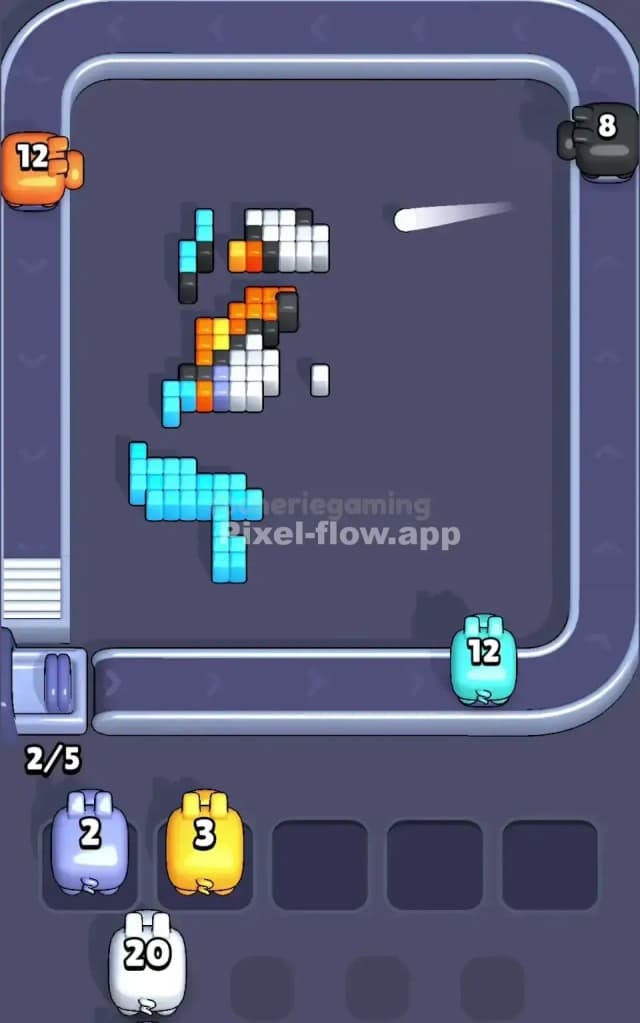
Once the cyan is mostly gone, the board looks like a floating, jagged ice cream cone with four isolated corner fortresses. This is the danger zone. Your slots might be filling up with purple or yellow pigs that have nothing to shoot yet.
Here is the strict priority to survive:
- White is Key: You must prioritize White Pigs now. Why? Because the corner egg nests are surrounded by white walls. Until those white walls break, your purple and yellow pigs are dead weight. Also, the ice cream swirls have white stripes. A white pig is never a wasted slot in this phase.
- The Black Outline: You will likely see Black Pigs (or dark grey). Use them to shave off the outline of the swirls. The black pixels act as a "crust" holding the orange in. Break the crust.
- Orange is Filler: Don't hoard orange pigs. The moment an orange section is exposed, fire. The orange sections are thick (high ammo cost), so you need to chip away at them constantly to keep the board moving.
If you have a purple pig in your slot, do not panic. Wait for a white pig to break a corner wall. As soon as one pixel of the corner wall is gone, the eggs inside are vulnerable.
Last Details You Clean Up in Pixel Flow Level 333
The endgame usually leaves you with the stubborn corner eggs. You might have cleared the entire delicious ice cream cone but still have a single yellow egg stuck in the top right.
Watch out for the Pink/Purple accents inside the ice cream swirls. They often blend in with the shadows. You might think you are done with the center, but a tiny pink voxel is hiding behind an orange block. Always clear the center completely before trying to snipe the last corner egg, or you'll risk clogging your slots with pigs that can't hit that one specific corner angle.