Pixel Flow Level 403 Solution | Pixel Flow 403 Walkthrough
How to beat Pixel Flow Level 403: Video solution & walkthrough. The fastest way to pass Pixel Flow 403.
Is this the wrong level layout?🤔
Pixel Flow randomizes levels for different players. Don't worry, just upload a screenshot of your board, and our AI will find the correct video instantly.

Pixel Flow Level 403 Walkthrough
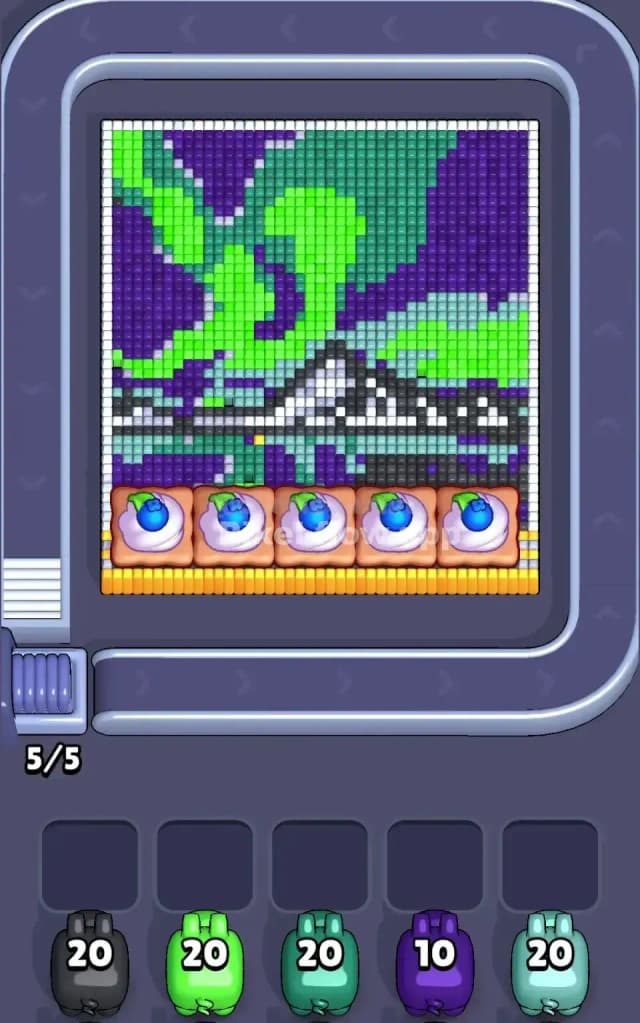
This level features a striking pixel art rendition of the Aurora Borealis (Northern Lights) glowing over a jagged, snowy mountain range. You have swirling bright greens in the sky, deep purple darkness, a stark black-and-white mountain line, and a teal reflection pool at the bottom. Oh, and there is a bizarre row of five cupcakes sitting at the very bottom of the frame, acting as the front-most blocker.
The rule to beat Pixel Flow Level 403 is strict inventory management. You must strip away the high-volume colors (Green and Black) to expose the buried White and Teal layers. Because the color palette is so mixed—especially between the lime green and the teal—it is easy to grab the wrong pig and clog your waiting slots. This is a very hard level due to the deceptive layering in the sky.
Pixel Flow Level 403 Overview
Imagine standing in a frozen tundra looking up. The top two-thirds of the board are dominated by a massive, chaotic swirl of Lime Green pixels representing the aurora. This green isn't flat; it weaves in and out of a Dark Purple background. It feels heavy on the left side, swooping down towards the center.
Below this celestial light show sits a sharp horizontal divider: the mountains. They are constructed of Black rocks and White snow. This strip cuts the image in half. Below the mountains, you have the "water" reflection, which uses Teal and darker blues to mirror the sky.
Finally, the most annoying part: the "Cupcake Row." The bottom five blocks are shaped like desserts with blue berries on top. These are solid objects in the foreground. They block access to the bottom reflection layer until you get specific colors to clear them, or clear the space immediately above them to get a clean shot.
Step by step solution walkthrough for Pixel Flow Level 403
First Color Zone to Erase in Pixel Flow Level 403
I start by attacking the Lime Green aurora. It is the most exposed color and covers nearly 40% of the upper board.
Narratively, the green is the "curtain" hiding the rest of the sky. Logically, the Lime Green pigs usually come with high ammo counts (20+), and because the green pixels are clumped together in large vertical chunks on the left and center, you can empty these pigs instantly. Clearing the green first breaks the board open. It exposes the purple deep background and, more importantly, creates vertical channels so you can drop shots down to the Black mountain range. If you try to pick at the Purple or Teal first, you will fail. The Green is simply in the way of everything else.
How to pass Pixel Flow Level 403 without power ups or boosters
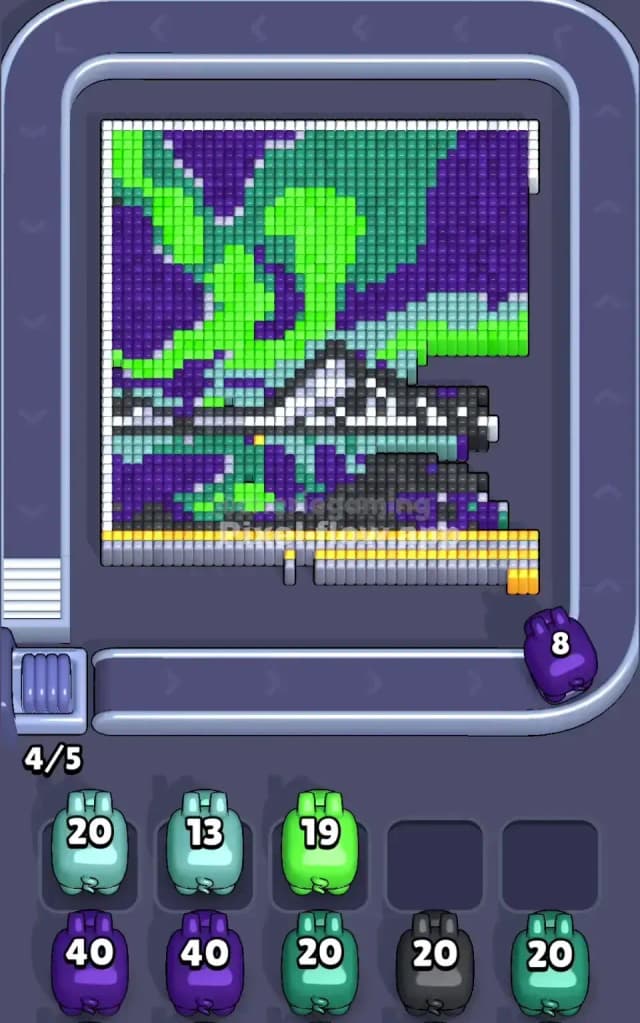
At the mid-level point, the board looks like a jagged mess. The beautiful green swirl is mostly gone, leaving behind scattered purple pixels and the stubborn mountain range. This is the danger zone.
You will see White pigs and Cyan pigs start to clog the belt. Do not panic. The White pixels are located on the mountain peaks and the "cream" of the bottom cupcakes. However, the Black pixels of the mountains often block the white snow.
To survive without power ups, you must prioritize the Black layer now. It sits right in the middle. Clearing the black strip separates the top sky from the bottom water, giving you two distinct zones to target. If you ignore the black pigs, they will pile up in your waiting slots while you uselessly wait for a shot at the white snow. Once the black rock is gone, the white snow is exposed, and you can finally start clearing those annoying cupcakes at the bottom.
Last Details You Clean Up in Pixel Flow Level 403
The end game is usually a cleanup operation on the edges. You will likely have a few stray Dark Purple pixels stuck in the top right corner where the aurora didn't reach.
But the real final boss is the Teal reflection pool at the very bottom. These pixels are often hidden behind the cupcakes or buried under the mountain reflection. Once the cupcakes are eaten and the mountains leveled, the teal layer is the last thing standing. Watch out for single pixels of Cyan/Light Blue that look exactly like the Teal but require a different pig. Hover your finger over the pig to see which pixels highlight before you commit to dropping it into a slot. Misidentifying Teal vs. Cyan here will cost you the game.