Pixel Flow Level 422 Solution Walkthrough | Pixel Flow 422

How to solve Pixel Flow level 422? Get instant solution for Pixel Flow 422 with our step by step solution & video walkthrough.

Share Pixel Flow Level 422 Guide:
Pixel Flow Level 422 Gameplay
Pixel Flow Level 422 Solution 1
Pixel Flow Level 422 Solution 2
Pixel Flow Level 422 Solution 3

Pixel Flow Level 422 Overview

The Board and Its Layers

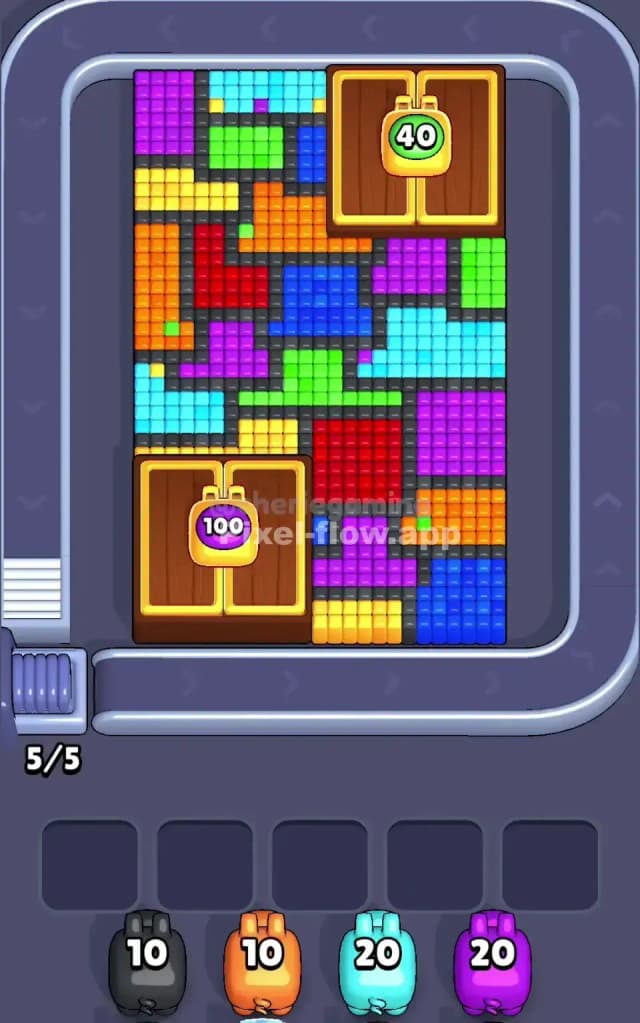
Pixel Flow Level 422 presents a densely packed voxel mosaic that demands careful sequencing and forward planning. The board is dominated by a chaotic blend of colors: magenta, cyan, yellow, orange, red, blue, and green all compete for space in a tightly interlocking pattern. What makes this level particularly tricky is that the colors aren't neatly separated into obvious regions—instead, they're woven together in a way that means removing one color often blocks your access to another. The board has clear depth, with multiple layers stacked behind the surface, so you'll need to systematically peel away foreground cubes to expose the hidden colors beneath.

Your incoming pig queue shows exactly what you're working with: a dark gray pig with 10 ammo, an orange pig with 10 ammo, a cyan pig with 20 ammo, and a magenta pig with 20 ammo. That's 60 total ammo units to clear the entire board—not particularly generous, which means every single pig must spend its ammo efficiently. You'll also notice the waiting slots at the bottom: only five of them, and they're your safety net if a pig runs out of targets mid-game.

The Win Condition and Deterministic Puzzle Nature

To beat Pixel Flow Level 422, you need to clear every single voxel cube on the board. There's no partial credit here; one stray cube means failure. The beautiful part is that the pig order, ammo counts, and cube positions never change—this is a fully deterministic puzzle. That means there's a "correct" sequence waiting to be discovered, and once you find it, you can replicate it perfectly every time. Your job is to unlock that sequence by understanding which colors to target first and how to keep your waiting slots from jamming up with stuck pigs.


Why Pixel Flow Level 422 Feels So Tricky

The Waiting Slot Bottleneck

Here's what'll get you frustrated about Pixel Flow Level 422: if you're not careful, you'll fill up those five waiting slots with pigs that have leftover ammo but no valid targets. Once that happens, you're dead in the water. The gray pig with 10 ammo is particularly dangerous because gray cubes are relatively scarce on this board—if you deploy it too early, it'll burn through its targets quickly and then park itself in a waiting slot with nowhere to go. If later pigs can't provide the right color setup to spend that leftover gray ammo, you'll eventually jam the entire buffer, and the game ends in failure.

The magenta and cyan pigs are equally troublesome because their colors are scattered across multiple layers. You might think you've cleared all the magenta, only to discover that your cyan pig's shots have exposed a fresh layer of magenta cubes hidden three levels deep. Now your magenta pig is sitting in a waiting slot, and you've got a queue problem on your hands.

Awkward Color Patches and Hidden Layers

Pixel Flow Level 422 has several color pockets that seem isolated until you chip away at the surrounding cubes. The yellow section in the upper-left area is a classic example—it looks like a manageable target, but it's hemmed in by magenta and cyan on nearly all sides. Deploy your pigs without thinking, and you'll expose yellow that your yellow-colored pig doesn't exist to target. That color then becomes a liability, forcing you to use other pigs or risk a permanent jam.

The blue sections are similarly treacherous. There's no dedicated blue pig in your incoming queue—blue must be eliminated by other pig colors or was supposed to be handled by a pig you haven't seen yet. This disconnect is a major red flag that Pixel Flow Level 422 requires you to understand the board's depth and plan multiple pigs ahead, not just react to what's visible right now.

The "Click" Moment

I'll be honest: my first five attempts at Pixel Flow Level 422 felt like I was throwing darts blindfolded. I'd deploy the orange pig, watch it clear its targets, and then panic as three other colors suddenly appeared. But then something clicked. I realized I needed to stop thinking about "clearing colors" and start thinking about "exposing layers." Once I accepted that my job was to use early pigs to remove blocking colors and expose inner layers for later pigs, everything made sense. Pixel Flow Level 422 went from maddening to satisfying in about thirty seconds.


Step-by-Step Strategy to Clear Pixel Flow Level 422

Opening: Build Breathing Room Immediately

Start Pixel Flow Level 422 by deploying your dark gray pig first. Gray is relatively scarce, and this pig has only 10 ammo—which means it'll likely consume all visible gray cubes and then need to park itself. That's actually fine for the opening, because you want to keep at least two waiting slots free going into the mid-game. The gray pig's primary job is to remove a specific blocking layer so your cyan pig can access deeper colors later.

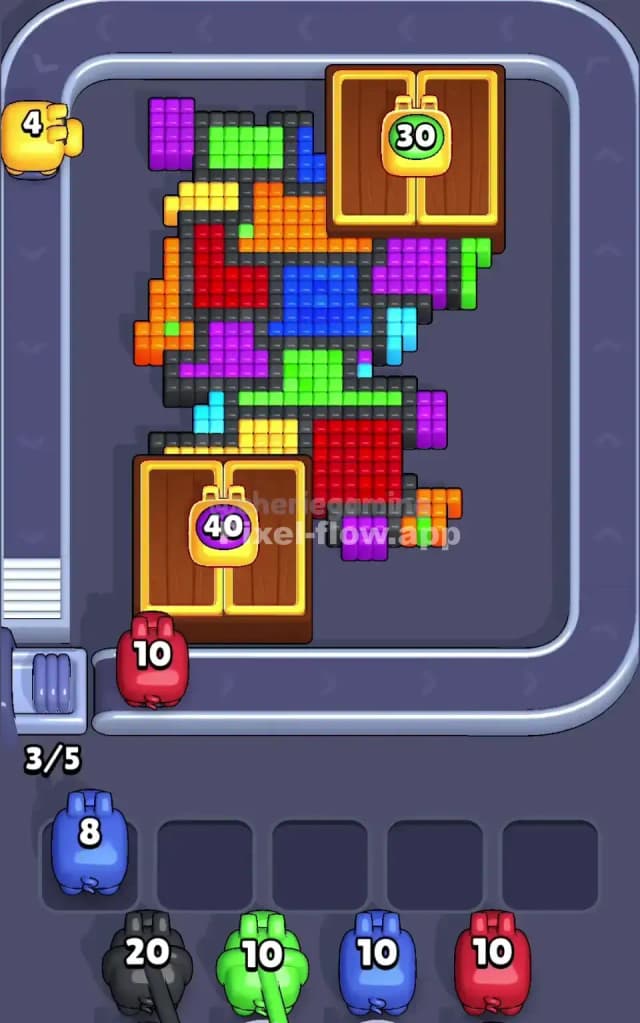
Once gray is committed, deploy your orange pig. Orange cubes are abundant in the upper-right and middle sections of Pixel Flow Level 422, and 10 ammo should clear most of them. Watch carefully as orange cubes disappear—you'll expose cyan and magenta beneath, and this is crucial information. You're essentially mapping the board's structure as you go. After orange is done, you should have at least three waiting slots still available, giving you flexibility if either the gray or orange pig had unexpected leftover ammo.

Mid-Game: Layer Peeling and Ammo Alignment

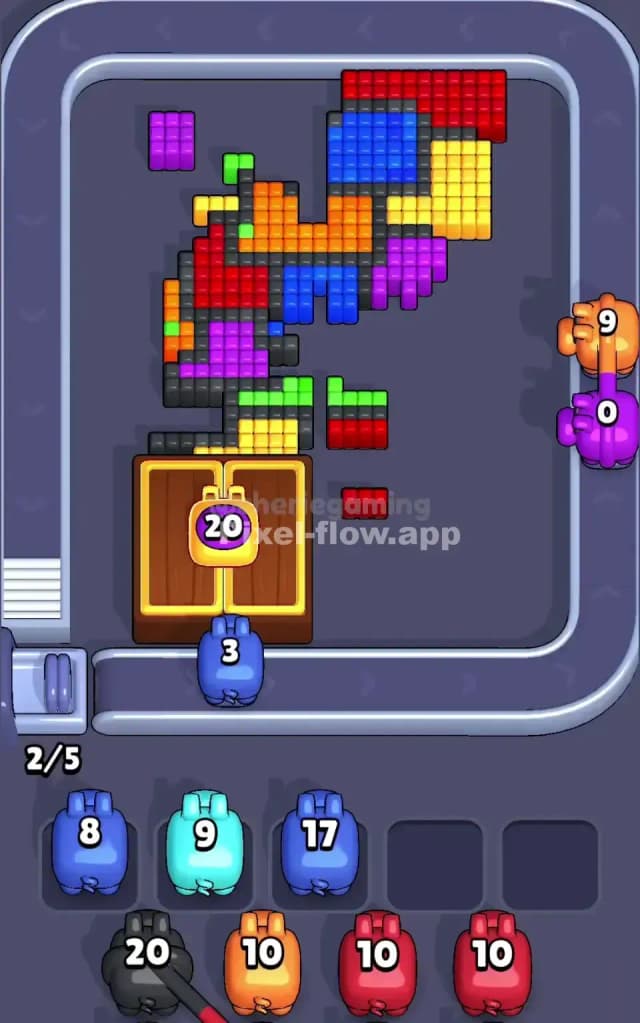
This is where Pixel Flow Level 422 gets truly strategic. Once gray and orange are parked in waiting slots, deploy your cyan pig with its 20 ammo. Cyan is going to be your workhorse—it's the largest ammo pool, and cyan cubes are positioned throughout the board in a way that forces you to think in three dimensions. As you clear cyan, you'll expose new magenta, yellow, and blue sections. Keep a mental tally of what's appearing.

Here's the critical thinking part: some of those newly exposed colors will match pigs you haven't deployed yet. Your magenta pig is sitting in the queue with 20 ammo, and if you expose magenta efficiently, that pig will have plenty to shoot when its turn comes. But if you're careless, you'll expose magenta in scattered, isolated pockets that your magenta pig can't reach because they're surrounded by other colors. This is why Pixel Flow Level 422 demands planning two or three pigs ahead.

As the cyan pig works, watch the waiting slots obsessively. If the gray pig or orange pig suddenly shows weakness (fewer visible targets), consider parking them and moving on rather than forcing them to hunt scattered cubes. A half-spent pig sitting in a waiting slot isn't a failure if it clears the way for your next pig to operate efficiently.

End-Game: The Final Purge

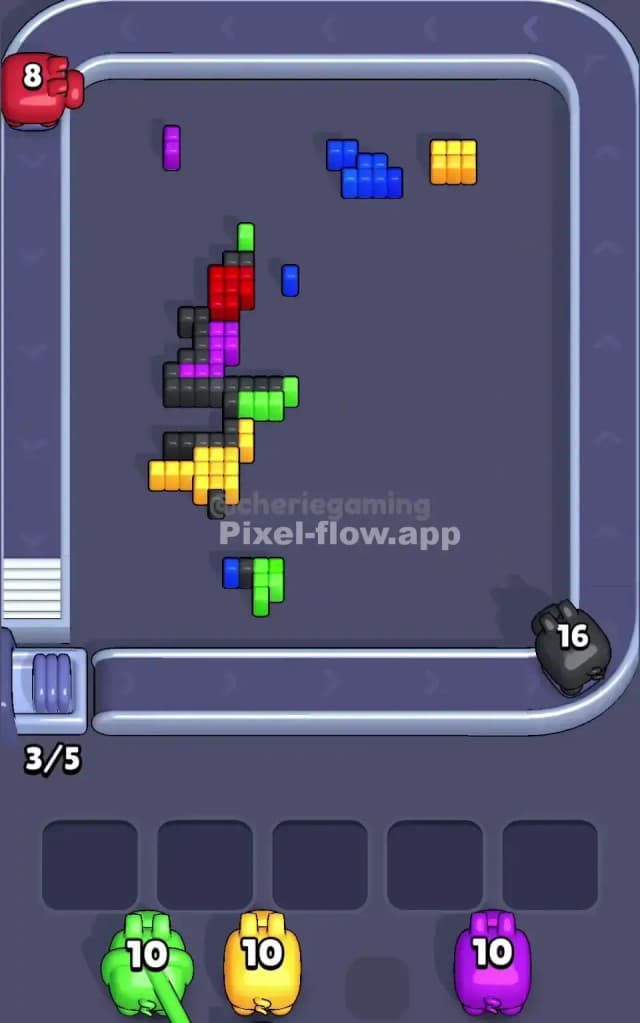
Deploy your magenta pig last, because it has the highest remaining ammo and the board should be substantially thinned by then. Pixel Flow Level 422's endgame is all about cleaning up leftover cubes and closing gaps. Your magenta pig with 20 ammo should have enough juice to finish almost any remaining magenta, and as a bonus, it'll likely expose any blue or yellow remnants hiding in the deepest layers.

If there are still cubes left after magenta spends its ammo, you've either made a sequencing error earlier (which means restart and learn), or there's a hidden layer you didn't anticipate. The latter is rare in Pixel Flow Level 422 if you're paying attention, but it happens. As you reach the final stages, keep your waiting slots mostly empty—you want flexibility to park a pig with 2–3 ammo remaining rather than be forced to overshoot and create new problems.


The Logic Behind This Pixel Flow Level 422 Plan

Exploiting Determinism and Pig Order

Pixel Flow Level 422 is solvable because everything's predetermined. The pig queue never changes, ammo never changes, and the cube positions never change. This means you can exploit the order strategically. By deploying gray and orange early, you're making a calculated bet that they'll expose the right layers for cyan and magenta to finish the job. This isn't luck—it's understanding that Pixel Flow Level 422 was designed with a specific sequence in mind, and your job is to discover it through observation and iteration.

The waiting slots are your tools for managing pigs that finish their ammo before you're ready to use the next pig in line. Instead of viewing a parked pig as a failure, see it as a temporary storage unit that lets you align later pigs perfectly.

Staying Calm Under Pressure

Here's my best advice for Pixel Flow Level 422: watch the queue, count ammo, and plan ahead. Every time a pig fires, you're spending a resource that won't return. Before you deploy a pig, ask yourself: "What colors will this expose, and can my remaining pigs handle them?" If the answer is no, reconsider your strategy. Pixel Flow Level 422 rewards patience and punishes impulsiveness. Take your time, and you'll beat it.