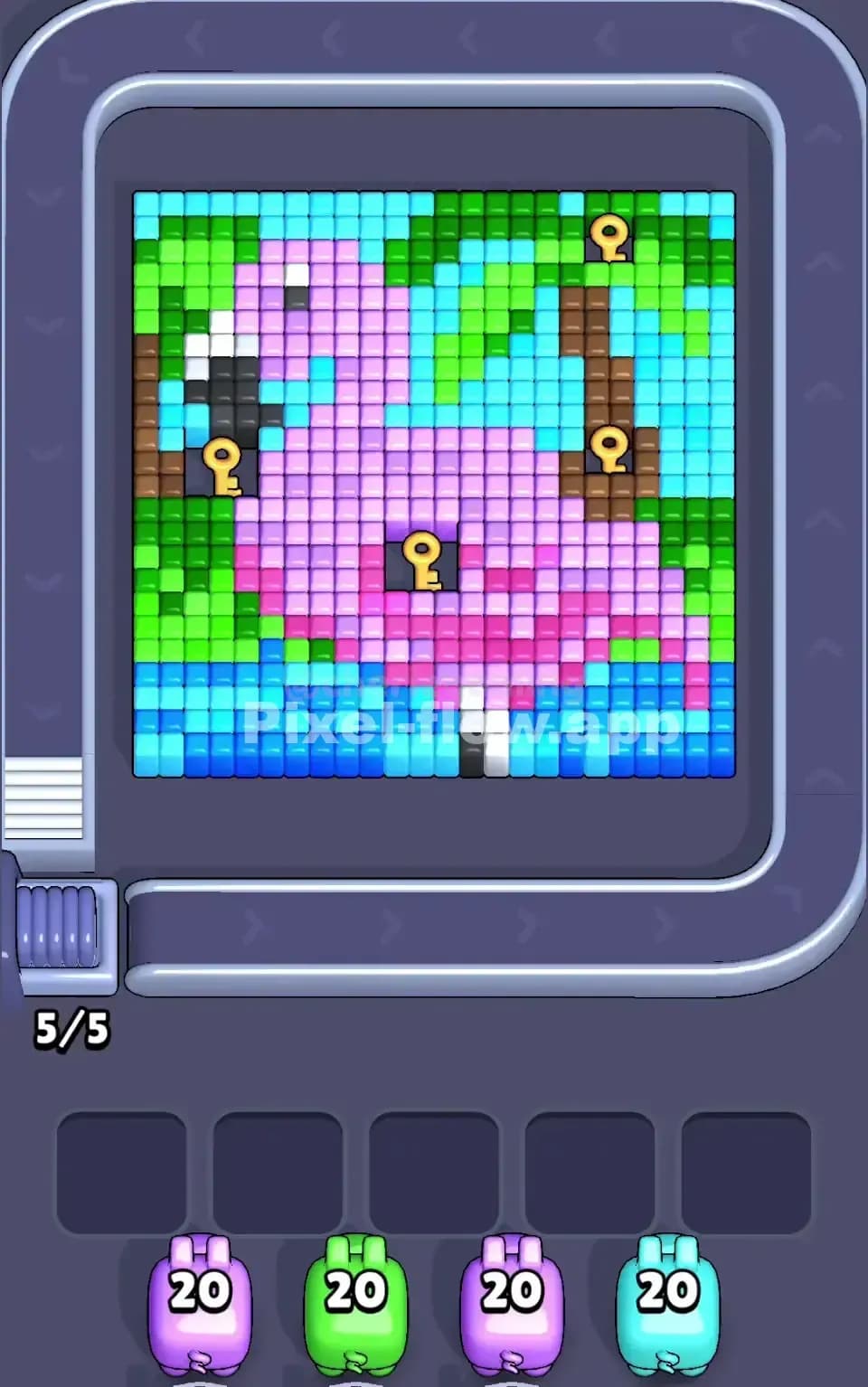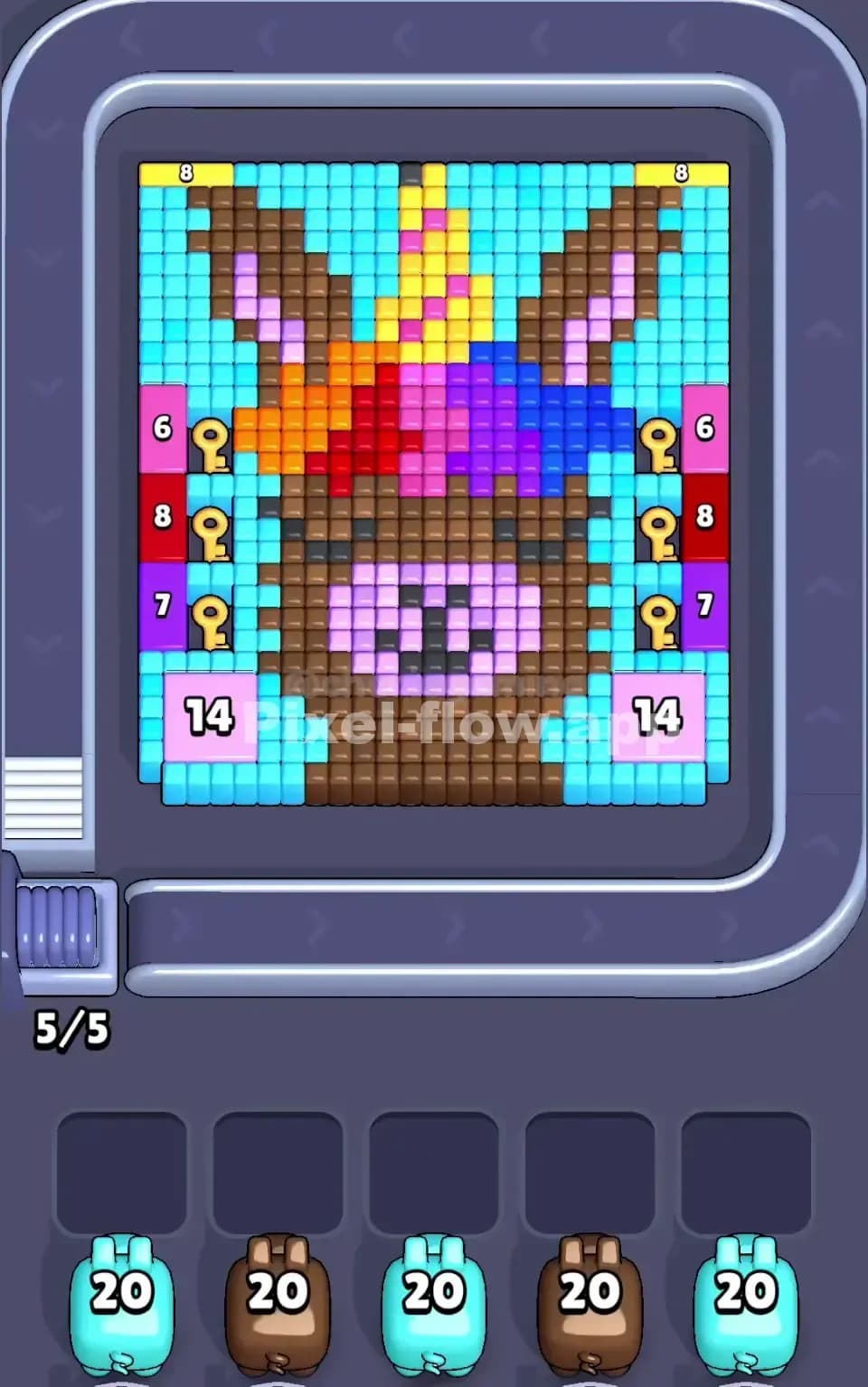
Pixel Flow Level 43 Solution | Pixel Flow 43 Walkthrough
How to beat Pixel Flow Level 43: Video solution & walkthrough. The fastest way to pass Pixel Flow 43.
Is this the wrong level layout?🤔
Pixel Flow randomizes levels for different players. Don't worry, just upload a screenshot of your board, and our AI will find the correct video instantly.
Pixel Flow Level 43 Overview
The Board and Its Layers
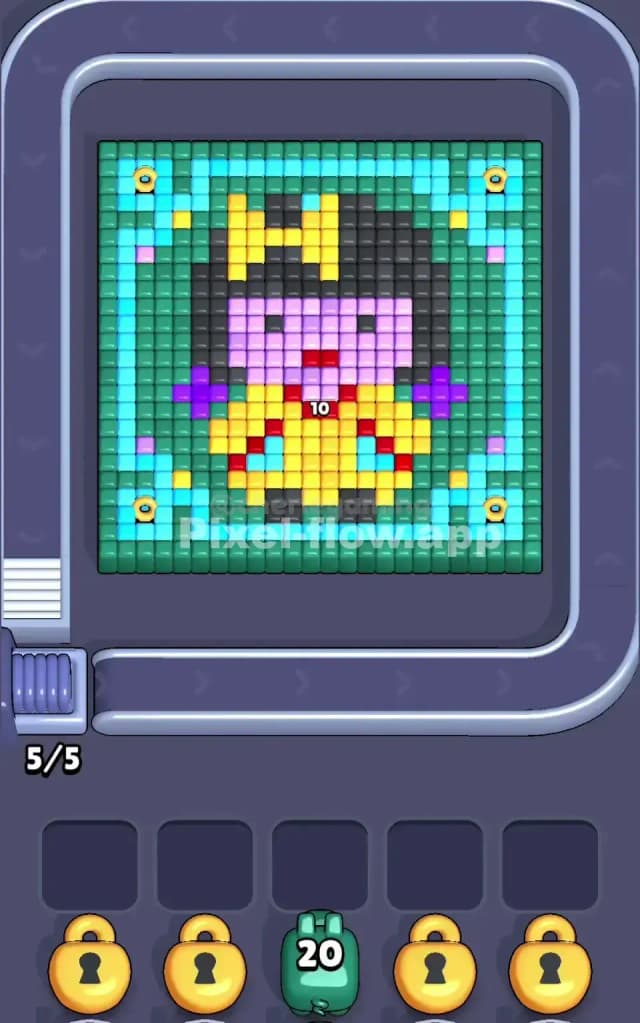
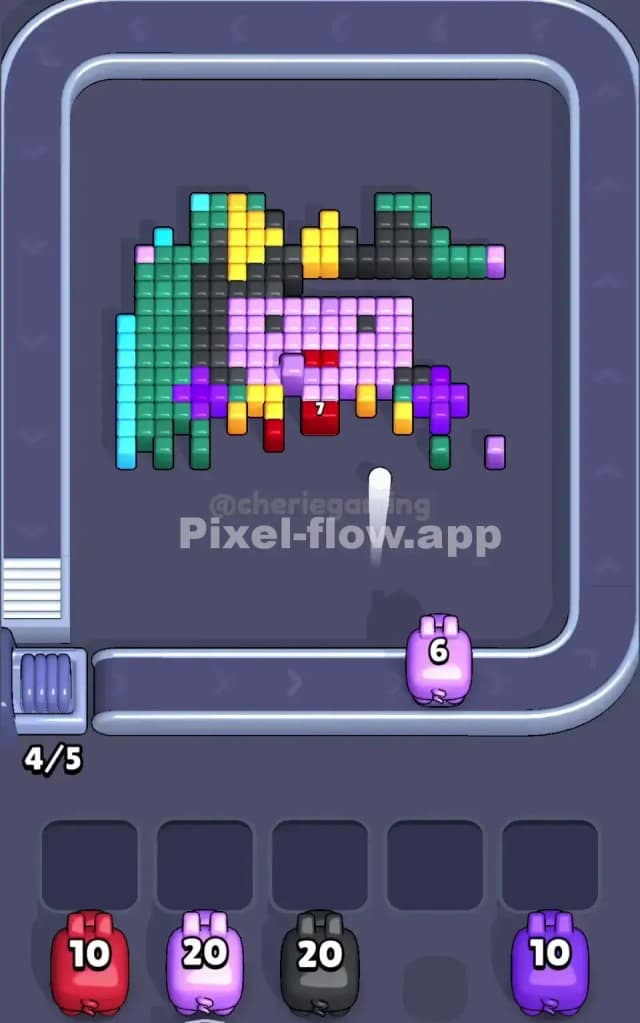
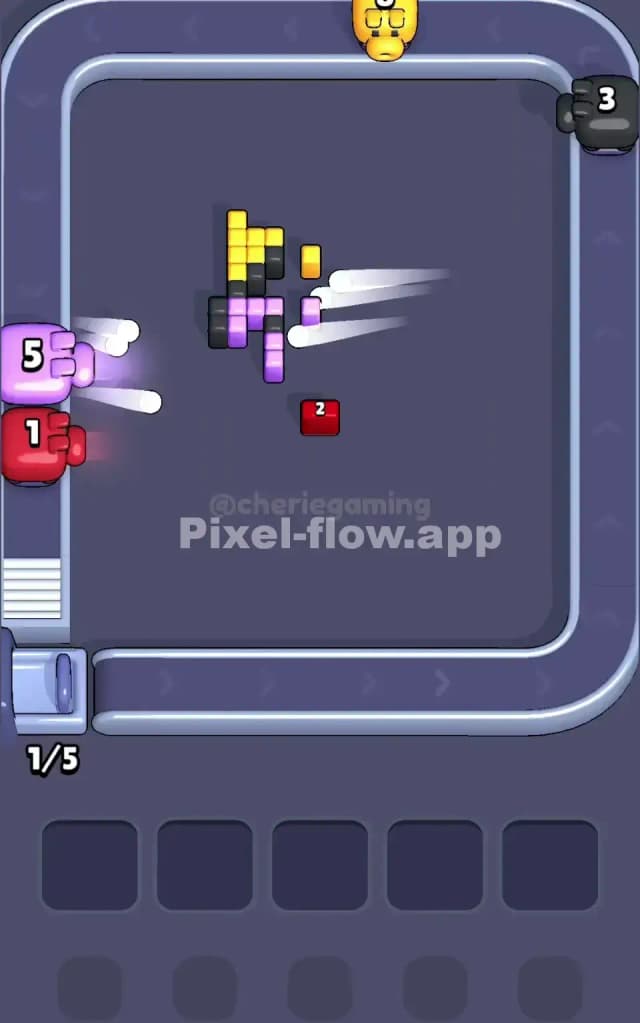
Pixel Flow Level 43 presents you with a vibrant pixel-art butterfly as its central subject, rendered across multiple color layers that'll test your sequencing skills. The outer frame is dominated by cyan and green cubes that form the wings and background, while the interior layers reveal yellow, pink, purple, red, and black voxels that create the butterfly's body and wing patterns. You're starting with five pigs in the waiting area, and the board displays a "10" in the center—that's your ammo indicator for one of the incoming pigs. The sheer number of colors and the layered depth of this image means you'll need to carefully orchestrate which pig shoots when, because clearing the outer colors will expose the inner details, and mess up that order and you'll find yourself holding three or four pigs with nowhere to send them.
Understanding the Win Condition
To beat Pixel Flow Level 43, you need to clear every single voxel cube from the board. That sounds straightforward until you realize each pig has a fixed ammo count and will only shoot cubes matching its color. The moment all five waiting slots are filled with pigs that can't find valid targets, you're stuck—and stuck means you lose. Your job is to activate pigs in an order that keeps at least two slots empty at all times while systematically dismantling this butterfly from the outside in. Since pig order and ammo counts are completely deterministic, every run of Pixel Flow Level 43 plays out the same way if you execute the same plan, which means there's a perfect solution waiting for you to discover it.
Why Pixel Flow Level 43 Feels So Tricky
The Central Bottleneck
The biggest threat to your success on Pixel Flow Level 43 is the dense cluster of colors in the butterfly's body and center region. There's a tight concentration of pink, purple, red, and yellow cubes all stacked on top of each other, and you'll quickly realize that the pink pig might have plenty of ammo but can only shoot when the overlying yellow and gray cubes are cleared. If you activate your pigs in the wrong order, you'll drop the pink pig into a waiting slot way too early, watch its ammo tick down to zero without ever finding a valid target, and suddenly you've lost a slot forever. The dark gray and black cubes add another layer of complexity because they're interspersed throughout the design—they're not just a border, they're woven into the pattern itself.
The Awkward Color Patches
Cyan creates its own mini-puzzle within Pixel Flow Level 43 because it appears in scattered pockets across both the outer wings and the inner detail layer. You might think you've cleared all the cyan, but then after you've removed the yellow, suddenly there's a hidden cyan cube nestled behind it. This forces you to hold onto the cyan pig longer than you'd like, tying up waiting slots. Red presents a similar problem—there are isolated red cubes in the center that won't become accessible until you've burned through nearly all your yellow ammo, so the red pig sits waiting for what feels like forever. Purple is perhaps the trickiest because there's so much of it in the face area that you genuinely can't predict when you'll finish it without mapping out the entire sequence beforehand.
The Personal "Click" Moment
I'll be honest—Pixel Flow Level 43 frustrated me for several attempts because I kept charging forward without planning ahead. I'd activate a yellow pig thinking I'd clear most of the visible cubes, only to watch it exhaust its ammo and drop into a waiting slot while three more pigs remained in the queue. The turning point came when I stopped trying to be clever and instead spent two minutes just looking at the board, counting how many yellow, cyan, and pink cubes were actually visible versus hidden. Once I realized I needed to think three or four pigs ahead instead of just reacting to the next pig in line, Pixel Flow Level 43 became a satisfying puzzle of timing rather than a frustrating guessing game.
Step-by-Step Strategy to Clear Pixel Flow Level 43
The Opening: Establishing Control
Start Pixel Flow Level 43 by activating the cyan pig first. You'll notice cyan forms much of the outer border and wing framework, so this pig should have plenty of targets and won't drop immediately. Watch it blast through the cyan cubes in the upper left, upper right, and lower corners—you're essentially clearing the "frame" of your butterfly. Keep your eyes on the waiting slots as the cyan pig works; as long as you still have at least three empty slots after cyan finishes, you're in good shape. Don't panic if cyan burns through its ammo faster than expected—that's actually helpful because it means the next layer is revealed sooner. Once cyan drops into a waiting slot, you should still have at least four pigs queued up, giving you plenty of breathing room.
Mid-Game: Exposing Layers and Managing the Queue
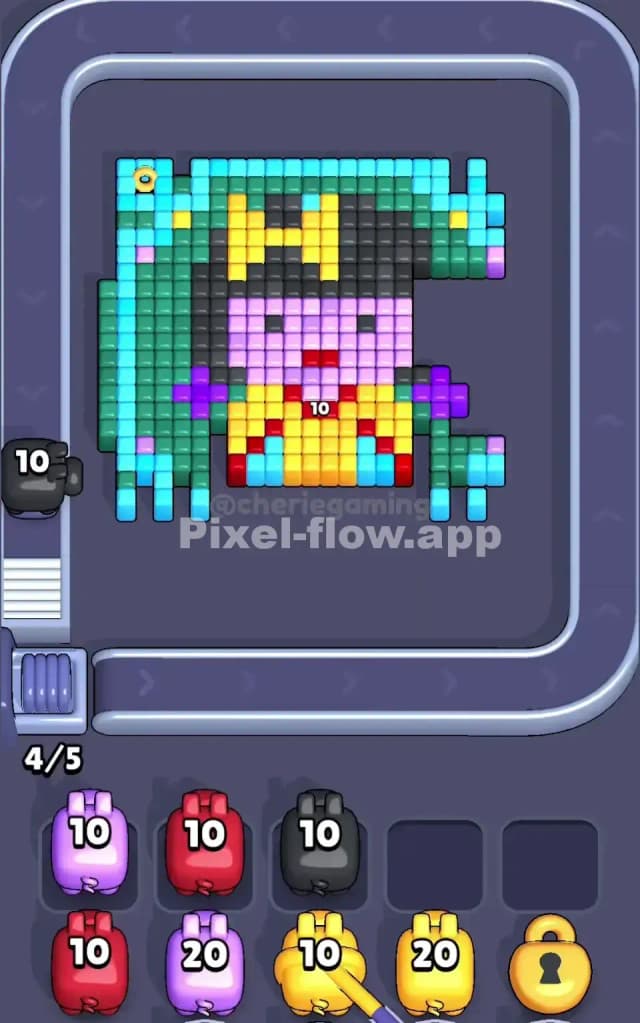
Now it's time to tackle yellow on Pixel Flow Level 43. Yellow has a massive footprint on this board—it fills much of the butterfly's wings and creates bridges throughout the design. The yellow pig should have substantial ammo (possibly that "10" you see indicated), and you'll watch it methodically clear the wing patterns. Here's the critical part: don't let yellow finish if you can help it. What I mean is, if yellow exhausts its ammo before the purple and pink faces are fully exposed, you're forcing those pigs to wait. Instead, try to activate yellow in a rhythm where it clears enough to expose the next priority color but leaves you with an opening to deploy the gray or black pig next. This keeps the momentum going and prevents the dreaded "all five slots full" scenario on Pixel Flow Level 43.
Once yellow drops, shift to the gray and black cubes. These darker colors are scattered throughout and act as connectors between the outer and inner layers. Gray especially is crucial on Pixel Flow Level 43 because clearing it will open up access to the pink and purple that form the butterfly's face. Don't underestimate how much gray is hiding—it weaves through the entire design. After gray and black, you'll have a much clearer picture of what's left. At this point, you should have at least one or two waiting slots still empty, which gives you the cushion you need for the tricky final colors.
End-Game: The Tight Finish
Here's where Pixel Flow Level 43 either rewards careful planning or punishes hasty decisions. Red, pink, and purple are your final three colors, and they're tightly packed in the central butterfly face. Activate red next—there aren't as many red cubes as you might think, and clearing them will expose some of the purple and pink cleanly. Watch red carefully; if it drops with ammo still remaining but no valid targets, you've made a sequencing error earlier. Assuming red clears successfully, pink is next. Pink has a large block in the face area, and once red is gone, pink should have clear access to most of its cubes. Finally, purple is your last pig. If you've done everything right, purple will have a small, manageable cluster left—perhaps some scattered cubes in the face area or edges. The final purple shot should clear the board and seal your victory on Pixel Flow Level 43.
The Logic Behind This Pixel Flow Level 43 Plan
Exploiting Determinism and Sequence
Pixel Flow Level 43 isn't about luck or twitch reflexes—it's about understanding that every pig's ammo and every cube's position are fixed. The outer colors (cyan, green) are your gateway to the inner colors (yellow, pink, purple, red). By starting with cyan and proceeding through the layers methodically, you're exploiting the board's geometry rather than fighting against it. Each pig you activate should bring you closer to a state where the remaining pigs in the queue have visible targets. Think of it like peeling an onion: you can't eat the core until you've removed the layers above it, and you can't be efficient about it unless you know which layers to peel first.
The waiting slots are your real constraint on Pixel Flow Level 43. You have exactly five slots, and if they're all filled with "stuck" pigs, you lose instantly. By keeping at least two slots empty at all times, you're giving yourself permission to make small mistakes without punishing yourself fatally. If a pig drops with a little ammo left, you've still got space to absorb it. But if all five slots are full and your next pig finds no targets, it's game over. This is why counting visible cubes and predicting ammo consumption is essential—you're not just clearing the board, you're orchestrating a five-pig ballet where timing is everything.
Staying Calm and Counting Ahead
The psychological side of Pixel Flow Level 43 is just as important as the mechanical side. It's tempting to mash the activate button and hope for the best, but that's how you end up with a buffer full of useless pigs. Instead, pause for a moment when you boot up Pixel Flow Level 43 and mentally map the colors. Count roughly how many cyan cubes you see, then estimate how many moves it'll take the cyan pig to exhaust them. Look ahead to the next pig in the queue and ask yourself: will it have a clear target once cyan is done? If the answer is no, reconsider whether cyan is really your best opening move.
As you progress through Pixel Flow Level 43, develop the habit of watching the queue even while a pig is actively shooting. You'll often see the next pig's color appear on the conveyor belt before the current pig finishes. Use that moment to visually sweep the board and mentally plan where that next pig's shots should land. This lookahead mentality transforms Pixel Flow Level 43 from a reactive slog into a proactive puzzle where you're always thinking two moves ahead. The level rewards this patience with a clean, satisfying victory where your last pig clears the final cube and no chaos remains.