Pixel Flow Level 453 Solution Walkthrough | Pixel Flow 453

How to solve Pixel Flow level 453? Get instant solution for Pixel Flow 453 with our step by step solution & video walkthrough.

Share Pixel Flow Level 453 Guide:
Pixel Flow Level 453 Gameplay
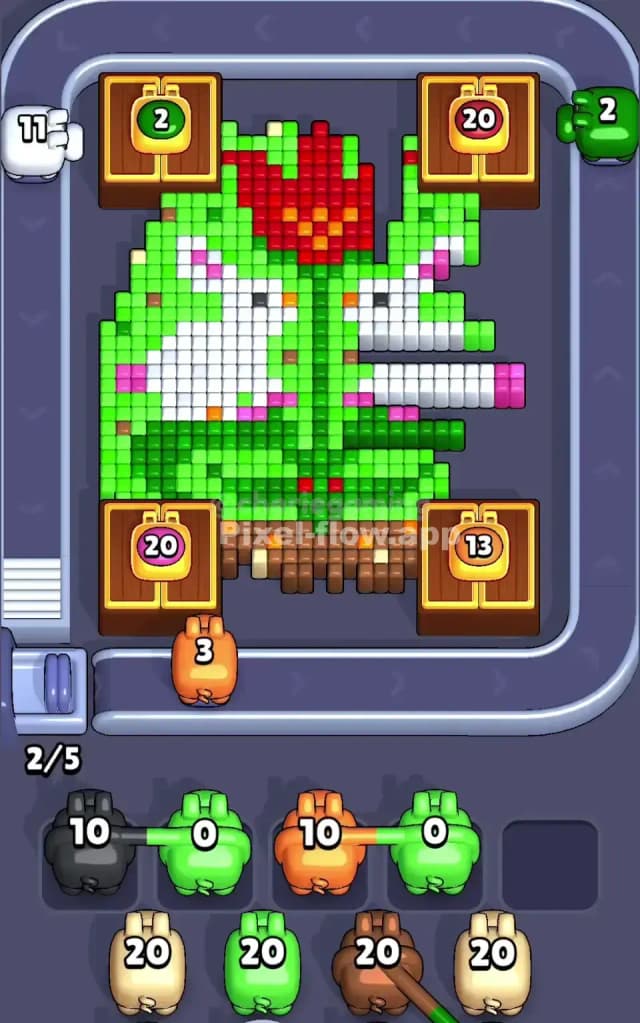
Pixel Flow Level 453 Solution 1
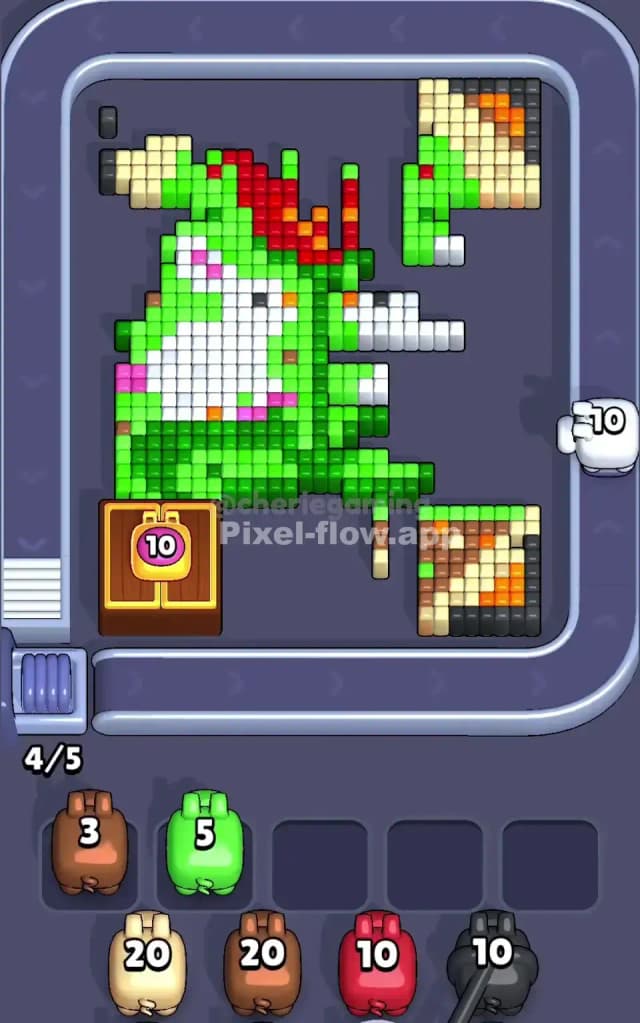
Pixel Flow Level 453 Solution 2
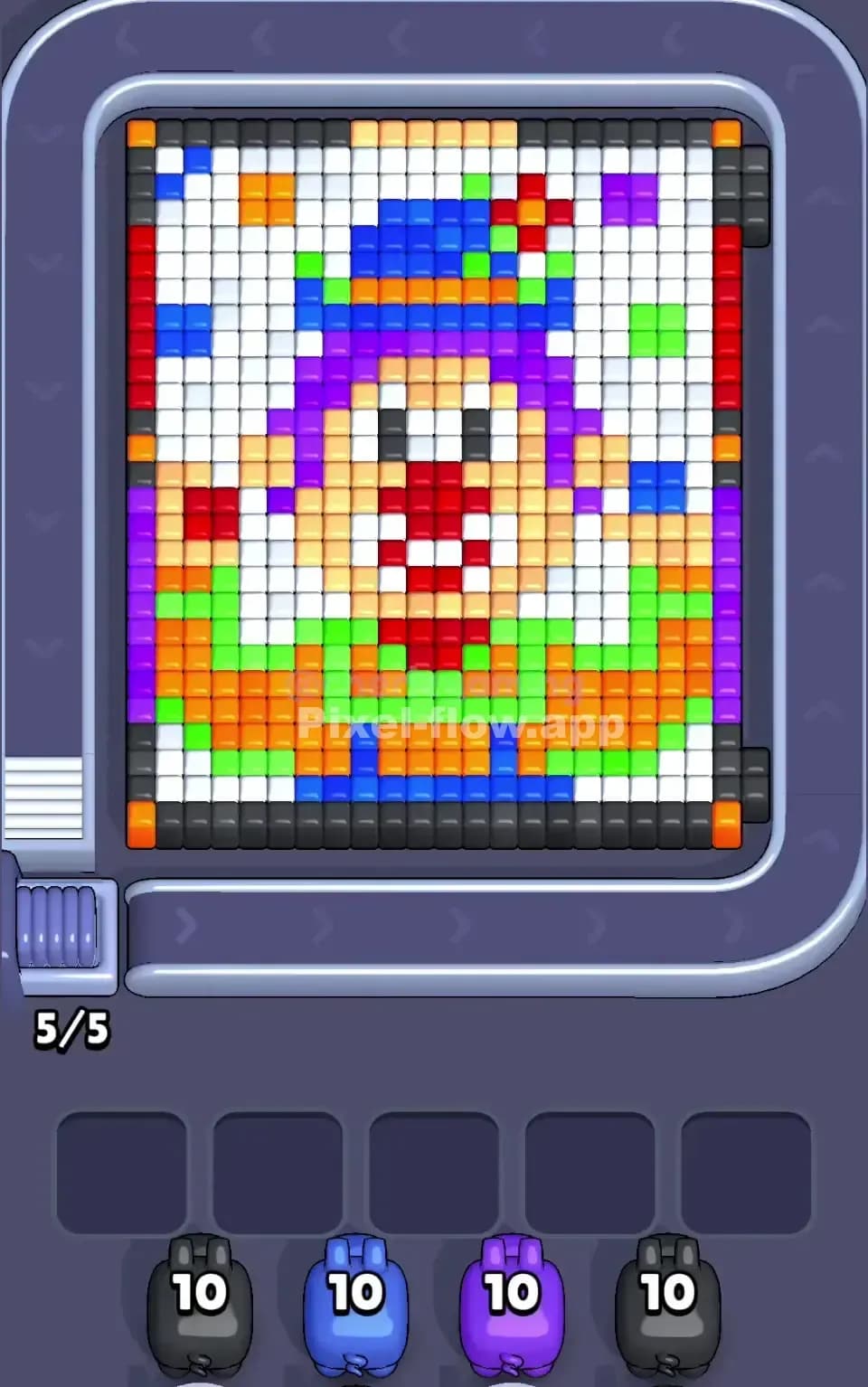
Pixel Flow Level 453 Solution 3

Pixel Flow Level 453 Overview

The Board Layout and Visual Challenge

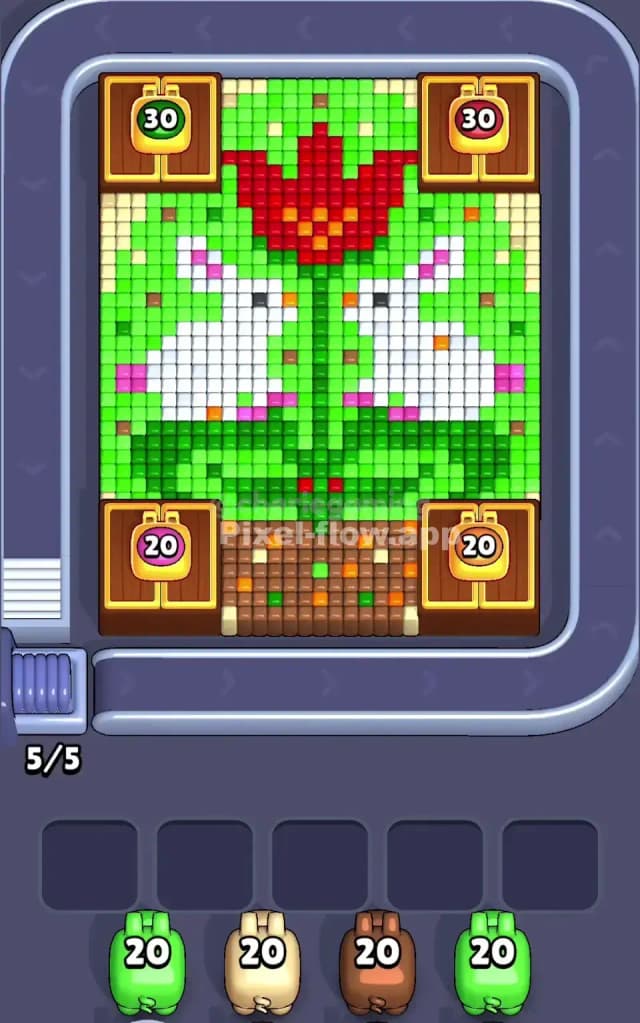
Pixel Flow Level 453 presents you with a charming pixel-art flower design that dominates the entire board. The main subject is a stylized daisy or similar bloom, rendered in vibrant red petals, white and pink inner details, and a rich green stem-and-leaf background. What makes this level visually deceptive is how the colors layer—what looks like a straightforward 2D picture actually conceals multiple depth levels filled with cubes you can't initially see. The dominant green background tiles are thick and numerous, which means you'll need serious firepower from your green pigs to expose the layers beneath. The red petals form a tight cluster in the upper-center region, and the white inner flower parts are fragmented across the middle, creating small pockets that are easy to miss. You'll also notice brown wooden borders at the top and bottom of the level, hinting at additional complexity.

Win Condition and Deterministic Nature

To win Pixel Flow Level 453, you must clear every single voxel cube on the board—no exceptions. The good news is that your pig roster and each pig's ammo count are completely fixed and unchanging, which means every attempt follows the same rules. Your four pigs arrive in a set order, each carrying a specific number of shots (you can see 20, 20, 20, 20 ammo across the queue at the bottom). This deterministic setup means there's no luck involved; success comes from planning the exact sequence of moves and understanding how to spend each pig's ammo efficiently so no pig gets stranded in the waiting slots without valid targets.


Why Pixel Flow Level 453 Feels So Tricky

The Green Bottleneck

If you're struggling on Pixel Flow Level 453, the primary culprit is almost certainly the sheer volume of green cubes. The green background alone consumes a huge portion of your board real estate, and because green pigs can only shoot green cubes, you're entirely dependent on your green pigs to clear this layer and expose what's underneath. The problem intensifies when you realize that some of the deeper layers might also contain green, meaning you could run out of visible green targets while your green pig still has ammo left. That's when the pig drops into a waiting slot—and if both your green pigs end up parked there without fresh targets, you're in serious trouble. I found myself staring at a half-cleared board with two green pigs sitting idle, each armed with 8 or 10 remaining shots, and no way to spend them because the green they needed was buried beneath other colors. That's the "aha moment" that made the level click for me: you must manage green first and most aggressively, leaving just enough for later phases.

The Fragmented Inner Layers

The white and pink details of the flower's center are scattered across multiple small regions, and they don't form one continuous block. This fragmentation is nasty because it means your lighter-colored pigs (likely white or pink) will have sporadic, isolated targets rather than one fat cluster they can bulldoze through. You might fire a white pig at one cluster, watch it exhaust its ammo, and then realize three or four more white cubes are hiding in a completely separate pocket on the other side of the board. I've definitely wasted moves by not counting all white cubes upfront and assuming I'd come back to stragglers later—spoiler alert, later never came because I'd already used my white pig's ammo.

The Ammo-to-Target Mismatch Risk

With Pixel Flow Level 453, you're dealing with four pigs, each packing exactly 20 ammo. The temptation is to think, "Twenty shots per pig should be plenty," but the level's design is specifically engineered so that your ammo only just covers what you need if you're strategic. Fire your pigs in the wrong order, miss-target even a couple of times, or leave an awkward color pocket unexposed, and you'll quickly find yourself in a position where a pig has 5 ammo left but the only remaining cubes of its color are buried under a layer you haven't opened yet. That's a waiting-slot trap, and it's why Pixel Flow Level 453 punishes casual play.


Step-by-Step Strategy to Clear Pixel Flow Level 453

Opening: Establish Breathing Room

Start Pixel Flow Level 453 by deploying your first green pig immediately. Yes, really—green first. Count the visible green cubes you can target and fire away, clearing the outer ring of the green background. You want to create visual separation between the top third of the board and the middle, exposing whatever color sits beneath that front layer of green. This opening phase should consume roughly 10 to 12 of your first green pig's 20 ammo and free up at least 2 of your 5 waiting slots. The reason you do this aggressively is psychological as much as mechanical: you want to see the second layer immediately, so you know which colors are coming and can plan your subsequent pig deployments. Don't overthink this phase; just target the dense green clusters and work methodically from one area to another. Keep at least 2 waiting slots free as a buffer; if you accidentally jam 3 pigs into waiting and the 4th arrives with no valid targets, you've lost.

Mid-Game: Layer-by-Layer Exposure and Ammo Precision

Once your first green pig is parked (hopefully with a little ammo left over), it's time to deploy your second pig. In Pixel Flow Level 453, this pig is typically white or another lighter shade, so aim it at the visible inner-flower cubes. Your goal here is not to erase every white cube—that might burn through ammo too quickly—but rather to clear enough white to expose the next hidden layer and create firing lanes for upcoming pigs. The middle game is where you practice thinking three moves ahead. After your white pig fires, what color will you need next? Is it brown? Red? Another green? Look at the newly exposed board and mentally queue the order before the next pig arrives. If you see that red is going to be your bottleneck because there's a thick cluster that only your third or fourth pig can handle, you might deliberately park your white pig with ammo left, accepting that loss, so your third pig (possibly red) arrives with full ammo to tackle the big red flower petals. This is Pixel Flow Level 453's core strategic dance: sometimes not spending all your ammo immediately is the winning move because it preserves the pig that comes later.

End-Game: The Final Color Sequence and Buffer Management

By the time you're nearing the finish on Pixel Flow Level 453, you should have cleared the dense green background, exposed the flower art, and be mopping up the secondary colors—reds, pinks, whites, and any browns or details. The end game is where patience pays off. You'll likely have one or two pigs left in your queue, and they'll be your heavy hitters for the remaining cubes. Fire conservatively, target the largest remaining clusters, and actively count remaining cubes for each color. If you have 6 red cubes visible and your red pig has 8 ammo, you're safe and can even afford a misfire. If you have 6 red cubes and no more red pigs coming, you must clear all 6 or you'll lock a pig in waiting without recourse. In the final moves, once every cube is gone, you've won—the board goes clear, the victory animation plays, and Pixel Flow Level 453 is in the books.


The Logic Behind This Pixel Flow Level 453 Plan

Exploiting Determinism and Queue Awareness

The brilliance of Pixel Flow Level 453 lies in how it teaches you to respect the queue and the order of pigs. Because every run is deterministic, you can memorize the optimal sequence. More importantly, you must think in layers: first green, then white/pink, then reds, then any final details. This order isn't arbitrary—it's baked into the level's design so that if you follow it, you'll never jam your waiting slots. The strategy doesn't rely on lucky bounces or random color cascades; it relies on you planning the sequence beforehand and committing to it. That's why I always spend a few seconds before I start, just scanning the board and mentally noting, "Green first to expose the flower, white second to separate the details, red third to clear the petals, final pig to clean up anything missed." Once you lock that sequence in your head, Pixel Flow Level 453 becomes a puzzle of precise execution rather than luck.

Staying Calm and Counting Under Pressure

The emotional side of Pixel Flow Level 453 is real—watching your waiting slots fill up with stuck pigs triggers a fight-or-flight response. Don't give in to panic. Instead, pause between each pig deployment and count. Count visible cubes per color. Count your pig's remaining ammo. Count your free waiting slots. This simple practice—literally pausing for three seconds to mentally tally numbers—transforms Pixel Flow Level 453 from a stressful memory game into a solvable logic puzzle. I've personally found that the moment I stopped rushing and started counting, my success rate jumped dramatically. The level has all the information you need; it's just asking you to process it calmly and deliberately. Trust the numbers, follow the plan, and Pixel Flow Level 453 will reward your patience with a clean victory.