Pixel Flow Level 463 Solution Walkthrough | Pixel Flow 463

How to solve Pixel Flow level 463? Get instant solution for Pixel Flow 463 with our step by step solution & video walkthrough.

Share Pixel Flow Level 463 Guide:
Pixel Flow Level 463 Gameplay
Pixel Flow Level 463 Solution 1
Pixel Flow Level 463 Solution 2
Pixel Flow Level 463 Solution 3

Pixel Flow Level 463 Overview

The Board: A Jellyfish in the Deep

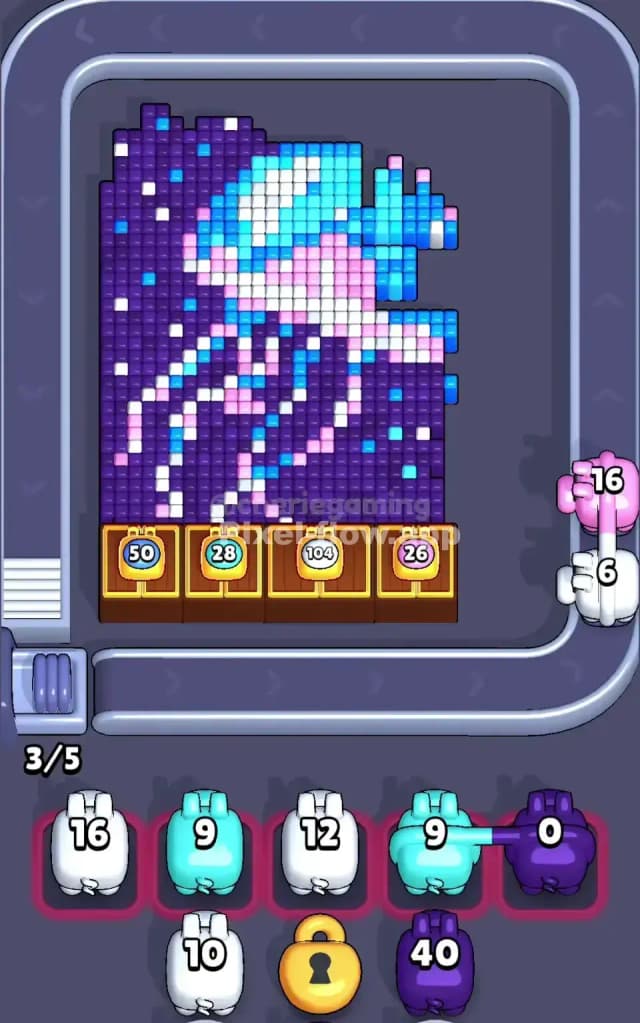
Pixel Flow Level 463 presents you with a beautiful jellyfish illustration rendered entirely in voxel cubes across multiple layers. The creature dominates the center of the screen, with its luminous bell rendered in cyan, white, and pink tones, while trailing tentacles extend downward in shades of magenta and purple. The background is a deep purple that fills the gaps and outer edges, creating a sense of oceanic depth. What makes Pixel Flow 463 visually striking is how the colors seem to glow against the dark backdrop, almost like bioluminescence—but don't let that beauty distract you from the puzzle's genuine complexity.

When you first load Pixel Flow 463, you're looking at a fully obscured board where every color is visible but layered in ways that aren't immediately obvious. The jellyfish's bell and tentacles contain multiple nested layers of cubes, and you'll need to systematically dismantle them to expose what lies beneath. The initial queue shows three pigs with 40 ammo each, and understanding their exact distribution across the five colors on the board is critical to success.

The Win Condition and Deterministic Challenge

Your goal in Pixel Flow Level 463 is straightforward: clear every single voxel cube from the board. Each pig shoots cubes of only its own color, and each destroyed cube costs exactly 1 ammo. The challenge isn't just about shooting—it's about sequencing your pigs so their ammo depletes at the right moment and so no color gets trapped behind others. Pig Flow Level 463 is entirely deterministic, meaning the queue order, ammo counts, and cube placements never change. This is your superpower: once you understand the puzzle's structure, you can plan a solution with mathematical precision.


Why Pixel Flow Level 463 Feels So Tricky

The Waiting Slot Bottleneck

The single biggest threat to beating Pixel Flow Level 463 is jamming your five waiting slots with pigs that can't spend their ammo. Imagine you use your first 40-ammo pig to clear cyan cubes, but the remaining cyan is buried behind layers of white and pink. That first pig drops into a waiting slot with full ammo still left—a trap. If the next two pigs also encounter colors they can't reach, you've suddenly filled three slots with 40 ammo each, and you've only used maybe 20 total shots. One wrong move, and you're locked into failure before you realize what happened.

What makes this bottleneck so insidious in Pixel Flow Level 463 is that it sneaks up on you. The jellyfish's central position means colors are intertwined, and a single "wrong" pig can block access to entire sections. You might think you're being efficient by clearing the beautiful cyan bell first, only to discover that you've sealed away pink and magenta cubes that a later pig desperately needs.

Awkward Color Patches and Hidden Layers

Pixel Flow Level 463 has a few genuinely tricky color pockets that don't reveal themselves until you've already committed shots. The tentacles contain scattered magenta and pink cubes mixed with purple, and if you're not careful, you'll shoot a purple pig and accidentally isolate magenta clusters behind purple layers. This forces you to either waste ammo on unreachable cubes or watch a pig drop into the waiting area half-spent.

Additionally, the transition between the bell and tentacles creates an awkward color sandwich where cyan and white overlap unpredictably. You might think a white pig has 20 targets, then clear just 8 and watch it drop into a slot because white is now completely blocked by pink or purple layers. The spatial relationships in Pixel Flow Level 463 aren't intuitive at first glance.

The Moment It Clicked for Me

Honestly, Pixel Flow Level 463 frustrated me for my first dozen attempts. I'd clear the top half of the jellyfish beautifully, feel confident, then watch my final pigs tumble into waiting slots with 30+ ammo still loaded. The turning point came when I stopped trying to clear visible colors and started asking: "Which pig must go next to unlock the next layer?" That shift from reactive to predictive thinking changed everything. Once I mapped out which colors blocked which, Pixel Flow Level 463 suddenly became solvable—even elegant.


Step-by-Step Strategy to Clear Pixel Flow Level 463

Opening: Establishing Your Breathing Room

Start Pixel Flow Level 463 by letting your first 40-ammo pig shoot the purple background cubes. This might sound counterintuitive—why waste your first pig on the "boring" background?—but it's essential. Purple comprises the bulk of the board, and clearing it early opens sightlines to the deeper layers where cyan, white, pink, and magenta live. Your first pig should spend all 40 ammo on purple, dropping into a waiting slot completely exhausted. That's exactly what you want: a slot filled by a spent pig is a slot that won't cause trouble later.

As your first pig finishes, you should have three waiting slots still empty. The immediate question becomes: which color shows the most accessible targets now? In Pixel Flow Level 463, once purple clears from the background, the cyan bell becomes the obvious target. However, don't commit your second pig to cyan yet—instead, observe how cyan cubes are positioned relative to white and pink. If cyan is shallower (closer to the front), shoot it fully. If you notice white actually blocks some cyan from behind, hold off and check the queue for what comes next.

Mid-Game: The Sequencing Dance

This is where Pixel Flow Level 463 separates patient players from frustrated ones. Around moves 3–6, you're working with pigs whose ammo counts don't perfectly match what you see. Maybe a white pig has 40 ammo but you only count 25 visible white cubes. Don't panic. This means white cubes exist in deeper layers, hidden by cyan or pink. Your job is to sequence other pigs to expose them.

A proven mid-game pattern for Pixel Flow Level 463 works like this: after purple and cyan are mostly clear, send in a pink pig. Pink will shoot the visible pink areas in the bell and tentacles, but it'll likely run out of targets before ammo depletes. When that happens, the pig drops into a waiting slot with perhaps 15–20 ammo remaining. That's okay—you're intentionally parking a half-spent pig because the magenta pig (which comes next in most Pixel Flow Level 463 queues) needs to expose deeper layers before pink can finish.

The magenta pig targets the tentacle strands and inner magenta clusters, and it often has just enough ammo to complete this task. If you've sequenced correctly, magenta will drop into the waiting area fully spent, freeing up resources and exposing white cubes that were previously hidden. Now your waiting area has two spent pigs and one half-spent pink pig—still plenty of room to maneuver.

End-Game: Closing the Puzzle Cleanly

As you approach the final moves in Pixel Flow Level 463, you should have two or three pigs left in the queue, and your waiting area should have at most two or three pigs parked. The remaining visible colors are usually scattered white and lingering cyan or pink. Assess which pig's ammo best matches the remaining target count. If you see 30 white cubes and have a 40-ammo pig next, that's nearly perfect—the pig will finish white and drop into a slot with just 10 ammo wasted, which is acceptable.

The absolute final move in Pixel Flow Level 463 should clear the board completely. Never end with cubes remaining or a pig in the queue if your waiting slots are full. If your final pig doesn't have quite enough ammo to finish the remaining color, you've made an error earlier and need to restart. That sounds harsh, but it reinforces why planning two to three pigs ahead is non-negotiable in Pixel Flow Level 463.


The Logic Behind This Pixel Flow Level 463 Plan

Why Order and Ammo Count Matter More Than Reaction Time

Pixel Flow Level 463 isn't a reflex puzzle—it's a logic puzzle disguised as a shooter. Every pig in your queue has a fixed ammo count, and the board has a fixed cube distribution. This means there is a mathematically correct sequence, and your job is to find it. By prioritizing background colors early and high-ammo pigs for high-cube-density areas, you're working with the puzzle's structure rather than against it.

The reason so many players fail Pixel Flow Level 463 is they treat it like a real-time action game, reacting to what they see rather than planning for what they'll see after each pig empties. The waiting slots are there not as a punishment but as a safety valve—and exploiting them wisely is the actual skill.

Staying Calm and Counting Ahead

The final secret to conquering Pixel Flow Level 463 is patience and simple arithmetic. Before you send a pig downrange, count the visible cubes of that color. Subtract from the pig's ammo count. If the difference is small (0–10), the pig will likely clear the color and drop spent. If the difference is large (15+), the pig will park in a waiting slot half-spent, which is fine—just make sure you have a waiting slot available. Keep mental tabs on your five slots, and never let yourself fill four or more slots until you're certain the remaining pig(s) will clean up the board.

Pixel Flow Level 463 rewards methodical thinking and punishes careless momentum. Give yourself permission to pause between moves, verify your count, and confirm the next pig's target. That five seconds of planning prevents the heartbreak of a last-move jam.