Pixel Flow Level 477 Solution | Pixel Flow 477 Walkthrough
How to beat Pixel Flow Level 477: Video solution & walkthrough. The fastest way to pass Pixel Flow 477.
Is this the wrong level layout?🤔
Pixel Flow randomizes levels for different players. Don't worry, just upload a screenshot of your board, and our AI will find the correct video instantly.
Pixel Flow Level 477 Walkthrough
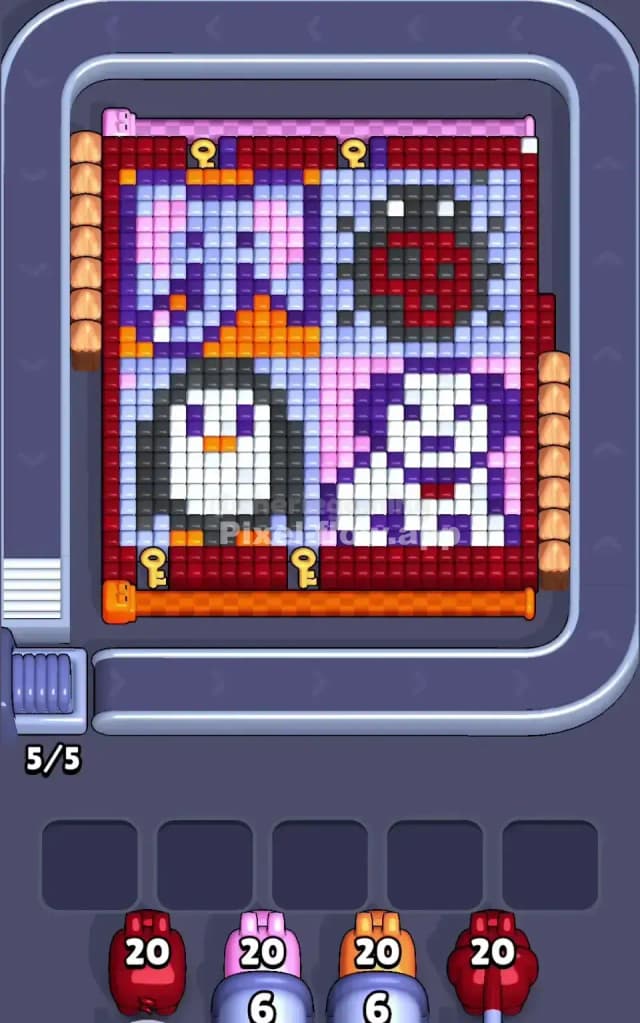
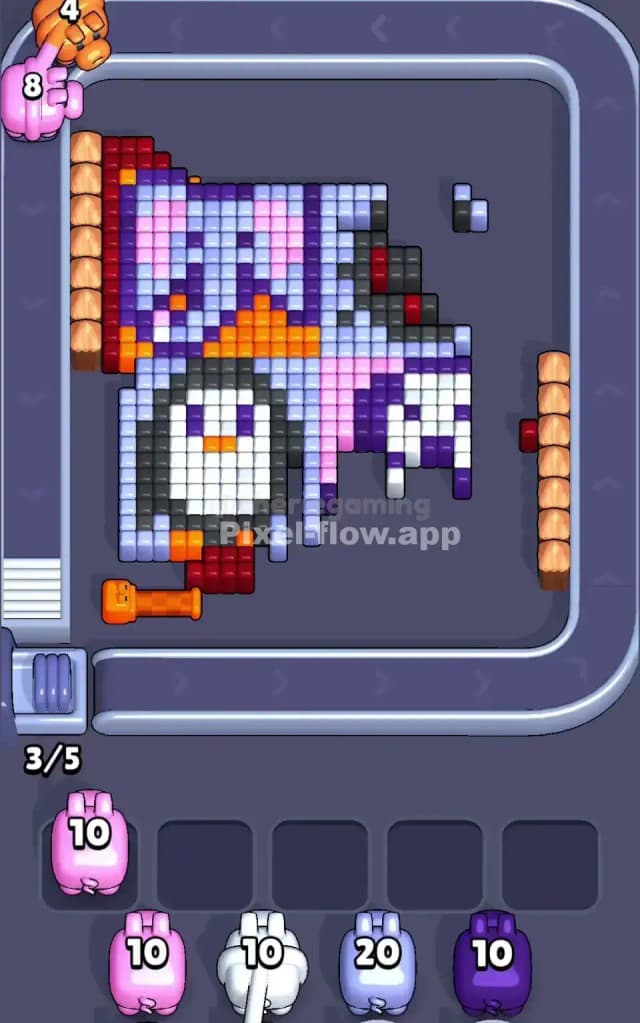
This level is a massive 4-in-1 mosaic. You aren't just clearing one picture; you are dismantling four distinct animal portraits locked inside a heavy frame. The board is split into quadrants: a pink elephant (top-left), a red ladybug (top-right), a penguin (bottom-left), and a dog (bottom-right).
The real danger here isn't the animals themselves. It's the framing. The entire outer rim is a deep red border, and the central cross separating the animals is also thick with blocks. Additionally, Key Locks are blocking the top and bottom edges, meaning you cannot access certain columns until you clear specific triggers. Is this a very hard level? Yes. The density of the blocks combined with the restricted firing angles makes it very hard to clear without clogging your waiting slots.
Pixel Flow Level 477 Overview
Think of this board as a window pane with four distinct views.
- Top Left: A pink elephant against a purple and blue striped background.
- Top Right: A classic red ladybug sitting on a light blue grid.
- Bottom Left: A penguin with an orange beak, set against light blue.
- Bottom Right: A white dog with purple ears on a pink background.
Crucially, the entire picture is wrapped in a thick Dark Red border. There is also a horizontal Orange bar at the very bottom that acts as a blocker. Wooden crates line the left and right sides, but these are mostly distractions; the core threat is the central cross and the outer red rim.
The asymmetry here is subtle but important: the elephant and dog quadrants rely heavily on purple and pink, while the penguin and ladybug are starkly black, white, and red. Your pig queue will likely flood with pinks and reds early on. You need to be aggressive with those colors to open holes for the rarer colors like orange or white.
Step by step solution walkthrough for Pixel Flow Level 477
First Color Zone to Erase in Pixel Flow Level 477
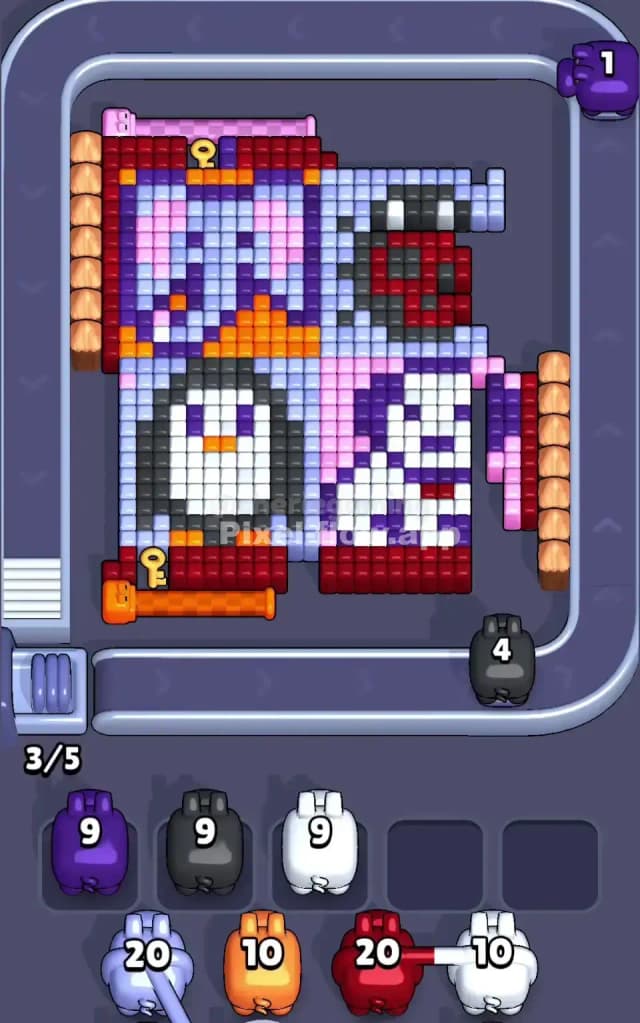
I start by attacking the Dark Red border. Look at the perimeter. It’s solid red. Since the conveyor belt moves clockwise, your pigs will often have a clear shot at the right or bottom edges first.
Why Red?
- Volume: It connects everything. Clearing the red frame separates the four animals, effectively turning one giant unsolvable puzzle into four smaller, manageable ones.
- Access: The red border is the "crust" of the puzzle. Until you break it, you can't easily reach the inner colors of the ladybug or the dog from the side angles.
- Ammo Dump: Red pigs often come with high ammo counts (20+). If you don't clear the border immediately, a Red pig might get stuck in your slot with 18 ammo left because it can't reach the inner red spots on the ladybug.
Once the red frame cracks, focus on the Orange bar at the bottom. It's a single straight line. Clearing it exposes the penguin's feet and the bottom of the dog, giving you vertical access from below.
How to pass Pixel Flow Level 477 without power ups or boosters
At the halfway mark, the board usually looks like a mess. The red frame is gone, and you likely have the ladybug and elephant half-eaten. Here is where players lose: The Central Cross.
There is a vertical and horizontal divider separating the four quadrants. Often, these blocks are purple or light blue. If you ignore them, they block shots to the opposite side of the board.
Mid-Game Strategy:
- Prioritize Vertical Shots: The side crates often block horizontal shots. Use the top and bottom openings (once the keys/orange bar are gone) to drill deep vertical lines.
- The "Penguin Trap": The penguin is mostly white and black. If a White pig comes up, do not waste it on the scattered white pixels in the ladybug background if you can help it. Save it or position it to hit the dense white belly of the penguin. White pigs run out of valid targets quickly on the top half, leading to slot clogging.
- Watch the Keys: There are yellow key icons on the border. You must hit the blocks covering these keys early. Unlocking them removes the indestructible barriers that prevent your pigs from shooting certain columns. If you leave the keys covered, you will inevitably fail because your pigs will have valid targets they physically cannot reach.
Last Details You Clean Up in Pixel Flow Level 477
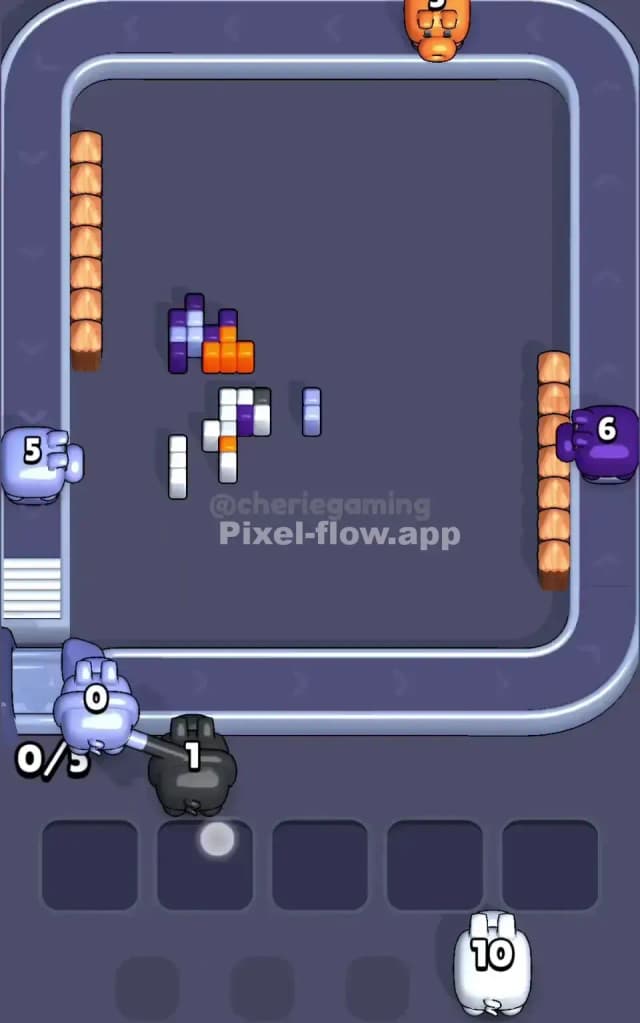
In the final phase, you are usually left with the "corners" of the quadrants. The center is empty, but the top-left corner of the elephant (purple background) and the bottom-right corner of the dog (pink background) act as stubborn islands.
- Check the Corners: Pigs on the conveyor belt turn corners. A pig sitting on the turn can often hit two sides of a block. Use this to snipe the last few pixels hiding behind other blocks.
- The Black Dots: The ladybug’s spots and the penguin’s outline are black. These are often the last to go because they are surrounded by other colors. If you see a Black pig, ensure you have a clear line of sight to the ladybug before dropping it. If the path is blocked by a stray blue pixel, clear the blue first.
Don't rush the end. Waiting for the belt to rotate the pig to the perfect angle (top-down or side-in) is better than dropping it into a slot where it becomes useless dead weight.