Pixel Flow Level 481 Solution | Pixel Flow 481 Walkthrough
How to beat Pixel Flow Level 481: Video solution & walkthrough. The fastest way to pass Pixel Flow 481.
Is this the wrong level layout?🤔
Pixel Flow randomizes levels for different players. Don't worry, just upload a screenshot of your board, and our AI will find the correct video instantly.
Pixel Flow Level 481 Walkthrough
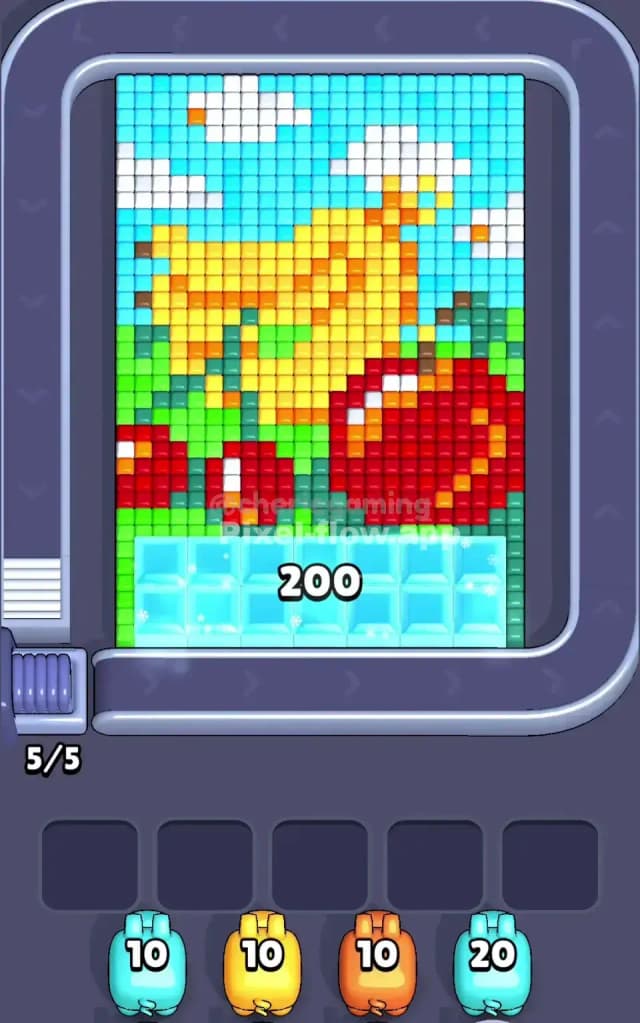
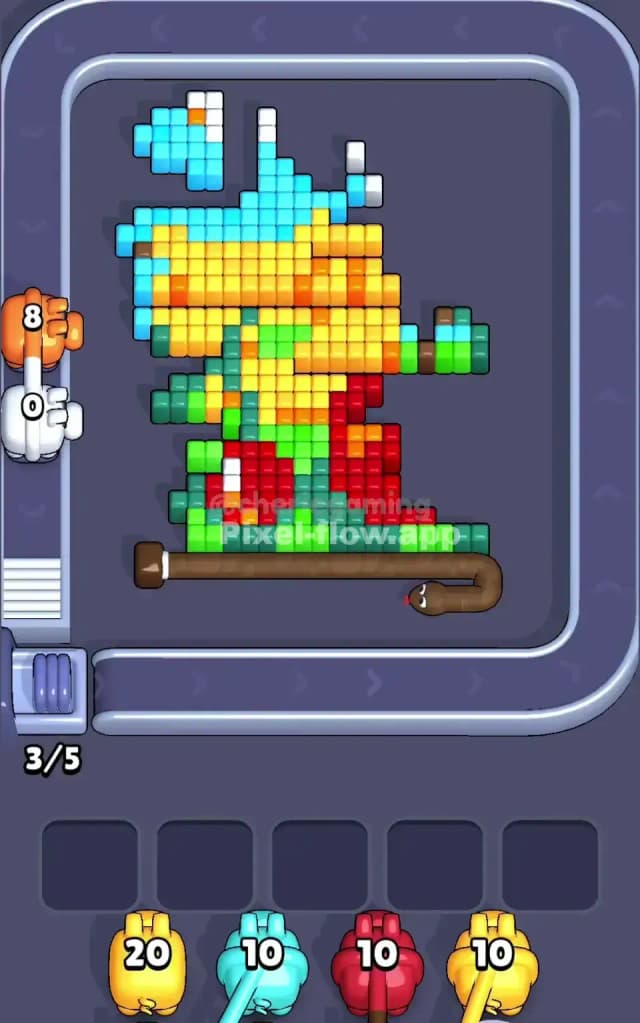
This level looks innocent enough—a cheerful pixel art still life of fruit on a sunny day—but don't let the bright colors fool you. Pixel Flow 481 is a dense, multi-layered puzzle that hides a nasty surprise in the bottom rows. You are looking at a large yellow banana bunch dominating the center, a massive red apple on the bottom right, and a pair of cherries on the left. The background is a mix of light blue sky and some white clouds, while the bottom is lined with green foliage and a strange row of icy blue blocks.
The rules are standard but strict: match the pig color to the pixel blocks. However, because the fruit shapes are irregular and the background is broken up by clouds, you have to be careful. Is it a very hard level? I wouldn't say "very hard" in terms of speed, but it is very hard if you play carelessly with your waiting slots. The hidden layers trap you easily.
Pixel Flow Level 481 Overview
Think of this board as a picnic gone wrong. The main subject is a heavy fruit basket composition. The Yellow bananas take up the high-center ground, curving awkwardly. This yellow block is thick and safe to target early. The Red apple is a giant, solid sphere in the corner, offering easy targets for red pigs.
But look at the edges. The Cyan (Light Blue) isn't just in the sky; it forms a solid barrier of "ice" blocks at the very bottom of the screen. This is asymmetric and tricky. Usually, colors are grouped together. Here, the Cyan is split between the very top (sky) and the very bottom (ice).
The Green acts as a separator, weaving between the cherries and the apple. It’s not a solid block; it’s patchy. This patchiness is dangerous. If you grab a green pig when only a few leaves are exposed, that pig will jam your slot.
Finally, the secret. As you peel back the fruit and grass layers, the scene changes. You aren't just clearing fruit; you are uncovering a hidden animal layer at the bottom—a Brown snake that is completely invisible at the start.
Step by step solution walkthrough for Pixel Flow Level 481
First Color Zone to Erase in Pixel Flow Level 481
I recommend attacking the Cyan (Light Blue) zones immediately.
Here is the logic: visual real estate. The Cyan color occupies the top "sky" section and that weird row of ice blocks at the absolute bottom. By prioritizing Cyan pigs, you do two things. First, you clear the top edge, making the bananas look like they are floating, which helps you see the layer depth better. Second, and more importantly, you destroy that bottom ice barrier.
Those ice blocks often obscure the "roots" of the image. Clearing them early prevents a situation later where you have a Cyan pig stuck in your queue because you forgot about the bottom row and focused only on the fruit. If you see a Cyan pig, play it. It has plenty of targets between the clouds and the ice.
If Cyan isn't available, go for Red. The apple is a huge, contiguous blob of pixels. A Red pig will almost certainly empty its ammo clip in one go, keeping your slots clean.
How to pass Pixel Flow Level 481 without power ups or boosters
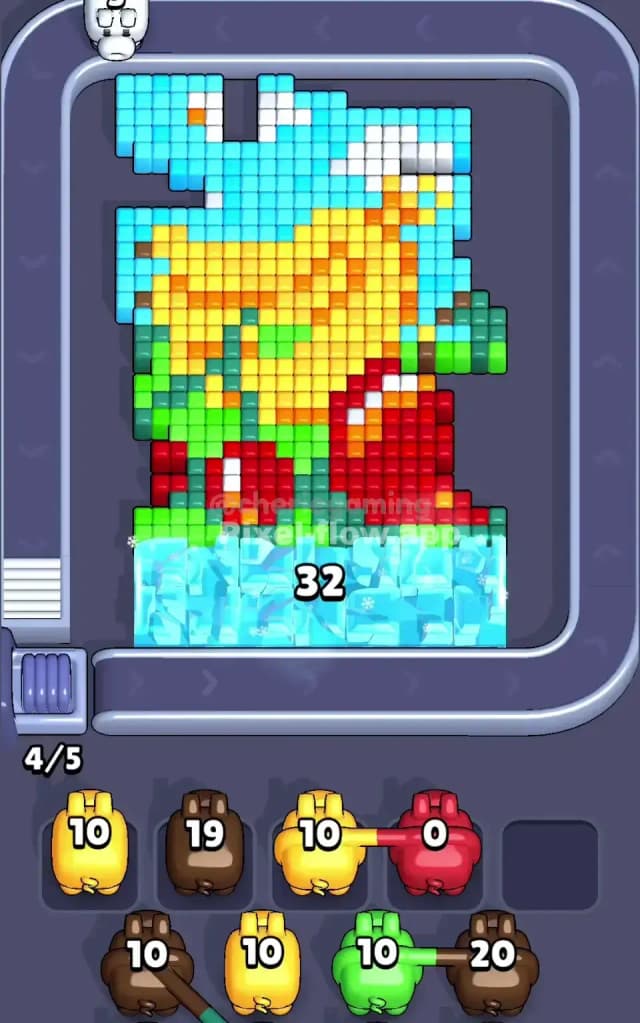
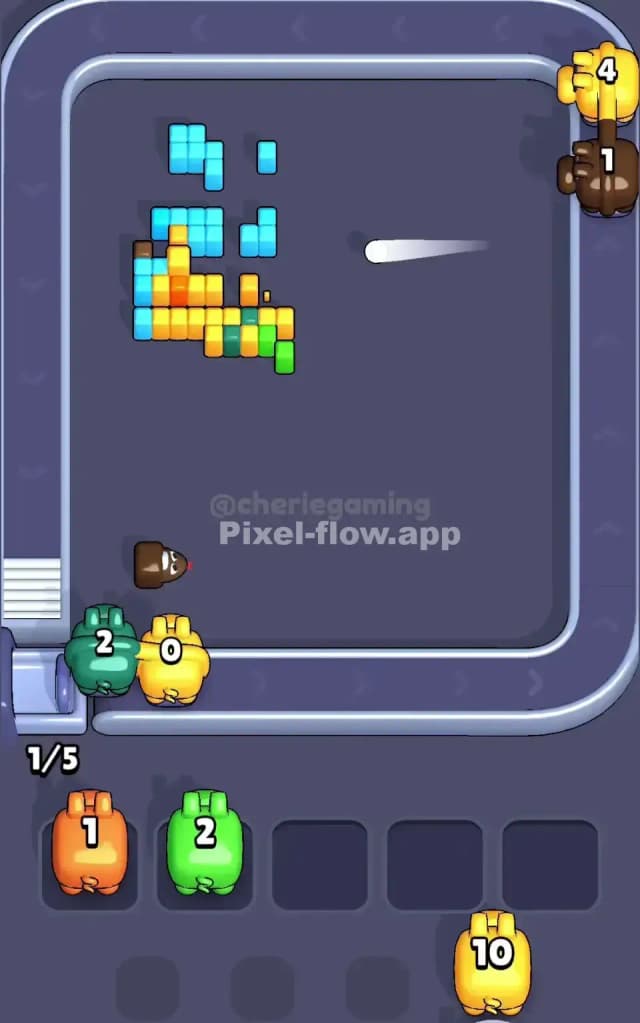
The mid-game of Pixel Flow Level 481 is where players lose. You have likely cleared the main chunks of the Red apple and the Cyan sky. Now the board looks messy. The bananas are half-eaten, and you see weird Brown pixels starting to peek out from behind the Green grass.
This is the danger zone. You will be tempted to grab a Brown pig because you see the snake's head appearing. Don't do it yet.
The snake is on a deeper layer. The visible brown spots (stems and snake head) might not be enough to satisfy a full pig's ammo count (usually 10 or 20 shots). If you grab a Brown pig now, it will shoot 4 pixels and then sit in your waiting slot, clogging your flow.
Instead, stick to the Green and Yellow. You must aggressively clear the remaining grass (Green) to fully expose the snake. The Green pixels are scattered around the cherries and under the bananas. Prioritize Green pigs to "shave" the board down. You want the board to look flat. Only when the Green is mostly gone should you start bringing in Brown pigs to deal with the snake and the fruit stems.
Also, watch out for White. The clouds are small clusters, and the highlights on the fruit (the shine on the apple and cherries) are also white. These are tiny targets. Only grab a White pig if you see at least two distinct white clusters (like a cloud AND the apple reflection) to ensure the pig doesn't get stuck.
Last Details You Clean Up in Pixel Flow Level 481
The end game is all about the Brown snake and the final scraps of Yellow.
Once the Green grass is gone, the snake at the bottom is fully visible. It’s a long, horizontal block of brown pixels. Now is the time to spam any Brown pigs you have. They will rip through that bottom layer quickly.
Your final moves will likely involve cleaning up stray Yellow pixels from the banana tips or single White pixels that were hiding behind the main fruit body. The board usually ends with a few random colored blocks that were part of the internal structure of the fruit. Keep one slot open at all times just in case you miscount the remaining pixels. If you see the snake, you have basically won; just don't choke your slots with colors that are already gone.