Pixel Flow Level 483 Solution | Pixel Flow 483 Walkthrough
How to beat Pixel Flow Level 483: Video solution & walkthrough. The fastest way to pass Pixel Flow 483.
Is this the wrong level layout?🤔
Pixel Flow randomizes levels for different players. Don't worry, just upload a screenshot of your board, and our AI will find the correct video instantly.
Pixel Flow Level 483 Walkthrough
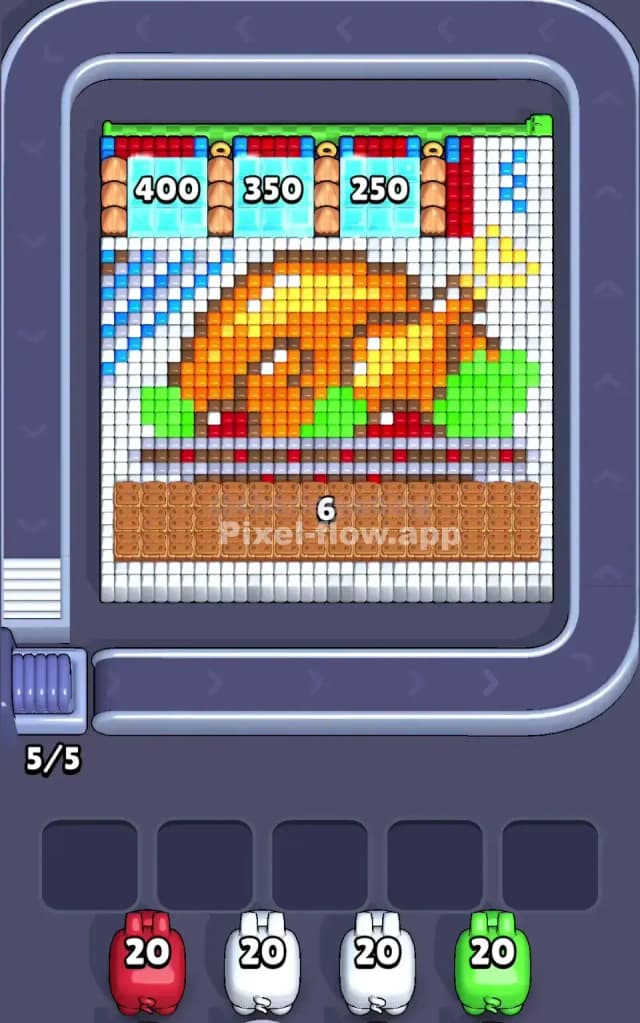
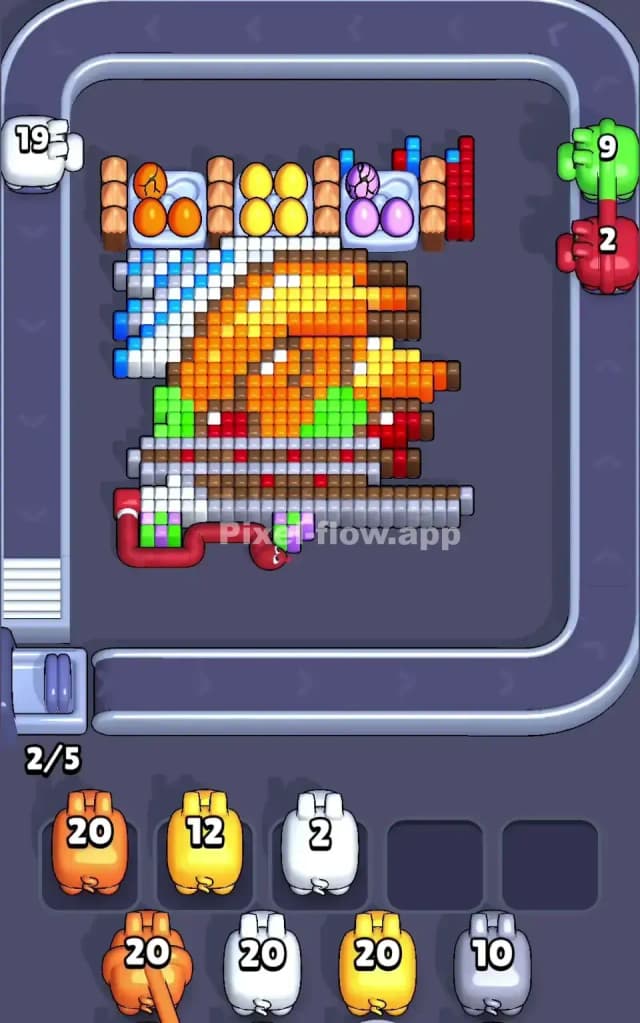
This level features a pixel art depiction of a massive, roasted holiday turkey sitting on a platter, garnished with greens. However, the real challenge isn't the bird itself—it's the environment. You are facing three massive "Ice Blocks" at the top of the screen with HP values of 400, 350, and 250. Below the turkey sits a heavy wall of brown biscuits or bricks.
The logic here is attrition. You have to chip away at huge health pools while managing a cluttered center. If you waste ammo on single pixels while ignoring the massive blocks, you will run out of moves. Is this a difficult stage? Yes, it is very hard. The health values on the ice blocks demand perfect ammo efficiency.
Pixel Flow Level 483 Overview
The scene is a kitchen counter nightmare. In the center, you have the golden-brown roasted turkey, which acts as a giant shield for the layers beneath it. To the left, there is a blue and white striped napkin pattern. The bottom is barricaded by a thick wall of brown squares, almost like a pie crust or a wooden table edge.
But your eyes should immediately lock onto the top row. Those three cyan blocks with numbers (400, 350, 250) are freezers. They are not just background; they are obstacles that require hundreds of hits to break. Behind them hide shelves of eggs (orange and yellow) that you can’t touch until the ice shatters. The board is top-heavy with these high-HP targets, but you can't reach them effectively until you clear the "fluff" (the white background pixels) that distracts your aim.
Step by step solution walkthrough for Pixel Flow Level 483
First Color Zone to Erase in Pixel Flow Level 483
White is your absolute priority to start.
Look at the board. The turkey is surrounded by white empty space (the platter and background tiles). The napkin on the left is also white-heavy. By prioritizing white pigs, you achieve two things:
- Clear the noise: You remove the scattered single pixels that often cause pigs to waste their last few shots on irrelevant targets.
- Expose the Turkey's edges: Once the white background is gone, the outline of the turkey (browns and oranges) and the lettuce (green) becomes accessible from all four sides of the conveyor belt.
If you don't clear the white early, your colored pigs (Red, Green, Brown) will have their line of sight blocked by stray white pixels, forcing them to drop into your waiting slots. Clogged slots mean game over.
How to pass Pixel Flow Level 483 without power ups or boosters
The mid-game of Pixel Flow Level 483 is where most players fail because they panic about the Ice Blocks.
Once the white background is thinned out, the board will look half-destroyed, but those top cyan blocks will likely still be standing. Here is the strict rule for the mid-game: Do not deploy Cyan pigs unless they have a clear shot at the Ice Blocks.
The conveyor belt moves pigs around the perimeter. The Ice Blocks are at the very top. You need your Cyan pigs to travel to the top section of the belt so they shoot downward directly into the 400 HP block. If you drop a Cyan pig while it is on the side or bottom, and it has nothing to shoot, it clogs your slot.
Focus on the Turkey's body next. Use Orange and Brown pigs to eat away the meat of the bird. This clears the center of the board. Why does this matter? Because eventually, you might need to shoot the Ice Blocks from the bottom belt shooting up (if the turkey is gone). Clearing the turkey reduces the obstruction between the bottom belt and the top targets.
Also, watch out for the Red pixels in the garnish. They are small and easy to miss. If a Red pig comes up and only has 3 targets, save it. Wait until you reveal more red underneath the turkey skin layers so you get full value from the pig's ammo.
Last Details You Clean Up in Pixel Flow Level 483
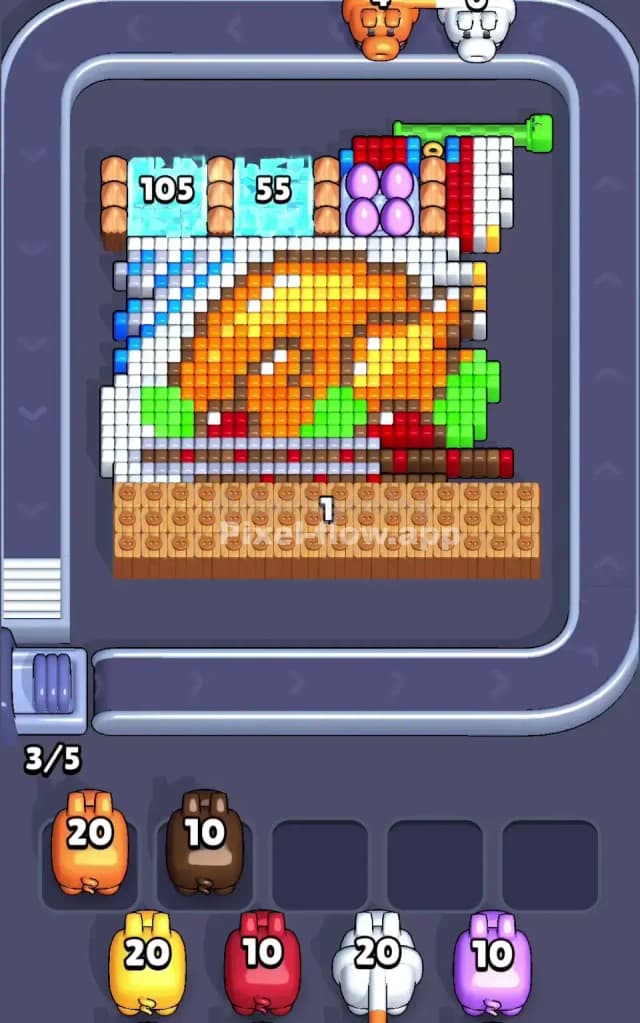
The end-game is a surprise party. Once you finally shatter those 400/350/250 HP ice blocks, you aren't done.
Behind the ice, you will reveal shelves of Eggs (Orange, Yellow, and sometimes Purple). These are dense clusters. Often, players exhaust all their Orange pigs on the turkey, only to realize they need ten more Orange pigs to clear the eggs at the top.
Save a few Yellow and Orange pigs in your queue if possible. Do not burn them on stray pixels if you can avoid it. You will need them for the top shelf cleanup. The final moves usually involve picking off the last few pixels of the blue/white napkin on the left or the final eggshell fragments at the top right. Stay patient.