Pixel Flow Level 507 Solution | Pixel Flow 507 Walkthrough
How to beat Pixel Flow Level 507: Video solution & walkthrough. The fastest way to pass Pixel Flow 507.
Is this the wrong level layout?🤔
Pixel Flow randomizes levels for different players. Don't worry, just upload a screenshot of your board, and our AI will find the correct video instantly.
Pixel Flow Level 507 Walkthrough
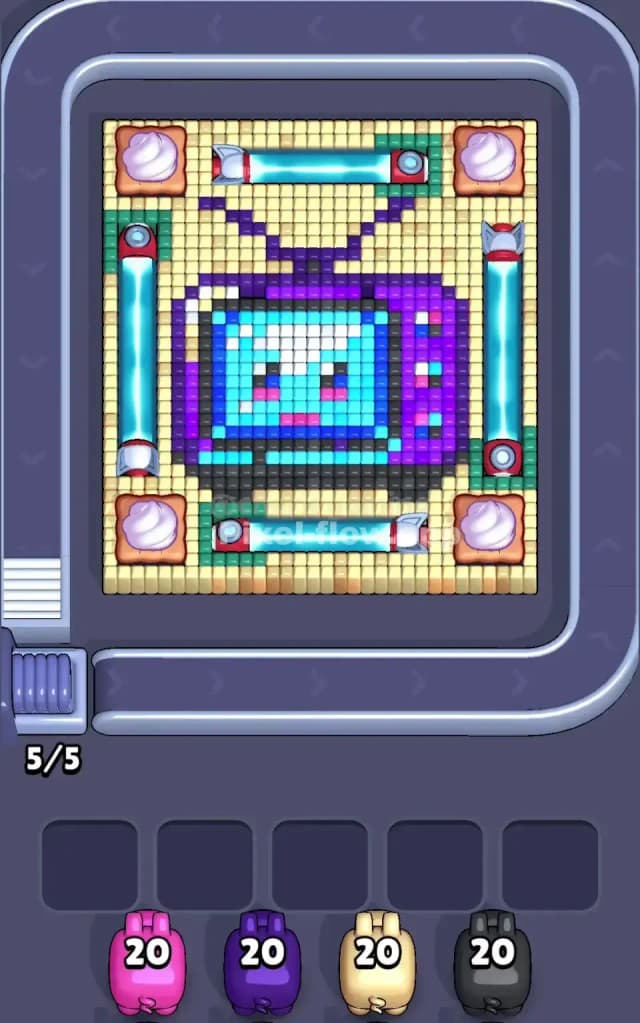
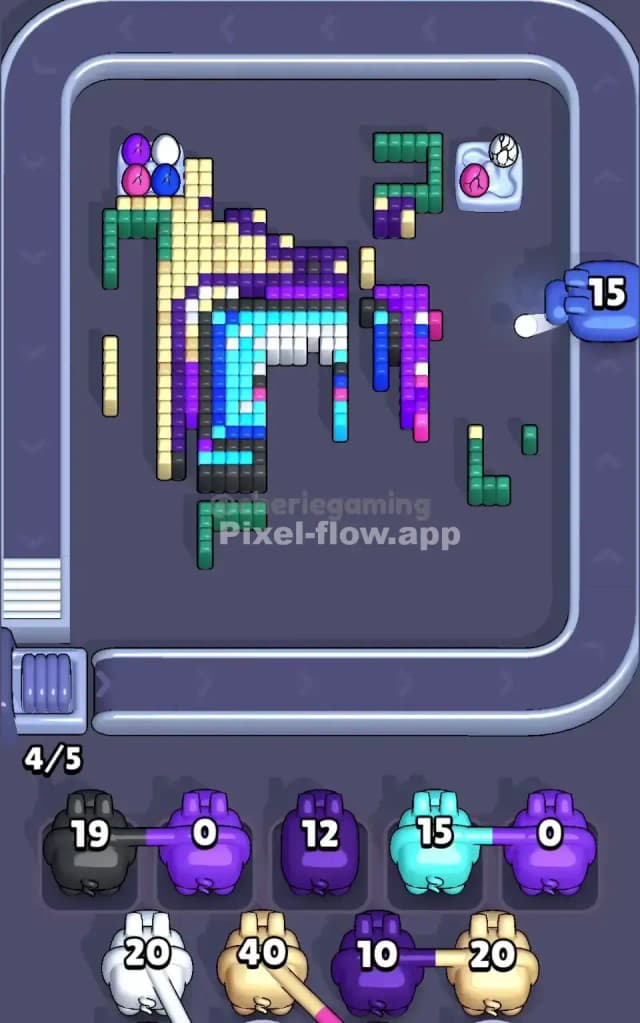
This level features a retro-style CRT television set with a cute pixelated face on the screen. It’s charming, but don’t let the cute face fool you. The layering here is dense. You have a massive outer background color that completely walls off the central subject, meaning you have zero access to the core of the puzzle until you perform some serious demolition work.
The rules are standard: pigs on the belt match the color of the voxel cubes. You shoot to clear. If a pig has no targets, it sits in your waiting slots. Pixel Flow Level 507 is a endurance test because the outer layers are so thick that if you accidentally pick a "screen color" pig (like cyan or white) too early, it will sit in your slot for the entire match, choking your flow. Is it difficult? Yes. This is a very hard level simply because of how easy it is to clog your waiting slots with useless pigs while trying to break the outer shell.
Pixel Flow Level 507 Overview
Imagine a purple, boxy television from the 90s sitting on a table. That is your main subject. The TV has a thick purple casing, rabbit-ear antennas on top, and a black base. Inside the screen, there is a glowing blue/cyan face with pink cheeks.
However, you won’t see much of that at the start. The TV is buried inside a massive frame of Cream/Beige pixels. This background layer covers the entire perimeter. Embedded in this beige wall are four "pastry" swirls in the corners and four long, blue rocket-like tubes framing the TV.
There is also a secondary border of Dark Green tiles that sits between the beige background and the purple TV. This creates a "double shell" effect. You have to peel the beige, then the green, just to scratch the paint on the TV itself. The layout is symmetrical, which helps slightly, but the sheer volume of beige pixels is the real threat here.
Step by step solution walkthrough for Pixel Flow Level 507
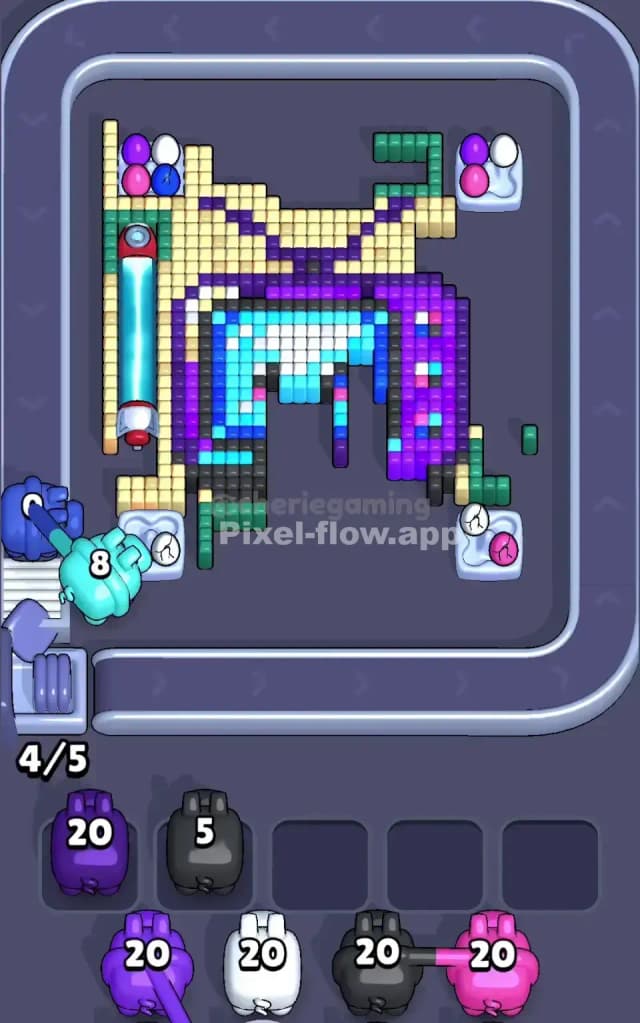
First Color Zone to Erase in Pixel Flow Level 507
You must aggressively hunt for Cream (Beige) pigs immediately. Do not hesitate.
There is no other logical starting point. The beige layer is the outermost skin of the puzzle. It blocks the green layer, which blocks the purple layer. If you see a Beige pig on the belt, grab it. Prioritize clearing the beige blocks around the four corner "pastries" and the long rocket tubes.
If Beige isn't available, look for Dark Green. The green pixels form a thin rectangular border touching the rocket tubes. Occasionally, the game might give you a pig that can snipe these edge pieces. Clearing the green helps isolate the center, but be careful: if you clear a green block and reveal a purple block underneath, you still can't hit the purple block if it's surrounded by beige walls. Keep your focus on the beige background until at least 70% of it is gone.
How to pass Pixel Flow Level 507 without power ups or boosters
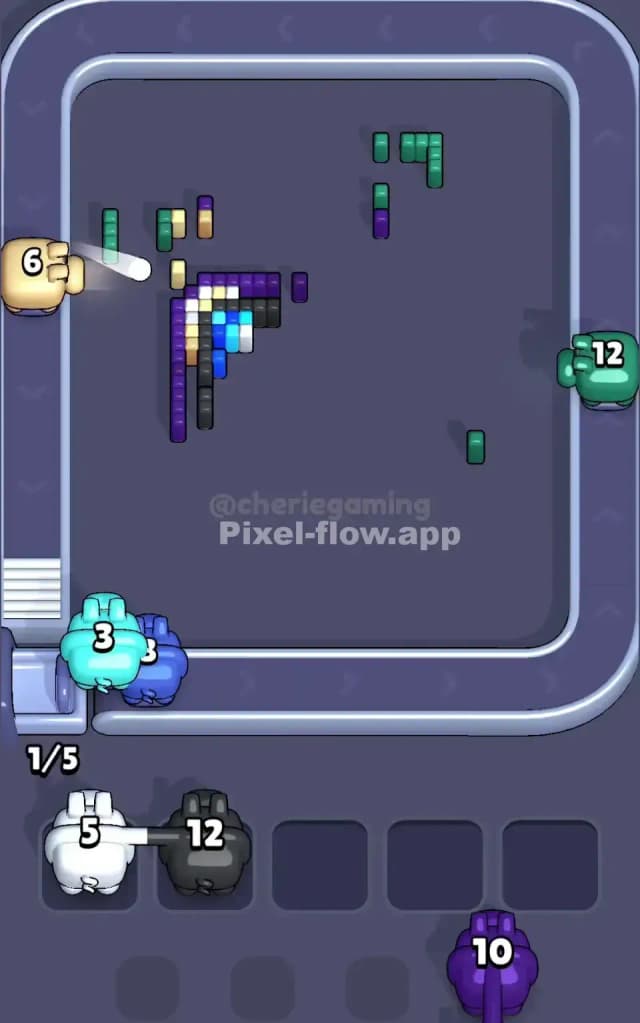
The mid-game of Pixel Flow Level 507 is the most dangerous phase. At this point, you have likely cleared the beige background and the corner pastries. The "rockets" are probably gone too. You are left with the Purple TV casing standing in isolation.
Here is the trap: The game will start sending you Cyan (Light Blue) and White pigs. These correspond to the TV screen face. Do not touch them yet.
The Purple casing is a solid shell. You cannot hit the Cyan screen pixels until you break the Purple front panel. If you pick up a Cyan pig now, it will have zero targets and will jam one of your five waiting slots. If you do this three or four times, you lose.
Focus entirely on Purple (the TV box) and Black (the TV stand and shadow). You need to smash the purple casing to expose the "glass" of the screen. Only grab a Cyan or White pig if you absolutely must clear the belt to reach a Purple pig behind it. Patience is the only way to survive this phase without boosters.
Last Details You Clean Up in Pixel Flow Level 507
Once the Purple casing is shattered, the level becomes a victory lap. You will be staring at the exposed TV screen.
The final cleanup involves the Cyan face, the White highlights in the eyes, and the two tiny Pink pixels for the cheeks. Usually, the White and Pink pixels are on the very bottom layer of the screen stack. You will likely clear the Cyan bulk first.
Watch out for the Antennas. The rabbit ears on top of the TV are Purple, but they are thin. sometimes a stray Purple block remains hiding at the very top tip of the antenna while you are busy looking at the screen. Make sure you don't leave a single purple pixel floating up there, or it might force you to hold a Purple pig while you are trying to finish the blue face. Clear the ears, then the screen.