Pixel Flow Level 549 Solution Walkthrough | Pixel Flow 549
How to solve Pixel Flow level 549? Get instant solution for Pixel Flow 549 with our step by step solution & video walkthrough.

Pixel Flow Level 549 Overview
The Board Layout and Starting Conditions
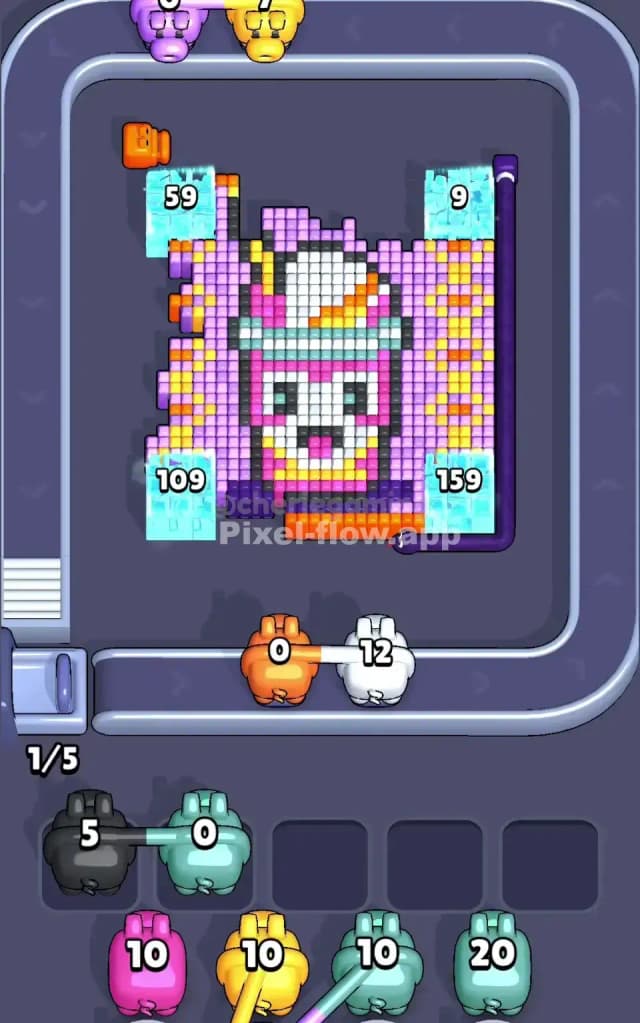
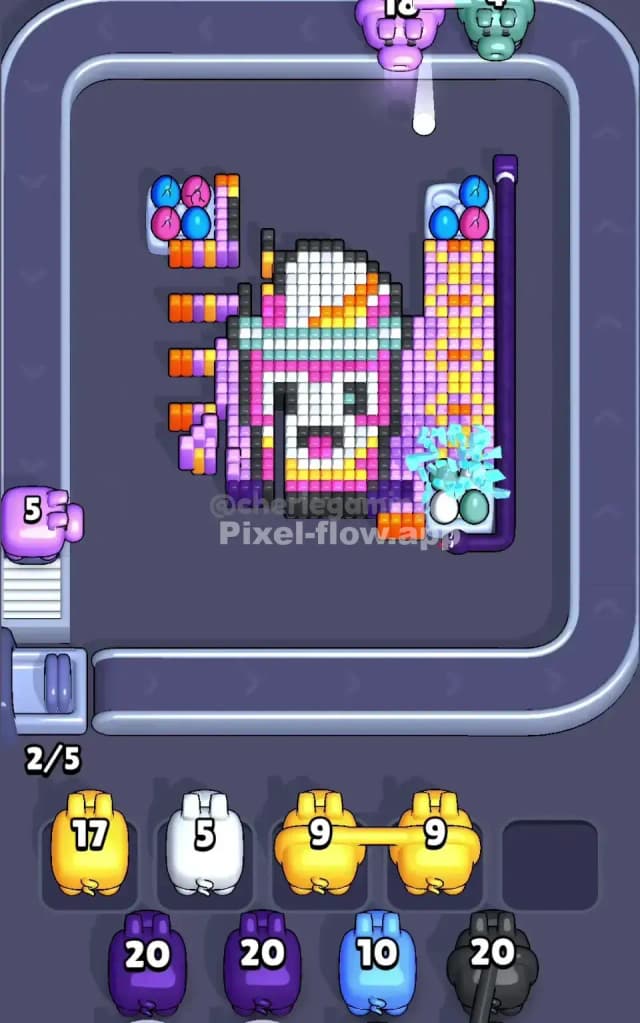
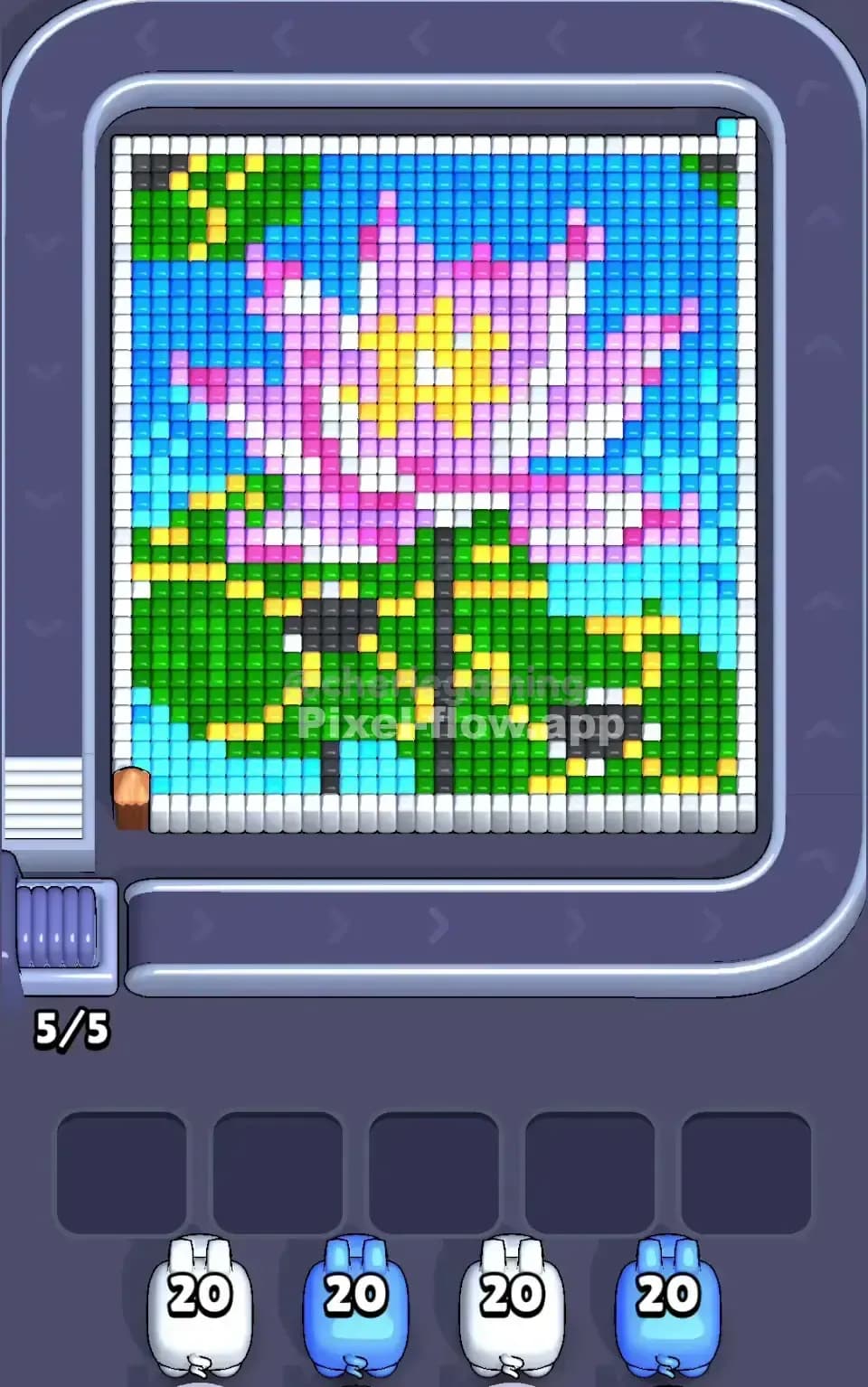
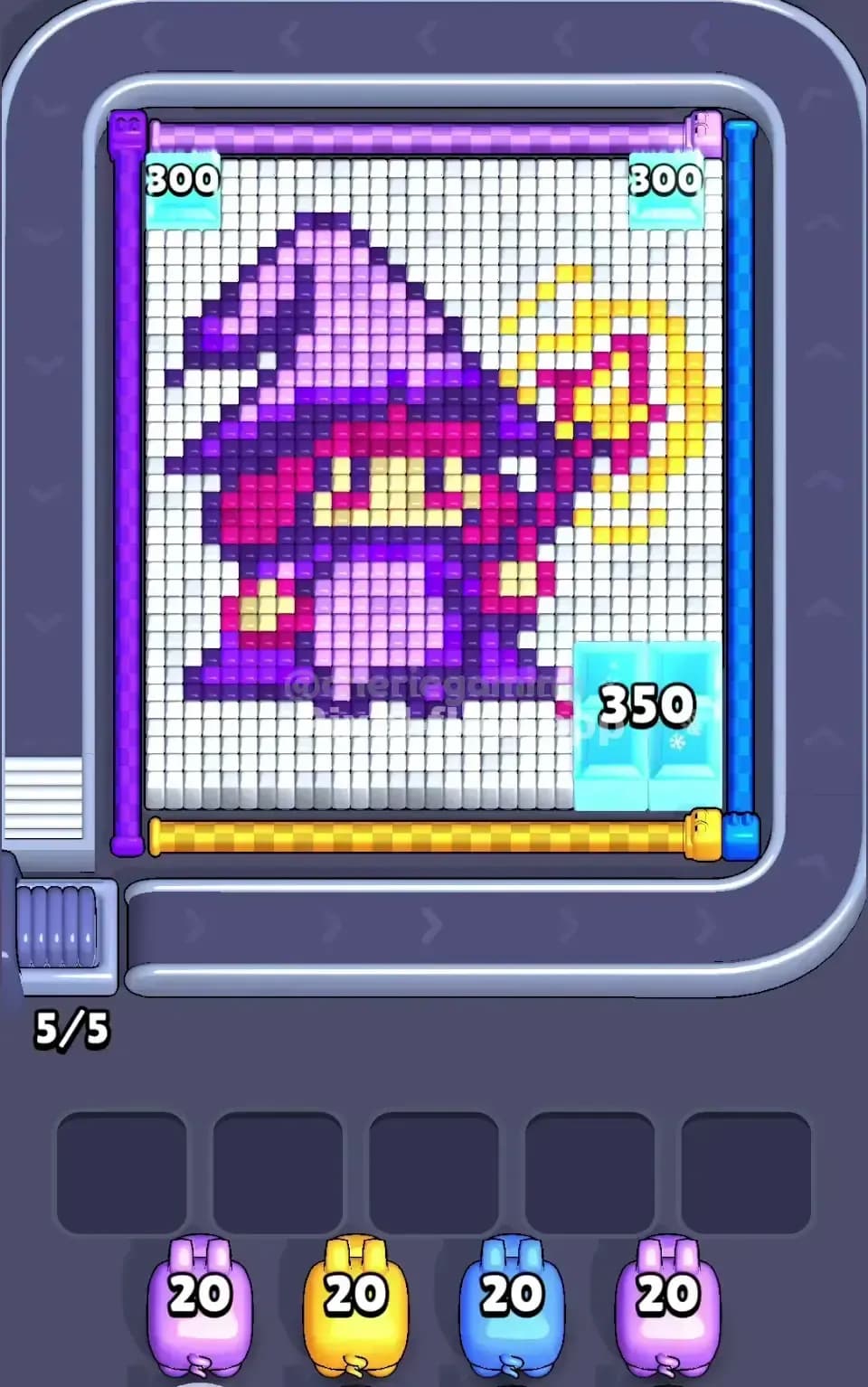
Pixel Flow Level 549 presents you with a detailed, multi-layered voxel portrait of a character's head and shoulders rendered in vibrant, contrasting colors. The dominant hues are cyan, magenta, red, blue, white, green, and brown, creating a densely packed puzzle that demands careful sequencing. The upper portion features the character's face with stark dark gray/black eye sockets and a variety of bright accent colors, while the lower half contains the torso and shoulders with bold red, blue, and green blocks arranged in complex patterns. The image is immediately striking—there's a lot of color competing for your attention, and that visual density translates directly into strategic complexity. You're starting with three pigs already loaded on the conveyor belt: a cyan pig with 20 ammo, a blue pig with 20 ammo, and a white pig with 0 ammo (meaning it'll drop into the waiting slots right away). Behind them in the queue sit a brown pig (20 ammo), another blue pig (20 ammo), a red pig (20 ammo), and a brown pig (20 ammo), plus a white pig (20 ammo)—that's eight pigs total, and the waiting buffer holds only five slots. Your win condition is straightforward: clear every single voxel cube on the board by matching pig colors to cube colors, spending exactly the right amount of ammo so no pig gets stuck unable to shoot.
Understanding the Challenge
Pixel Flow Level 549 is unforgiving because pig order and ammo counts are completely deterministic—there's no randomness, only strategy. You can't reorder the pigs or change their ammo values, so you must plan several moves ahead and understand exactly how many red, blue, cyan, brown, and white cubes exist at each layer. The board layout hides some colors deep inside, meaning early pigs might not have any valid targets if you're careless, forcing them into the waiting slots prematurely and clogging your buffer.
Why Pixel Flow Level 549 Feels So Tricky
The Central Bottleneck: Color Sequencing and Hidden Layers
The biggest threat in Pixel Flow Level 549 is the interplay between surface-level colors and buried layers. You can see bright red and blue blocks dominating the torso and shoulders, but many of those colors form thick, interlocking patches. If you fire your red pig too early, you'll chip away at visible red cubes but expose brown or magenta underneath—colors that your current pigs might not be able to target immediately. Meanwhile, your white pig (which has 0 ammo) is already sitting in a waiting slot doing nothing productive, and if you're not careful, the cyan pig's 20 ammo won't align perfectly with the cyan cubes on the board, leaving it half-spent and stranded. This creates a cascade: one misaligned pig forces you to pause and reassess, and suddenly you've filled three or four waiting slots with pigs that have no targets. The game ends in failure not because you lack firepower overall, but because you sequenced your pigs out of order and locked yourself out of the solution.
The Subtle Problem Spots
One of the trickiest regions in Pixel Flow Level 549 is the face area, particularly around the eyes and the top of the head. The dark gray/black eye sockets are framed by cyan, magenta, and white cubes in a tight, complex arrangement. You cannot destroy the dark gray cubes (they're not color-coded to any pig), so you have to work around them, meaning cyan and magenta pigs must be sequenced precisely to clear the surrounding blocks without wasting ammo on impossible targets. Another problem spot is the neck and upper torso junction, where red, blue, brown, and green blocks are tightly woven together. It's tempting to fire your red pig early because there's so much red visible, but doing so exposes blue and brown underneath, and if your next pigs aren't blue and brown, you've just created dead weight. Finally, the lower torso features a dense cluster of green and cyan cubes that might not be fully visible until you've cleared the red and blue layers above. If you exhaust your cyan ammo early on the head, you won't have a cyan pig left for the bottom section, and you'll fail.
When It Clicked for Me
I'll be honest: my first dozen attempts at Pixel Flow Level 549 felt chaotic. I was firing pigs reactively, watching colors disappear and then cursing when a pig ran out of ammo mid-layer. The "aha" moment came when I stopped looking at the board holistically and instead counted every visible cube of each color, then worked backward from the pig queue. I realized that the white pig with 0 ammo was actually a clue—it's a "blocker" or "sacrificial" pig that fills a waiting slot and forces you to think about which six remaining pigs will do the real work. Once I accepted that Pixel Flow Level 549 is a logic puzzle first and a shooter second, the frustration melted away, and I could see the solution path clearly.
Step-by-Step Strategy to Clear Pixel Flow Level 549
Opening: Establish a Strong Foundation
Your first move in Pixel Flow Level 549 should be to launch the cyan pig with 20 ammo. Cyan is visible in the upper head region (the lighter areas) and scattered throughout the lower torso, giving you plenty of targets and minimizing the risk of this pig running dry with no valid shots. Firing cyan first accomplishes two things: it removes a significant surface color, exposing the darker layers beneath, and it keeps the waiting buffer empty because the pig's ammo lines up well with visible cyan cubes. After the cyan pig, immediately send in the blue pig (20 ammo). Blue is abundant in the face region and the torso, and it's the second-most visible color on the board. By clearing cyan and blue back-to-back, you'll expose red, brown, and darker inner layers without filling your waiting slots. Watch your buffer carefully—you should still have at least 3 or 4 empty slots after these two pigs finish. The white pig with 0 ammo will drop into the waiting queue automatically once it reaches the conveyor, and that's okay because you're still below capacity.
Mid-Game: Expose Inner Layers and Maintain Flexibility
Once cyan and blue are mostly cleared, you're at a critical juncture in Pixel Flow Level 549. The red pig is next in the queue, and red blocks are definitely visible, particularly in the torso. Fire the red pig and let it spend its 20 ammo freely—red is plentiful enough that this pig shouldn't jam. After red, you'll see a brown pig (20 ammo) enter the conveyor. Brown is trickier because it's partially buried under red and blue; however, firing the red pig first exposes brown cubes, so the brown pig should have valid targets waiting. Don't hesitate to let the brown pig fire even if it seems slow at first. The key in the mid-game is trusting the sequence: the pig designers built Pixel Flow Level 549 so that each pig's firing exposes the next pig's targets, as long as you don't deviate from the intended order. If you skip a pig or try to be clever, you'll break that chain. Around this point (after firing cyan, blue, red, and brown), you should have cleared most of the torso and upper body, leaving the lower section and some detail work on the head. Monitor your waiting buffer—it should still have 1 or 2 free slots. The second blue pig in the queue is your next launcher. Fire it to clean up any remaining blue cubes and further expose green and white sections at the bottom.
End-Game: Clean Up Precisely and Avoid the Final Jam
As you reach the endgame of Pixel Flow Level 549, you're down to the final pigs and a board that's mostly hollow. The red pig with 20 ammo is next, and by now, any remaining red cubes are isolated and clearly visible. This pig should burn through its ammo without trouble. Follow it with the brown pig (20 ammo), targeting any brown blocks left in the lower sections. Finally, the white pig (20 ammo) cleans up the white cubes scattered throughout the board, particularly in the face highlights and lower details. The critical moment comes at the very end: you must ensure that the final pig's ammo count exactly matches the remaining cube count. If you've played cleanly through Pixel Flow Level 549, each pig will have zero ammo left when it exits the conveyor, and the waiting buffer will be empty. If you see a pig still sitting in a waiting slot with ammo remaining and no valid targets, you've made an error earlier—usually by firing pigs out of sequence or misjudging color counts.
The Logic Behind This Pixel Flow Level 549 Plan
Pig Order as the Master Key
The strategy for Pixel Flow Level 549 hinges on understanding that pig order is not arbitrary—it's prescriptive. The level designer has deliberately sequenced the pigs so that each one's color targets are exposed by the previous pig's destruction. Cyan clears the light, outer layer; blue removes mid-tones and frame elements; red opens up the deep reds; brown and the secondary colors finish the details. By respecting this order and not trying to "optimize" by skipping or reordering pigs, you align your ammo expenditure with the board's layer structure. This transforms Pixel Flow Level 549 from a chaotic shooting gallery into a solvable puzzle. Every pig has exactly the right ammo count to clear its assigned color regions, no more and no less. When you stick to the sequence, you'll never fill the waiting buffer past capacity, and you'll never have a pig left stranded.
Staying Calm and Counting Ahead
The final key to mastering Pixel Flow Level 549 is maintaining awareness of the pig queue and the waiting buffer. Before you fire each pig, glance at the upcoming pigs and ask yourself: "Does the current pig have enough ammo for the visible cubes?" and "Will firing this pig expose targets for the next pig?" By thinking two or three pigs ahead, you avoid reactive decisions and keep your focus on the larger solution. When you feel the urge to panic—say, when a pig seems to be running out of ammo—resist it and trust the sequence. Pixel Flow Level 549 is solvable, and the path to victory is visible if you stay calm, count your colors, and respect the pig order. You've got this.