Pixel Flow Level 556 Solution | Pixel Flow 556 Walkthrough
How to beat Pixel Flow Level 556: Video solution & walkthrough. The fastest way to pass Pixel Flow 556.
Is this the wrong level layout?🤔
Pixel Flow randomizes levels for different players. Don't worry, just upload a screenshot of your board, and our AI will find the correct video instantly.
Pixel Flow Level 556 Walkthrough
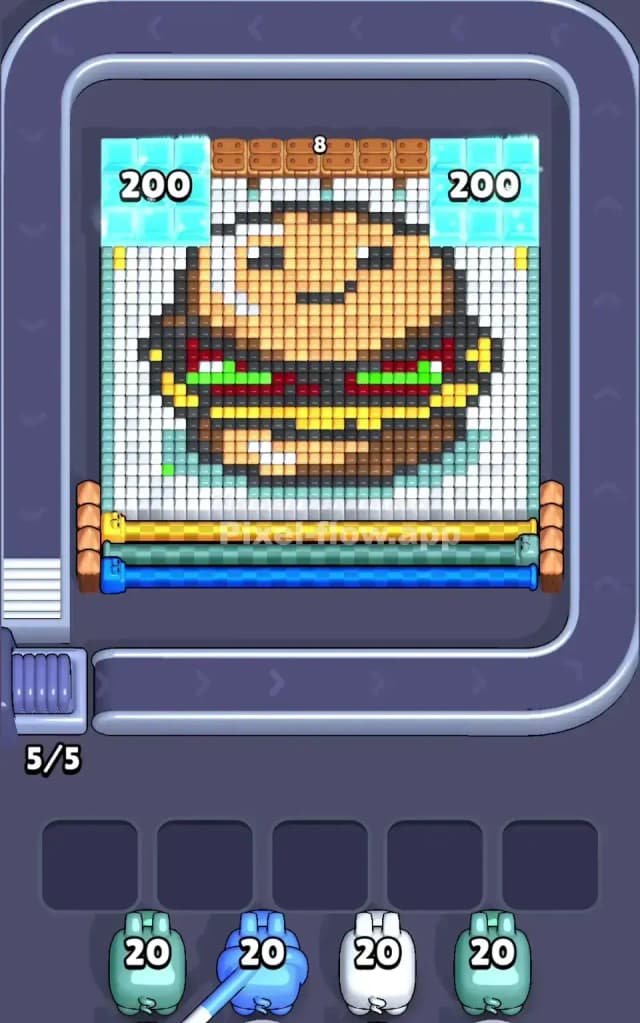
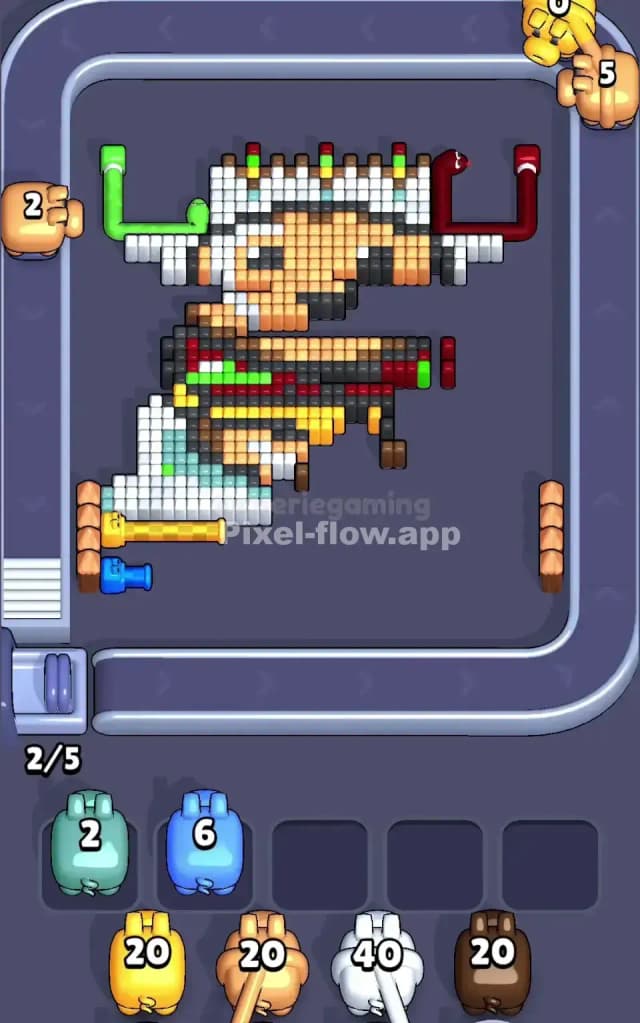
This level features a giant, happy-looking Hamburger character. The burger sits centrally, surrounded by a massive field of White background tiles that wrap around the bottom and sides. The top corners are blocked by large Ice Cubes, and there is a wooden barrier row right at the very top. To beat Pixel Flow 556, you need to chip away that white exterior to reach the juicy layers of the burger itself—the bun, the lettuce, the patty, and the cheese. Because the white background is so dominant and blocks everything else, this is a very hard level if you don't manage your white pigs correctly.
Pixel Flow Level 556 Overview
The artwork here is a anthropomorphized Hamburger. It has a tan top bun with a simple smiley face (two eyes and a mouth), a dark brown patty, a jagged line of yellow cheese, and green lettuce. The bottom bun is also tan.
The most critical feature isn't the burger, though. It's the "wrapper." A thick layer of White pixels encases the left, right, and bottom of the burger. Until you remove this U-shaped white shield, you cannot touch the colored ingredients inside.
The top of the board is asymmetrical. You have two large blocks of Ice in the top left and right corners. Between them is a wooden crate barrier. These act as blockers for your vertical shots, meaning pigs shooting from the center might hit the wood, while pigs on the edges hit the ice. This limits your shooting angles significantly at the start.
Step by step solution walkthrough for Pixel Flow Level 556
First Color Zone to Erase in Pixel Flow Level 556
Focus entirely on White.
You have no choice here. The white background forms a U-shape that physically blocks shots from reaching the burger's ingredients. If you try to shoot Brown or Tan pigs now, they will just hit the white wall, fail to do damage, and clog your waiting slots.
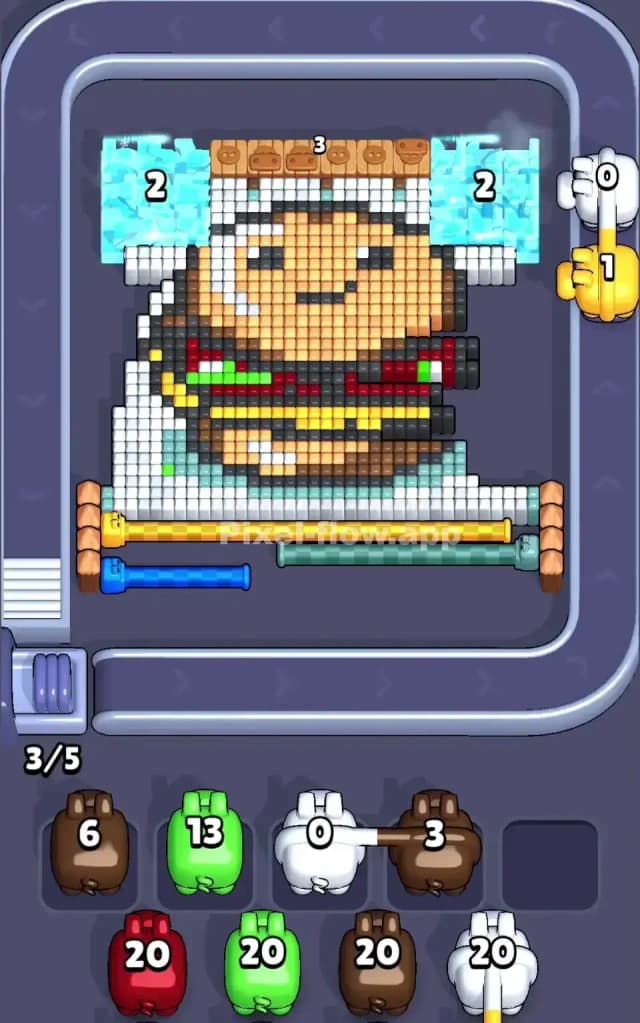
Wait for White Pigs on the conveyor belt. Prioritize them above everything. If a White Pig appears, grab it immediately. Clearing the bottom rows of white pixels opens up the bottom bun. Clearing the side columns of white pixels exposes the edges of the lettuce and patty. You need to "unwrap" the burger before you can eat it.
How to pass Pixel Flow Level 556 without power ups or boosters
Once you’ve stripped away about 50% of the white background, the picture changes. You will see the tan bottom bun and the dark brown edges of the meat patty exposed.
Here is the danger zone: The top of the burger (the face) is still protected by the remaining white pixels on the sides and the wooden/ice barriers at the top. You might be tempted to spam Tan pigs to hit the face, but if the side white pixels are still standing tall, your tan pigs might run out of targets on the bottom bun and get stuck.
Stick to this priority:
- White: Finish the wrapper. Get those side columns down to zero.
- Tan (Light Brown): Once the bottom is open, clear the bottom bun. This usually creates a "hole" in the middle of the board that lets you shoot deeper.
- Dark Brown: Start chipping away at the patty.
- Green/Yellow/Red: These are the fillings. Only use these pigs once you have a clear line of sight to the middle of the burger. If you grab a Green pig too early, it will have nowhere to shoot and will choke your slot capacity.
Last Details You Clean Up in Pixel Flow Level 556
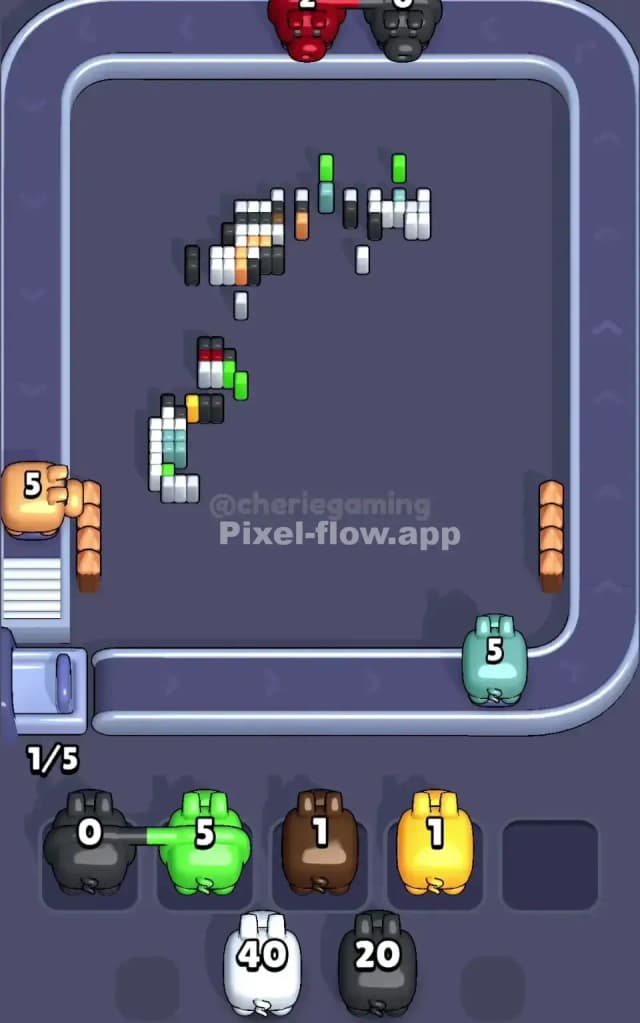
The end game gets tricky near the top. As you clear the burger, you will eventually reach the top bun with the smiley face. The Ice Blocks in the corners might still be lingering if you haven't hit them with splash damage or specific clearers.
Often, stray Black pixels (the outline of the burger) or Dark Brown pixels hide right under that top wooden barrier. Make sure you save a high-ammo pig for the final few columns. The very last cubes to go are usually the top corners of the bun, tucked right up against the ice blocks where line-of-sight is worst. Keep one slot open for a "clean-up" pig to snipe these final hidden blocks.