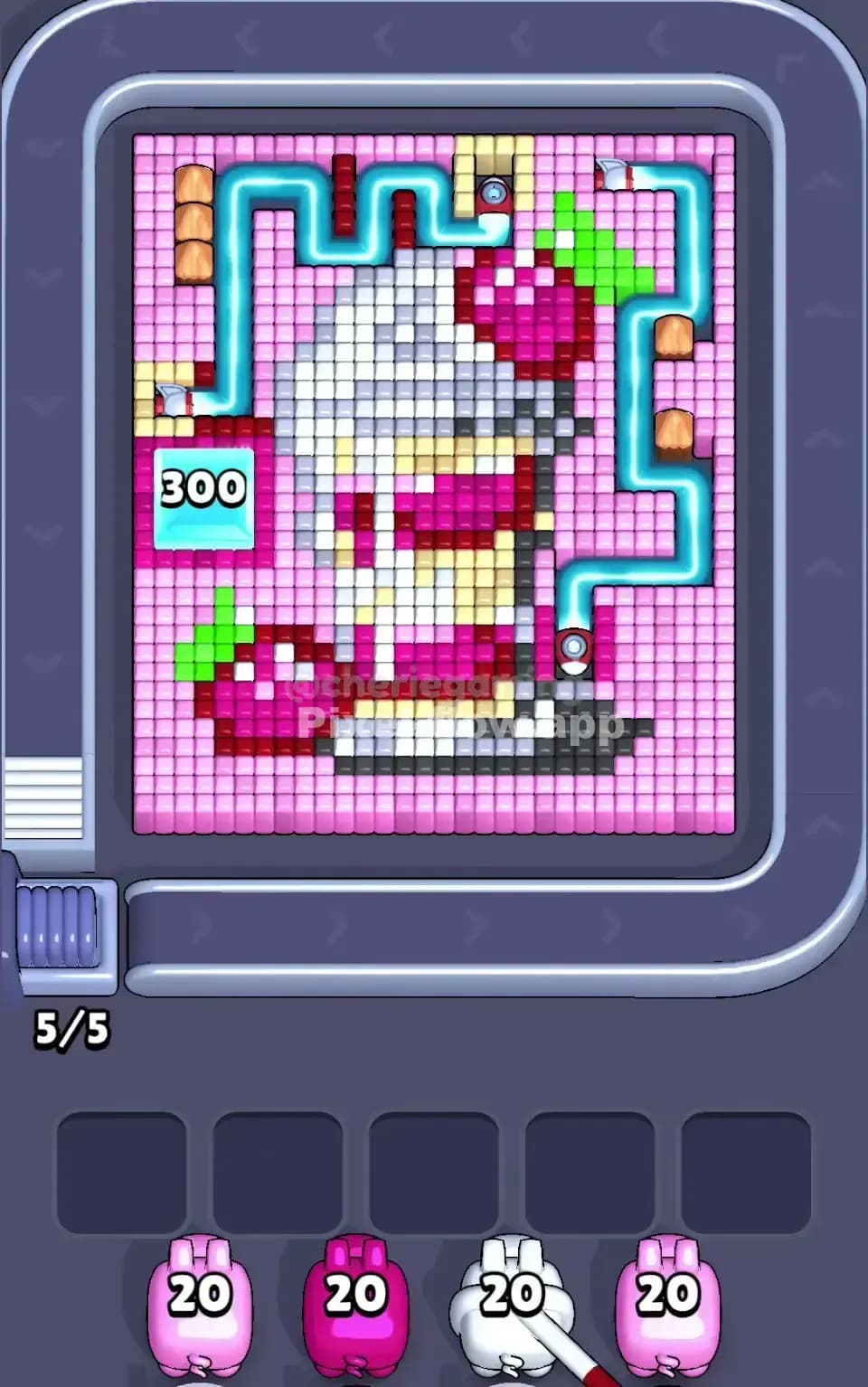
Pixel Flow Level 563 Solution Walkthrough | Pixel Flow 563
How to solve Pixel Flow level 563? Get instant solution for Pixel Flow 563 with our step by step solution & video walkthrough.


Pixel Flow Level 563 Overview
The Board and Its Pixel Art Subject
Pixel Flow Level 563 presents you with a charming pixel-art fox surrounded by a vibrant, multi-layered background. The fox's face is rendered in warm orange and white tones, with striking black eyes and alert ears that draw your immediate attention. Behind this central character, you'll notice a rich tapestry of colors: deep magentas, hot pinks, golden yellows, and fiery oranges create a gradient effect that radiates outward. The board is densely packed, which means there's almost no wasted space—every cube matters, and exposing the right layers in the right order will be crucial to your success. You're looking at a classic multi-layered voxel puzzle where the aesthetic appeal masks a genuinely tricky sequence puzzle underneath.
Understanding the Win Condition and Pig Mechanics
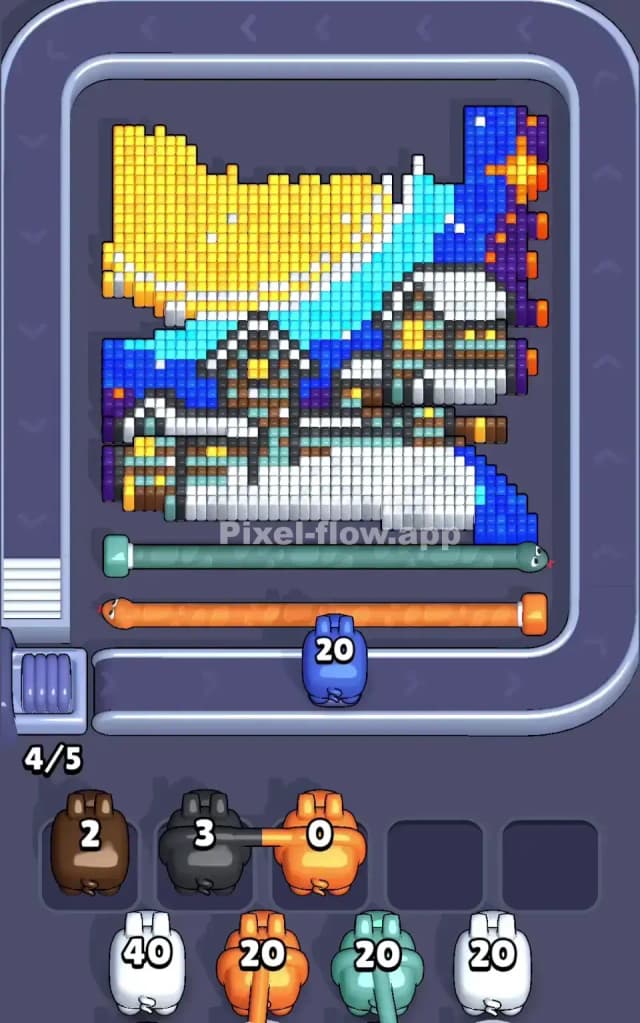
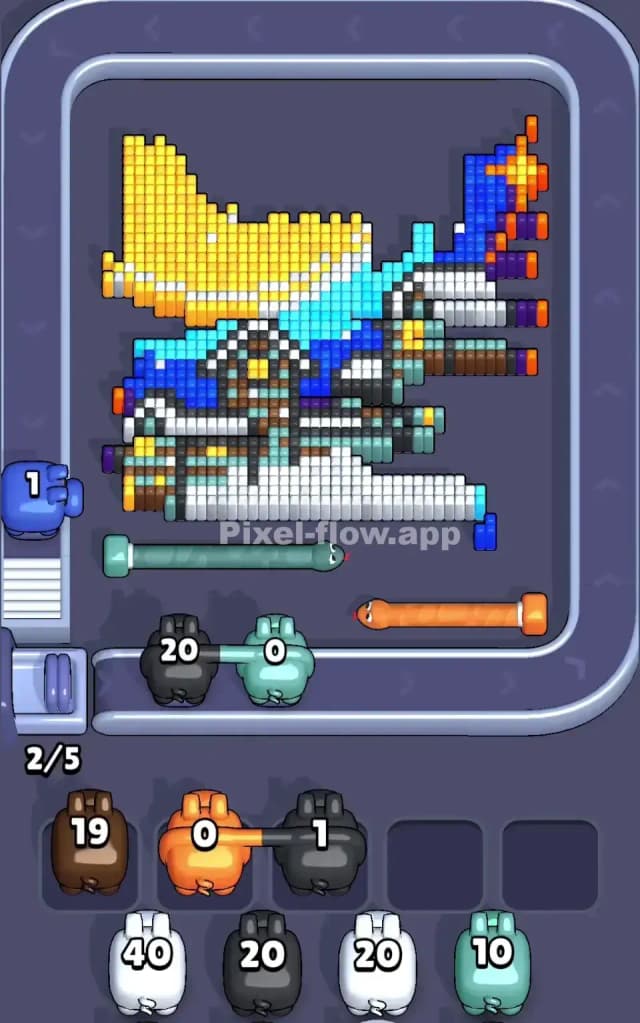
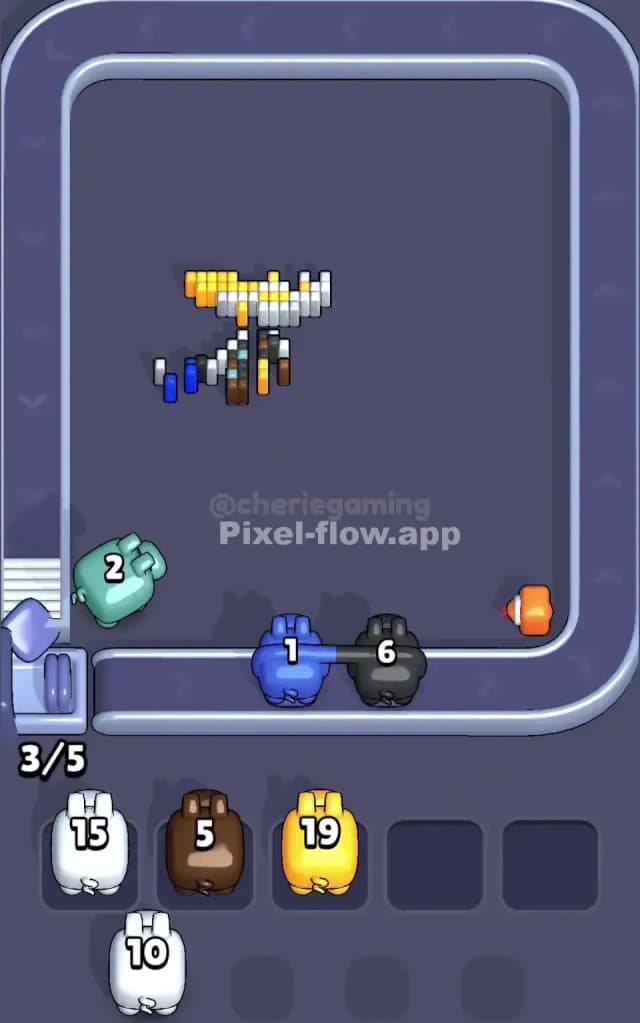
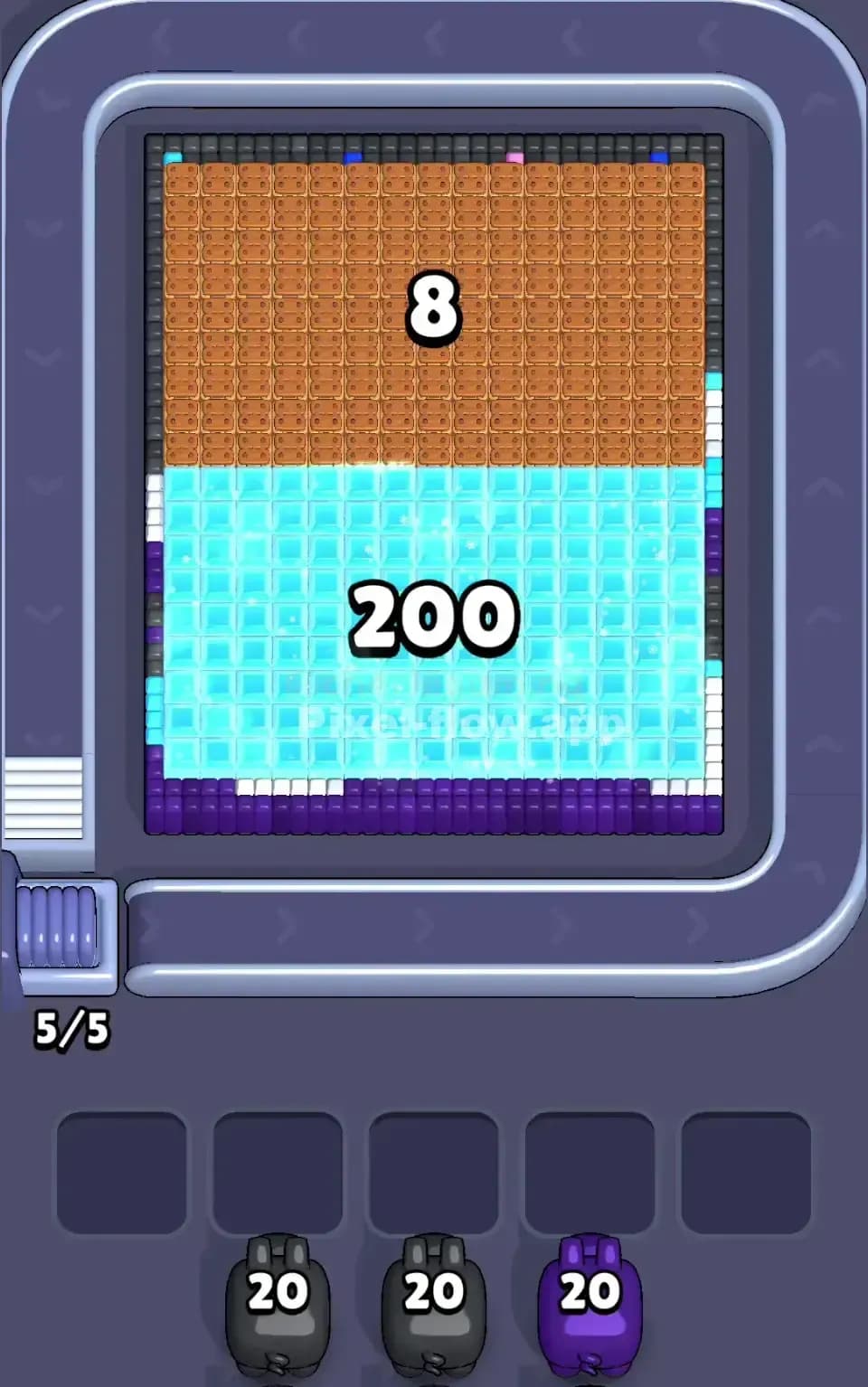
Your goal in Pixel Flow Level 563 is straightforward: clear every single cube on the board. However, the path to victory isn't obvious, because you're entirely dependent on four color-coded pigs, each arriving with exactly 20 ammo. Two magenta pigs come first, followed by an orange pig, and finally a white pig—all with identical ammo counts. Every cube you destroy costs you one ammo from the matching pig, and the order in which pigs arrive is completely deterministic. You can't change their sequence or their ammo counts, so Pixel Flow Level 563 demands that you plan carefully, anticipate which colors will be exposed as you progress, and ensure that each pig's ammo is fully spent on valid targets. If any pig runs out of targets while still holding ammo, it'll drop into one of your five waiting slots, and filling all five slots with stuck pigs means instant failure.
Why Pixel Flow Level 563 Feels So Tricky
The Color Layering Bottleneck
The biggest threat in Pixel Flow Level 563 is how the magenta and orange tones blend together in the background and outer layers. When you look at the board, magenta appears dominant, sprawling across much of the fox's surroundings, yet the magenta cubes aren't all accessible at once. The fox's body and features force you to chip away at magenta in specific regions first, which means your first magenta pig might finish its ammo before you've even exposed all the magenta beneath the fox's face. If you're not careful, you'll end up with a second magenta pig that has nowhere to go—and that's how you start jamming your waiting slots. The trick is understanding that you need to work around the fox's structure, not through it, at least initially.
Awkward Color Patches and Hidden Layers
As you chip away at Pixel Flow Level 563, you'll discover that white and black pixels are scattered throughout, often tucked behind other colors in ways that aren't immediately obvious. The fox's eyes and ears contain white and black cubes, but reaching them requires clearing the orange and magenta surrounding them first. This creates a nasty catch-22: if you're too aggressive with your orange pig early on, you might expose white cubes before your white pig arrives, leaving you with hanging targets that no current pig can destroy. Similarly, there are yellow accents scattered throughout the background that peek out between the magenta layers, creating a visual illusion that makes you think a color is more abundant than it actually is. Counting your ammo against visible targets in Pixel Flow Level 563 isn't enough—you have to count conservatively and assume hidden layers exist beneath what you see.
The Frustration Point and How It Clicks
I'll be honest: my first few attempts at Pixel Flow Level 563 felt like I was playing against the board itself rather than solving it. I'd get to the third pig and suddenly have two stuck magenta pigs sitting in my waiting buffer with no targets left. That's when I realized I was being too greedy in the early game, burning through one color in large chunks instead of spreading my pig usage across the board. Once I started thinking of the level as a spatial puzzle—where the order I clear regions matters more than which pig I use—Pixel Flow Level 563 stopped feeling unfair. The "click" moment came when I understood that I should let the first magenta pig take the easy, obvious magenta patches, saving the trickier magenta cubes hidden under the fox for when I'd already exposed deeper layers with my orange and white pigs.
Step-by-Step Strategy to Clear Pixel Flow Level 563
Opening: Starting Safely and Keeping Your Buffer Clear
Your first magenta pig should focus on the peripheral magenta—the background gradients and outer-ring pixels surrounding the fox. Don't rush to clear the magenta immediately around the fox's face or body; that magenta is layered deeper and will only become fully clear once you've worked around the fox itself. Spend your first magenta pig on the upper corners, sides, and lower background regions where magenta is clearly the outermost cube. This approach keeps your waiting slots free and lets you observe which new colors emerge as you clear these outer pixels. After your first magenta pig lands, you'll likely expose some orange and possibly some yellow beneath, giving your orange pig a clear target when it arrives. The goal in opening Pixel Flow Level 563 is simply to survive the first two pigs without jamming—clear safely, count your remaining targets, and leave at least two waiting slots free as a buffer.
Mid-Game: Sequencing and Exposing Layers
Once your second magenta pig arrives, you're ready to tackle the fox itself more directly. This magenta pig should target the magenta cubes immediately surrounding the fox's outer features—the areas where magenta and orange start to intertwine. As you clear these, orange becomes your primary target, and your orange pig will have plenty of work. In Pixel Flow Level 563, the orange pig is your workhorse; it'll destroy cubes across the fox's body, ears, and face, exposing white and black cubes as it goes. Critically, you should not use your orange pig to finish off every orange cube—leave some orange for later in the sequence. Why? Because as your orange pig works, it'll expose white regions (the fox's eyes and facial features) and you need those white cubes to be visible when your white pig arrives, not stuck behind lingering orange. The mid-game phase is where patience matters most; you're essentially painting with ammo, creating a visual map of which colors will be available for your final pig. Watch your waiting slots constantly, and if you see a pig settling into a slot, immediately plan how the next pig will unblock it.
End-Game: Finishing Cleanly and Avoiding the Last-Second Jam
By the time your white pig arrives, you should have mostly cleared the magenta, orange, and exposed the white extensively. Your white pig's job is to finish off all remaining white cubes—the eyes, teeth, and highlights. However, Pixel Flow Level 563 often leaves a few tricky cases: maybe there's a white cube still hidden behind a lingering orange one, or black pixels scattered throughout that no pig can destroy (since all four of your pigs are color-coded to magenta, orange, or white). Here's the crucial insight: black cubes are environmental obstacles, not targets. They don't require ammo and they won't jam you. Your white pig will clean up the visible white cubes, and once all magenta, orange, and white are gone, Pixel Flow Level 563 is won—black and any other non-matching colors are irrelevant to victory. Finish your white pig methodically, confirm all color-coded cubes are cleared, and you've beaten the level.
The Logic Behind This Pixel Flow Level 563 Plan
Exploiting Determinism and Ammo Efficiency
Pixel Flow Level 563 feels random until you realize it's completely deterministic. Your four pigs arrive in a fixed order with fixed ammo—20 each—and the board layout never changes. This means you can solve Pixel Flow Level 563 by planning backward: count exactly how many magenta, orange, and white cubes exist on the board, verify that your four pigs' ammo (80 total) matches the sum of all color-coded cubes, and then route your pigs so each one lands on the right regions. The strategy I've outlined (safe opening, layered mid-game, clean finish) works because it respects this determinism. You're not reacting to random luck; you're orchestrating a carefully sequenced dance where each pig's arrival exposes the right colors for the next pig. In Pixel Flow Level 563, ammo efficiency isn't about speed—it's about ensuring that zero ammo is wasted on invisible or inaccessible targets.
Staying Calm and Planning Ahead
The psychological challenge of Pixel Flow Level 563 is resisting the temptation to rush. When you see a huge swath of magenta, your brain screams "destroy it now!" But that's exactly how you jam your buffer. Instead, cultivate a habit of looking two or three pigs ahead. Before your first pig even lands, mentally categorize the board: "Magenta here gets hit first, magenta there waits. Orange will spread across the fox body. White comes last." Count your waiting slots like they're precious real estate—never let more than one pig sit idle. If a pig lands and you don't immediately see a full ammo's worth of targets for it, you've missequenced. Rewind and rethink. Pixel Flow Level 563 rewards this deliberate, thoughtful playstyle far more than it rewards quick reflexes. The level is a puzzle, not a race, and once you embrace that mindset, you'll find the solution isn't mysterious—it's just waiting for you to see it.