Pixel Flow Level 566 Solution | Pixel Flow 566 Walkthrough
How to beat Pixel Flow Level 566: Video solution & walkthrough. The fastest way to pass Pixel Flow 566.
Is this the wrong level layout?🤔
Pixel Flow randomizes levels for different players. Don't worry, just upload a screenshot of your board, and our AI will find the correct video instantly.
Pixel Flow Level 566 Walkthrough
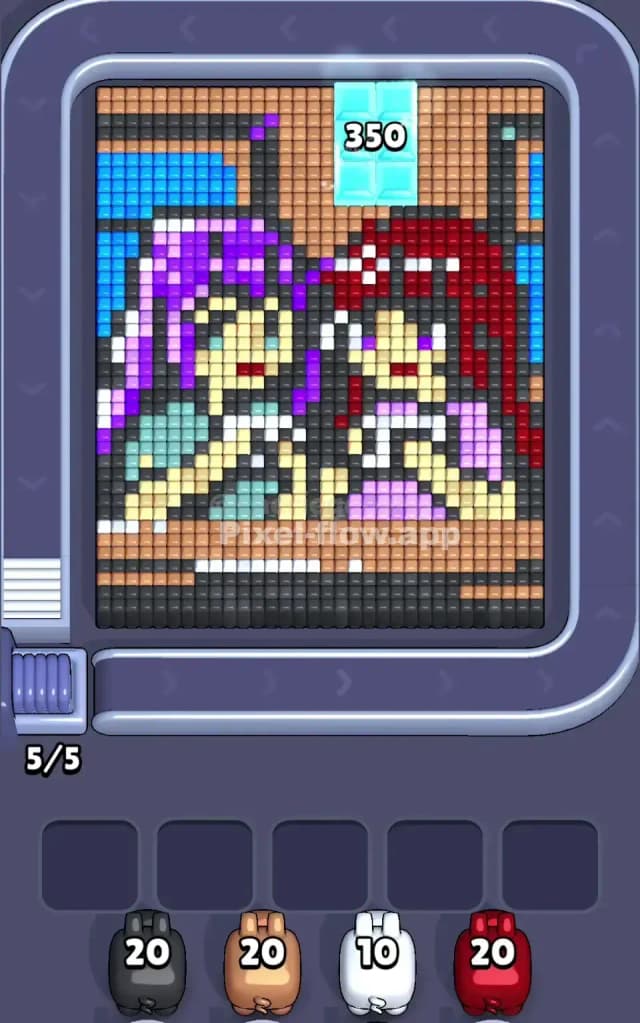
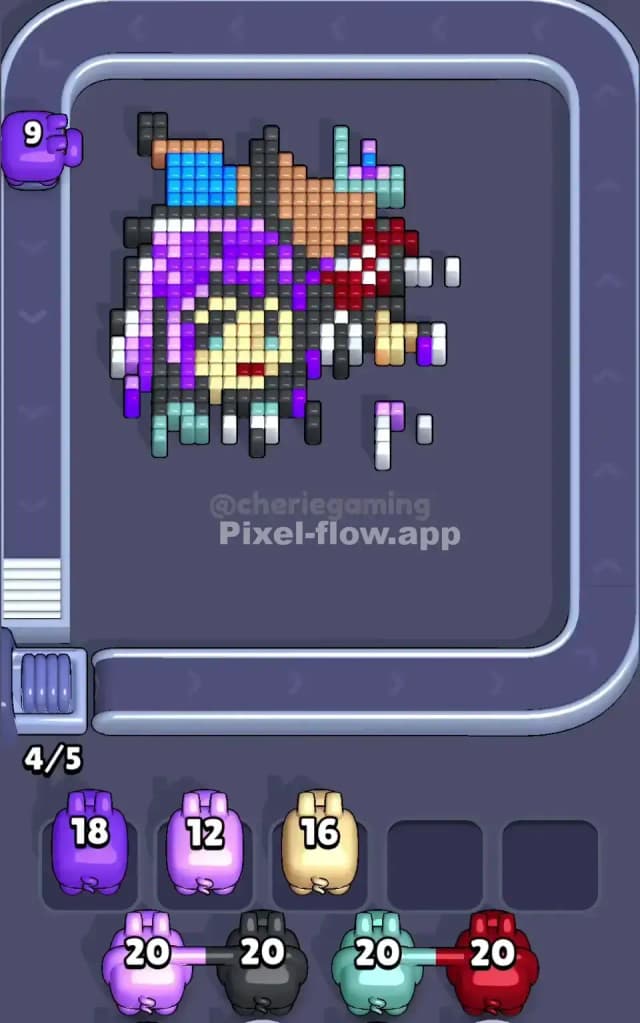
This level features a detailed anime-style portrait of two girls sitting side-by-side. The left character sports vibrant purple hair and a teal top, while the right character has deep red hair and a pink outfit. They are set against a background that looks like a wooden wall with blue window accents.
The rules are standard but strict: pigs drop from the conveyor belt into the five slots below. They shoot pixel blocks of their own color. If your slots fill up with pigs that have no targets to shoot, you fail. Your goal is to clear the outer layers of "wood" and hair to reveal the faces and outfits beneath.
Is it hard? Yes. This is a very hard level because of the massive blocks of background color (brown and black) that obscure the critical details needed to clear the board.
Pixel Flow Level 566 Overview
The scene is a cozy snapshot of two friends. The left girl is the "Purple" character, defined by her violet hair and teal clothing. The right girl is the "Red" character, with long maroon locks and a pinkish dress.
The layout is visually dense.
- Top and Sides: Heavy layers of tan/brown wood texture frame the girls.
- Bottom: A solid, dangerous strip of black blocks creates a "floor" or table edge.
- Center: The faces are buried deep. You have layers of hair (purple and red) sitting on top of skin tones, which are sitting on top of background elements.
The asymmetry here is key. The right side is dominated by that big block of Red hair. The left side is a mix of Purple hair and Blue window panes. The bottom row is almost entirely black, which is a huge trap if you don't manage your black pigs correctly early on.
Step by step solution walkthrough for Pixel Flow Level 566
First Color Zone to Erase in Pixel Flow Level 566
Your first move should be targeting the Black or Brown zones at the very bottom and top edges. Specifically, look at the bottom row. It is a solid, horizontal line of black pixels.
Why start here? Narratively, you are clearing the floor and the ceiling to "open the room." Logically, these are the most accessible, large contiguous blocks. If you get a Black pig early, let it rip on that bottom row. It will empty its ammo fast (usually 20 shots), clearing a slot instantly. If you ignore the black floor, those pixels will block access to the girls' dresses later, causing a bottleneck where you have pigs with no targets.
Similarly, the Brown wood texture at the top is a safe bet. It's high volume and low risk. Clearing the wood exposes the Blue window panes and the tops of their heads, giving you more valid targets for Blue, Purple, and Red pigs that come down the belt.
How to pass Pixel Flow Level 566 without power ups or boosters
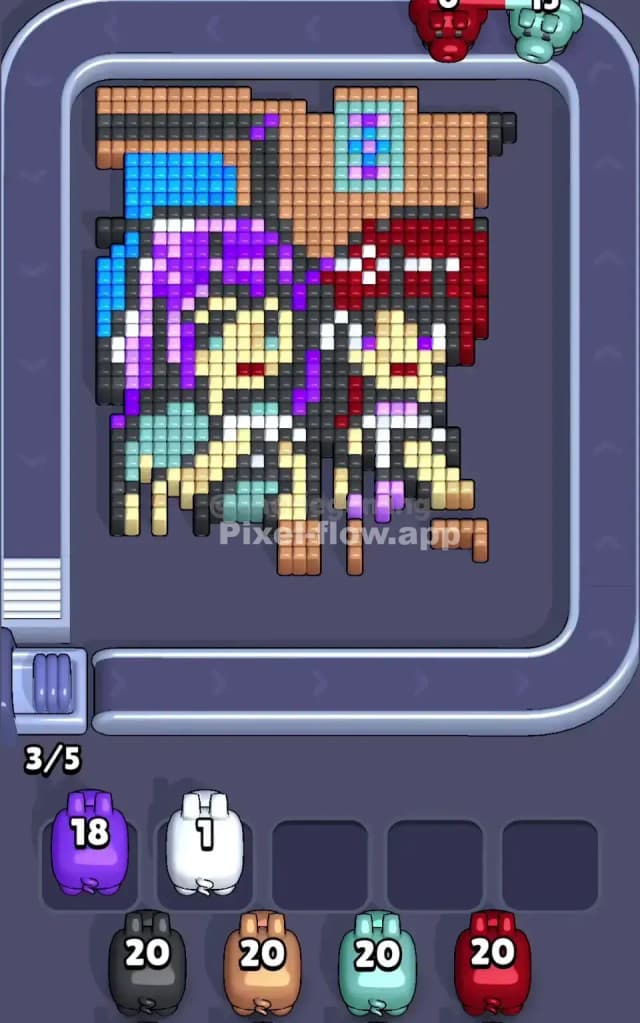
The mid-game is where players usually get stuck on Level 566. You've cleared the wood and the black floor, and now you have a messy mix of hair and faces.
-
Prioritize the "Hair" Pigs (Purple and Red): Once the outer frame is gone, you are left with two massive clumps of color: the Purple hair on the left and the Red hair on the right. These are "blockers." They cover the face pixels (skin tone) and the eye details. If you see a Purple or Red pig, use it immediately. Do not let them sit in your holding slots while you wait for a "better" time. There is no better time. You need to shave those hair layers down to expose the skin tone underneath.
-
The "Skin Tone" Trap: The girls' faces use a pale yellow/cream color. This color is buried deep. You will likely get Cream-colored pigs before you have exposed enough skin pixels to use them. Do not click them yet. Let them ride the conveyor belt loop if possible. If you are forced to drop them into a slot, keep them there and focus strictly on clearing the hair (Purple/Red) adjacent to the faces. If you fill 3 slots with Cream pigs but can't shoot the faces yet, you will lose.
-
Manage the Window Panes: The Blue pixels in the top left and right corners are tricky. They look separate, but they are often on the same layer as the hair. Clear them with Blue pigs whenever you have a clear shot to prevent them from becoming "orphan" pixels that require a specific pig later when you're desperate for slot space.
Last Details You Clean Up in Pixel Flow Level 566
In the final phase, the board looks sparse. The heavy hair and wood are gone.
- The Eyes and Mouths: You will be left with tiny clusters of specific colors—likely Black or Dark Purple for the eyes, and Red for the mouths.
- The Outfits: The last chunks to go are usually the specific shading on their clothes—the teal on the left and pink on the right.
Be very careful with your slots here. You might need a specific shade of Pink pig to finish the right girl's dress, but the conveyor belt might give you three other colors first. Since the board is mostly empty, you can't just "dump" ammo into big blocks anymore. You have to be precise. Count how many shots you need versus how much ammo the pig has. If a pig has 20 ammo but there are only 4 matching pixels left, that pig will sit in your slot forever (or until the level ends). Plan your final drops to ensure every pig can finish its job and leave the slot.