Pixel Flow Level 107 Solution Walkthrough | Pixel Flow 107

How to solve Pixel Flow level 107? Get instant solution for Pixel Flow 107 with our step by step solution & video walkthrough.

Share Pixel Flow Level 107 Guide:
Pixel Flow Level 107 Gameplay
Pixel Flow Level 107 Solution 1
Pixel Flow Level 107 Solution 2
Pixel Flow Level 107 Solution 3

Pixel Flow Level 107 Overview

The Board Layout and Color Layers

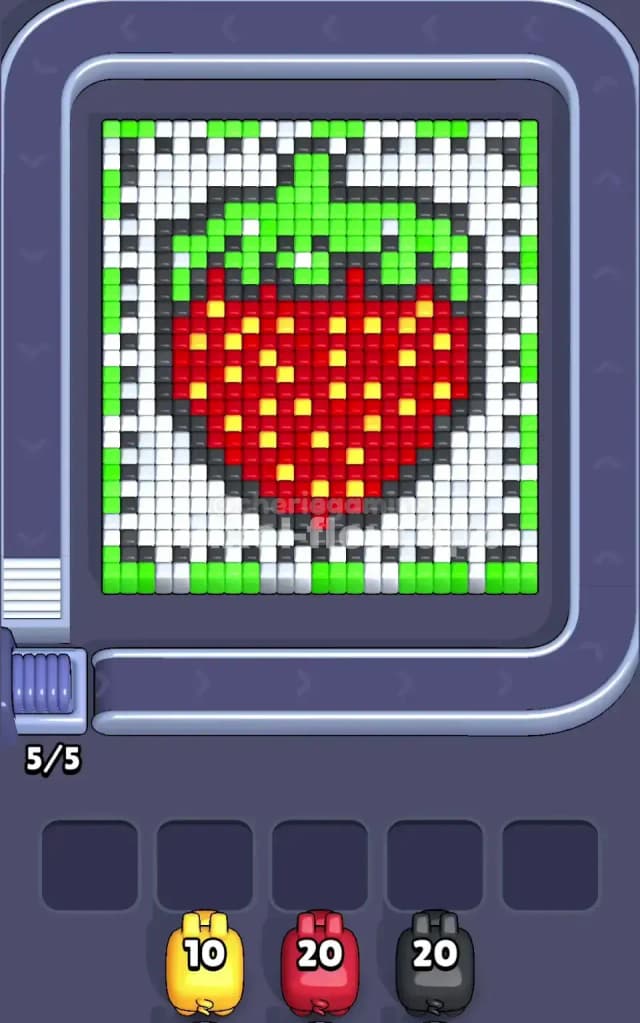
Pixel Flow Level 107 presents you with a beautiful pixel art heart as the main subject, rendered in warm reds and yellows at the center of the play field. The heart is framed by darker gray and black voxels that form the outline and inner definition, while the outer border is dominated by bright green cubes on the left and right edges, with white cubes filling much of the background. This layered design means you're not just clearing random colors—you're systematically peeling away the outer protective layers to expose the vibrant red and yellow heart beneath. The board measures a decent size with multiple depth layers, so understanding which color to target first is absolutely critical to your success in Pixel Flow Level 107.

The Win Condition and Deterministic Pig Order

Your goal in Pixel Flow Level 107 is straightforward: eliminate every single voxel cube on the board. You've got three pigs visible in the queue, and you're starting with 5/5 waiting slots available—meaning you can park up to five pigs before the level fails. The yellow pig carries 10 ammo, while both the red and gray pigs carry 20 ammo each. This ammo is fully deterministic; every time you replay Pixel Flow Level 107, the pig order and ammo counts remain identical, so there's no luck involved—only strategy and careful sequencing.


Why Pixel Flow Level 107 Feels So Tricky

The Green and White Border Jam Risk

The biggest bottleneck in Pixel Flow Level 107 is managing the seemingly endless green and white cubes that dominate the outer edge of the board. At first glance, you might think you need to blast through all the green and white immediately, but that's exactly the trap. If you send your yellow pig (with only 10 ammo) after green cubes early, you'll barely make a dent, and then you'll be forced to park it in a waiting slot with ammo still remaining. Once that yellow pig settles into the buffer with unused bullets, it becomes a liability—a "stuck" pig that can't fire at anything because there are no more green targets visible. Multiply this by a few more misprioritized moves, and you'll rapidly fill all five waiting slots while ammo sits unused, triggering a loss in Pixel Flow Level 107.

The Awkward Red and Yellow Interaction

Another subtle problem spot in Pixel Flow Level 107 is the interplay between the red and yellow cubes at the heart's core. The yellow voxels are scattered throughout the red mass in what looks like a random pattern, but they're actually positioned in a way that makes it hard to expose them all without the red pig doing most of the work first. If you send your yellow pig in too early, it'll spend its limited ammo on isolated yellows while the red remains mostly intact, leaving you stranded again. The red pig with 20 ammo is your real workhorse for this section, but you have to sequence things carefully so the yellow pig doesn't arrive until the red has already carved out enough space to make every yellow shot count.

The Gray Cube Confusion

The gray cubes throughout Pixel Flow Level 107 form a secondary outline layer that sits between the outer green/white border and the inner red/yellow heart. They're not numerous enough to consume a whole pig's ammo, yet they're too scattered to ignore. If you don't plan for gray strategically, you'll end up with your gray pig (20 ammo) spending only a handful of shots on visible grays, then getting stuck in a waiting slot with 15+ ammo still loaded. That's a potential wipeout scenario in Pixel Flow Level 107 if you're not careful.

When It Clicked for Me

Honestly, Pixel Flow Level 107 frustrated me until I stopped thinking about clearing colors in rainbow order and started thinking about exposing layers. Once I realized that the gray and white cubes were mostly just visual scaffolding—and that my real job was to systematically peel them away to give the red and yellow pigs clear shots—the puzzle suddenly made sense. The moment I sent the yellow pig after just a few specific targets instead of charging at every visible yellow cube, I felt the tension drop. It wasn't about spray-and-pray; it was about surgical precision and timing.


Step-by-Step Strategy to Clear Pixel Flow Level 107

Opening: Targeting the Green Edges First

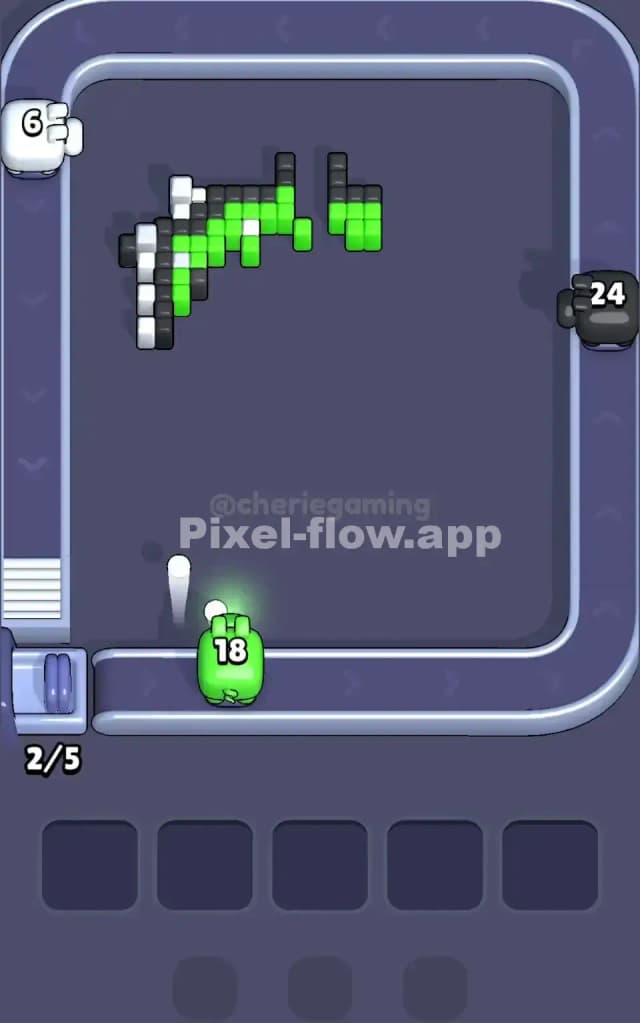
Your opening move in Pixel Flow Level 107 should be to send the yellow pig after the green cubes on the left edge of the board. I know what you're thinking—the yellow pig only has 10 ammo, so how can it do much damage? The answer is that you're not trying to clear all the green; you're trying to expose the gray and white cubes behind the green so that your next pigs have better visibility and firing angles. Focus your yellow pig's shots on a vertical column of green on one side, maybe five to seven cubes if possible, just enough to create a pathway. This keeps at least three waiting slots free, giving you buffer room for any unexpected pig parking. Don't overthink it in Pixel Flow Level 107; the yellow pig is your opening move, not your green eraser.

Mid-Game: Sequencing Red, Gray, and White

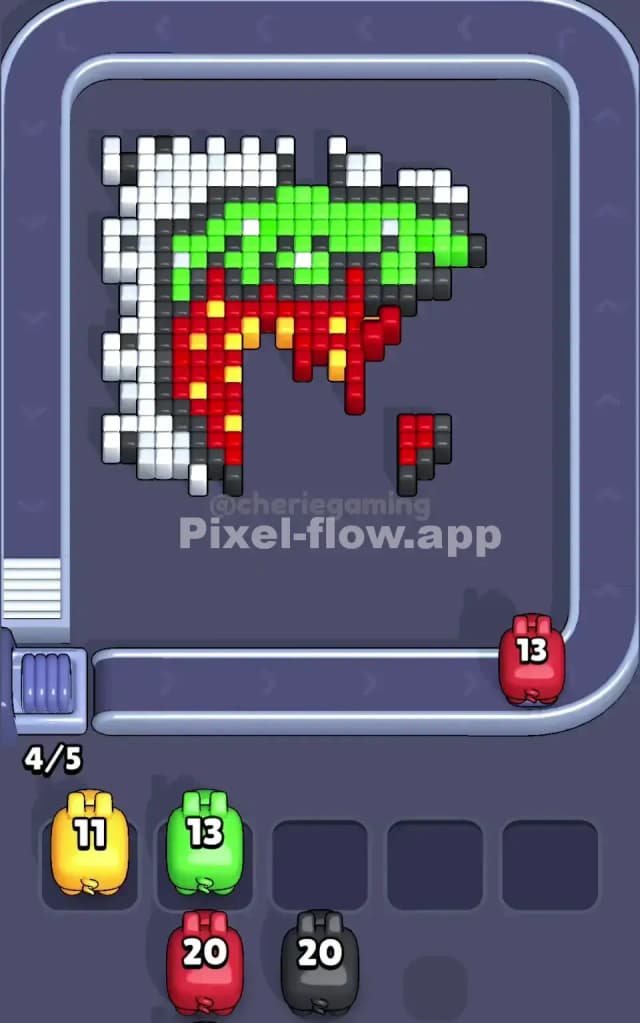
Once the yellow pig has opened a small gap, your red pig (20 ammo) takes center stage in Pixel Flow Level 107. This is where the real work happens. Send the red pig to target red cubes, but be strategic about which reds you prioritize. Start with the outer edges of the red heart—the reds that form the perimeter—because clearing those will expose more inner reds and, crucially, reveal some of those tricky scattered yellows we discussed. Your red pig should chew through roughly 12 to 15 of its 20 ammo in this first pass, which means it'll still have 5 to 8 shots left over. Don't panic if it ends up in a waiting slot; that's totally fine for Pixel Flow Level 107, as long as you've got room.

Next, send the gray pig (20 ammo) after the gray outline cubes. This is a tactical move in Pixel Flow Level 107 because the gray pig will spend maybe 8 to 12 ammo on gray targets, leaving it partially spent. That's okay—the gray pig's job is to further expose the red and yellow interior so that when pigs cycle back, they have clearer shots. After the gray pig parks in the buffer, you should have two or three waiting slots still open, which gives you breathing room in Pixel Flow Level 107.

End-Game: Finishing Red and Yellow Without Jamming

Here's where Pixel Flow Level 107 gets intense. By now, you've exposed the heart, and your remaining pigs (cycling back into the queue) will have visible targets. Send the red pig back out if it's available, and let it mop up the remaining red cubes, particularly the inner reds that are now exposed. The red pig should finish most of its remaining ammo here. Finally, your yellow pig makes its comeback in Pixel Flow Level 107, hitting the scattered yellow cubes that are now clearly visible. If you've sequenced everything correctly, the yellow cubes should be few enough that the yellow pig can eliminate them all without getting stuck.

For the final cleanup, the white cubes are your last priority in Pixel Flow Level 107. By the time you've cleared red and yellow, you might have a pig or two with a handful of ammo left, and those stragglers can finish off any remaining white edges. The key is making sure your waiting slots never stay full, and that ammo gets spent before a pig has to park permanently.


The Logic Behind This Pixel Flow Level 107 Plan

Exploiting Deterministic Ammo and Pig Order

Pixel Flow Level 107 isn't a game of luck; it's a logic puzzle with a predetermined pig sequence and ammo. By mapping out the ammo values (10 yellow, 20 red, 20 gray) and understanding that pigs cycle back into the queue after they're done, you can plan three or four moves ahead. The strategy above works because it respects the ammo constraints—the yellow pig isn't asked to do more than 10 cubes worth of work upfront, the red pig is tasked with the bulk of the heavy lifting, and the gray pig is positioned to unlock access rather than finish large sections. This careful ammo budgeting is what separates a clean Pixel Flow Level 107 run from a chaotic buffer jam.

Staying Calm and Counting Two Pigs Ahead

The real secret to beating Pixel Flow Level 107 is patience and mental accounting. Before you send each pig out, glance at the queue and count: "Okay, yellow goes next, then red is after that. Yellow will expose green, so red will have clear shots at red. Then gray will clean up gray voxels, and I'll still have two slots free." This forward-thinking prevents panic decisions in Pixel Flow Level 107. Watch your waiting slots like a hawk; if you ever see three pigs sitting idle, slow down and reassess. Count the visible cubes of each remaining color, cross-reference them with your pigs' remaining ammo, and make sure your math works out. That discipline is what transforms Pixel Flow Level 107 from a frustrating mess into a satisfying puzzle you can solve repeatedly.