Pixel Flow Level 118 Solution | Pixel Flow 118 Walkthrough
How to beat Pixel Flow Level 118: Video solution & walkthrough. The fastest way to pass Pixel Flow 118.
Is this the wrong level layout?🤔
Pixel Flow randomizes levels for different players. Don't worry, just upload a screenshot of your board, and our AI will find the correct video instantly.


Pixel Flow Level 118 Overview
The Board Layout and Starting Colors
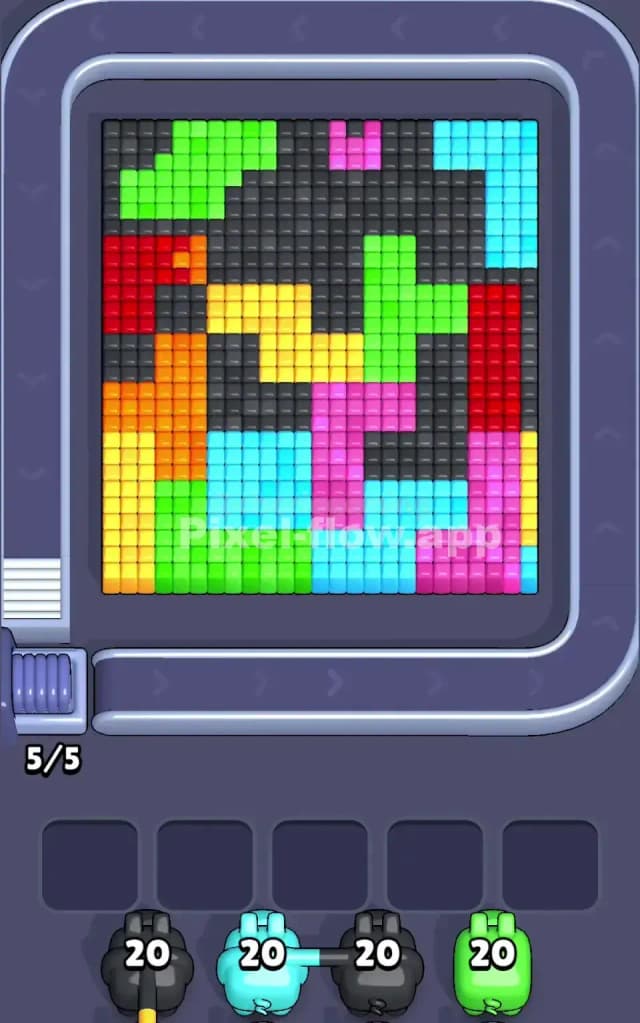
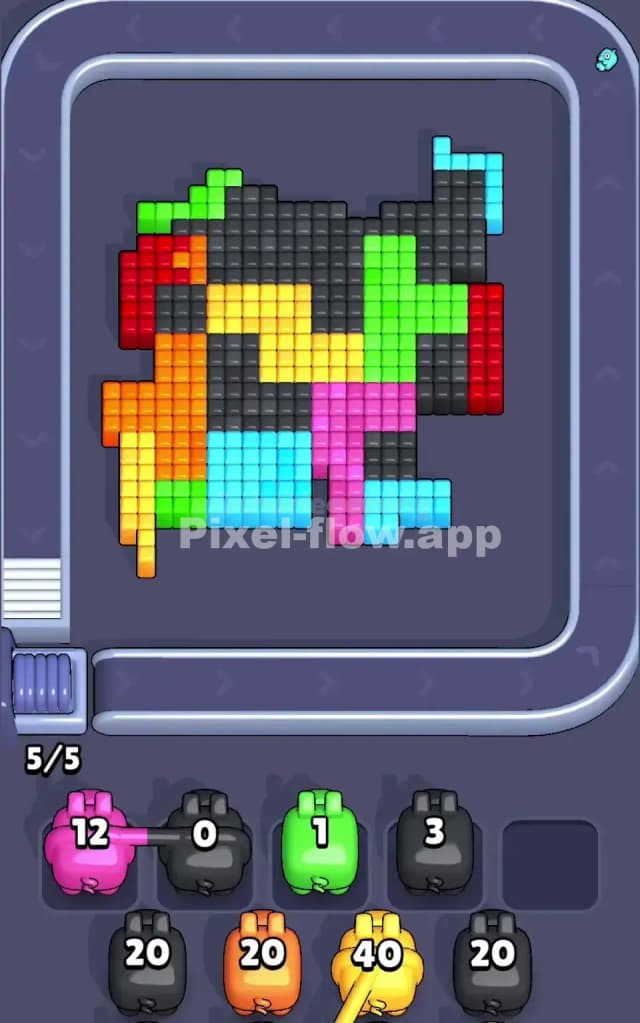
Pixel Flow Level 118 presents you with a vibrant, multi-layered voxel puzzle dominated by six main colors: bright green, cyan, red, orange, yellow, magenta, and a thick gray foundation. The board features a dense arrangement where green and cyan cubes dominate the upper and right sections, while yellow and orange occupy the lower-left quadrant. Red cubes cluster on the right side, and magenta patches sit scattered throughout the middle layers. The gray "dead" cubes form natural barriers and choke points that you'll need to work around. What makes Pixel Flow Level 118 particularly interesting is how the colors are stacked and interwoven—you won't be able to clear one color completely without exposing and managing the layers beneath it. The visual density here is real, and that's exactly what makes this level demand careful planning.
Win Condition and Deterministic Mechanics
Your goal in Pixel Flow Level 118 is straightforward: clear every single colored cube from the board until nothing remains but empty space. You've got four pigs lined up in the queue, each carrying 20 ammo and tied to a specific color (black, cyan, black, and green in the visible sequence). Since every pig's ammo count and firing sequence is completely deterministic, success hinges entirely on your ability to order the pigs intelligently so that each one spends all its ammunition before the waiting slots overflow. Remember, if you jam all five waiting slots with stuck pigs and still have ammo left unspent, you'll fail immediately. Pixel Flow Level 118 won't punish poor play randomly—it'll punish poor sequencing, which means you have full control over your outcome.
Why Pixel Flow Level 118 Feels So Tricky
The Gray Barrier Problem
The biggest threat in Pixel Flow Level 118 is the thick gray foundation and scattered gray blocking cubes throughout the middle of the board. Gray cubes don't belong to any pig, so no amount of ammo spending will clear them—they're permanent landscape. This creates a genuine bottleneck: you can't simply bulldoze your way through the puzzle. Instead, you have to carefully expose pockets of colored cubes on either side of these barriers, which means some pigs will run dry of ammo before you've even seen deeper layers. The cyan pig, for example, has 20 ammo but cyan cubes are split across the right edge and buried in lower sections. If you fire cyan too early without proper setup, you'll burn through those 20 shots on surface-level cubes and leave the pig stranded in your waiting slots—and that's when the jam begins.
Awkward Color Pockets and Buried Layers
Pixel Flow Level 118 hides several color patches in positions that don't become accessible until you've cleared cubes ahead of them. Magenta sits in scattered clusters that are partially obscured by yellow and green. The yellow block in the center looks dense, but much of it overlaps with regions that will need orange to expose first. When the orange pig fires, it'll strip away some obstacles, but you need to predict which colors will emerge beneath. If you let the black pigs go too early, they'll consume their ammo on easily visible gray-adjacent cubes, then sit idle in your waiting slots while deeper pink and cyan colors remain locked away. The puzzle isn't cruel—it's just tightly orchestrated, and one miscalculation cascades quickly.
The Pressure Point
Honestly, the first time I played Pixel Flow Level 118, I felt that panic around move five or six when I realized I'd parked a black pig in slot three with 8 ammo still loaded, and the next pig in queue was also black with 20 fresh ammo. That's 28 black shots competing for maybe 15 visible black cubes, and suddenly I was staring at the looming possibility of a double-pig jam. The level clicked for me the moment I stopped reacting to each pig sequentially and started planning four moves ahead—I literally sketched out which colors I'd expose with each pig and verified that the ammo counts would land cleanly. That shift from "fire and hope" to "sequence and execute" is what transforms Pixel Flow Level 118 from maddening to manageable.
Step-by-Step Strategy to Clear Pixel Flow Level 118
Opening: Establishing a Safe Buffer
Your first priority in Pixel Flow Level 118 is to maintain at least two empty waiting slots throughout the early game. This gives you breathing room if a pig runs out of ammo before it can spend everything. Start by firing the first black pig immediately—yes, the black pig with 20 ammo. Don't overthink it. There are enough gray and dark cubes visible in the upper-left and center regions to absorb a significant portion of that ammo. As the black pig fires, it will expose green cubes beneath and around the gray barriers. You'll see cyan pockets on the right side start to become more defined. While that black pig is working, resist the urge to chain-fire immediately. Watch where its shots land, count what's revealed, and then decide whether to fire the cyan pig or hold. The opening phase of Pixel Flow Level 118 is about controlled aggression: you're spending ammo, but you're doing it strategically enough that you're never more than one pig away from a clean state.
Mid-Game: Layering and Slot Management
Once the first black pig has fired and begun resting in a waiting slot (assuming it's not completely empty—it might still have 2–4 shots left), it's time to assess the board. Yellow and orange cubes now occupy clearer territory in the lower sections. The cyan on the right is more visible and more numerous than it appeared initially. This is where you want to sequence the cyan pig into action. Cyan has 20 ammo, and the right-side cyan block plus the lower-middle cyan pocket should consume most of that. As cyan fires, it'll clear obstacles that were obscuring magenta and deeper yellow. Here's the critical bit: don't fire the second black pig immediately after cyan. Instead, hold it in the queue and observe. You want the second black pig to fire when the remaining black cubes are concentrated and exposed, not scattered across multiple layers. In the mid-game of Pixel Flow Level 118, you're essentially managing a puzzle within the puzzle—you're using pig order to choreograph layer-by-layer exposure. If you need to park a half-spent pig, do it. The waiting slots are there for exactly this reason: to buffer pigs that still have ammo but no immediate targets. Just make sure you never fill all five at once.
End-Game: Finishing Cleanly
By the end-game phase of Pixel Flow Level 118, you should have only two colors left on the board: likely green (which has 20 ammo) and maybe lingering magenta, orange, or yellow remnants. This is where patience becomes your best asset. The green pig with 20 ammo should be able to clear the bulk of remaining green cubes—and there are a lot of them scattered throughout the puzzle. Fire the green pig and let it work. As it clears, any last magenta, yellow, or orange patches become isolated and easier to target with remaining pigs in the queue. Your final move should leave you with an empty board and empty waiting slots, which means no pig jams and a clean level clear. The trick to avoiding a last-second failure in Pixel Flow Level 118 is simple: never let a pig with more than 5 ammo remaining sit in a waiting slot without a clear plan to spend that ammo on the next cycle.
The Logic Behind This Pixel Flow Level 118 Plan
Why Sequence Beats Reaction
The core insight for conquering Pixel Flow Level 118 is that you're not playing a reflex game—you're playing a planning game. Every pig's ammo count is fixed, every cube's color is permanent, and the waiting slots are finite. This means there exists an optimal (or near-optimal) pig sequence that clears the board cleanly. By planning two or three pigs ahead instead of reacting to each pig one at a time, you're essentially solving a constraint-satisfaction puzzle. When you see that the cyan pig has 20 ammo and you know there are roughly 18–22 cyan cubes on the board (scattered across two zones), you can confidently fire it and predict that it'll either empty completely or leave 1–3 shots. That predictability is your leverage in Pixel Flow Level 118. The strategy I've outlined—gray first, then cyan, then strategically spaced black and green—works because it respects the physics of ammo consumption and the topology of the board.
Staying Calm and Counting Ammo
Under the pressure of Pixel Flow Level 118, it's easy to panic and fire pigs randomly, hoping something works out. Don't do that. Instead, adopt a simple discipline: before you fire each pig, count the visible cubes of that pig's color and compare it to the ammo remaining. If they're roughly equal (within 3–5 cubes), fire away. If there are way fewer cubes than ammo, hold the pig and clear obstacles first. If there are way more cubes, understand that this pig will be a two-cycle affair—it'll fire, drop to a waiting slot with some ammo left, and fire again later. This mental practice turns the anxiety of Pixel Flow Level 118 into actionable data. You're not gambling; you're executing a plan based on observable facts. And when you clear the final cube and see that empty board, you'll know it wasn't luck—it was strategy, patience, and the discipline to think two moves ahead.