Pixel Flow Level 117 Solution | Pixel Flow 117 Walkthrough
How to beat Pixel Flow Level 117: Video solution & walkthrough. The fastest way to pass Pixel Flow 117.
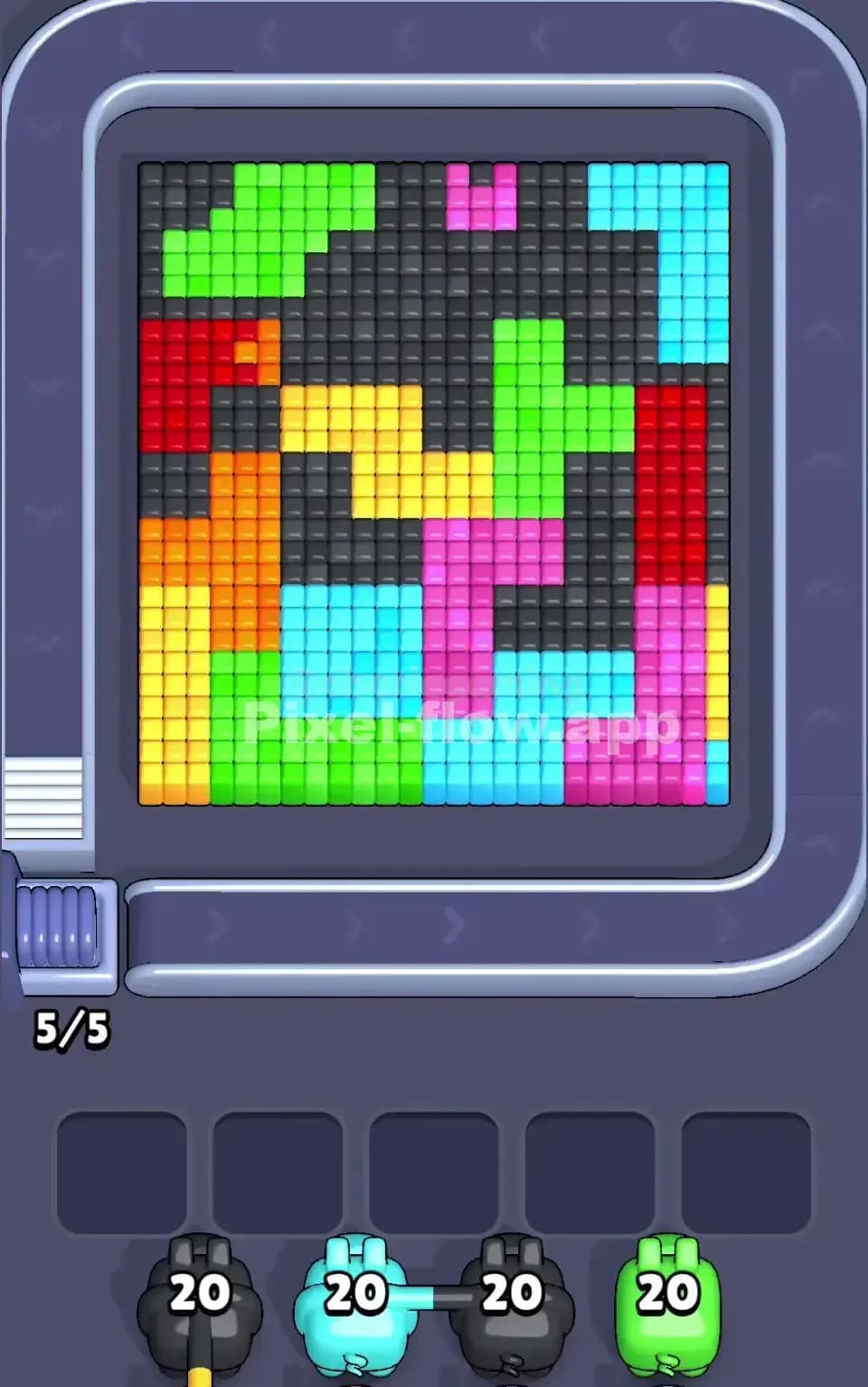
Is this the wrong level layout?🤔
Pixel Flow randomizes levels for different players. Don't worry, just upload a screenshot of your board, and our AI will find the correct video instantly.
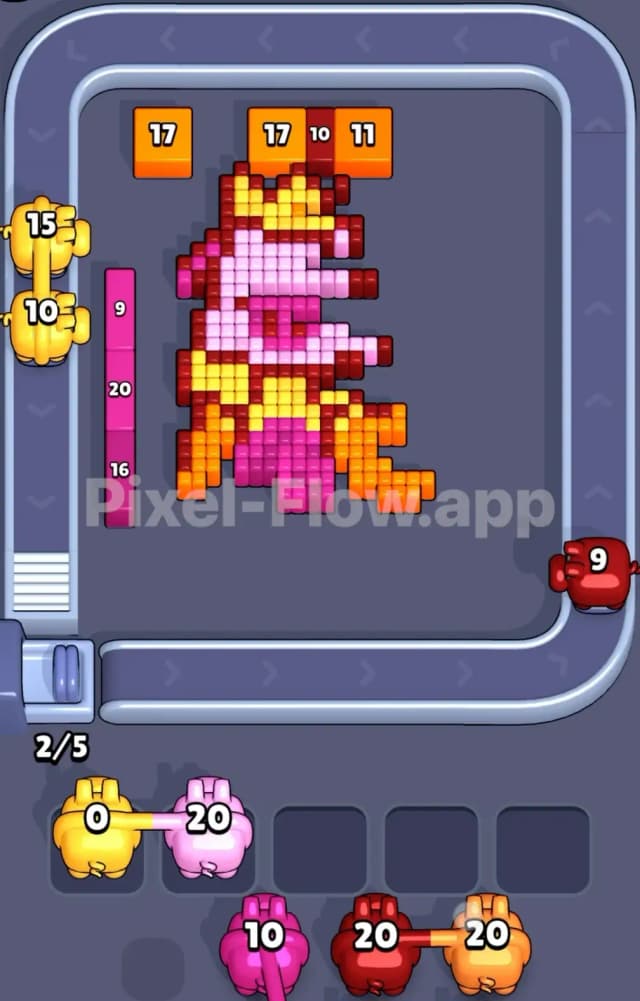
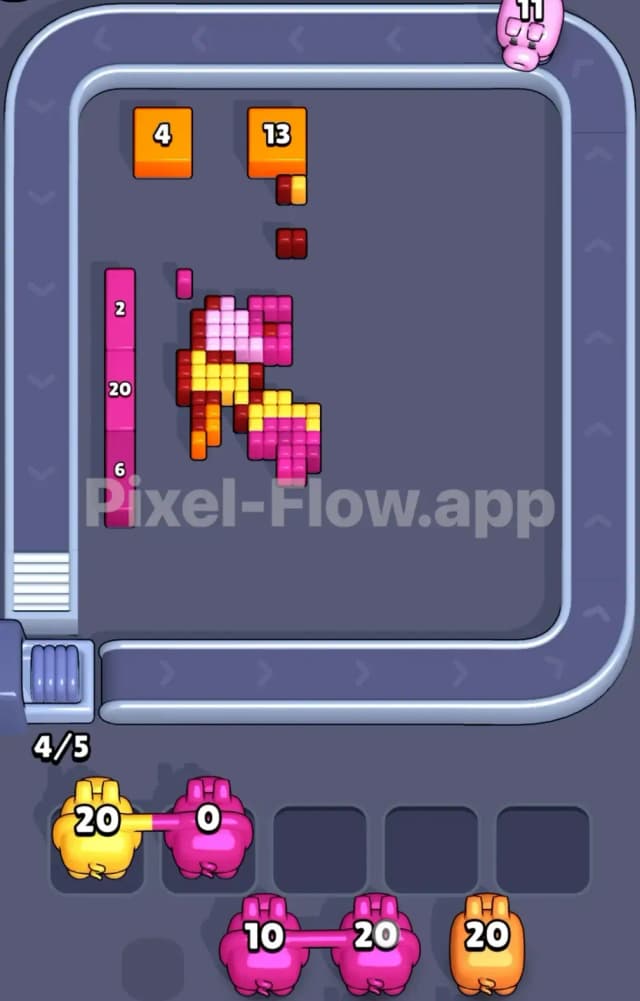
Pixel Flow Level 117 Overview
The Board Layout and Color Palette
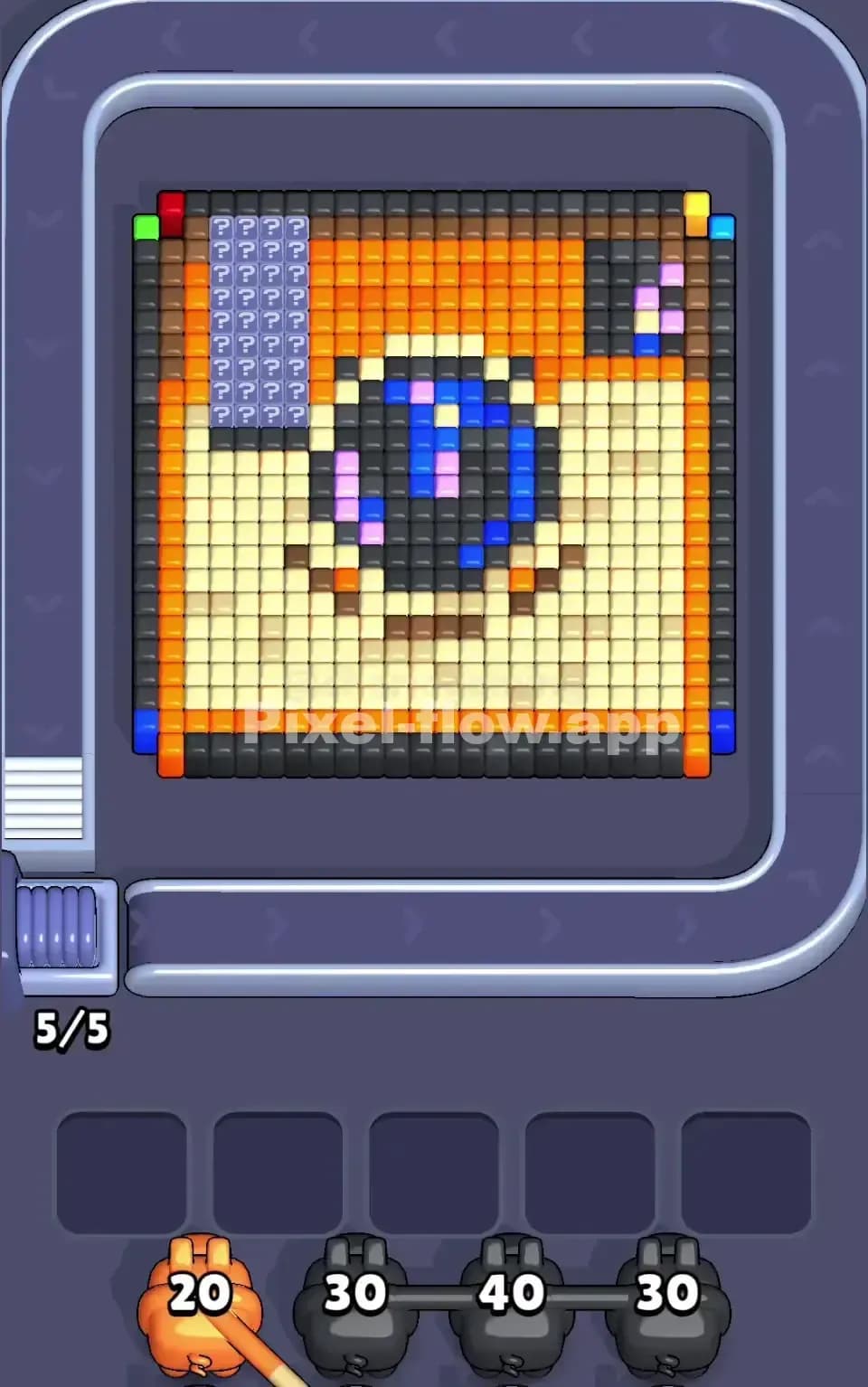
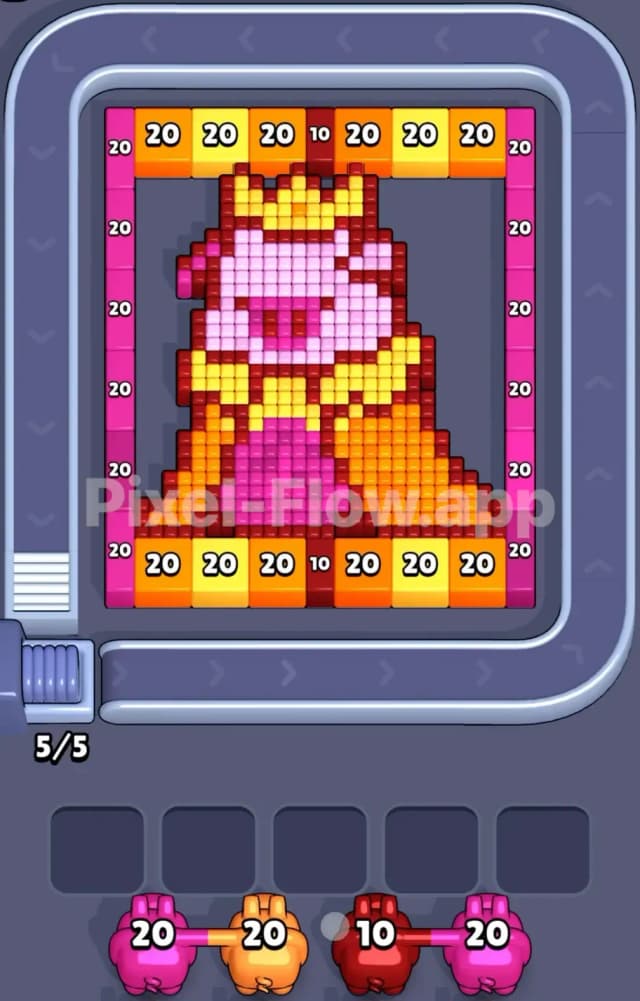
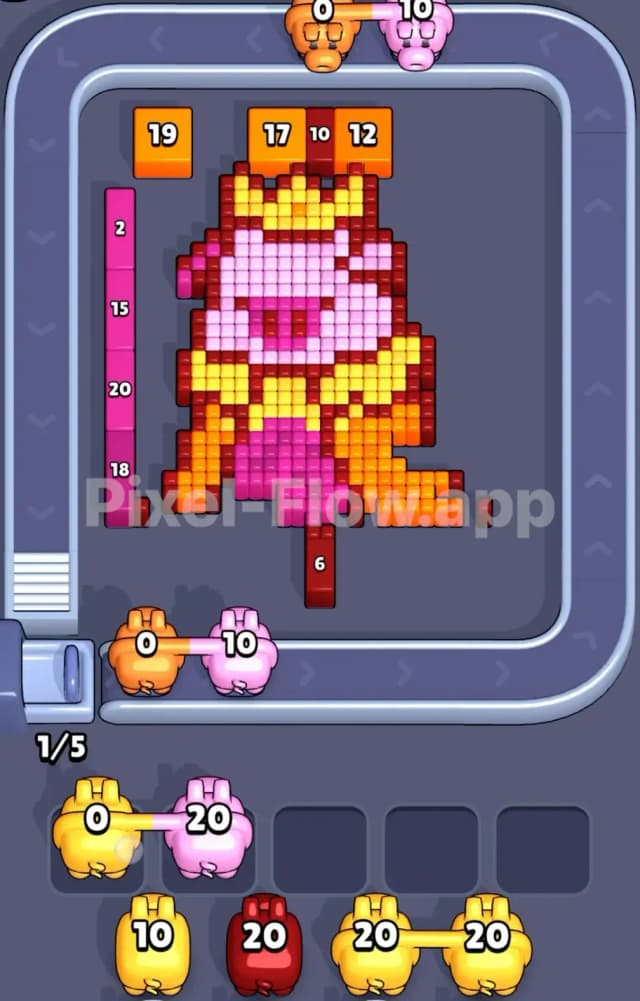
Pixel Flow Level 117 presents a charming pixel-art portrait that sits across multiple color layers, and you're immediately confronted with a dense, intricate composition. The image features a character's face rendered in browns, blacks, and flesh tones—think warm, earthy hues layered over a bright cyan background. Red, white, and cream-colored accents add definition and contrast throughout the piece, while a bold orange band runs along the bottom edge like a frame or accent stripe. This multi-color design means you're not dealing with a simple two-color puzzle; instead, you'll need to carefully manage five distinct color pigs (orange, cyan, red, white, and brown/black variants) to avoid jamming your waiting slots.
The pixel art itself creates natural visual "choke points" where one color dominates a region and blocks access to deeper layers beneath. For instance, the cyan background is absolutely everywhere—it's the most abundant color on the board—which means the cyan pig will need to be deployed strategically and repeatedly. The portrait's facial features (eyes, nose, mouth details) are formed by small patches of black and white, and these sparse, scattered pieces become critically important later in the puzzle when you've cleared the bulk of the visible layers.
Win Condition and Deterministic Pig Order
Your goal in Pixel Flow Level 117 is straightforward: eliminate every single voxel cube on the board until the playing field is completely empty. What makes this level demanding is that your pig queue is fixed and deterministic. You'll see that you have three pigs visible at the bottom with 20 ammo each—orange (20), cyan (20), and red (20)—and their firing order never changes. You cannot swap pigs, reorder the queue, or skip a pig you don't immediately need. This rigidity means you must plan your moves with precision, because every pig you call will automatically fire at its matching color, and if it runs out of targets before spending all its ammo, it'll occupy one of your five waiting slots permanently. Fill all five slots with "stuck" pigs holding unused ammo, and you'll fail the level with no way to recover.
Why Pixel Flow Level 117 Feels So Tricky
The Cyan Background Bottleneck
The biggest threat in Pixel Flow Level 117 is the sheer volume of cyan cubes. They're absolutely everywhere—blanketing the top half, surrounding the portrait, and filling gaps in the composition. The cyan pig has 20 ammo, which sounds generous, but cyan cubes are scattered across multiple depths and layers, not clustered in one neat region. If you're careless and call cyan too early, you'll burn through ammo hitting only the surface layer, leaving deeper cyan cubes unexposed and untouched. Worse, if cyan runs out of targets with ammo still remaining, it'll drop into your waiting slots and take up precious real estate. This is where panic happens—you suddenly realize your buffer is filling up, and you don't have a clear path to clear the rest of the puzzle.
Sparse Color Patches and Layer Exposure
Pixel Flow Level 117 has several small, isolated pockets of less obvious colors. Those black and white cubes that form the character's facial features are few and far between, scattered across the mid-section of the puzzle. These sparse patches mean that black and white pigs (if they're in your queue) won't have obvious targets until you've cleared enough foreground colors to expose them fully. There's also the orange band at the bottom, which seems straightforward until you realize it's anchoring the entire composition—clearing it too early can leave you unable to clear certain cubes behind it, while leaving it too long ties up your orange pig.
The brown cubes forming the character's hair and skin tones create another subtle problem. They're dense in one region but scattered in another, forcing you to either commit the brown pig early and risk overshooting, or hold off and hope the pig has enough ammo when you finally need it. This tension between "commit now or wait?" is the psychological crux of Pixel Flow Level 117.
When the Puzzle "Clicks"
I'll be honest—my first attempt at Pixel Flow Level 117 felt overwhelming. I saw that cyan pig and thought "just fire and clear," and within three moves I had two pigs sitting in my waiting slots with nowhere to go. The frustration hit when I realized I'd locked myself into failure by acting reactively instead of planning ahead. What changed everything was accepting that Pixel Flow Level 117 isn't about speed; it's about reading the board like a map and understanding which colors are truly blocking your progress. Once I spent a moment counting visible cubes of each color and mapping out the portrait's depth, everything suddenly made sense. The cyan background became a systematic clearing operation rather than a panic zone, and the sparse accent colors revealed themselves as intentional puzzle gates that unlock the final stages.
Step-by-Step Strategy to Clear Pixel Flow Level 117
The Opening: Establishing a Safe Rhythm
Start Pixel Flow Level 117 by calling your cyan pig first. I know that sounds counterintuitive given the bottleneck I just described, but hear me out: cyan is so abundant that firing once will clear a visible patch and expose at least some of the next layer beneath. Your goal in the opening isn't to finish cyan—it's to establish a safe rhythm and keep at least three waiting slots empty. Call cyan once, watch where the cubes fall and what gets revealed, and then immediately assess whether another pig needs to go next.
After the first cyan fire, scan the board for any color that's now clearly visible and has a small, countable pile of cubes. This might be white (the character's eyes or teeth), red (facial features or clothing), or brown (the hair and face structure). By targeting a smaller secondary color now, you accomplish two things: you reduce the overall cube count and create new layers that expose even more of the portrait. This is the principle of "cascading clears" in Pixel Flow Level 117—each strategic fire sets up the next one.
Crucially, after your third or fourth move in Pixel Flow Level 117, ensure you have at least two completely empty waiting slots. Those slots are your safety buffer, your escape hatch if a pig unexpectedly runs out of targets. Never let more than three slots fill, or you'll find yourself in a suffocating endgame where every move risks a permanent jam.
Mid-Game: Sequencing Pigs and Exposing Inner Layers
Once you're five or six moves into Pixel Flow Level 117, you'll have a clearer picture of the remaining structure. At this point, you should begin cycling through your pigs more deliberately. If your queue includes a second round of cyan (which it likely does, given cyan's abundance), don't fire it immediately just because it's next. Instead, check: are there visible cyan cubes on the board? If yes, how many does cyan need to clear them all? If the answer is "fewer than the ammo cyan has left," you know cyan will get stuck, and you should find another color to fire first.
This is where reading your queue matters. You might need to cycle through orange, red, white, or brown before returning to cyan, even if cyan is "next" in the traditional sense. Pixel Flow Level 117 rewards flexibility and forethought. Keep a mental note of which pigs are coming up and how much ammo they carry. If a pig with 20 ammo is about to arrive, and you know there are only 12 visible cubes of that color, you'll have 8 ammo left over and a waiting-slot problem.
As you progress through Pixel Flow Level 117, focus on exposing the character's face and the interior portrait details. Clearing the cyan background methodically reveals the browns, blacks, and skin tones that form the actual subject. Once the portrait structure is visible, the remaining colors become much easier to target. Don't rush the portrait itself—those small, delicate patches of black and white cubes require precision. Call the appropriate pigs in small doses, watching carefully to avoid overshooting and wasting ammo.
End-Game: Finishing Cleanly Without a Jam
The final stretch of Pixel Flow Level 117 is where your patience pays off. By now, you should have only a handful of colors remaining, and most of your waiting slots should still be relatively empty. The danger zone is here: with just a few dozen cubes left and three or four pigs remaining in your queue, it's tempting to fire rapidly and finish. Resist that urge.
Instead, count the remaining cubes of each color visible on the board. Then check your incoming queue and their ammo counts. Ideally, you want to fire pigs in an order where each pig's ammo aligns almost perfectly with the number of visible cubes of that color. If your orange pig is coming next with 20 ammo, but there are only 8 orange cubes visible, hold off. Call a different color first, clear some of those 8 orange cubes with an incidental hit, and then bring in orange when it'll land near its exact target count.
In the very last moves of Pixel Flow Level 117, you might be down to two or three pigs in your waiting slots and a small cluster of cubes. This is the moment to be coldly methodical. Fire each pig once, watch what clears, and plan the next two shots before you commit. A single wasted ammo at this stage can cascade into a jam that costs you the level.
The Logic Behind This Pixel Flow Level 117 Plan
Exploiting Determinism and Slot Pressure
Pixel Flow Level 117 is winnable because its pig order and ammo counts are fixed. You're not fighting randomness; you're solving a deterministic puzzle. The strategy above works because it treats your five waiting slots as a precious resource that you're actively managing, not a passive dumping ground. Every pig you send onto the board is a calculated decision: you're confident that this pig will either spend all (or nearly all) of its ammo on visible, matching cubes, or you're deliberately parking it to buy time for other colors.
The waiting-slot pressure is the level's real challenge. It's not that the puzzle is mechanically hard; it's that you need to stay three or four pigs ahead mentally, running simulations in your head about how ammo will land. This is why Pixel Flow Level 117 teaches patience and strategic thinking rather than reflexes.
Staying Calm and Counting Ahead
The final principle for conquering Pixel Flow Level 117 is simple: count before you fire. Spend five seconds mentally tallying the visible cubes of the color you're about to target. Check your queue for the next two or three pigs and their ammo. Ask yourself: if I fire now, what will become exposed, and will the next pig have a clear shot? By building this habit, you transform Pixel Flow Level 117 from a frustrating guessing game into a satisfying logic puzzle. The moment you internalize that every move is a choice with cascading consequences, the level stops feeling unfair and starts feeling elegant.
You've got this. Pixel Flow Level 117 is tough, but it's fair—and once you crack its rhythm, you'll clear it with confidence.