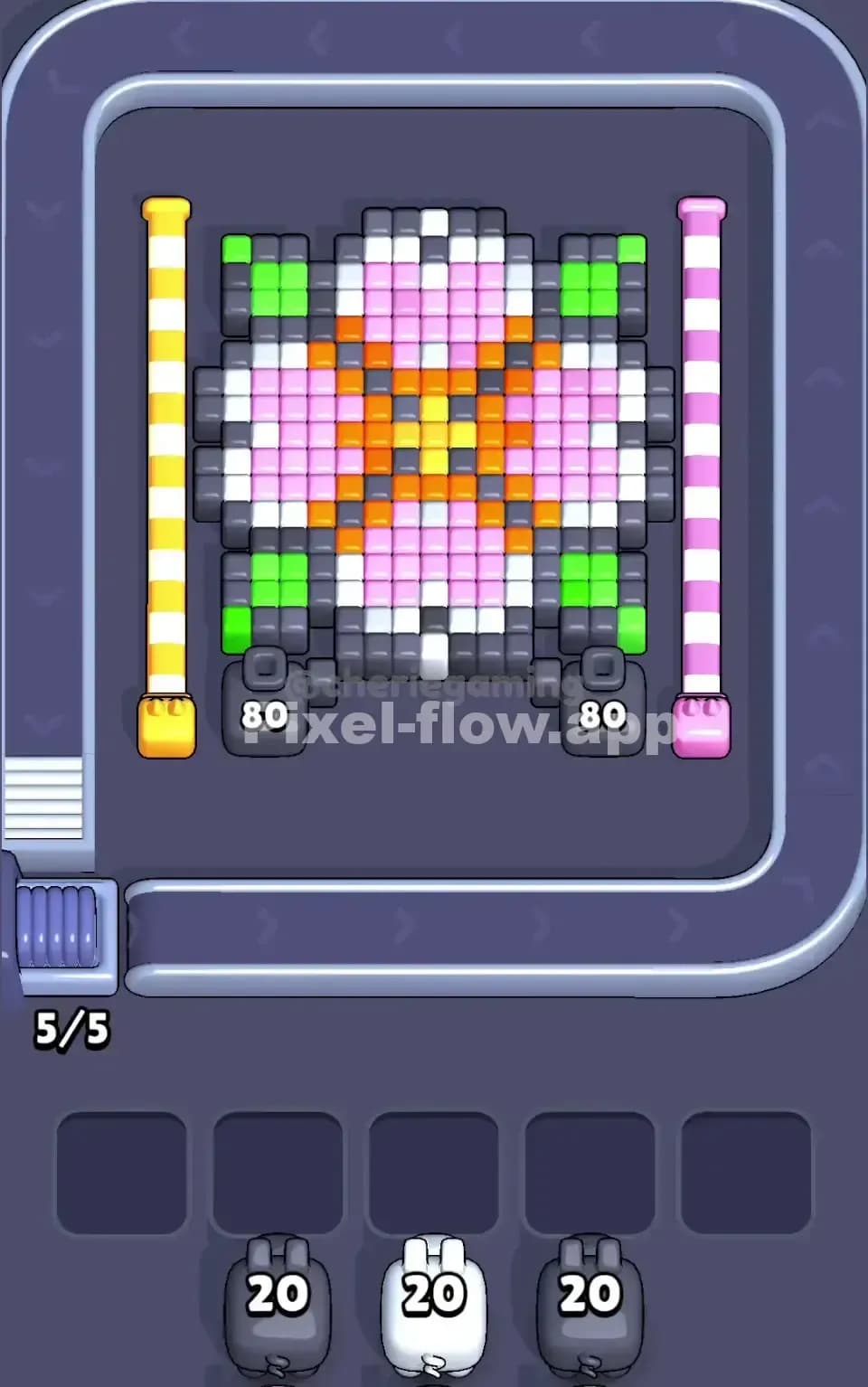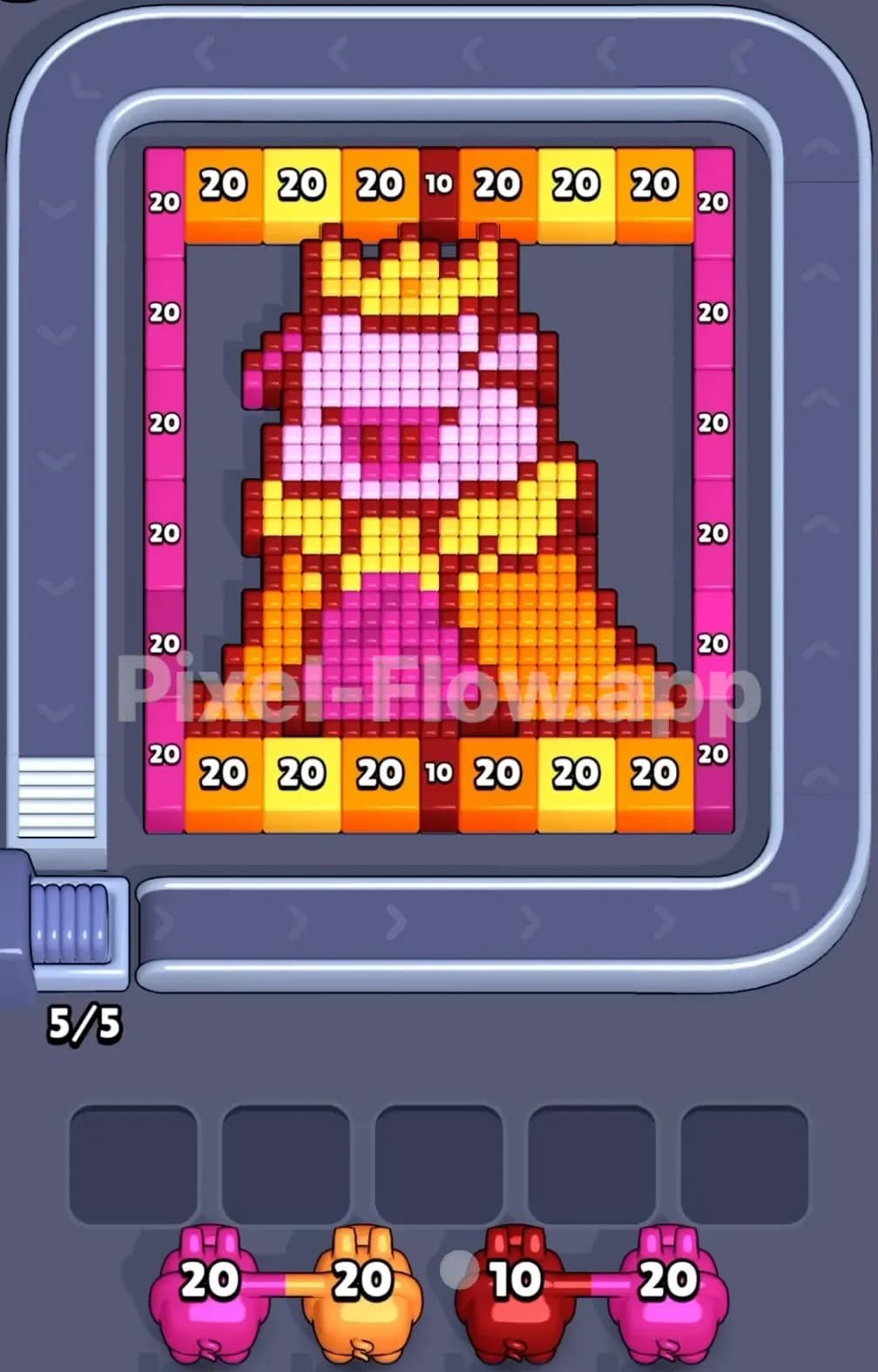
Pixel Flow Level 116 Solution | Pixel Flow 116 Walkthrough
How to beat Pixel Flow Level 116: Video solution & walkthrough. The fastest way to pass Pixel Flow 116.
Is this the wrong level layout?🤔
Pixel Flow randomizes levels for different players. Don't worry, just upload a screenshot of your board, and our AI will find the correct video instantly.

Pixel Flow Level 116 Walkthrough
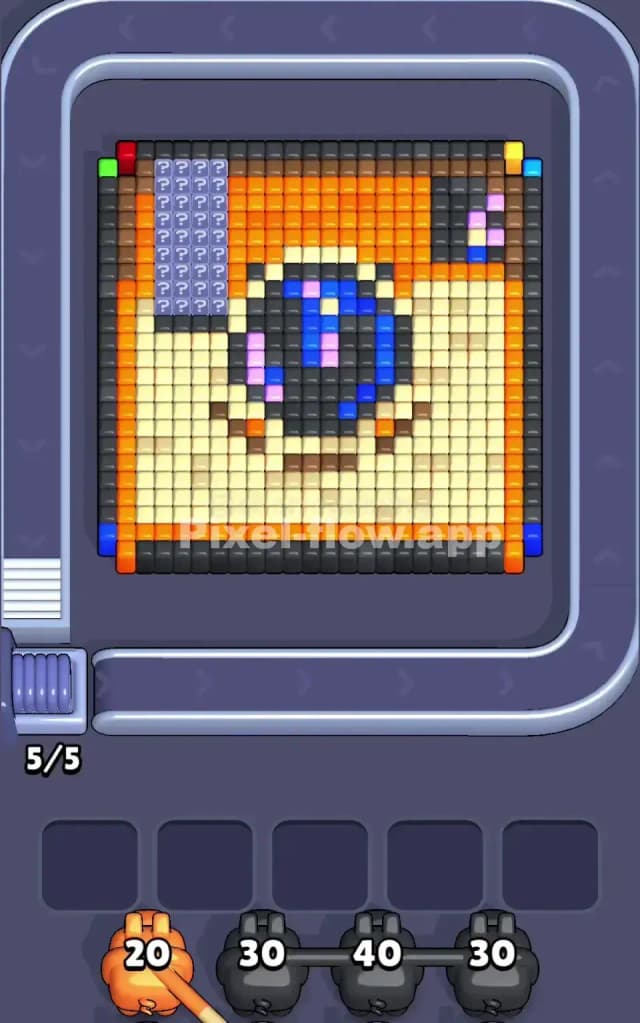
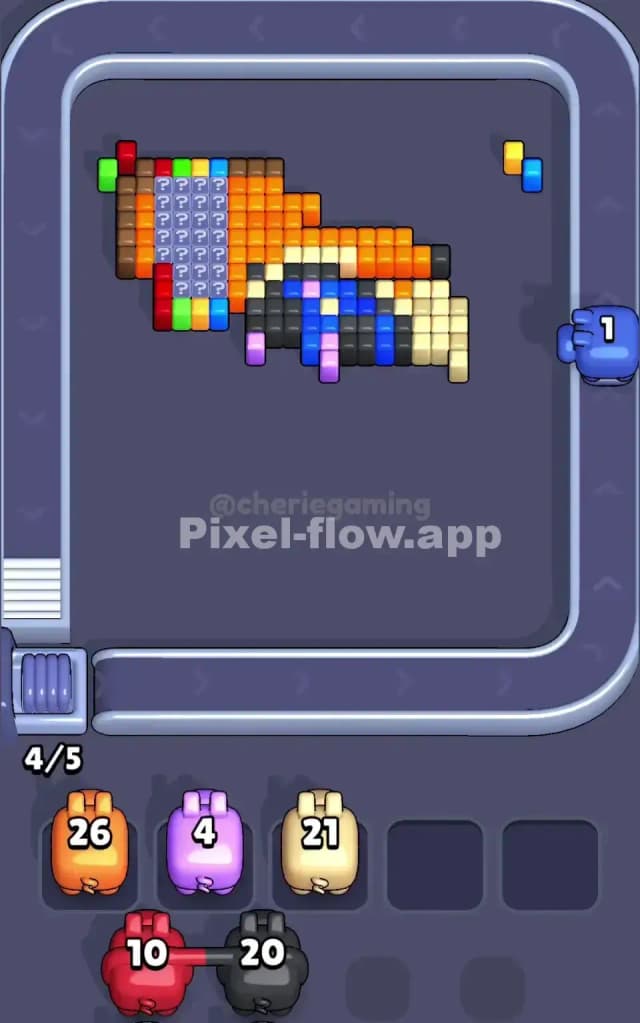
This level features a distinct Retro Camera Icon. It mimics the old-school Instagram logo with a warm color palette split horizontally. You have a heavy focus on the outer edges and a tricky, multi-colored center lens. To beat Pixel Flow Level 116, you must prioritize stripping the dark outer casing to reveal the lighter colors inside.
Is this a difficult stage? It is not a very hard level, provided you don't panic when you see the "Mystery Blocks" in the corner. The ammo count is generous, but the color layering is strict.
Pixel Flow Level 116 Overview
Imagine a vintage instant camera sitting on a table. The top half is a vibrant, sunset Orange, evoking the sky. The bottom half is a creamy Tan or beige, representing the leather grip of the camera.
Dominating the center is a massive Lens. This isn't just a black circle; it has depth. It contains a dark ring, a Blue glass reflection, and tiny glints of Purple and Pink.
The most aggressive visual feature is the Black Border that wraps around the sides and bottom, locking the lighter colors inside. Finally, notice the top-left corner. There is a patch of Mystery Blocks (marked with question marks). These are essentially "fogged" pixels. They obscure the pattern and often disrupt your rhythm because you can't instantly see what color pig is needed to clear them.
Step by step solution walkthrough for Pixel Flow Level 116
First Color Zone to Erase in Pixel Flow Level 116
Your first move should be to clear the Black Border. Look at your pig queue. You start with an Orange Pig (20), followed immediately by three high-ammo Black Pigs (30, 40, 30). This is not a coincidence.
While the Orange Pig might be able to snipe a few pixels from the top row, the real obstacle is that heavy U-shaped black frame. I recommend slotting the Orange Pig if it doesn't have a clear shot at at least 10 blocks. Bring out the Black Pigs. Let them shred the left, right, and bottom edges.
Removing this dark outline is critical. It exposes the Tan bottom section and the rest of the Orange top section. If you don't strip the frame, your lighter-colored pigs will just bounce off the sides and clog your slots.
How to pass Pixel Flow Level 116 without power ups or boosters
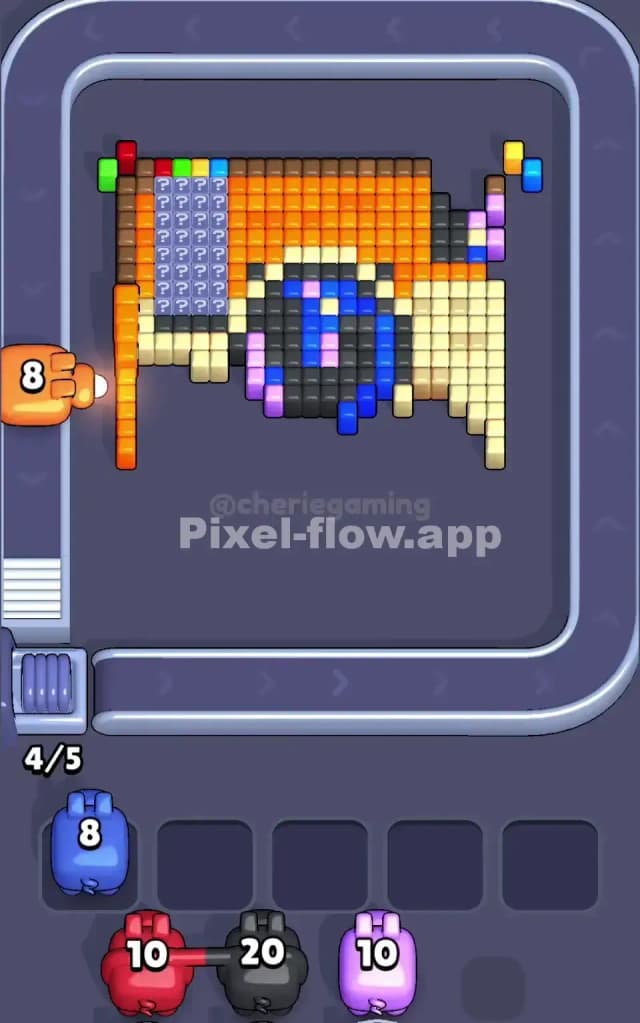
Midway through, the camera icon will look like a wreck. The black edges will be gone, leaving a jagged shape of orange and tan.
At this point, you will likely encounter the Tan/Cream Pigs. Use them to wipe out the bottom half of the camera body. This is the safest area to clear because it is solid and predictable.
Do not obsess over the Mystery Blocks in the top left yet. They are likely covering more orange or blue pixels, but they act as a distraction. Focus on the Lens. As you clear the tan blocks, the bottom half of the lens becomes exposed. You will see Blue and Purple pixels here.
You must save your Purple and Pink pigs for exactly the right moment. The lens reflection is tiny. If you fire a Purple Pig at a row that only has black or blue pixels, you waste ammo. Wait until the black ring around the lens is thinned out so you have a clear line of fire to the colored center.
Last Details You Clean Up in Pixel Flow Level 116
The end game is almost always the Lens Core and the Mystery Patch.
Once the orange sky and tan body are gone, you'll be left with the stubborn blocks in the middle. The Blue pixels in the lens are usually deep in the layer stack. You might also find that the Mystery Blocks finally reveal themselves or become accessible.
Often, the final few shots are dedicated to the small Flash detail in the top right corner (usually blue or black) and the center sparkle of the eye. Ensure you don't leave a single Black pixel hiding in the corners of the lens ring, or you'll be stuck with a Black pig and no targets, forcing a loss right at the end.