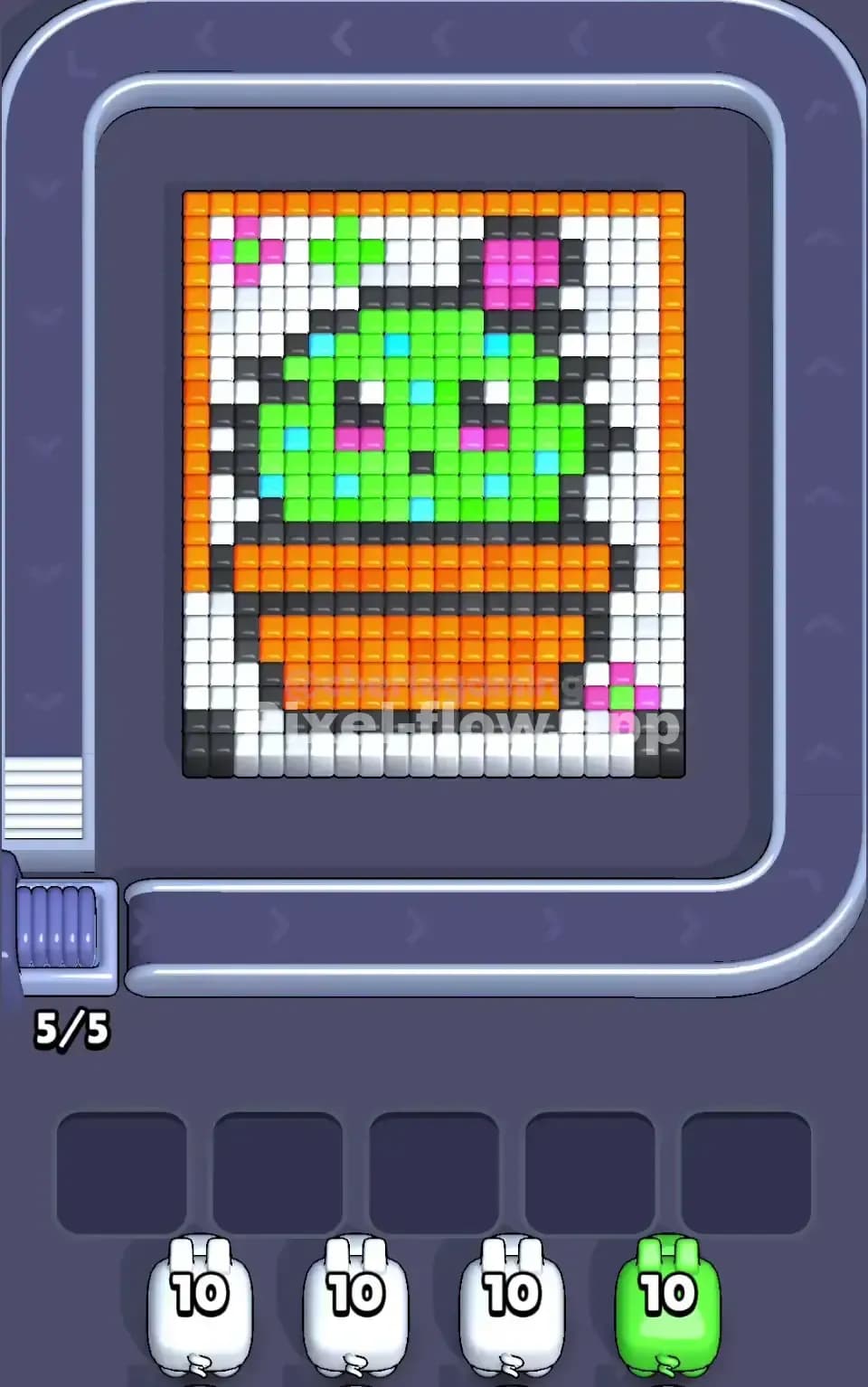
Pixel Flow Level 127 Solution | Pixel Flow 127 Walkthrough
How to beat Pixel Flow Level 127: Video solution & walkthrough. The fastest way to pass Pixel Flow 127.
Is this the wrong level layout?🤔
Pixel Flow randomizes levels for different players. Don't worry, just upload a screenshot of your board, and our AI will find the correct video instantly.



Pixel Flow Level 127 Overview
The Board Layout and Visual Challenge
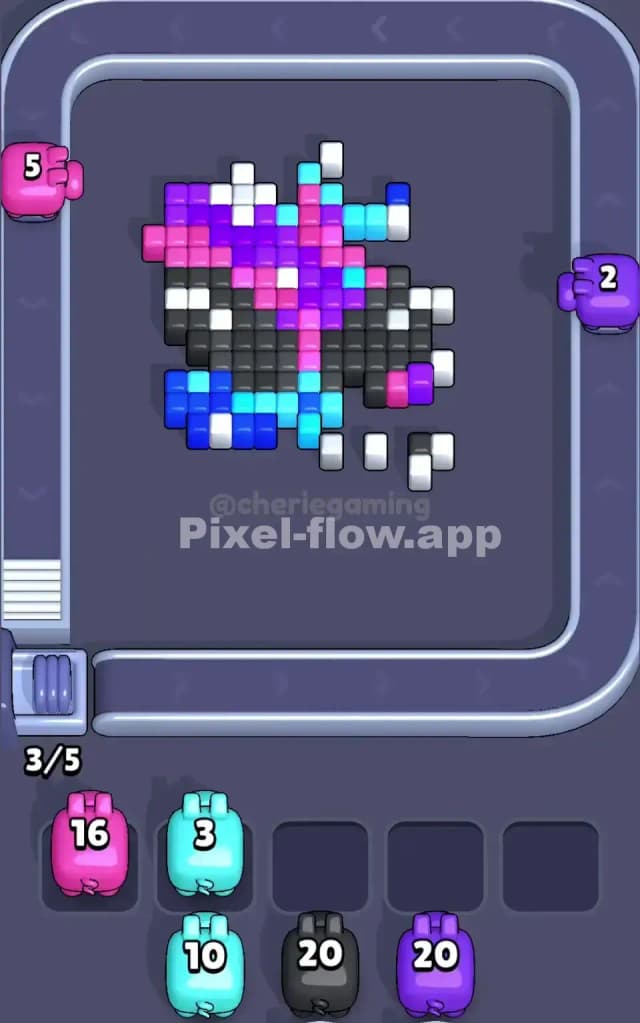
Pixel Flow Level 127 presents a colorful, multi-layered voxel puzzle that combines strategic depth with visual complexity. The board is dominated by a vibrant composition featuring cyan, magenta, blue, white, and black cubes arranged in distinct regions. You'll notice the magenta color forms a substantial base layer across the bottom portion of the board, while cyan and blue patches populate the upper and middle sections. White cubes scatter throughout as accent details, and black voxels create visual separation and structural depth. The arrangement isn't random—these layers are deliberately stacked to create a puzzle that demands you understand which colors hide beneath others and plan your pig sequence accordingly.
Win Condition and Deterministic Gameplay
Your goal in Pixel Flow Level 127 is straightforward on paper: clear every single cube from the board. However, the path to victory requires precision. You begin with three pigs in your queue (showing 40 ammo each for purple, magenta, and cyan), and you'll deploy them strategically to destroy matching-colored cubes. Every cube destroyed costs exactly one ammo from the attacking pig. The beauty of Pixel Flow Level 127 lies in its determinism—pig order never changes, ammo counts are fixed, and every cube's position is set. This means success isn't about luck; it's about understanding the sequence and executing the plan with confidence.
Why Pixel Flow Level 127 Feels So Tricky
The Magenta Bottleneck
The first major hurdle in Pixel Flow Level 127 is managing the magenta pig's 40 ammo against the massive magenta cube count dominating the bottom layer. You might think you should just fire away, but here's the trap: if you send magenta too early, you'll demolish the lower section before exposing the mid-layer colors above it. When magenta cubes vanish, blue and cyan clusters suddenly become visible and vulnerable to the wrong pig. Worse, if your magenta pig exhausts its ammo before all magenta targets are gone, it'll drop into a waiting slot and sit there uselessly while you're forced to deploy other pigs. This creates a domino effect where your waiting buffer fills up dangerously fast, and one miscalculation locks you into failure.
Awkward Color Pockets and Exposure Timing
Pixel Flow Level 127 hides sneaky color patches in unexpected places. You'll find magenta cubes scattered through the upper regions, not just at the bottom. Similarly, cyan and blue are interspersed in ways that make it tempting to clear them too early. The real challenge is that some of these pockets only become fully visible once neighboring colors disappear. If you fire a pig at a partially exposed color zone and miss the full picture of what's underneath, you might create orphaned cubes that no remaining pig can reach. I found this out the hard way—I sent cyan too aggressively on my first attempt and left a blue cluster floating in mid-air with no pig ammo remaining to finish it.
The Waiting Slot Pressure
Here's where Pixel Flow Level 127 gets genuinely brutal: the five waiting slots are your buffer, but they're also your timer. If you fill all five slots with pigs that have ammo but no valid targets to shoot, you're locked into an immediate loss. I watched myself get paralyzed when four pigs were waiting, each with leftover ammo, and the exposed board had no matching cubes within reach. The fifth pig arrived and there was nowhere to put it—game over. This mechanic forces you to think three or four pigs ahead and ensures you never park a pig that can still attack if there's nowhere for it to land.
Step-by-Step Strategy to Clear Pixel Flow Level 127
Opening: Establishing Board Control
Your opening move in Pixel Flow Level 127 should target the purple pig first. You've got 40 ammo, and scanning the board reveals scattered purple cubes concentrated in the mid-upper area. Fire the purple pig and systematically clear these targets—you should be able to eliminate most purple cubes without overshooting. The reason you start here is strategic: purple sits in a position where clearing it doesn't immediately expose a avalanche of other colors competing for waiting slots. After purple completes its run, it should drop into the first waiting slot, satisfied.
Next, hold back and assess the board. Which waiting slots are free? Ideally, you want at least three slots open before deploying your second pig. The magenta pig is tempting because it has so much ammo, but resist the urge. Instead, send cyan first. Cyan has 40 ammo and appears in multiple layers across the board. Targeting cyan early lets you peel back upper sections and reveal what's actually underneath without committing magenta prematurely. As cyan destroys its targets, new cube positions become exposed layer by layer—this is where the puzzle's true structure reveals itself.
Mid-Game: Layering and Ammo Efficiency
This is where Pixel Flow Level 127 separates careful players from reckless ones. After cyan finishes and parks itself, you're looking at a partially cleared board. Count the remaining colors. You should still have magenta waiting in the queue with its full 40 ammo. Before you deploy magenta, trace which magenta cubes remain visible and how many you can actually see. If you spot 35 or fewer, magenta's going to overload and either get stuck or waste ammo. In that case, consider whether any other pig's remaining ammo could help.
Here's a critical insight for Pixel Flow Level 127: sometimes you need to intentionally park a pig mid-run even if it still has ammo. How? Send a pig to attack, let it fire until it's at 5–10 ammo remaining, then immediately queue up the next pig. When the first pig runs out of targets, it drops into a waiting slot. When the second pig deploys, it might expose fresh cubes for the first pig to destroy (if you send it back out later). This layered approach maximizes efficiency and prevents the waiting buffer from gridlocking.
Once you've cleared cyan's accessible targets and exposed deeper colors, deploy magenta. Fire methodically, watching the board transform as magenta cubes vanish. As the lower layer clears, you'll see blue and white cubes emerging underneath. If magenta's ammo is running high and all visible magenta targets are gone, let magenta drop into a waiting slot. Don't waste ammo shooting into empty space—that's how players fail Pixel Flow Level 127.
End-Game: The Final Push
You're in the home stretch of Pixel Flow Level 127 when only blue and white cubes remain. Blue pigs typically arrive later in the queue, so by now you're working with whatever blue ammo is available. Count every blue cube on the board—your remaining pigs' ammo must equal or exceed this number. If you're short, you've already lost; if you're matching or over, you're golden.
Deploy blue confidently. White cubes are often the final layer, and they'll appear as blue cubes disappear. Once blue is exhausted and drops into a waiting slot, your last pig (if any remains in the queue) handles white. With careful play throughout Pixel Flow Level 127, you should end with zero cubes remaining and most or all waiting slots empty.
The Logic Behind This Pixel Flow Level 127 Plan
Exploiting Determinism and Queue Knowledge
The genius of Pixel Flow Level 127 is that it rewards players who view the level as a deterministic puzzle, not a reactive game. You know exactly which pigs are coming, in what order, and with how much ammo. Rather than playing seat-of-your-pants and hoping things work out, you count cubes by color, trace which colors hide beneath others, and sequence pigs so their ammo totals match the cube counts. Purple opens weak positions, cyan exposes layers, and magenta demolishes the foundation. This isn't improvisation—it's chess.
The waiting slots are your tactical resource. Treat each one as precious real estate. If a pig has ammo but nowhere to shoot, it's a liability occupying space. By contrast, a fully spent pig is a satisfied tenant. The strategy above ensures pigs spend their ammo efficiently and park cleanly, keeping the buffer available for pigs that actually need space.
Staying Calm and Planning Ahead
Pixel Flow Level 127 can feel hectic when pigs are queuing and the board's shifting constantly. The antidote is planning two or three pigs ahead. Before you send a pig out, ask yourself: "Where will this pig sit when it's done? What will the board look like? Will the next pig have targets?" This forward-thinking prevents the catastrophic end-game jams that feel so unfair but are actually predictable failures.
Watch your ammo counts like a hawk. I've failed Pixel Flow Level 127 multiple times because I deployed magenta without recounting the visible magenta cubes, only to watch 15 ammo vanish into nothing. A ten-second recount prevents that disaster. Similarly, keep an eye on the waiting slots—if you ever have four pigs parked with ammo remaining, hit pause and reconsider your next move. You're seconds away from a loss, and sometimes backing off is the right call.
Pixel Flow Level 127 rewards patience, precision, and a clear mental model of the puzzle's structure. Master these principles, and you'll clear this level with the confidence of a true puzzle solver.