Pixel Flow Level 133 Solution Walkthrough | Pixel Flow 133
How to solve Pixel Flow level 133? Get instant solution for Pixel Flow 133 with our step by step solution & video walkthrough.


Pixel Flow Level 133 Overview
The Board at a Glance
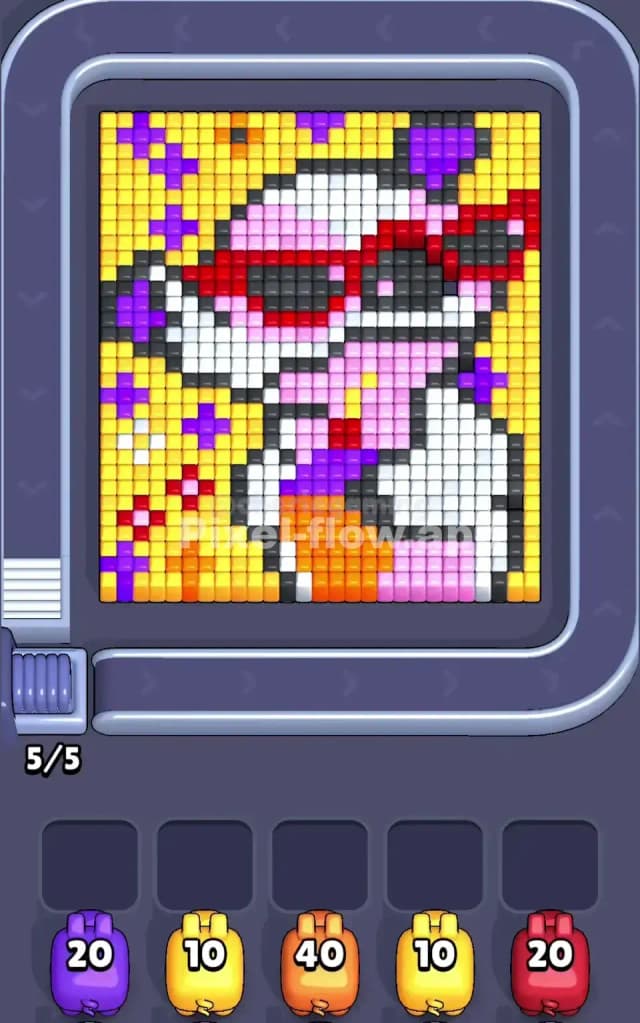
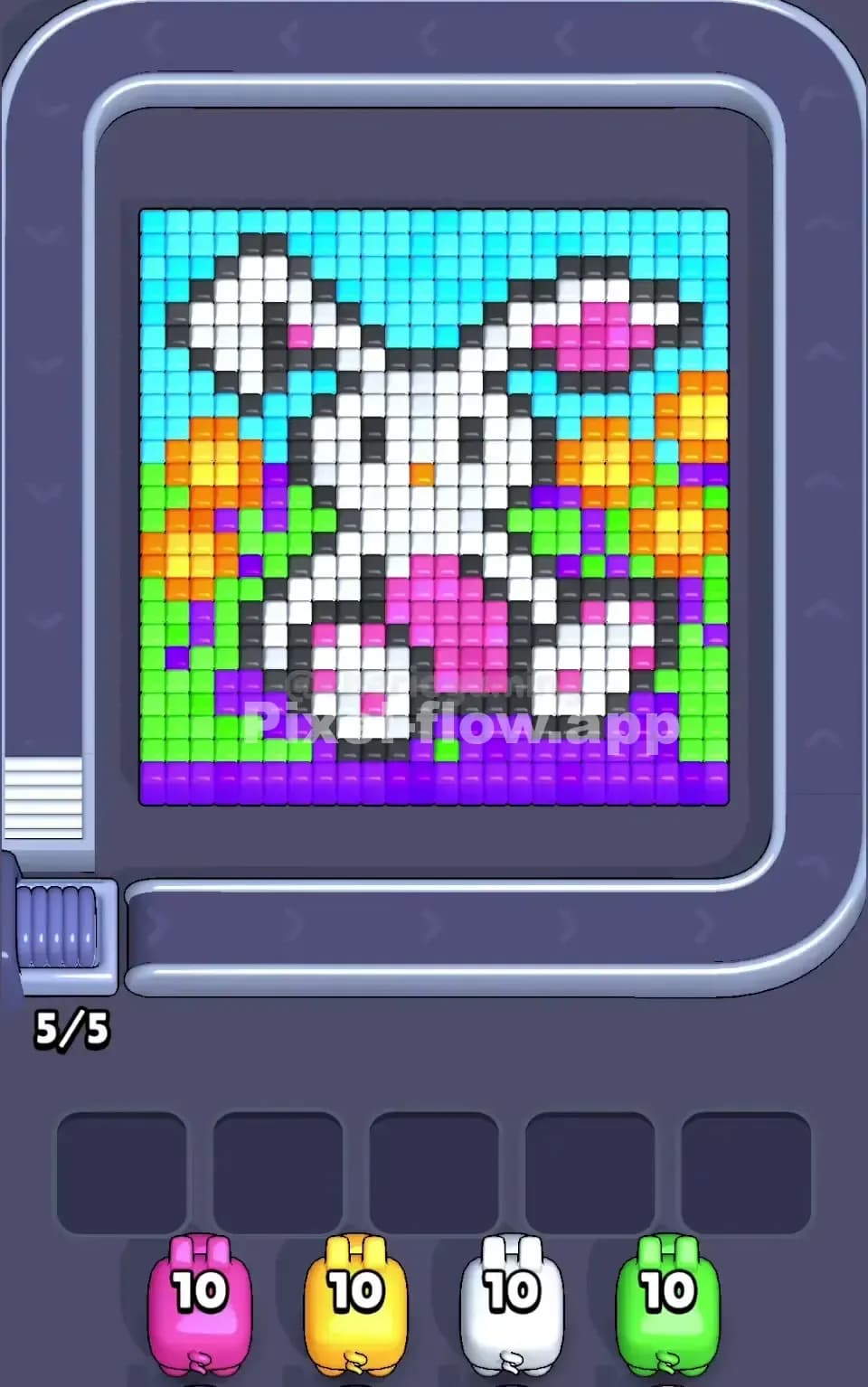
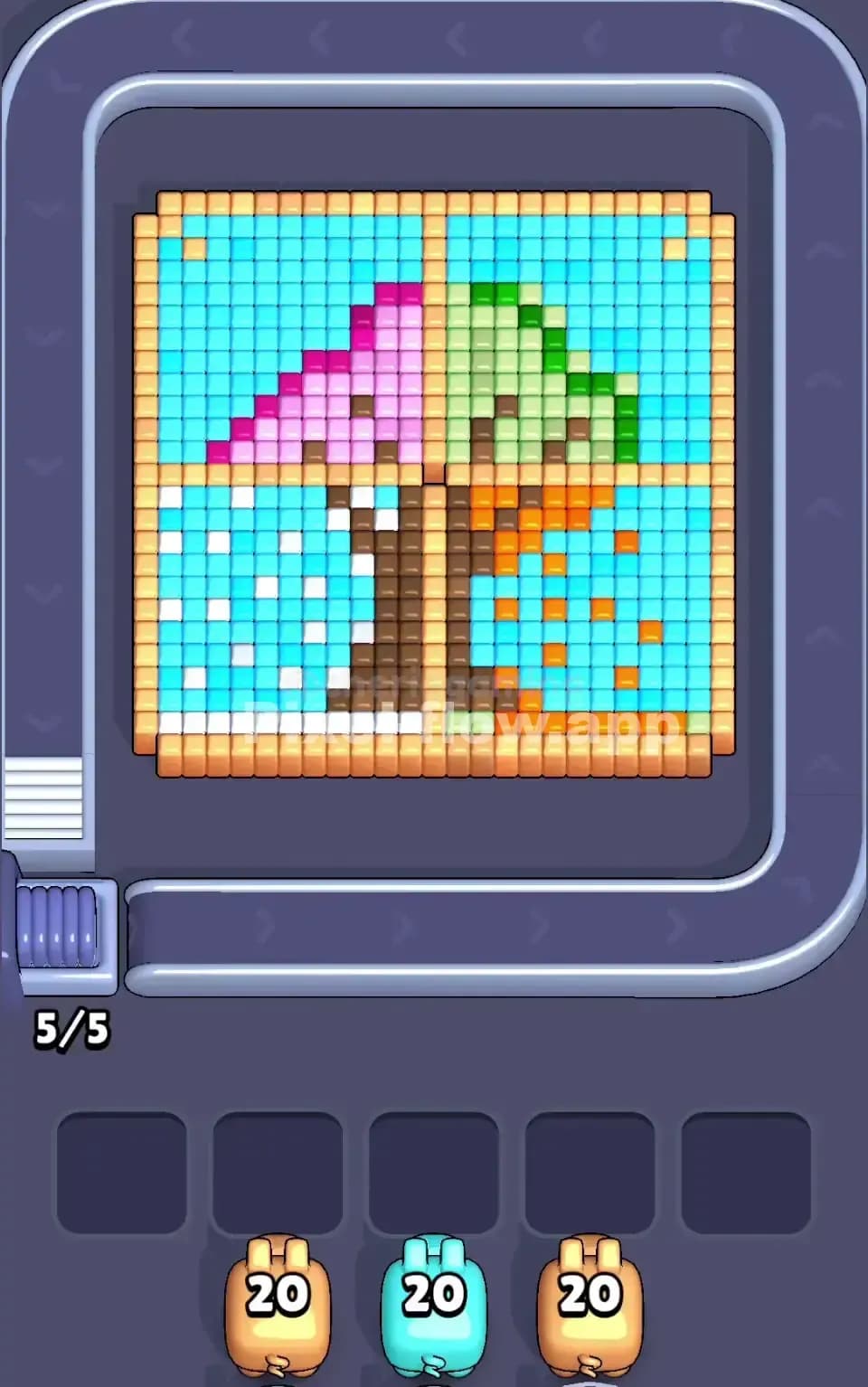
Pixel Flow Level 133 presents a vibrant, intricate pixel art composition dominated by a complex character or creature rendered across multiple color layers. The board is absolutely packed with cubes in nearly every visible space, creating a dense visual puzzle. Yellow forms the overwhelming majority of the surface layer, creating a bright, almost saturated border around the entire puzzle. Beneath and around the yellow, you'll find substantial patches of white, pink, red, purple, gray, and orange cubes, all woven together in a detailed pattern. The color distribution is uneven—some hues appear clustered in specific regions, while others are scattered throughout, which means you'll need precise sequencing to avoid trapping pigs with leftover ammo.
The five pigs waiting at the bottom tell you everything about your starting resources: purple with 20 ammo, yellow with 10, orange with 40, yellow again with 10, and red with 20. That's 100 total ammo shots to clear every single cube on the board, and every move counts. Pixel Flow Level 133 demands that you respect this ammo budget and understand that pig order is completely deterministic—the queue never changes, so your job is to find the sequence that clears the board without jamming.
The Win Condition and Deterministic Nature
To beat Pixel Flow Level 133, you must eliminate every voxel cube on the board. Each pig shoots only cubes matching its color, and each shot consumes one ammo. If a pig runs out of targets before spending all its ammo, it slides into one of the five waiting slots, potentially blocking future pigs and leading to failure. Your win comes when the board is completely clear and all pigs have either fired all their ammo or are sitting contentedly in the buffer without blocking progress. Because the pig queue is fixed—purple, yellow, orange, yellow, red—you're solving a puzzle with known constraints, not gambling on random outcomes. This is why Pixel Flow Level 133 feels so satisfying once you crack it: you've outsmarted a deterministic system through planning and foresight.
Why Pixel Flow Level 133 Feels So Tricky
The Yellow Bottleneck
The biggest threat to your run on Pixel Flow Level 133 is the sheer volume of yellow cubes surrounding the puzzle. You've got two yellow pigs with 10 ammo each, totaling only 20 shots, yet yellow dominates the outer perimeter and likely weaves through the interior. This creates an immediate tension: those two yellow pigs cannot possibly clear all the yellow voxels in one pass, which means you'll be relying on other colors to expose hidden yellow cubes as the puzzle layers open up. If you release your yellow pigs too early and they park themselves in the buffer after 10 shots each, you've now got two pigs taking up two slots, leaving only three slots for the remaining colors. This is a recipe for disaster on Pixel Flow Level 133 because you'll quickly jam. The strategy, then, is to delay the yellow pigs and let other colors work first, gradually exposing the inner layers so that when yellow finally fires, it has fresh targets waiting.
The Hidden Color Patches and Ammo Mismatch
Another nasty surprise in Pixel Flow Level 133 is the way certain colors cluster in awkward spots, buried behind other layers. That orange pig with 40 ammo is your heaviest hitter, but if orange cubes are trapped deep within the puzzle, you can't reach them until white, pink, or gray blocks fall away first. Similarly, the purple pig starts with 20 ammo, and purple appears scattered across the upper left and lower sections—but again, some purple might be locked behind other colors, meaning purple fires first but can't finish the job cleanly. The white cubes are particularly tricky: they seem plentiful in the center, but you have no white pig, so you're counting on other colors to clear them as collateral. This ammo mismatch between pig supply and actual on-board cube distribution is what makes Pixel Flow Level 133 feel like a logic puzzle rather than a simple shooter.
The "Click" Moment
Honestly, when I first looked at Pixel Flow Level 133, I felt overwhelmed. The board is so colorful and chaotic that it's tempting to just fire the first pig and see what happens. But that's a trap—you'll fill your waiting slots with stuck pigs and waste ammo on targets that aren't even visible yet. The click came for me when I realized I had to work backwards from the end state: if I want to clear Pixel Flow Level 133 completely, which colors need to go last? Red is probably the last layer or deeply embedded, so red pig should fire near the end. Orange has the most ammo, so it should have plenty of targets waiting. By planning the final moves first and then sequencing backwards, the optimal path for Pixel Flow Level 133 suddenly became visible. That's when the frustration turned into excitement—I went from "this is impossible" to "oh, I see exactly what to do."
Step-by-Step Strategy to Clear Pixel Flow Level 133
Opening: Start with Purple and Expose Inner Layers
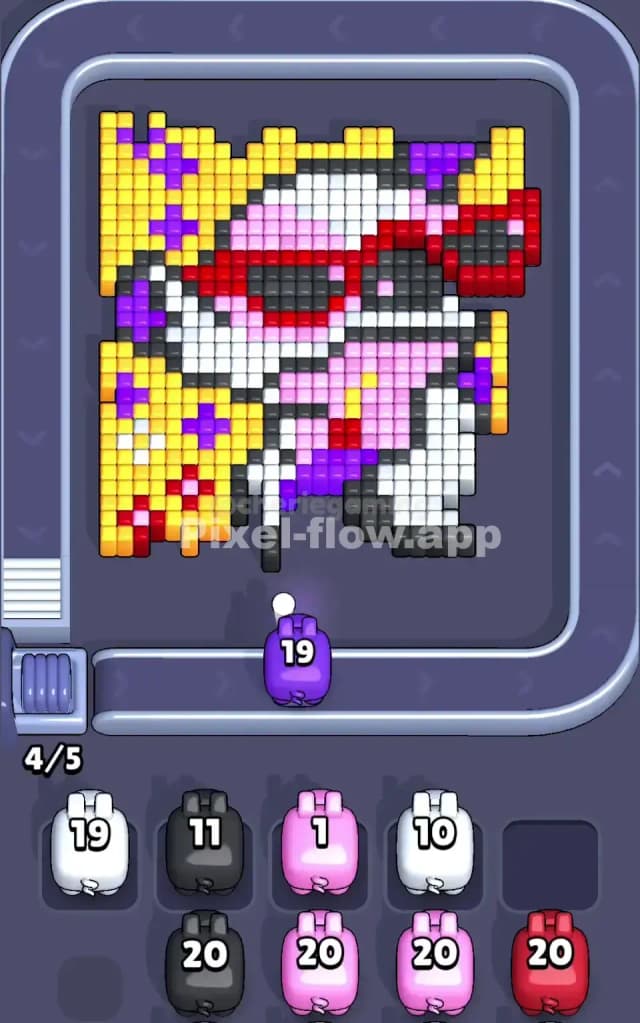
Your first move in Pixel Flow Level 133 should be to release the purple pig with 20 ammo. Purple appears in the upper left corner and scattered along the lower edge, giving the pig a decent number of targets right away. As the purple pig fires, it'll expose previously hidden cubes and begin peeling back the outer layer of the puzzle. The key here is to watch carefully: once purple hits around 8–12 shots remaining, check whether fresh targets are still appearing or if the purple pig is about to run dry. If purple is about to jam (no more purple cubes visible), let it park in the waiting slot and move on. This leaves you with four free slots—plenty of breathing room for Pixel Flow Level 133.
Don't try to clear all purple on the first pass. Instead, view that first purple pig as a peeling tool: it removes surface clutter and exposes the next layer beneath. This is the mindset that makes Pixel Flow Level 133 solvable. You're not trying to finish any single color; you're strategically revealing the board's internal structure so that future pigs inherit a board rich with fresh targets.
Mid-Game: Sequence Yellow and Orange to Build Momentum
Once purple has sat down in a waiting slot, your first yellow pig (10 ammo) should fire. Yellow is so plentiful on Pixel Flow Level 133 that this pig will have no trouble finding targets, but again, it'll only spend 10 ammo and then park itself. That's slot two occupied. Don't panic—this is intentional. Yellow's job is to continue the peeling process, removing the bright border and opening up the red, white, and pink layers underneath.
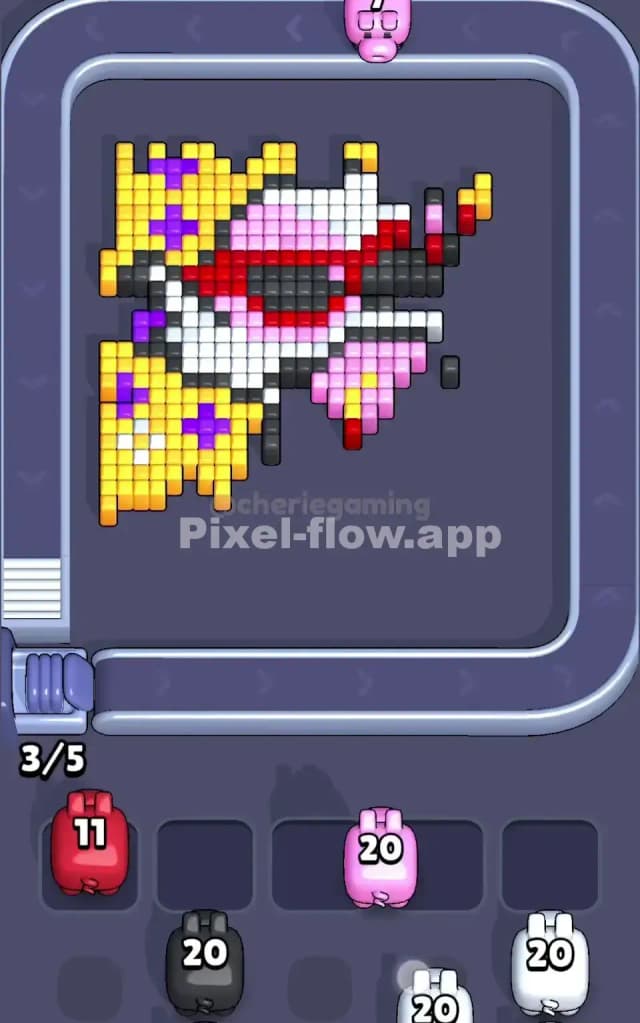
Now bring out the orange pig with 40 ammo. This is where Pixel Flow Level 133 starts to reward planning. Orange is abundant, and with 40 ammo, this pig is going to do serious work. Watch as it blasts through its targets—orange cubes should be firing continuously, filling the board with satisfying destruction. As orange depletes, the white and pink layers will become increasingly exposed. You're building momentum, and your waiting slots are still manageable (two pigs parked, three free).
Once the second yellow pig fires (another 10 ammo), it'll have more targets available than the first yellow because the board is now more exposed. Try to engineer situations where the second yellow pig can spend most or all of its ammo before parking. If it finishes its 10 shots and there are still yellow cubes visible, call that a success for Pixel Flow Level 133—you've made progress without jamming.
End-Game: Red Pig Finishes What Orange and Others Started
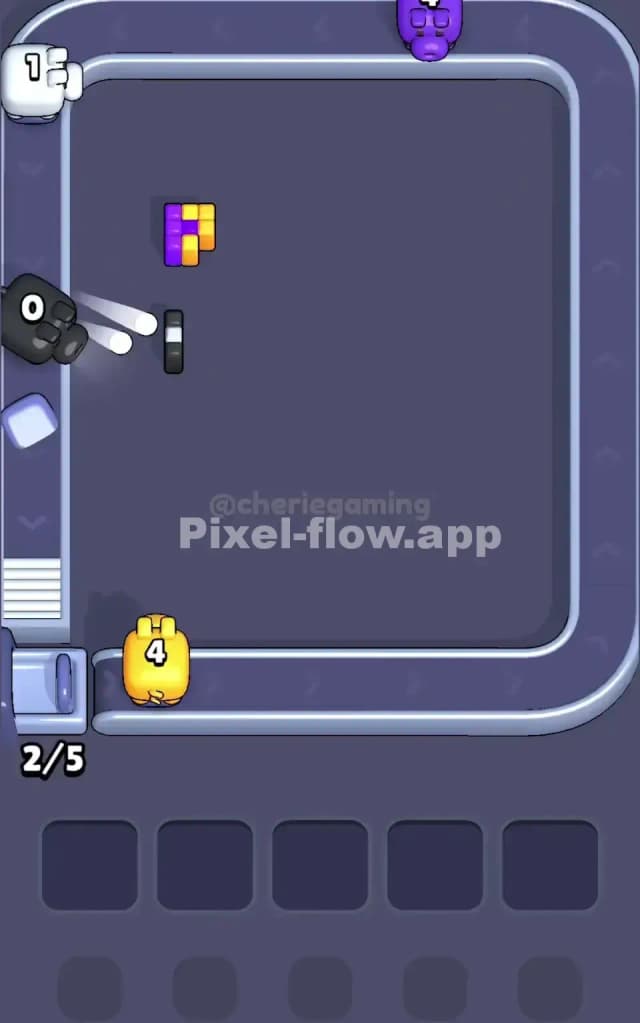
By the time you're down to the red pig with 20 ammo, Pixel Flow Level 133 should be nearly clear. Red cubes are scattered throughout the board, especially in the central and lower regions, so red won't run out of targets easily. Fire the red pig last, and it should sweep up the remaining red voxels while white, pink, and gray cubes fall away around it. If you've sequenced correctly, the red pig will exhaust its ammo perfectly, or very close to it, leaving you with a completely empty board.
The final check is ensuring all five waiting slots are not overfilled with stuck pigs. Ideally, when the red pig fires its last shot and the final cube disappears, you've won Pixel Flow Level 133 cleanly—no buffer overflow, no wasted ammo, just perfect execution.
The Logic Behind This Pixel Flow Level 133 Plan
Respecting Determinism and Pig Order
The reason this strategy works for Pixel Flow Level 133 is that it treats the pig queue as a fixed constraint, not a variable. Because purple, yellow, orange, yellow, red always arrive in that order, you can predict which colors will be available at each stage of the puzzle. Instead of reacting to what's visible right now, you're planning what will be visible after the previous pig fires. This forward-thinking mindset is what separates a successful Pixel Flow Level 133 run from a failed one. You're not hoping the board cooperates; you're ensuring it does by sequencing pigs strategically.
Counting Ammo and Watching the Buffer
Success on Pixel Flow Level 133 comes down to two habits: count your ammo constantly, and never let the buffer fill beyond three pigs if you can help it. Every time a pig fires, glance at the remaining ammo counter. If a pig is about to run dry and you see no fresh targets appearing, let it park. Don't force it to fire uselessly. Similarly, keep a mental tally of waiting slots—each filled slot is a risk, because a jamming fifth pig means instant failure. On Pixel Flow Level 133, staying calm under this pressure is the real skill. You're juggling five independent pigs, 100 total ammo, a dense voxel board, and a five-slot buffer. Breathe, count, plan two or three pigs ahead, and trust the math. If your arithmetic is sound and you're following the layering logic, Pixel Flow Level 133 will fall.
Pixel Flow Level 133 is a masterclass in puzzle design wrapped in bright, colorful voxels. It's tough, but it's fair—and once you understand the mechanics, the path to victory becomes clear. Good luck, and enjoy clearing this one!