Pixel Flow Level 151 Solution | Pixel Flow 151 Walkthrough
How to beat Pixel Flow Level 151: Video solution & walkthrough. The fastest way to pass Pixel Flow 151.
Is this the wrong level layout?🤔
Pixel Flow randomizes levels for different players. Don't worry, just upload a screenshot of your board, and our AI will find the correct video instantly.

Pixel Flow Level 151 Walkthrough
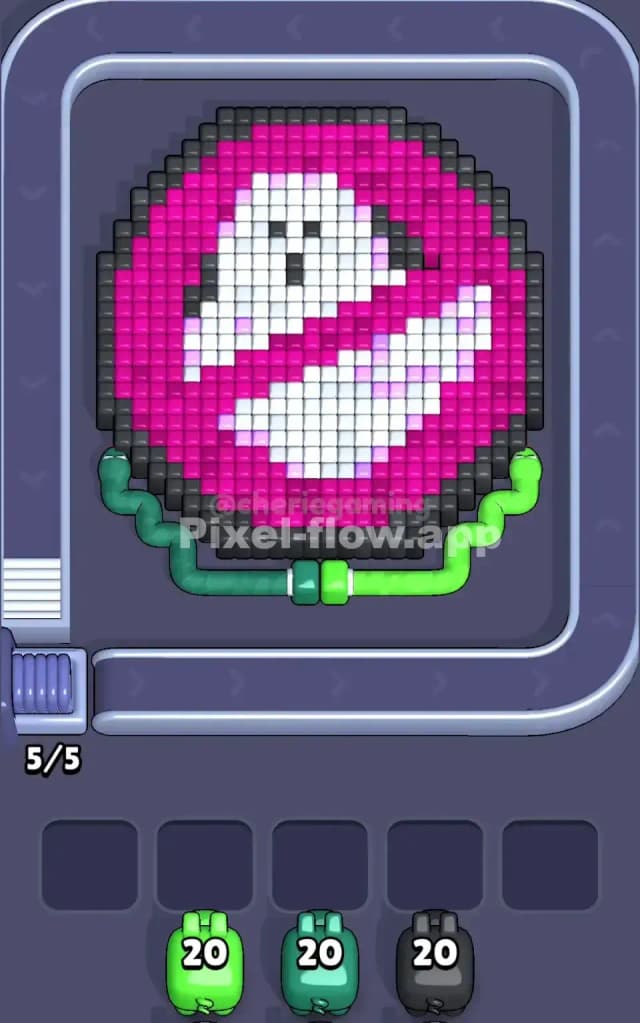
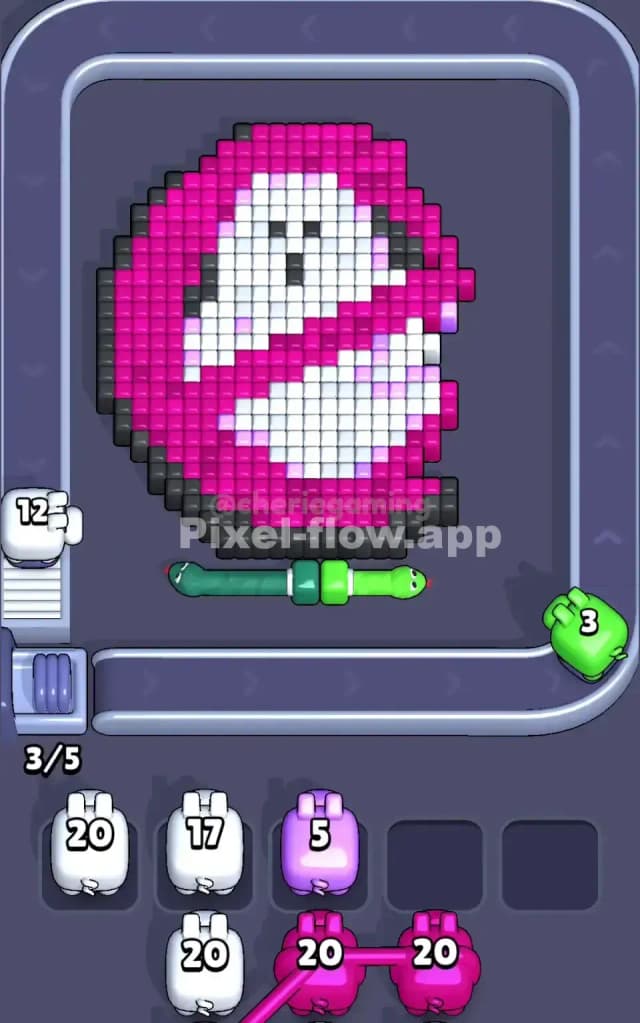
This level features a very recognizable pop-culture icon: a white ghost trapped inside a red prohibition circle. It’s a "No Ghosts" sign. While the design is fun, the layout is deceptive. The board is blocked at the very bottom by what looks like plumbing or hoses, which shields the lower pixels from your pigs.
You need to clear these obstructions before you can effectively attack the main art. Because of this layered defense and the sheer volume of red pixels required to clear the circle, I judge Pixel Flow 151 to be very hard. You can easily choke your waiting slots if you ignore the bottom pipes.
Pixel Flow Level 151 Overview
The main attraction here is the spooky white ghost with a surprised expression, overlaid by a massive red "forbidden" slash and circle. The entire sign is bordered by a thick black outline.
However, the most critical visual element isn't the ghost; it's the green machinery at the bottom.
- The Obstruction: Two wiggly green pipes snake out from the left and right sides, meeting in the middle.
- The Trap: These pipes are not just one color. They are mostly Light Green, but they are joined by a Teal/Dark Green connector in the absolute center.
- The Shielding: Until these pipes are gone, your pigs cannot hit the bottom 20% of the red circle or the black outline. This creates a "blind spot" where ammo goes to waste if you aren't careful.
Step by step solution walkthrough for Pixel Flow Level 151
First Color Zone to Erase in Pixel Flow Level 151
Focus immediately on the plumbing at the bottom. You will likely see Light Green and Teal pigs in your early rotation. Use them instantly.
Do not try to chip away at the top of the black outline yet. Why? Because the green hoses are a physical wall. If you send a Red or Black pig out while the hoses are still there, they will only be able to hit the top half of the board. Once they drift to the bottom, their line of sight is blocked by the green pixels, and they will drop into your waiting slots with wasted ammo.
- Deploy the Light Green Pig: This clears the wiggly left and right sections of the hose.
- Deploy the Teal Pig: This targets the dark connector clamp in the bottom center. Once these two are gone, the bottom of the board is naked. Now you can actually play the game.
How to pass Pixel Flow Level 151 without power ups or boosters
With the pipes gone, you are left with a massive three-layer sandwich: Black Outline, Red Circle, White Ghost.
Your priority shifts to the Black outline. The black pixels form a protective shell around the red circle. If you try to force Red pigs through now, they will struggle to find targets on the edges. Send the Black pigs to strip away the outer ring. This maximizes the surface area for the next color.
Now comes the grind. The Red (Magenta) layer is thick. It covers the ghost and forms the slash.
- The Red Trap: The red circle is huge. A single Red pig often isn't enough to clear a whole section. You might need two or three in a row.
- Slot Management: If you see White pigs clogging your queue, let them sit. Do not send them out yet. The White ghost is the deepest layer. If you send a White pig now, it will have zero targets and will instantly clog a waiting slot. Only send Red pigs until the "slash" across the ghost's face is clearly defined.
Last Details You Clean Up in Pixel Flow Level 151
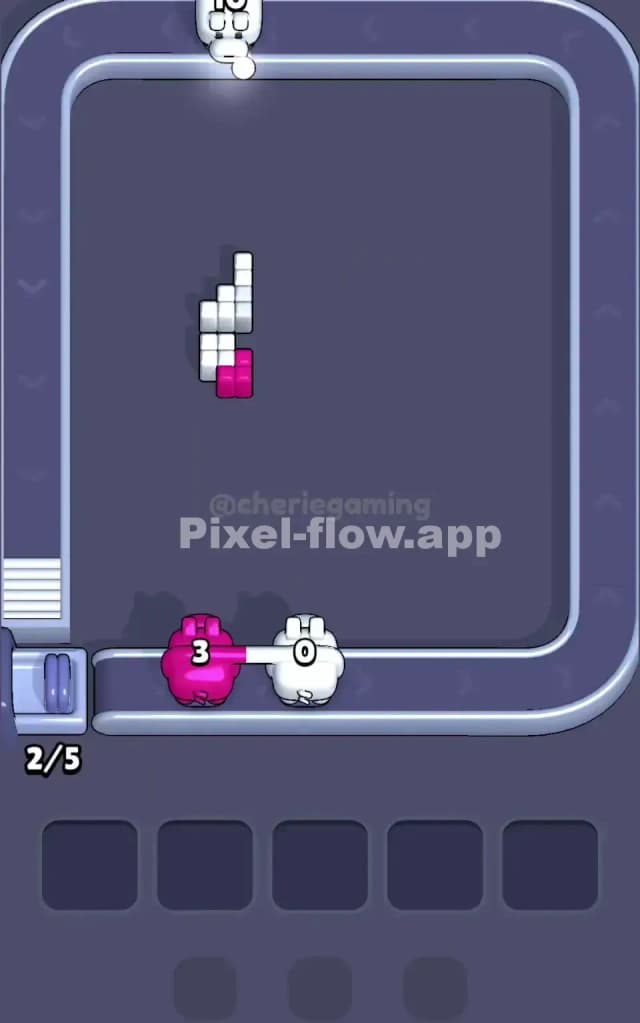
At the end of Pixel Flow Level 151, the board usually looks like a mess of floating white pixels. Once the Red circle is mostly dissolved, the White ghost is exposed.
Be careful with the eyes and mouth. These are often black pixels buried deep inside the white layer. Sometimes a stray Black pig is needed right at the end to finish the facial features. Don't panic if a Black pig appears late in the run; it's likely for the ghost's eyes, not the outer rim. Clear the White body, pop the eyes, and the level is yours.