Pixel Flow Level 155 Solution Walkthrough | Pixel Flow 155
How to solve Pixel Flow level 155? Get instant solution for Pixel Flow 155 with our step by step solution & video walkthrough.


Pixel Flow Level 155 Overview
The Board Layout and Dominant Colors
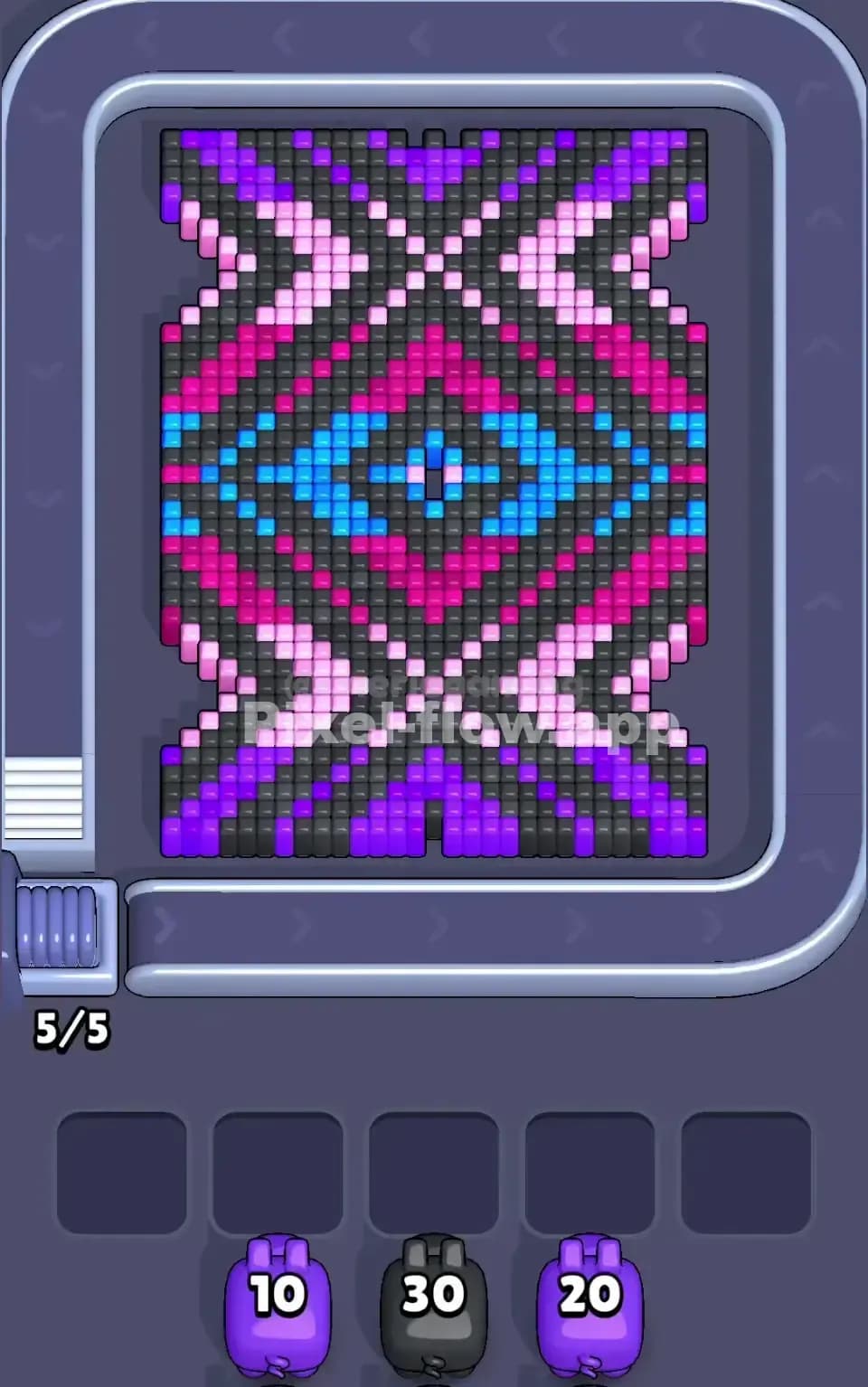
Pixel Flow Level 155 presents a complex, multi-layered voxel image that resembles a retro arcade or digital scene. The board is dominated by cream and tan-colored cubes forming the bulk of the visible structure, with distinct horizontal bands of darker gray cubes creating visual compartments. You'll immediately notice a striking pixel art face or character rendered in the upper portion, complete with pink accent cubes for eyes and a detailed yellow and brown color scheme. Below that sits a dense middle section packed with yellow cubes, then a vibrant red and green striped pattern in the lower half that contrasts sharply against the lighter tones above. At the very bottom, you can see several teal-colored curved shapes that anchor the entire composition. The board layout feels deliberately crowded, which is a key part of what makes Pixel Flow Level 155 such a demanding puzzle.
Win Condition and Deterministic Flow
Your objective in Pixel Flow Level 155 is straightforward: clear every single voxel cube from the board by strategically deploying color-coded pigs in the right sequence. Each pig fires voxels of its matching color and possesses a fixed ammo count—you start with three pigs carrying 20 ammo each (brown, green, and red based on the queue). The puzzle is entirely deterministic, meaning the pig order, ammo values, and cube positions never change between attempts. This predictability is your greatest asset; once you understand the mechanics and sequence, you can execute a flawless run. The challenge lies in figuring out that perfect sequence before your waiting slots fill up with stuck pigs.
Why Pixel Flow Level 155 Feels So Tricky
The Primary Bottleneck: Cream and Tan Cubes
The biggest threat to your success in Pixel Flow Level 155 is the sheer volume of cream and tan-colored cubes dominating the board. At first glance, you might not see any pigs with tan or cream ammo in your queue, which immediately raises a red flag. These neutral-colored cubes act as a massive roadblock; if you can't eliminate them efficiently or if they're hiding a lower layer you need to access, you'll quickly find yourself with pigs that have nowhere to shoot. The tan and cream colors occupy both the upper pixel art section and the middle zone, creating a thick buffer between your visible targets and the deeper colored sections below. You'll need to be extremely careful not to deploy pigs in an order that leaves you with full ammo and no valid targets—that's a one-way ticket to a jammed waiting queue.
The Awkward Pink and Gray Separators
Pixel Flow Level 155 includes small but frustrating clusters of pink cubes scattered throughout the design, particularly in and around the facial features. These pink accents are genuine cubes you'll need to remove, but they're isolated and don't appear in large numbers. The gray horizontal bands cutting through the middle of the board function similarly; they're barriers that separate regions and force you to think in layers rather than horizontally. If you clear colors in the wrong order, you might expose pink or gray cubes that your current pig can't target, forcing it into the waiting slots prematurely. This layering trick is what makes Pixel Flow Level 155 genuinely challenging—it's not just about ammo counts; it's about understanding which cubes hide which colors beneath.
The Red-Green Stripe Pattern and Ammo Mismatch
The lower third of Pixel Flow Level 155 features an intricate alternating red and green striped pattern. While you do have red and green pigs with 20 ammo each, the stripe pattern is deceptively complex. The colors interweave in ways that might make it tempting to alternate between red and green pigs, but doing so can quickly exhaust one pig's ammo while the other still has targets. You could easily find yourself in a situation where you've fired 18 red shots but only 12 green shots, leaving a green pig with 8 ammo remaining and no green cubes visible—it drops into a waiting slot, taking up precious space. The visual density of this stripe section makes it hard to count exactly how many cubes of each color exist, which is why many players struggle with Pixel Flow Level 155 on their first attempt.
When the Level Clicked for Me
I'll be honest: Pixel Flow Level 155 frustrated me initially. I kept deploying pigs based on instinct, clearing the most obvious colors first, and inevitably ended up with a waiting queue full of partially-spent pigs. The breakthrough came when I stopped thinking about "clearing colors I see" and started thinking about "exposing layers strategically." Once I realized that the cream and tan cubes were there to be worked around rather than solved first, and that I needed to plan five pigs ahead instead of one, the puzzle transformed from maddening to actually quite elegant. That shift in mindset—from reactive to proactive—is what separates a failed run from a successful clear of Pixel Flow Level 155.
Step-by-Step Strategy to Clear Pixel Flow Level 155
Opening: Securing Your Waiting Slots
Here's how I recommend starting Pixel Flow Level 155: don't deploy your first pig immediately unless you're absolutely certain about your strategy. Take a moment to trace through the visible colors and count rough ammo requirements. Your opening move should target green cubes, specifically the teal shapes at the bottom and any visible green sections in the striped pattern. Why green first? Because green is abundant and clearly visible, which means your green pig can spend a significant chunk of its 20 ammo immediately without risk of getting stuck. Deploy the green pig and let it fire roughly 10–12 times into the obvious green targets at the bottom. This accomplishes two things: it clears a visible section without filling your waiting slots, and it begins exposing whatever lies beneath that lower section. Keep at least four waiting slots completely empty after this first move. The moment you feel pressure on slot availability, you've moved too fast.
Mid-Game: Sequencing and Layer Exposure
Once your green pig has spent a reasonable amount of ammo, it's time to think strategically about what's now visible and what's still hidden. Your next pig should typically be brown, targeting the brown cubes in the upper pixel art section. The brown pixels are concentrated in the face/character area, and attacking them will clear a defined region without scattering your fire. Aim for roughly 8–12 brown shots to make meaningful progress. As you work through Pixel Flow Level 155, you'll start to see which colors are hiding under the cream and tan buffer. This is crucial: watch carefully for hints of colors peeking through gaps. Don't waste ammo on colors that aren't yet fully exposed. After green and brown, you should have a much clearer picture of what the board actually contains. At this point, deploy red carefully into the stripe pattern. Don't try to clear all red in one go; instead, fire 6–8 shots to begin breaking up the alternating pattern. Red often reveals more complexity underneath, so be patient. Park your partially-spent red pig safely and move to your next available color before committing it fully.
End-Game: The Clean Finish
The final phase of Pixel Flow Level 155 requires absolute precision. By now, you should have only a few pig deployments left, and those last pigs should be specifically targeted at whatever stubborn colors remain. Return to your partially-spent green and red pigs once their respective colors are fully visible and concentrated. Burn off the remaining ammo cleanly, ensuring that each pig exits its turn with zero ammo left (or close to it). The pink and gray cubes should be addressed toward the very end when you can see their exact count and group them efficiently. Your goal is to reach the final pig with your waiting queue as empty as possible and the board nearly cleared. The last pig should be able to finish the job without any tricky color interactions. If you've planned correctly through Pixel Flow Level 155, that final pig will fire its last shot, the board clears completely, and you'll unlock the next level.
The Logic Behind This Pixel Flow Level 155 Plan
Exploiting Pig Order and Ammo Efficiency
The strategy for Pixel Flow Level 155 works because it respects the game's core mechanic: pigs fire in a fixed order and stop when they run out of ammo or targets. By sequencing pigs to hit abundant, clearly visible colors first, you drain ammo efficiently and avoid the trap of having a pig with plenty of shots but nowhere to aim. The brown pig's upper-section focus and the green pig's lower-section focus create natural geographic boundaries, meaning they're unlikely to conflict or duplicate efforts. When you reach the red pig, the board has already been partially deconstructed, revealing new color pockets that the red pig can then target. This layered approach prevents the catastrophic scenario where all three pigs end up in your waiting queue simultaneously, each holding 15+ unspent ammo. The deterministic nature of Pixel Flow Level 155 means you can actually calculate this out: knowing that green has 20 shots and red has 20 shots, you can estimate how many green and red cubes exist and plan accordingly.
Staying Calm and Counting Ahead
The psychological challenge of Pixel Flow Level 155 is managing the pressure of watching your waiting slots fill up. Here's my advice: before each pig deploys, count how many waiting slots are occupied and ask yourself if you can afford to send this pig without guaranteeing it will find targets. If you're at three occupied slots and uncertain, wait and reconsider. Use the visual cues to estimate ammo requirements; a dense cluster of one color should consume roughly 5–10 ammo, while scattered cubes might only take 2–3. Watch the pig queue two positions ahead so you're never surprised by which color is coming next. The calmness comes from realizing that Pixel Flow Level 155 rewards patience and planning over speed and aggression. There's no timer, no move limit (beyond ammo), so taking 30 seconds to trace through the board and plan your next three pig deployments is never wasted time. In fact, that deliberation is precisely what separates successful runs of Pixel Flow Level 155 from frustrating failures. Trust the system, count carefully, and deploy with confidence.